


Soon after we knew that we’d be going to Athens to meet up with my brother and sister-in-law, Bill asked me where else in Greece I wanted to go. With the stunning landscapes from the movie “Mamma Mia” playing in my head, where every quaint village is filled with whitewashed stone houses topped by domed blue roofs, I said, “the islands”. Although Greece has thousands of islands, only about 200 of them are inhabited including names I knew such as Mykonos, Santorini, Crete, and Rhodes but we chose one that’s not been so popular and it was less than 3 hours by ferry from Athens.

Based on archeological findings, the ancient civilization of Phylakopi first inhabited Milos around 2300 BC. They successfully traded with neighboring islands until 800 BC when the settlement was abandoned perhaps because of earthquake damage, not uncommon on this volcanic island. Two thousand years later it would be these same lava formations that would draw visitors to Sarakiniko Beach, not for soft white sand but for the white rocky landscape that reminds people of the Moon.
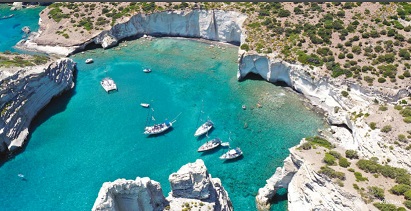
One of the main attractions of Milos is its coastline and Sarakiniko is just one of at least 40 beaches but our 5-hour boat tour was to see something else. We had hired a cabin cruiser with captain to take us around the island with the destination being Kleftiko, a former pirate’s cove with sea caves and crystal clear water, perfect for snorkeling. Unfortunately, strong winds kept all small craft in port so our only views are these two photos from Best of Milos Tourism.
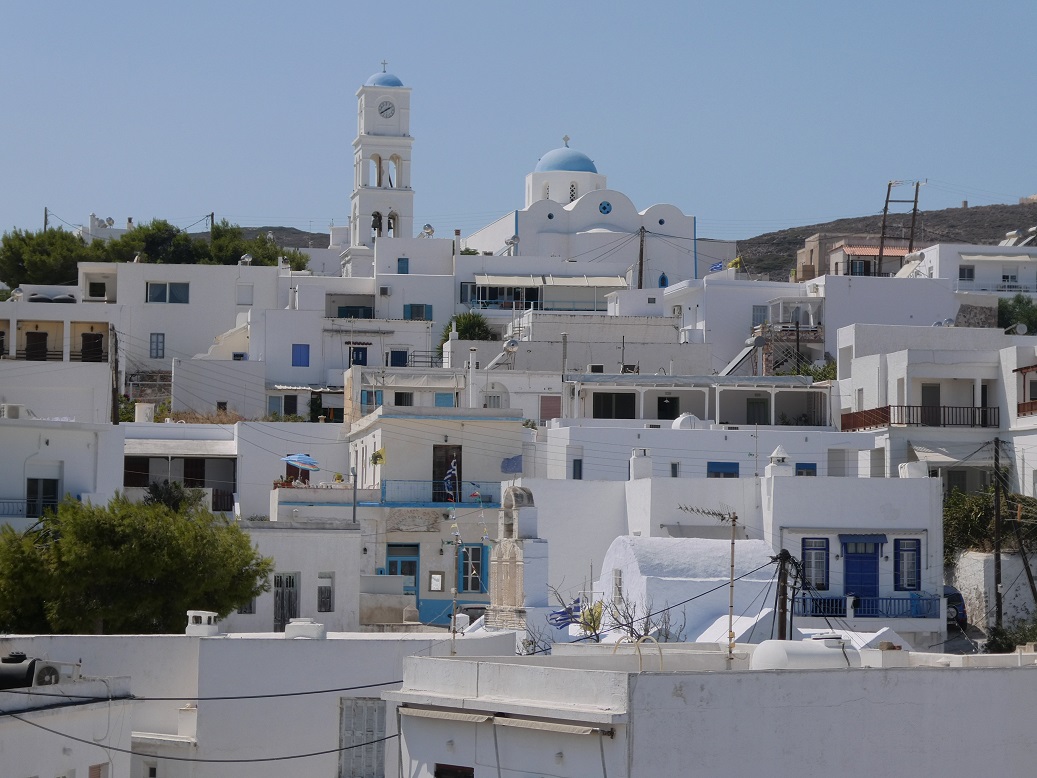
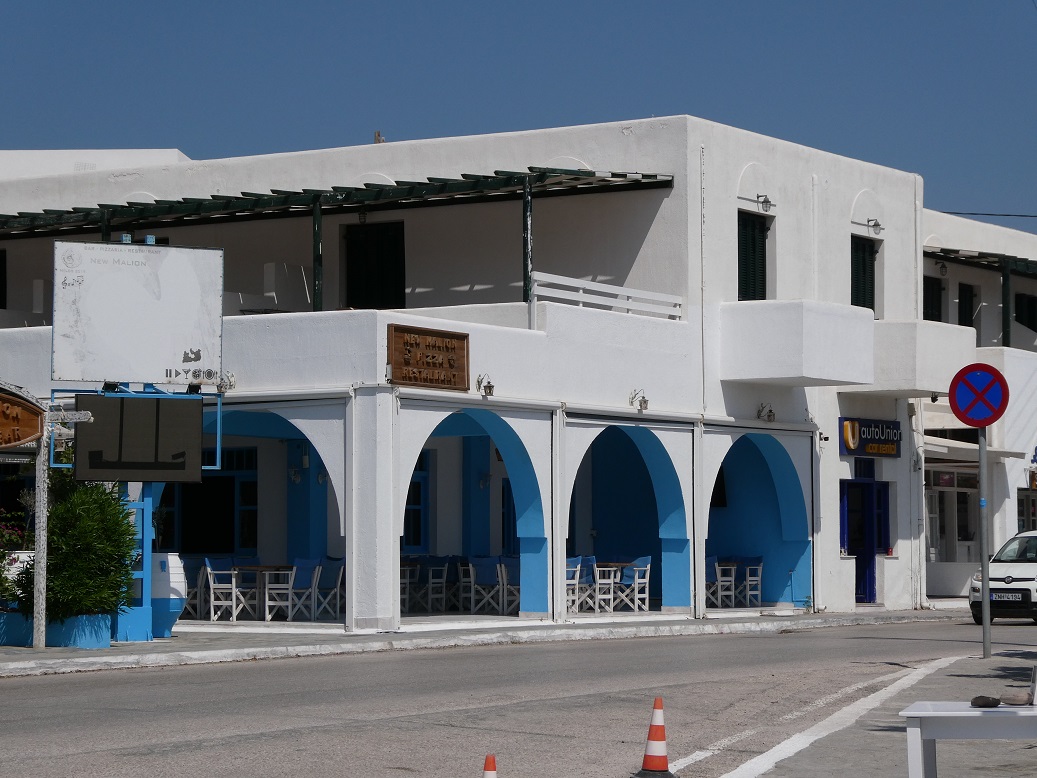
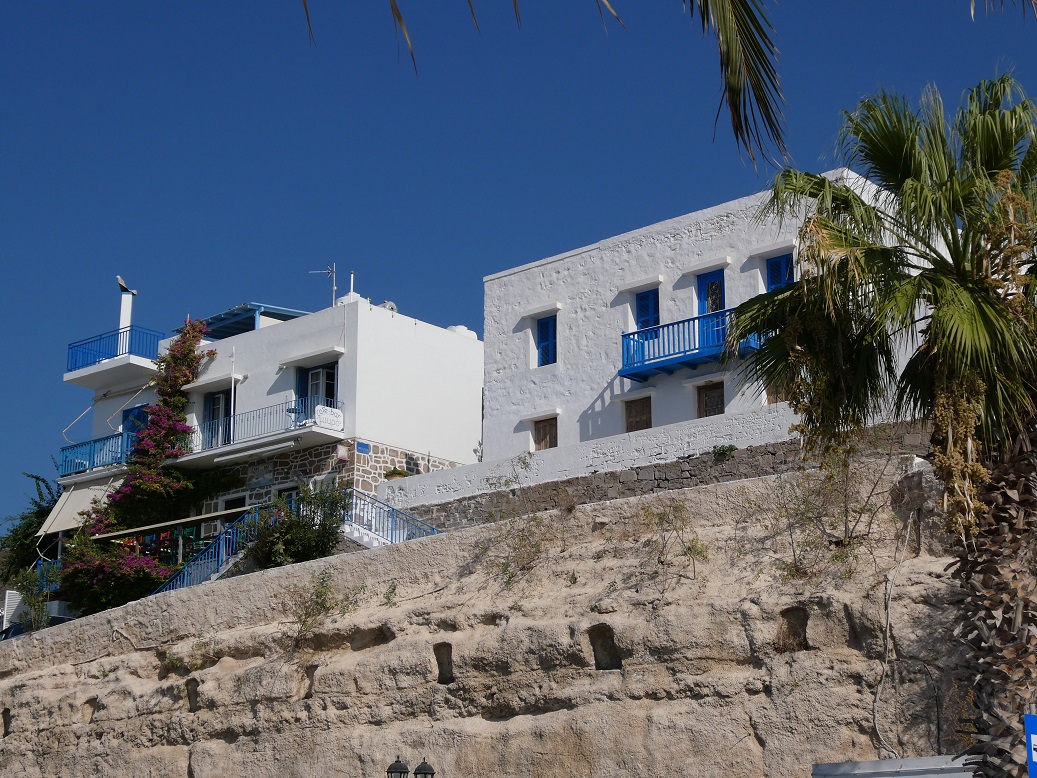
Back in the port city of Adamantas where our hotel room balcony had a view over the water (the featured photo across the top of today’s post) we went in the opposite direction on an inland search for those white and blue buildings that signified “Greece” to me. Although we were surrounded by whitewashed houses and shops, finding those blue highlights was more of a challenge and now we know why. Because of a cholera outbreak in 1938, houses were painted with disinfecting limestone that turned the surfaces white. Then in 1967 the military government required the addition of blue, to match the Greek flag, that would demonstrate the populations’ allegiance to the regime. The dictatorship ended in 1974 but by then the colors had become a trademark of the Greek islands and a tourist attraction, although still a reminder of an oppressive past.

We’ve been lucky to have gone to the Louvre Museum in Paris several times and on each visit we’ve always walked past the prominently displayed Venus de Milo statue without realizing that the “de Milo” refers to the island on which we were standing. In 1820 a farmer found the statue in pieces near the capital of Milos, Plaka. He sold them to the French ambassador who presented the find to King Louis XVIII who had it installed in the Louvre in 1821.
Having spent 10 days in antiquity in both Athens and “the islands” it was time to rejoin the modern world. Thanks to fast ferries plus comfortable, high-speed Italian and French trains, we were soon home, planning our next trip.




 Let's Live In France
What a lovely trip!
LikeLiked by 2 people
I’d had no idea why the blue shutters were part of Greece! Thank you for enlightening me this morning, but thanks especially for the gorgeous photos. What a view you had from your room!
LikeLiked by 2 people