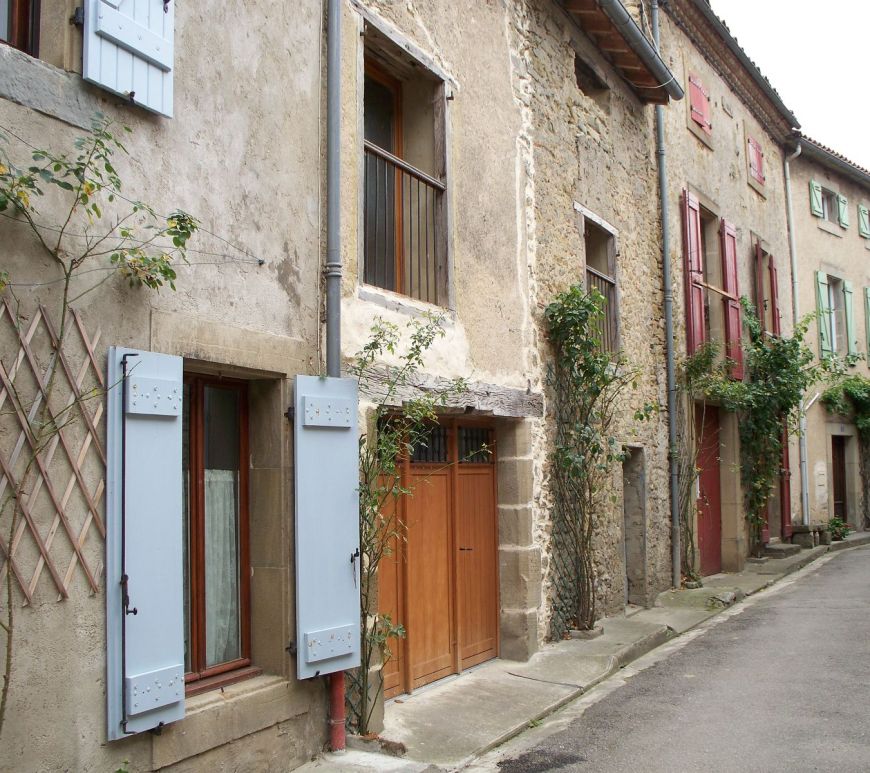
La petite Carcassonne

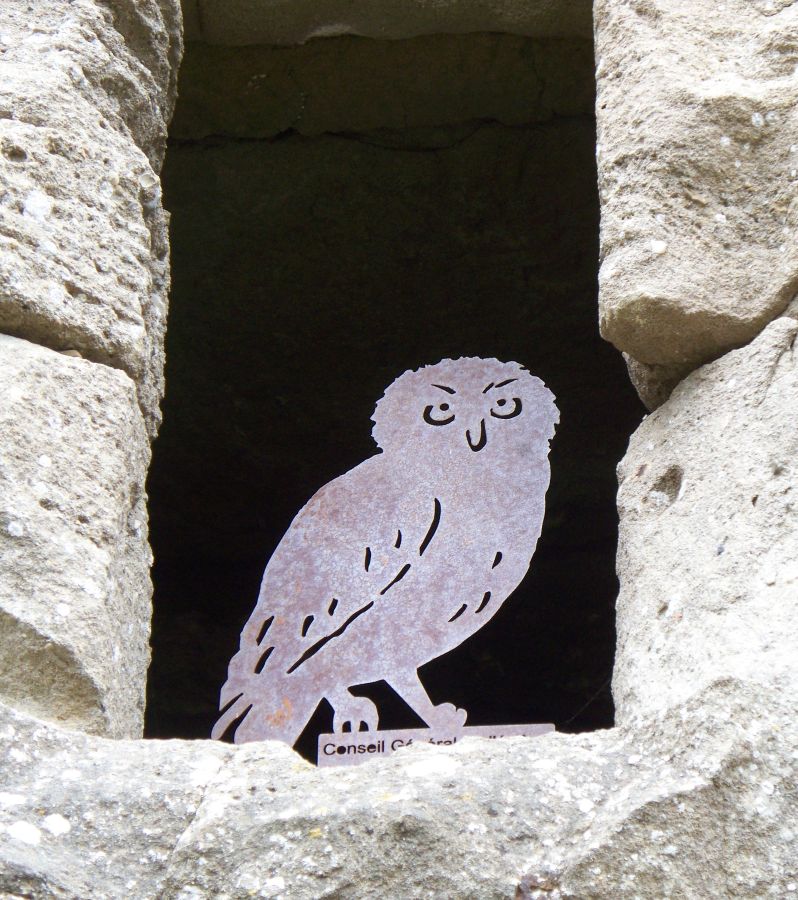
It’s not often that the word little (petite) is used in the same sentence with Carcassonne. After all, with 3 kilometers (nearly 2 miles) of double walls surrounding it, we’re more likely to see descriptions including “Europe’s largest medieval walled city” or “giant fortress”  or even “most formidable fortified city”. That reputation has attracted up to 3 million visitors during an exceptionally busy year, half of whom were from nearby Spain. Historically, it’s that proximity to our former adversary, now ally to the south that required the construction of those protective walls. In fact there’s a string of fortifications along the French/Spanish border that provided security to this area for hundreds of years, including one in the village of Camon, also known as “La petite Carcassonne”.

Continue reading “La petite Carcassonne”
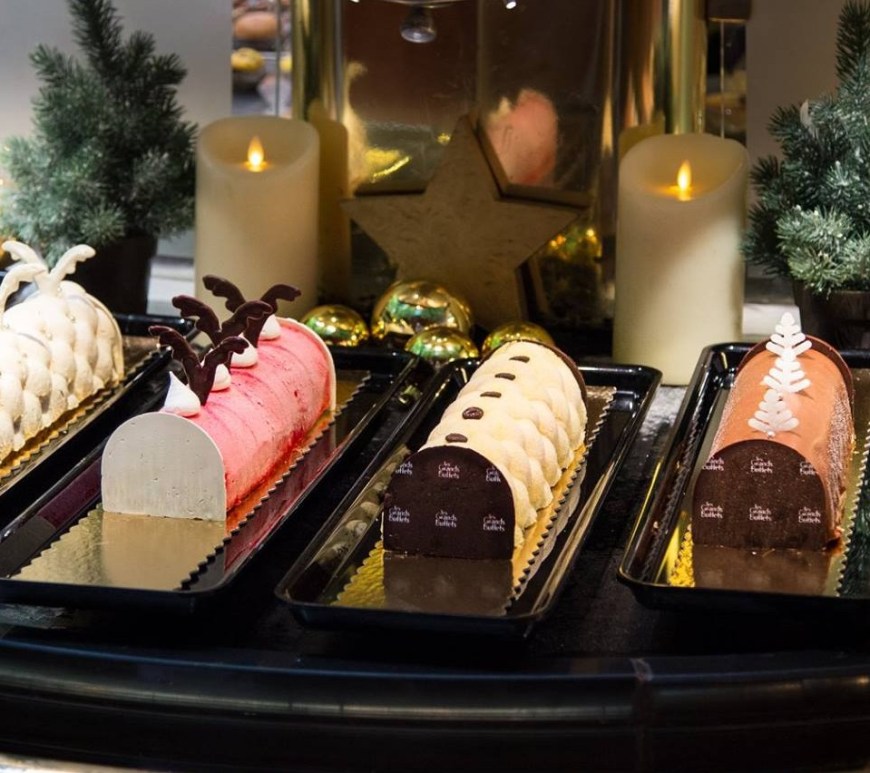
What’s for dinner?

Christmas dinner, that is, and to be more precise since we’re in France that’s typically Christmas Eve dinner. One of the advantages of living in a country where you didn’t grow up is learning about all of the local traditions and of course this time of year is filled with them. As kids we were used to the big meal being at midday on the 25th which was an interruption of playtime with the toys that we had unwrapped only a few hours earlier. In our household if Noël happened to fall on a Sunday that break was extended to cover a visit to church prior to sitting down to the feast that typically resembled what we had enjoyed a month before at Thanksgiving. Now, that is all so different.

Continue reading “What’s for dinner?”

Don’t mention it

My guess is that many of us have been in the following situation, especially around the holidays such as Thanksgiving, Christmas, and New Year’s Day—or maybe all three! You’re at the dinner table with members of your family, many of whom you haven’t seen in a while. Everyone is looking forward to a meal that has been in preparation for hours, plus hearing all the news from your siblings, cousins, aunts and uncles. When there’s a lull in the conversation, someone tries to be helpful and asks for opinions about the latest election, the role of the Church, or why a certain relative chose not to join you that evening. There’s a spontaneous intake of breath, sideways glances, a cough, and a sudden interest in those glasses of wine on the table. It seems that this isn’t unique to the US. According to a survey that was highlighted in our local newspaper, awkward discussions can happen during the fêtes in France as well.

Continue reading “Don’t mention it”

Never say Nevers + Moulins-sur-Allier

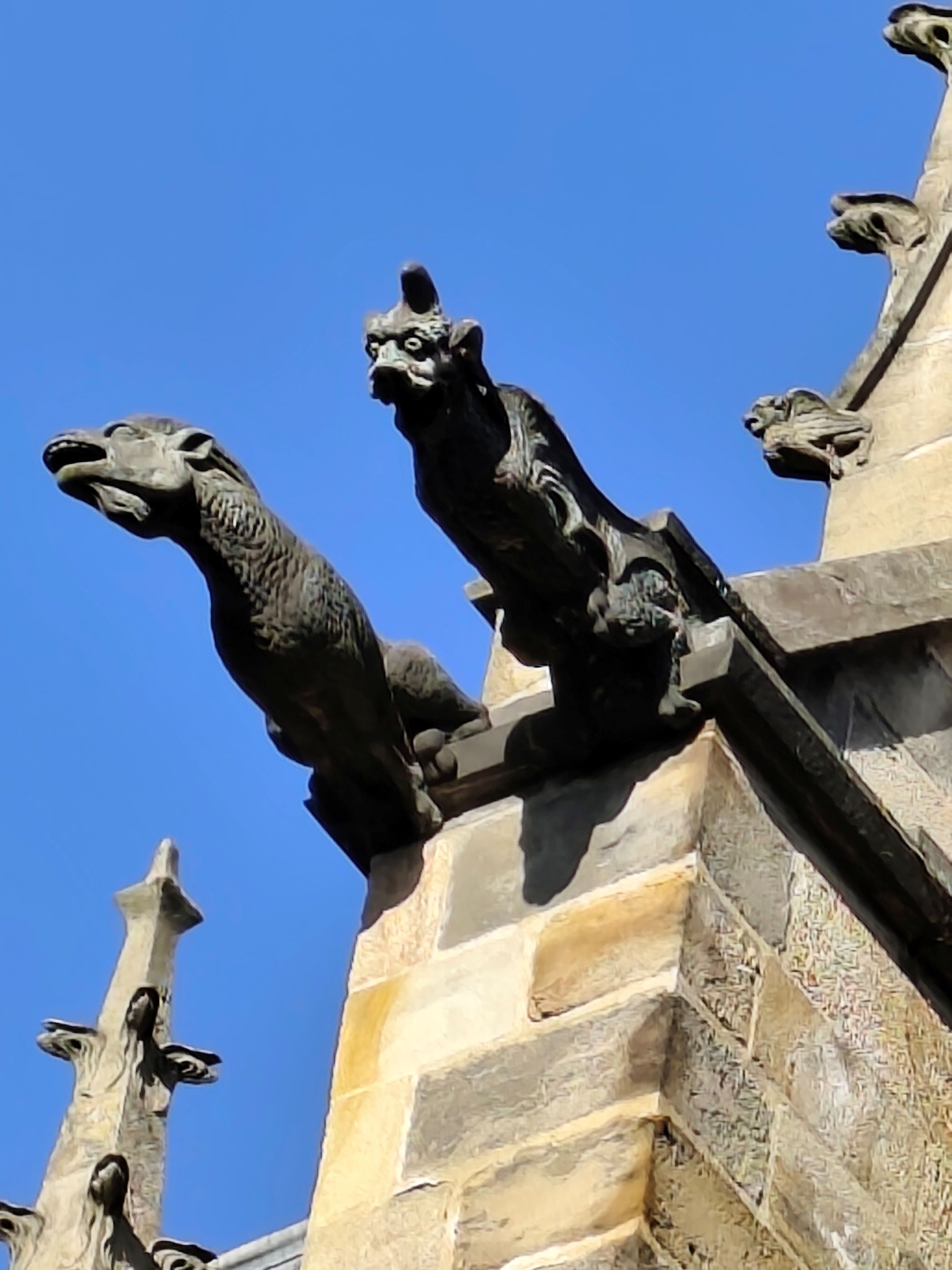
Someday we’ll have to publish a post about some of the French village names that sound funny to native English speakers. There could be a mature-audiences-only version but we’d prefer to keep it G-rated by including Sassy, Misery, or taking a train trip where you might be “Going to Die”. One dear to my heart, of course, would be seeing “Billy” that’s actually near the two towns in today’s post, although it no longer has an active station. Last week we talked about our time in Vichy and since we had the chance to take a couple of day trips it sounded like fun to visit a place called Nevers and how could we go wrong with what one guide calls Moulins: “a charming city that beautifully blends history, culture, and art.” These gargoyles agree.

Continue reading “Never say Nevers + Moulins-sur-Allier”

Vichy and the Belle Époque

Although Vichy has been on our “must visit” list for years, I was reluctant to go because of the city’s connection to Nazi Germany. French Marshal Philippe Pétain, leading an autocratic government during World War II, dismantled the democratic institutions of the French Third Republic and consolidated power by creating a cult of personality around himself. His government, based in Vichy, collaborated with Hitler’s regime by imposing a police state controlled by censorship and propaganda. Luckily that ended 80 years ago, leaving behind a city where the painful memories of that era remain, but the beautiful Belle Époque architecture endures.

Continue reading “Vichy and the Belle Époque”

Aix-en-Provence + the Calanques

Both of us were convinced that we’d already visited Aix-en-Provence, most likely on a quick visit to the area years ago. We’d been on a sleepless overnight flight from NY to Paris, a speedy train south, and still under the influence of jetlag early the next morning, a rail trip out into the countryside of Provence. As always, we took lots of photos but it was only upon returning to the US while reviewing our vacation pictures did we realize that we’d been to Arles and Avignon but not to that third “A” town, Aix. To remedy that, we scheduled a return stay in Marseille as home base with a bonus boat ride to the National Park of the Calanques.

Continue reading “Aix-en-Provence + the Calanques”

The cost of catching the flu

If you watch the TV show “House Hunters International” you may know the name of one of the presenters, Adrian Leeds. You would certainly recognize her signature red beret, glasses, lipstick, and outfit as she helps property buyers in Paris and Nice find the ideal—or compromise—new home. We’ve been following her since that first show in 2006 (now over 50 episodes) and used her book “Good Value Restaurant Guide” on every trip to Paris before moving to France. When our friend Sally sent us a link to one of Adrian’s newsletters, or Nouvellettres®, with just the short message, “Did you see this?” we were of course curious about what might be inside.

Continue reading “The cost of catching the flu”