


France 3 is technically one television channel yet it’s really made up of stations from each of the country’s 13 mainland regions and even those might be split into two or three parts. It’s kind of like PBS in the US with one nationwide channel that’s enhanced by local stories originating from state or city affiliates. Their mission statement includes, “France 3 reflects the diversity of economic, social and cultural life in the regions and through regional offshoots, including prime time, whose programs can be picked up nationally.” It’s thanks to that “national” reference that we found out about a newly-opened business in the north of France. The program carried the subtitle “A bar in a retirement home to make the residents smile again.”
An EHPAD (Établissement d’hébergement pour personnes âgées dépendantes) is the current name of what was previously known as a retirement home. The government website Service Public says that this is where people (typically over age 60) can live and receive assistance as needed with everyday tasks. It’s the EHPAD in Abbeville, northeast France near Amiens that was featured in the program called, “A bistro opens in an EHPAD to recreate social ties: “because of this, everyone has come back to life”.

A psychiatric health specialist, Laurent Douchin, recognized the importance of establishing social connections when people move into a new environment, especially one that can feel cold and empty. With funding from both the French government and the European Union he set up a café in the lobby of the EHPAD in Abbeville as a not-for-profit enterprise with drink prices set at an affordable level and apparently it’s already been successful. According to the host/bartender there are always people waiting for him to open at 2 PM and he has trouble getting everyone to leave at closing time. Through the afternoon the tables are filled with board games, coffee, juice, and non-alcoholic beer being enjoyed by those who might not otherwise feel like leaving their room.
And it’s not just the residents who appreciate this new enterprise long established in French culture. Relatives who come to see their loved ones can share a beverage in a friendly atmosphere that visitor Marie said helps her mother forget that she no longer lives in her own home. Another resident agrees, “We feel better. For me, it’s like a vacation! It’s friendly. Since there is this, everyone is alive again. People are laughing, it’s not the same at all.”

Historical note: Bistros have been in Paris since at least the early 1800s when they served traditional French dishes and wine at affordable prices and were a place for relaxing and socializing. Legend says that the name came from invading Russian officers/noblemen shouting at waiters “bystro” which means “quickly” in their native language yet they likely spoke fluent French since that was the language of culture and diplomacy in Europe at that time. Perhaps a more feasible origin for the word comes from the French slang bistraud meaning servant or wine merchant.
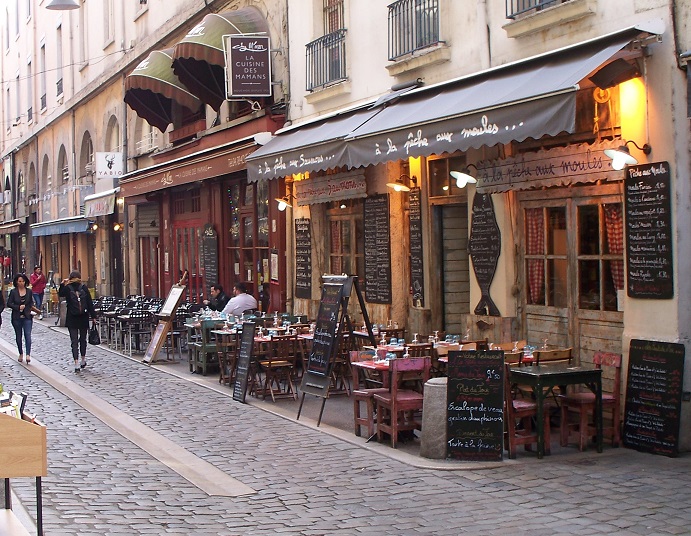
Photo notes: Across the top are tables ready for lunch in Lyon while in the first paragraph is an affordable menu in Sète.
 Let's Live In France
What a brilliant idea!
LikeLiked by 2 people
I agree with Sheree that this is a wonderful idea. There are so many ways to do this sort of thing, including building EHPADs/affordable over 55 housing IN towns instead of on the outskirts, allowing carers to take residents out more easily, and not just to bars but restaurants, museums, parks, theatre, etc. France has fallen woefully behind in terms of promised accessibility, too. Old narrow streets and lots of steps in villages and towns limit the ways this can be done, but life expectancy is high here and I often wonder when the promises to older people and the disabled will allow us all to be fully functioning members of French society.
LikeLiked by 2 people