
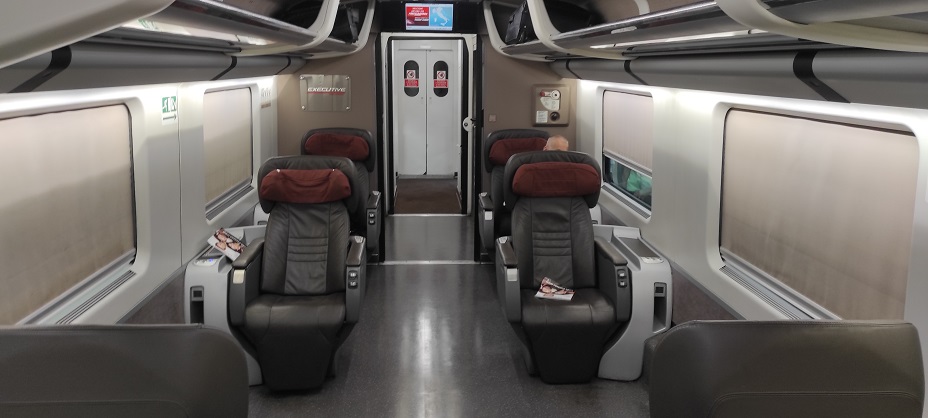
Last month on the way to Greece we changed trains in Lyon from where we could have taken a plane and been in Athens about 3 hours later. Instead we chose the “slow travel” option via Milan that included travel onboard the Italian Frecciarossa train in Executive class. The car had 10 extra-wide leather reclining armchairs (photo in this paragraph) so we had lots of legroom with at-seat dining choices of 3, four-course meals. We were onboard long enough to enjoy both breakfast and lunch and below I’ll include a pdf of the menu. (Tip: don’t be shy about asking for what you want to eat and drink.) While all of this comfort on the train was a pleasant surprise, an unexpected bonus awaited us at our ferry port destination.

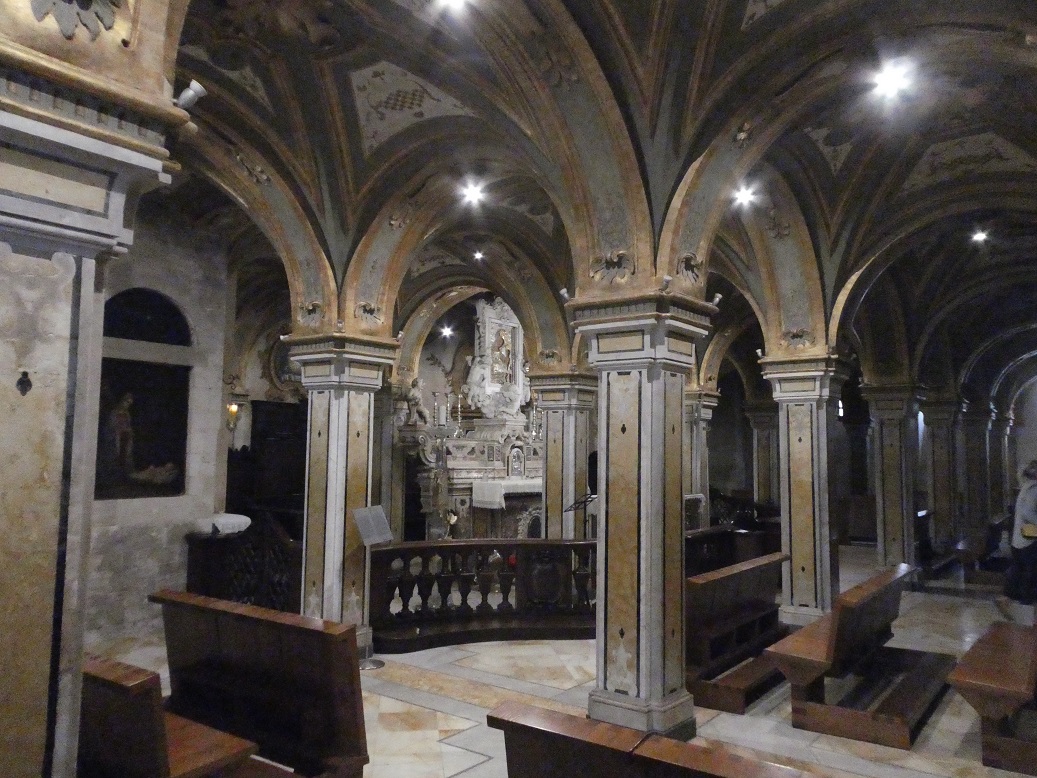
Even at 300 km/hr (186 mi/hr) it takes about 7 hours to travel from Milan to Bari since it’s all the way down where the heel of Italy’s boot begins. Although this was a summertime visit, we made our first stop at something associated with a much cooler season. Legend says that Santa Claus originated from St. Nicolas, the patron saint of Bari, whose bones are believed to be kept in the crypt of the Basilica di San Nicola. This fortified church was completed in 1197 and its gleaming gold ceiling was added in the 18th century.

Since we were now near the center of Old Town (Bari Vecchia) it made sense to continue exploring that area by going to the 12th century Cathedral San Sabino where you can view mosaics considered as old as parts of the original Roman ruins, also visible there, created 2000 years ago (3€ entrance fee). Stepping out of the church we had to simply look down an adjoining street to see an equally ancient building with a much different purpose. The Castello Normanno-Svevo is a castle built in 1132 by the Norman king Roger II to protect the city. The unfurnished interior is used for art exhibits so we were happy to admire the massive walls, towers, and moat from the outside.

The street that’s officially called Strada Arco Basso is nicknamed Strada delle Orecchiette because of the women who sit outside their homes and create the little ear-shaped pasta (orecchiette) that then dry on racks ready to sell to visitors like us for about 5€ per kilo.
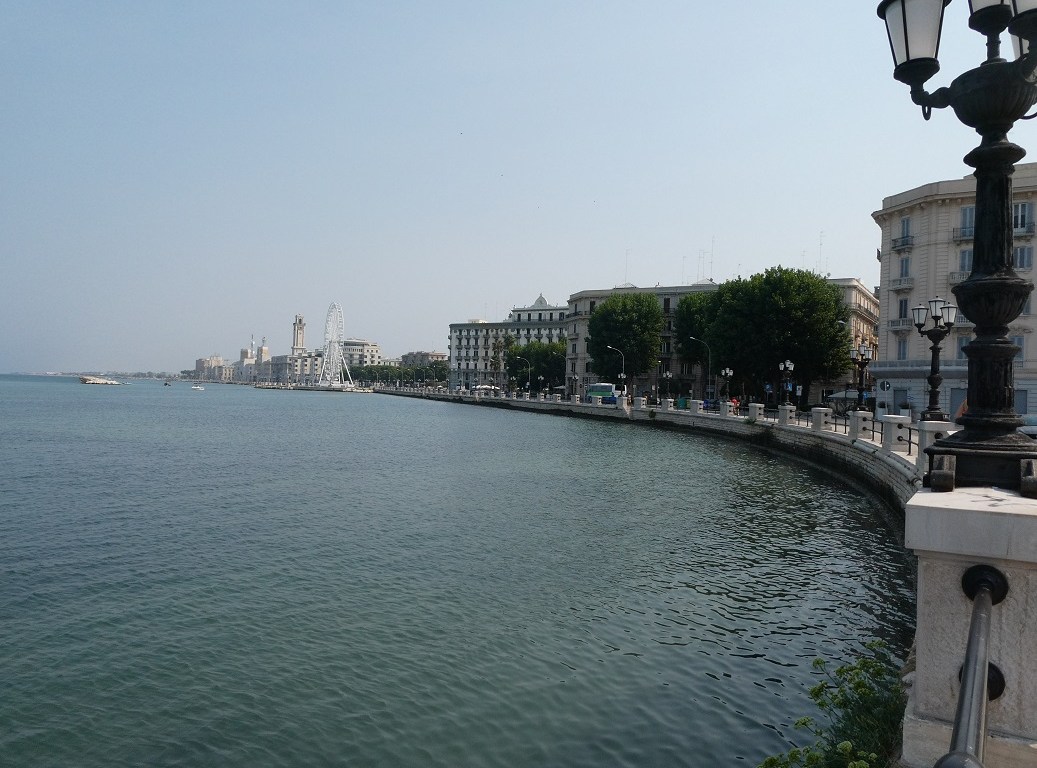
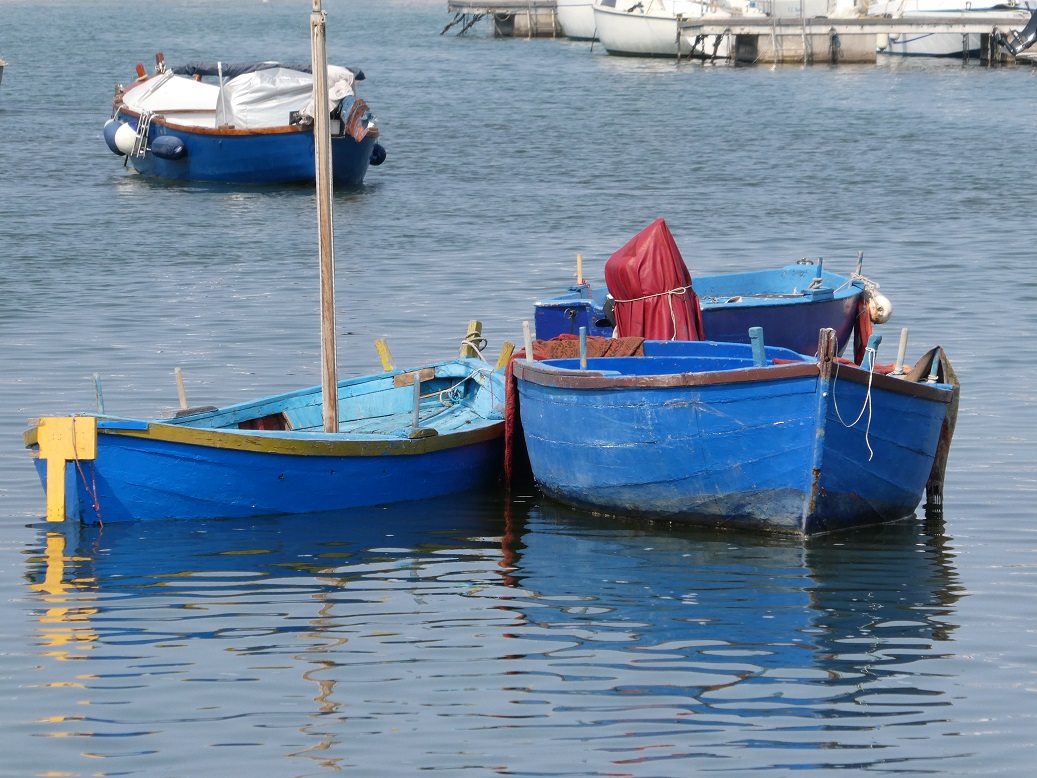
If you look at a city map of Bari you can easily contrast the labyrinth of narrow, winding streets we’d been wandering in old town with the wide, straight boulevards of the more modern Murat district. This area was laid out in the early 1800s by Joachim Murat, Napoleon’s brother-in-law and King of Naples. He wanted to create a Parisian-style city with a rectangular grid-plan and a promenade on the sea. It was along this walkway (featured photo above) by the Asiatic Sea that we saw this region’s characteristic small blue boats that local fishermen have used for centuries to bring in fish, oysters, and octopus.
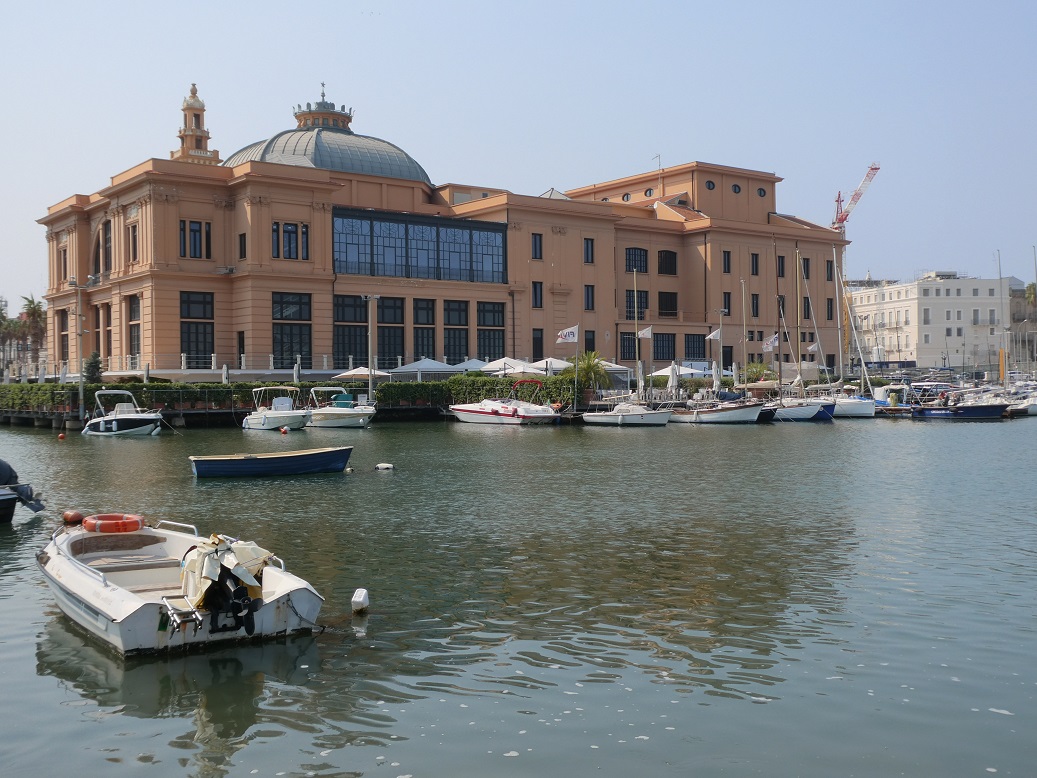
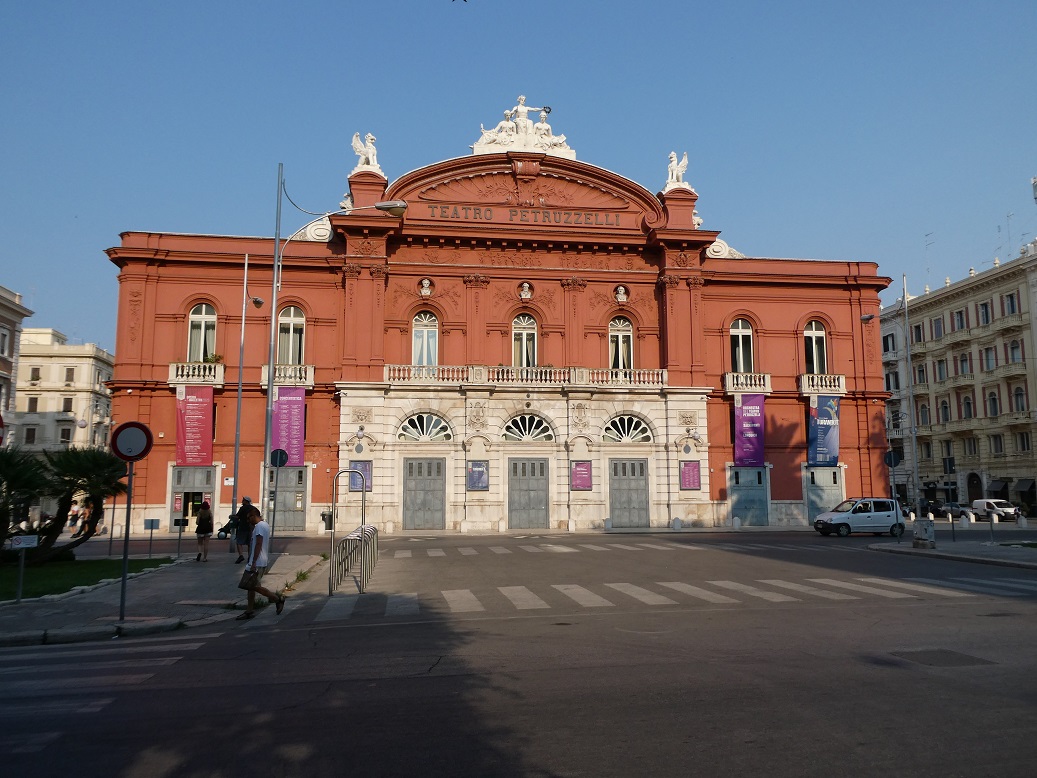
Further along the Lungomare (seafront walkway) is Teatro Margherita, a theater that was built in 1912 as direct competition to Teatro Petruzzelli that had been completed a few years earlier. Both buildings are still in use, Margherita as an art gallery and the other for opera and ballet.
There’s something about eating pizza in Italy that makes it taste better than anywhere else and we’ve never been disappointed. Bari is no exception although they are perhaps better known for focaccia, a flat bread that here includes mashed potatoes in the dough to give it that “surprising” touch fitting for our visit.

We still had one more day in the area so we hopped aboard a bus for the one-hour ride to a Unesco World Heritage Site, Alberobello. This town is known for its village of trulli—from Greek and Latin for “domed”—houses that were built in the 16th century as a clever way to avoid property taxes, so the story goes. At the time, there was no mortar between the stones and with the pull of a rope that passed through a vent hole in the roof, it collapsed. No house; no tax. Just one more part of “Surprising Bari, Italy”!





Good morning,
This part I do not understand:
“At the time, there was no mortar between the stones and with the pull of a rope that passed through a vent hole in the roof, it collapsed. No house; no tax.”
Would this not destroy the house then? It leaves me confused.
LikeLiked by 1 person
The walls remained standing and the roofs were small. It was better to do a little extra work restacking the stones than to give the tax man anything.
LikeLike
Wonderful post with great photos. Beautiful AND surprising!
LikeLiked by 2 people
This is a train ride I’d like to take. Must look into it, thanks.
LikeLiked by 2 people
Sounds like a wonderful journey! Bari is definitely on our list; we want to see the trulli. And that train!!!
LikeLiked by 2 people
Well worth the trip; both getting there and the destination!
LikeLike
So many places….so little time!
LikeLiked by 2 people
Great post and yet another place to visit!
LikeLiked by 1 person