

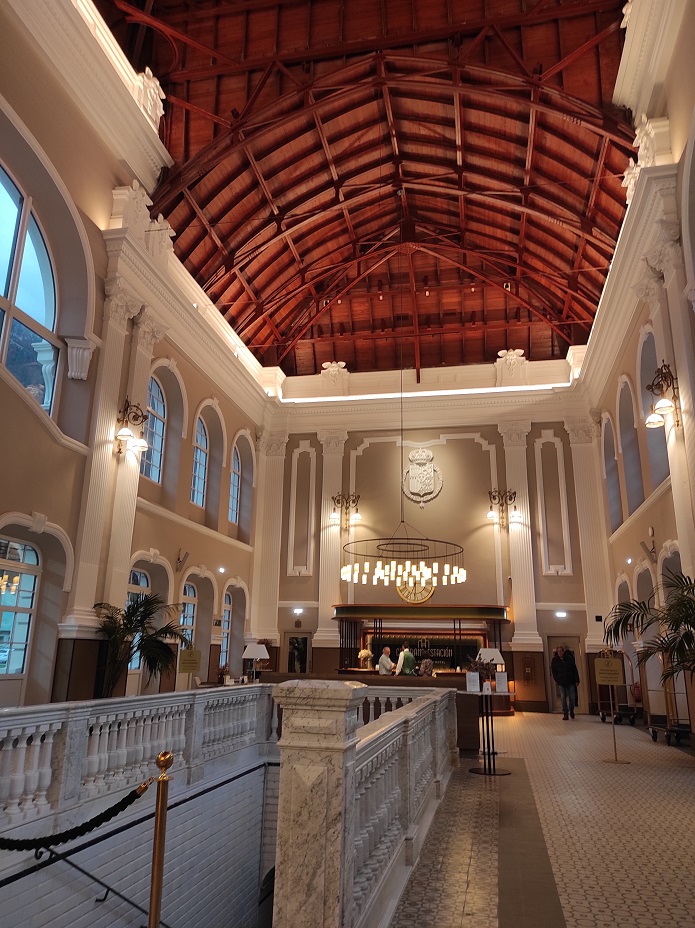
Although Bill and I are definite fans of rail travel, we seldom pay close attention to the station. For us it’s usually just the place to check the departure board and to pick up some buttery croissants or a freshly made sandwich to take onboard. If we’re changing trains along the way we might not even go inside the building; instead, we look at the display screen as we arrive to see from which platform our connection will be departing and then walk directly there. Oh sure, who wouldn’t notice the massive open interior of New York’s Grand Central Terminal, London’s impressive red brick facade of St. Pancras International, said to have been the world’s largest enclosed space when it opened in 1868, or the beautiful tile covered walls inside São Bento in Porto, depicting the history of Portugal. While we’ve seen those and one or two others that come to mind, we had never made travel plans specifically to route ourselves a particular way in order to visit a station…until we went to Canfranc, Spain.

France and Spain have two major road/rail crossings at either end of the Pyrenees near the Atlantic and Mediterranean coastlines. Between those there are a few other crossings used mainly for local travel including near Urdos, France, that had both a highway and a train route until 1970 when a derailment destroyed a bridge further north near Bedous which is still where the trains end today. It was from there that we had a 40-minute bus ride to reach the colossal evidence of the cooperation between two countries.

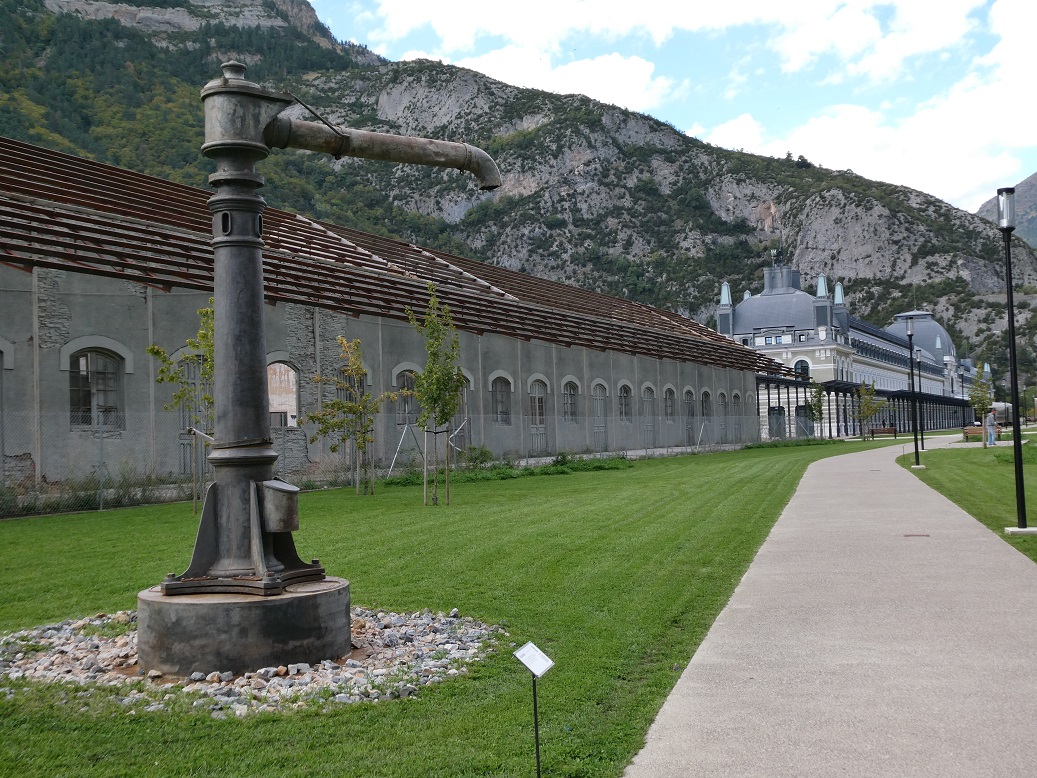
When Canfranc Station opened in 1928 it was the second largest rail station in Europe, only outsized by Leipsig that still holds the number one position today. That said, when you stand at one end of a building that’s as long as an aircraft carrier, you can’t help but feel awed by its size, not to mention the 365 windows and 156 doors that line its sides. The building needed to be massive to handle all of the passengers and freight that had to be unloaded from French trains and put aboard Spanish trains, and vice versa. That transition was required because the gauge of the tracks between the two countries was different. In addition there had to be room for both country’s customs and immigration officers, a bank, a library, a hospital, a restaurant, a hotel, and offices for railway and other employees.

Canfranc was a strategic point of escape for many people during the Spanish Civil War and again in World War II. In 1936, thousands of refugees fled the Spain of dictator Franco and crossed the Pyrenees through the pass near Canfranc to seek asylum in France. The direction reversed in 1940, when France was occupied by Nazi Germany and Canfranc station became a hub for smuggling gold, tungsten, and people. Many Jews and other persecuted groups used the same route to reach Spain and then Portugal, hoping to find a safe way to the Americas. Josephine Baker is known to have traveled through the area several times giving encouragement to the refugees and sharing information with the British embassy in Lisbon about German troop locations in western France .


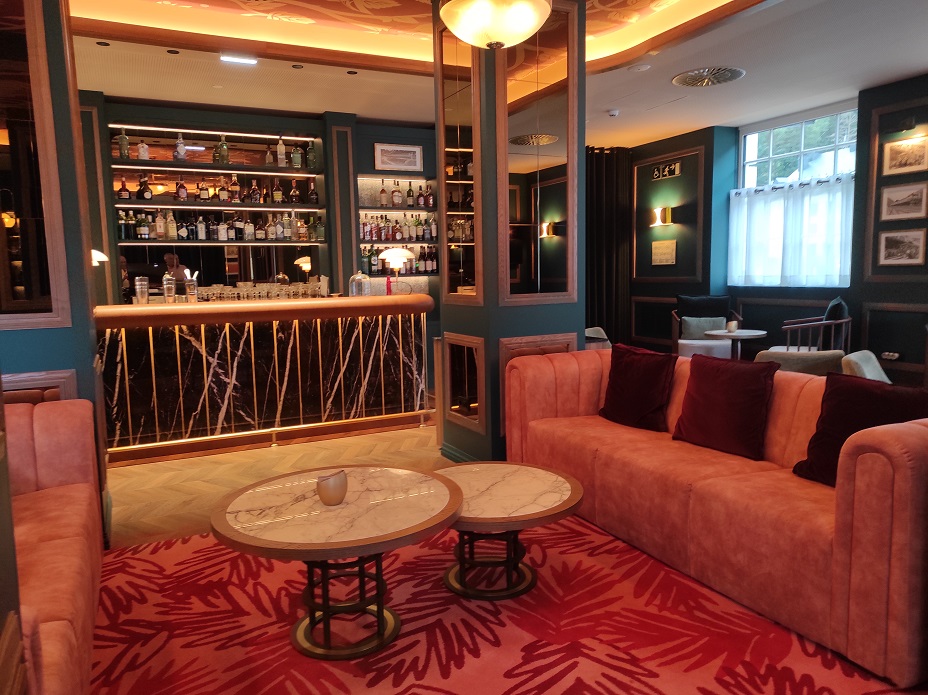
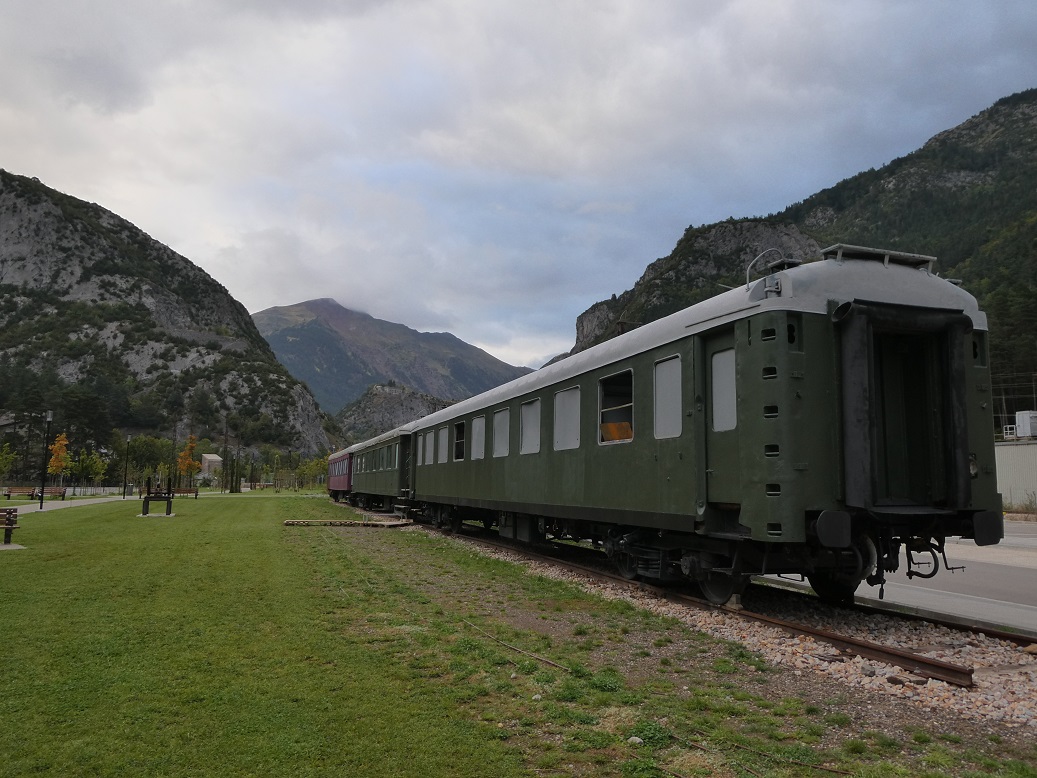
Luckily those tragic times are all now history and Canfranc Station has been beautifully restored as a 5-star, 104-room hotel with some of the original marble floors, chandeliers, and frescos still in place. The staff uniforms reflect the classic look of the 1930s in cream and green just as they would have worn them when the station opened. There are 7 types of rooms—ours was on 2 levels, bedroom up, living room down—all rightfully including the words superior, deluxe, and/or suite in their description. It took 1 minute and 10 seconds to walk from the elevator in the center of the hotel down the hallway you see here to our room. While we were there only one restaurant and one bar were open but restored rail cars from the 1920s sit just outside the station providing additional dining and entertainment options. It’s our guess that once the rail line is reopened from France, projected for 2026, they won’t have any trouble filling the rooms or the restaurants.








Thanks to you, this is on our list!
LikeLiked by 3 people
You’ll have a great time and even get in some exercise just walking down that long hall to your room!
LikeLike
Mine too!
LikeLiked by 2 people
We’ll have to have a blog readers’ reunion, LOL!
LikeLiked by 1 person
What a great idea!
LikeLiked by 2 people
My goodness what a beautiful place. I’dd seen photos of it in its heyday but had no idea they’d turned it into a hotel!
LikeLiked by 1 person
Sounds to me as if you will simply have to go there in person to see 😍
LikeLike
So glad you shared this little gem. Unbelievably beautiful! We will definitely go…I hope the hotel gives you a free stay for this wonderful review! (Maybe post 2026)
LikeLiked by 2 people
We were pretty sure that the two of you would enjoy this hotel. When you are there, be sure to remind them of the free night they owe us, LOL!
LikeLike
As always, you 2 are great at teaching us all about the wonders of our world. I hope to be able to take these trips in the not too distant future. You guys are amazing as always. Thank you.
LikeLiked by 2 people
Hi Chris, what a nice thing to say, thank you! We will look forward to hearing that you too have experienced this wonderful hotel!
LikeLike
Better hurry! Sounds to me as if it’s going to fill up very quickly!
LikeLike