

The two of us are probably like most tourists on our first visit to any city; that is, we want to see all the highlights and take all the photos of the sites we’ve been admiring for years on TV and at the movies. Since we travel by train, we’re often in a hub city to make a connection but sometimes we stay over in that hub to see what we’ve been missing by not leaving the train station. That’s been the case with both Bordeaux and Montpellier where we’ve written about our first impressions and then what we discovered by returning. That’s how we learned of the public demonstration of a parachute in 1783 and the American Ambassador to France, Thomas Jefferson, in 1787. Now it was time to uncover what Toulouse was keeping under wraps.
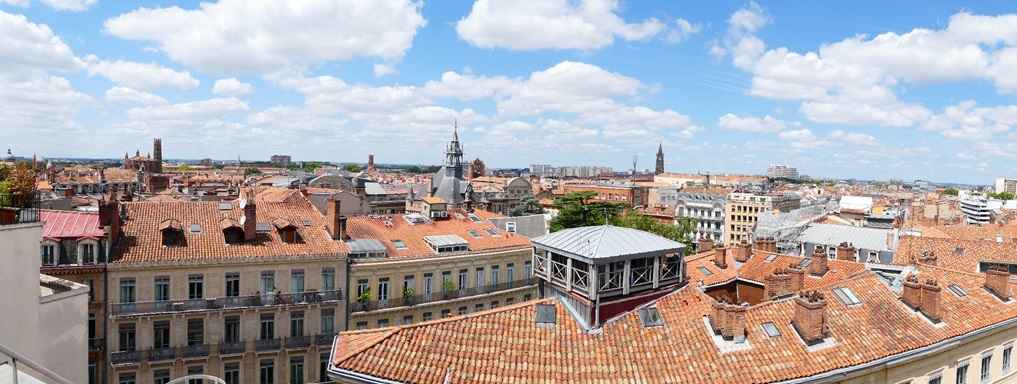
For an overview, from the top, puns intended, let’s take the elevator up to the rooftop restaurant at the department store Galeries Lafayette. We had the same viewpoint from their store in Paris and today’s featured photo across the top of this post is what we saw from 6 stories high. When we arrived at 2:00 PM the restaurant was deserted so we quickly walked through the interior dining room to the exterior terrace, snapped some photos, and took the elevator back to the ground floor to continue the adventure.
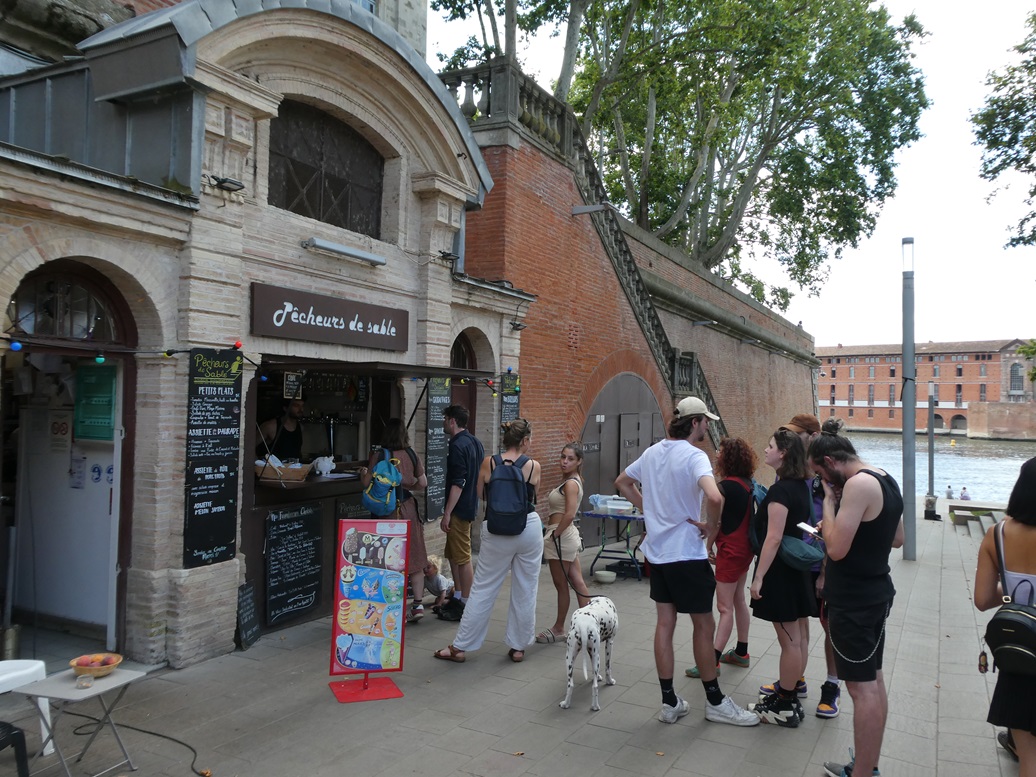
In a sense, we then went even further below as we walked down a ramp to the level of the river where lots of people were enjoying drinks and snacks from the Pêcheur des Sables café by the water. Despite the current convivial atmosphere, it was anything but that during the Middle Ages when this served as the city’s morgue. Bodies that washed up from the Garonne River were displayed here in hopes that families would identify them.

Instead of using AM and PM after the hours and minutes to distinguish the morning from the afternoon and evening, we’re now used to seeing the time displayed in “military time” where 8:00 PM is 20h00, for example. The huge clock on the building at 59 rue Alsace Lorraine takes this 24-hour style literally and displays the hour numbers 1 through 24 to add a sense of precision, so the theory goes, that was lacking when it entered into service in 1895. When we arrived it was around 9:35 AM and as you can see the hour hand is nearing the number 10 while the minute hand is where it would be on any clock.

Just as seeing that clock required us to look up, so did the next stop at the Compagnonnage (Journeyman) museum that details the work of Medieval apprentices. On the front of the building is a skillfully carved wooden balcony and embedded into the wall are some small terracotta rabbits (photo in the first paragraph) said to represent the young workers.
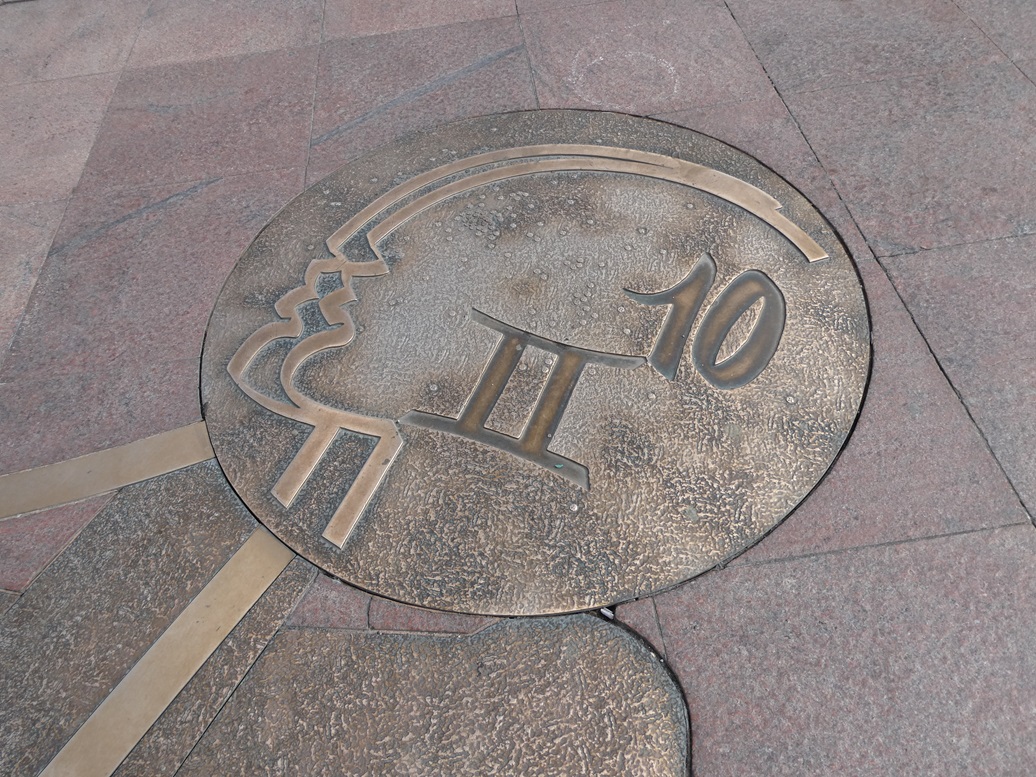
To contrast the very narrow street where the museum is located we next went to the most open space in the city, the Place du Capitole where we were in for a double surprise. The massive 18th century city hall contains giant ballrooms, now used for council meetings and weddings, where the walls and ceilings are painted with scenes you’d expect to see in a palace. Outside on the plaza in front of the building is a huge Occitanie cross, a symbol of this region, with 12 points on the star. Legend says that originally these represented the 12 apostles but with the 1905 law making France officially secular, those points were changed into the signs of the zodiac. True or not, it certainly made us carefully examine the walkway.
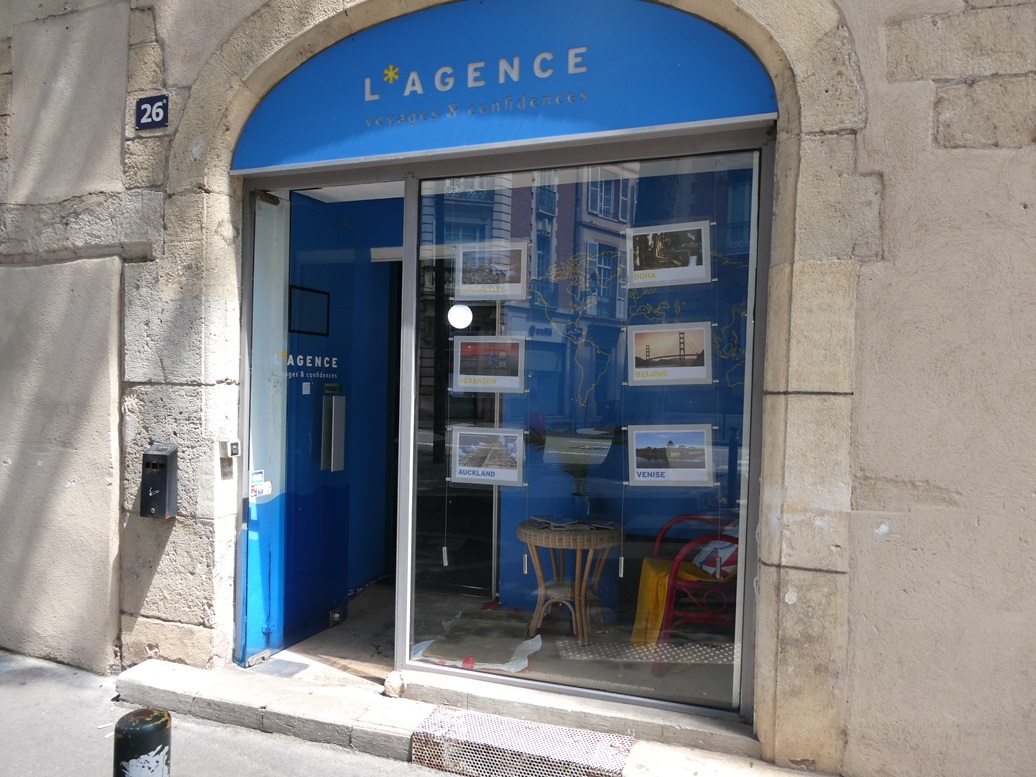
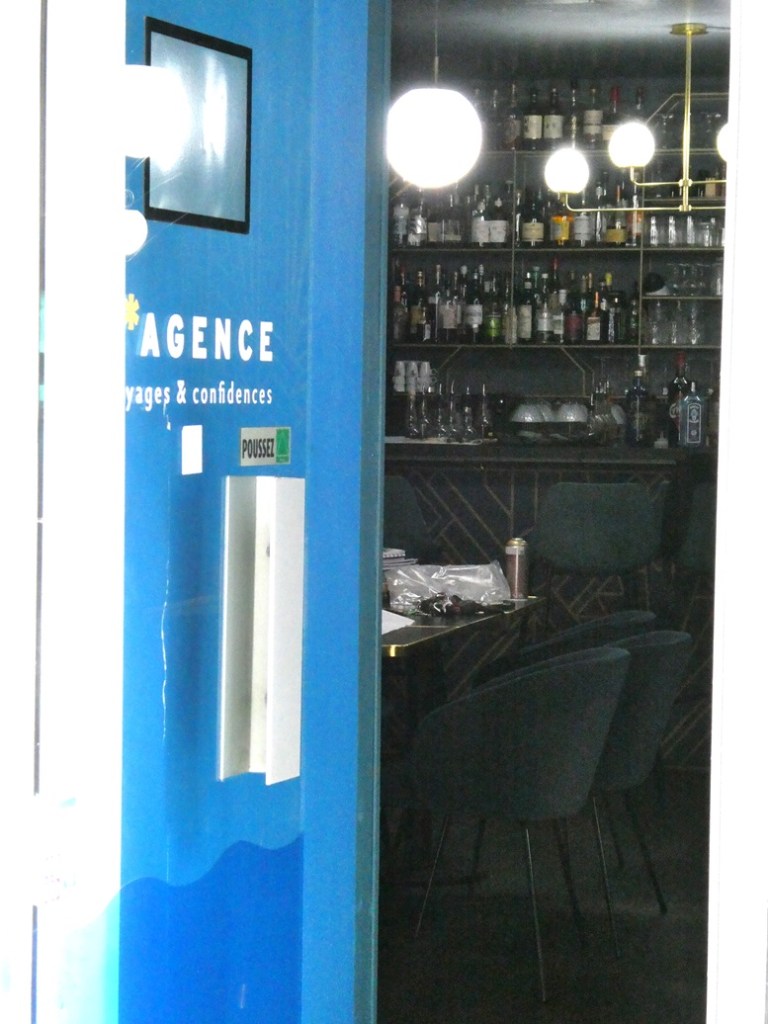
To finish out the day we headed for some refreshment, first to a bar called “Number 5” where for 7000€ you can apparently get a glass of Madeira from 1675. Unfortunately (or perhaps, fortunately?) they weren’t open so we had to find a recreated secret from the American days of prohibition, a speakeasy. The front window of L’Agence looks like any travel agency but inside, the wall of glasses and liquor bottles tells a different story. No password required; just open the door, push aside the bookcase, and enter the Roaring 20s!

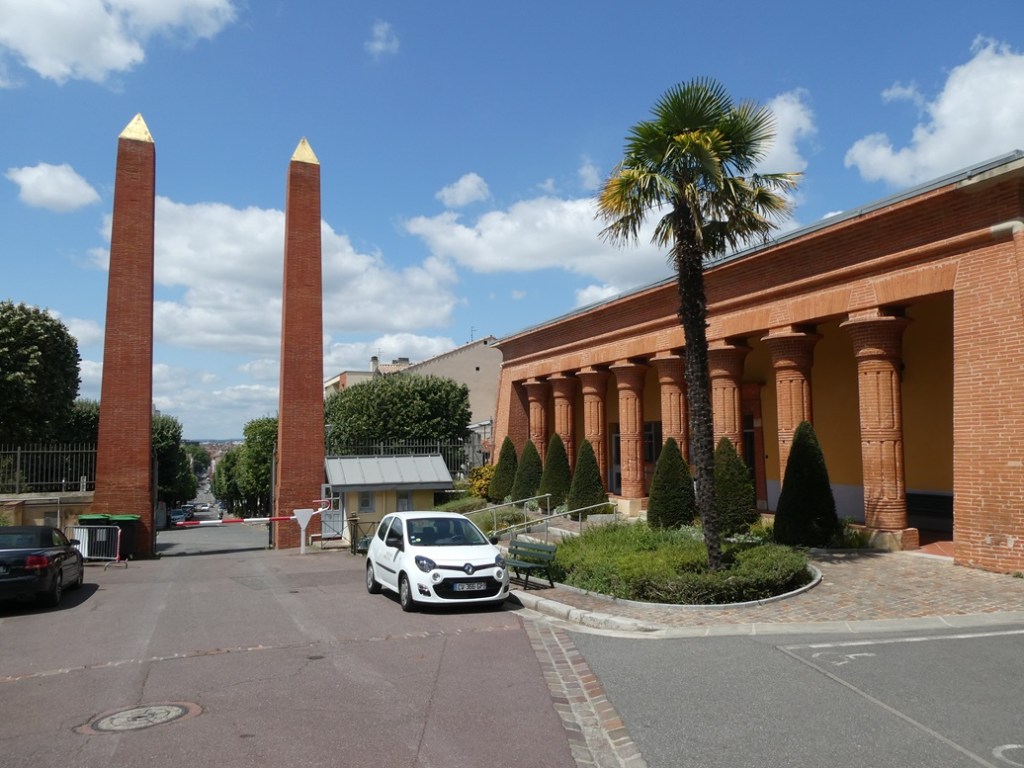


All such fun! I’ve driven around Toulouse, but never into it, sadly. I’m intrigued by its nickname “ville rose” – for the color of bricks used in many of the buildings. Was the color noticeable on your visit?
LikeLiked by 2 people
It is definitely a brick city and the block where we stayed was all red-rose brick high rise buildings. In the older center it is very noticeable also.
LikeLike
Toulouse is another French city that tends to fly under the radar
LikeLiked by 1 person
Great reminder of a wonderful city which competes with Bordeaux in our affections. Perfect timing as they celebrate Olympic success of local boy Léon Marchand.
LikeLiked by 1 person
Thank you Bob, it is very interesting!
BTW 24-hour instead of AM and PM is typically used all over Europe, including Russia:).
LikeLiked by 2 people