


Earlier this year, the French newspapers that we read regularly were filled with articles about the long-debated immigration bill. Comments from the extreme-right included, “We can rejoice…progress…victory…national priority” while others said, “a shift in (this country’s) fundamental values” and, “the most regressive bill of the past 40 years for the rights and living conditions of foreigners.” These were all in reference to the bill’s points about migration quotas, benefit limits, family reunification, medical care and amnesty for undocumented workers, among others. While those points didn’t directly affect us, one provision of the bill could, or at least it could for some of the readers of this blog: language level requirements for residence cards and citizenship.
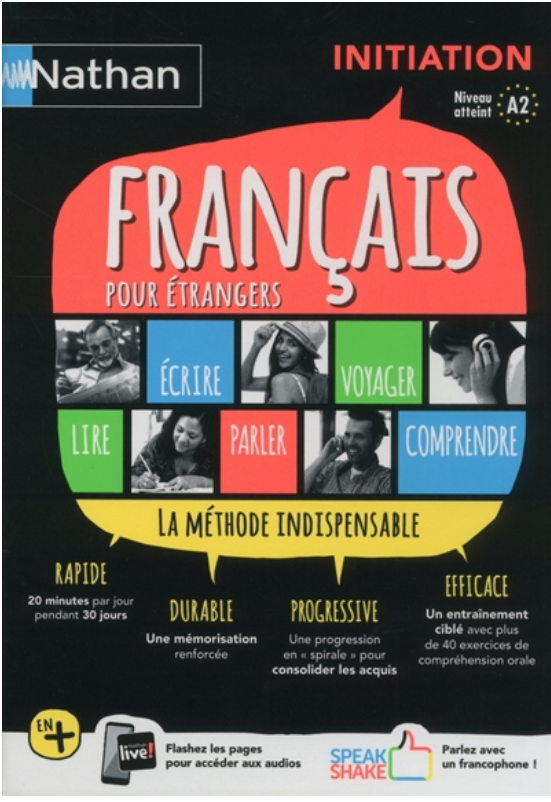
It’s still possible to obtain a one-year, renewable 3 times, visa/carte de séjour to live in France without proving that you speak the language. Generally, if you can show sufficient financial resources to support yourself including health insurance and a place to live, you’re in. After residing here for 5 consecutive years you can apply for a 10-year residence card that does now require an intermediate level of French, although anyone over age 65 is apparently exempt. That intermediate level, known as B1 is what I needed 2 ½ years ago when I applied for citizenship. New applicants to become French are now required to have the higher B2 rating that previously I associated only with job seekers or university students.
With those new requirements in mind, the online newspaper The Local France had some tips for successful language test taking:
- Look at exams from previous years—This helped me the most, that is, to be prepared, knowing how the exam would unfold and what to expect next.
- Take a preparation class—I did a video course that included recordings from previous exams; again helpful in feeling comfortable with the test format.
- Review the basics—Even if you use French daily it won’t hurt to brush up on the spelling of irregular verb conjugations and the gender of nouns.
- Use a preparation book—Each exam, like DELF B1 or B2, has several guide books that take you through the 4 parts to help you feel more comfortable with the test.
- Know the scoring system—To pass the DELF exam you need a minimum score of 50 points out of 100 with none of the 4 sections scoring less than 5 points. Strong speaking, reading and listening skills can compensate for weaker writing abilities, for example.
- Practice introducing yourself—I had 2 minutes to say whatever I wanted to about myself, true or not as long as it was in reasonably correct French. Then I had 10 minutes to role play a randomly selected scenario with the test monitor. The Local France suggested, “keep talking” since the longer you talk the fewer questions the examiner will be able to ask you in the limited time allowed for your interview.
- Read French news—This is important because portions of the exam often come from current events so the more familiar you are with today’s news, the more confidently you will be able to comment.
- Pick your exam type—The French government accepts several different exams as proof of your language ability. The DELF is a diploma that lasts a lifetime, doesn’t ask direct grammar questions and lets you listen to audio documents twice. The TCF is an attestation with a validity of only 2 years, includes grammar questions, and you hear 29 short documents only once each. The DELF I took was all handwritten yet others have taken the TCF on a computer.
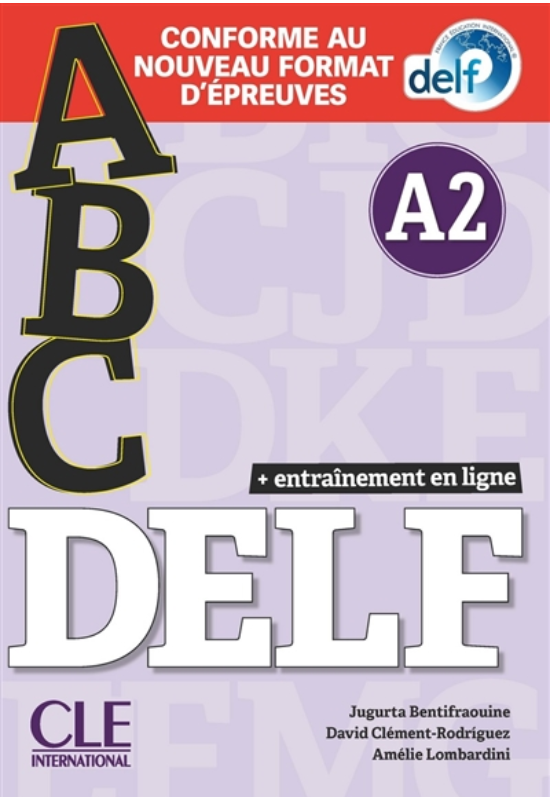
With all of that said, the best advice remains “Be Prepared”. Time and again I read that understanding the test format and question types is half the battle when it comes to passing a test.
Photo note: All photos in today’s post came from the Carcassonne public library’s website that lists dozens of other books you can check out to learn the language.
 Let's Live In France
Hello there Bill and Bob,Germany has not cracked down this hard. I bet this will come sooner or later here as well. Have a nice sunday.
LikeLiked by 2 people
That’s very interesting because I remember one of the arguments for increasing the language level requirement was to bring France more in alignment with the other EU countries. Hmmm 🤔
LikeLiked by 1 person
Fantastic post, as always. Your articles are always so informative, helpful, and fun to read. The age requirement seems to also have changed, as it was age 60 in order to be exempt from the language requirement, at least for a conjoint. I’d still like to improve my level of French from A2 to B1. Should I jump to studying B1?
LikeLiked by 3 people
Thank you for the kind words. If you work to the B2 level then you are ready for the citizenship test if you want that. That is what I will have to do since I waited too long to apply.
LikeLiked by 1 person
Better late than never, but I feel your pain. My main focus at the moment is just improving my French, so I’m just wondering if I’m currently at an A2 level, if I should start with that level or just start studying B1 if that’s what I’m working toward? I don’t really know how it works.
LikeLiked by 2 people
You would probably want to study for the level you would like to acheive otherwise you would not be challenged to progress to the next level.
LikeLiked by 2 people
Great post! Aside from travel and food, our bigget budget item is French lessons. I have two private, one-hour lessons per week, along with two 1.5-hour conversation classes–and also a weekly language exchange coffee group. And after studying French in university, and living in France 2.5 years, I still struggle every day with the language (I’m at a B1 level). The most difficult thing for me is oral comprehension. And my husband, who never studied French in school, is still at an A1 level and recently (at the advice of our teacher) has seen a hypnotherapist to help him feel more relaxed and confident about the language. It’s helped!
My perspective is that learning French is very difficult, especially for seniors. We hope to one day become fluent, or at last functional, in French, regardless of government requirements.
Your suggestions are very helpful; thank you! Also, if this is allowed: I have a friend in Switzerland who went from zero French to passing the Delf B2 exam in one year, and she wrote about her experience. I got some good resources from her writings, and perhaps others of your readers would benefit as well. Anyway, you can read about her experience here: https://observingleslie.com/magazine/taking-the-delf-b2-examination-what-to-know-and-expect?rq=b2
Again, this is a great post; thank you for writing it.
LikeLiked by 4 people
Thanks, Sandy, you always say the nicest things. Wow, you are certainly dedicated in your quest to learn French! Both Bill and I read the article from your friend in Switzerland about preparing for the language exam and I see that she has many others regarding language learning. Thanks for including the link.
LikeLike
i should have done it when it was B1, but the paperwork for the dossier kept putting me off. Now, like Bill, the B2 awaits me!
Great post, thank you.
LikeLiked by 1 person
Hey, you two can study together 👨🎓👩🎓
LikeLike
Great advice as always!
LikeLiked by 3 people
For a change I am glad I’m over 65 senior. Those little perks.
LikeLiked by 3 people
Bonjour mes amis! Interesting and well put together post. So thoughtful to add the resources & your own insights of the process. Be Prepared = less stress! Thanks for sharing!
LikeLiked by 1 person
Merci, Monique. Anything that we can share of our experiences that makes it easier for someone else is all the better.
LikeLiked by 1 person
Very useful tips. Thanks Bill and Bob!
LikeLiked by 2 people