
There’s an online group called “Everything French” that publishes destination ideas, historical and cultural details and interesting facts about this country. They sometimes print links to other websites or blogs where you can get even more information about a topic. That was the case when I saw an article about the “Iris of Kings” that originated from the travel blog The Curious Rambler by Margo Lestz, an American author who used to live in Nice. Since there’s confusion about how to spell the flower’s name, how to pronounce it, and even what type of fleur it is, let’s start there.

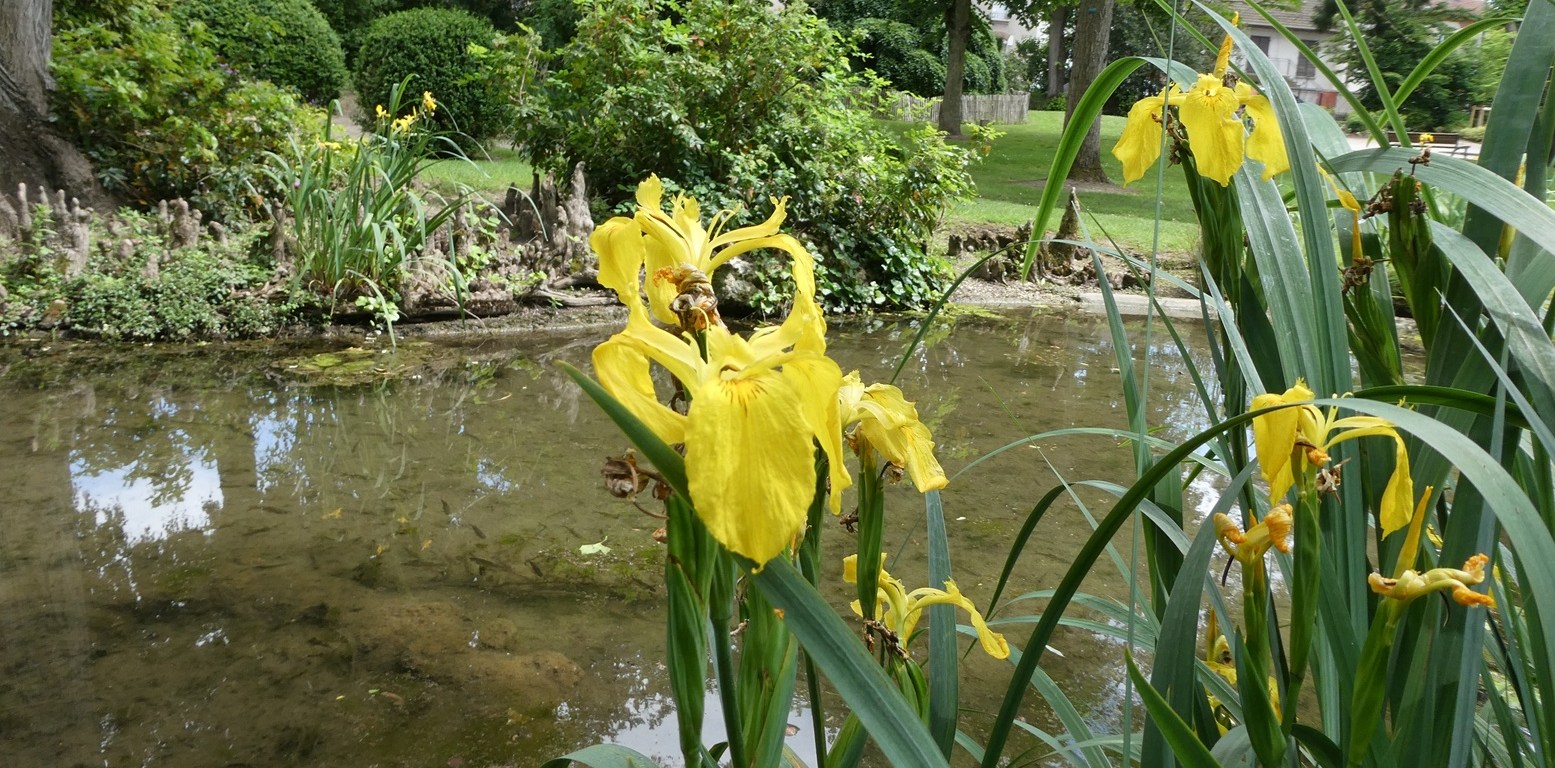
There’s a river in northern France called the “Lys” and that’s the region from which many early French kings came. Some of the riverbanks are lined with yellow irises, the symbol of which was apparently adopted by those early monarchs. Regarding that confusion mentioned above:
- The flower: The French river’s name, “Lys”, translates to lily (not iris) in English.
- The spelling: In French it’s spelled “lys” but in English it’s “lis”.
- The sound: In Paris you hear it pronounced “lease” with an s while in New York it’s “lee” without the s.
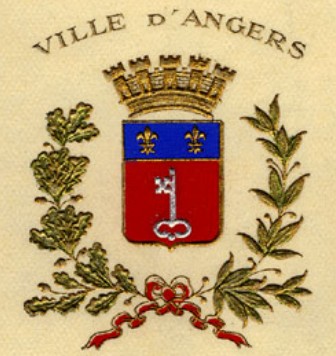
It is well documented that in the year 481, Clovis was crowned King of the Francs and is therefore considered the first monarch of France. What’s not easy to prove is his association with the fleur de lys although several legends attempt to do so. One says that just prior to a major battle, many fleurs de lys miraculously appeared on his shield and Clovis went on to win the conflict. With his wife’s encouragement he adopted the flower as his symbol.
In another tale associated with war, Clovis and his army were trapped in marshlands with no apparent way to escape from the approaching enemy. Seeing a group of yellow irises on a riverbank and knowing that they grew in shallow water, he led his men to safety across the river. Lastly, some say that an angel anointed the king with oil poured from a flask in the shape of the flower. Curiously, all of these stories seem to have originated in the 12th century when Louis VI could have been looking for connections to prior kings to support his divine right to rule.
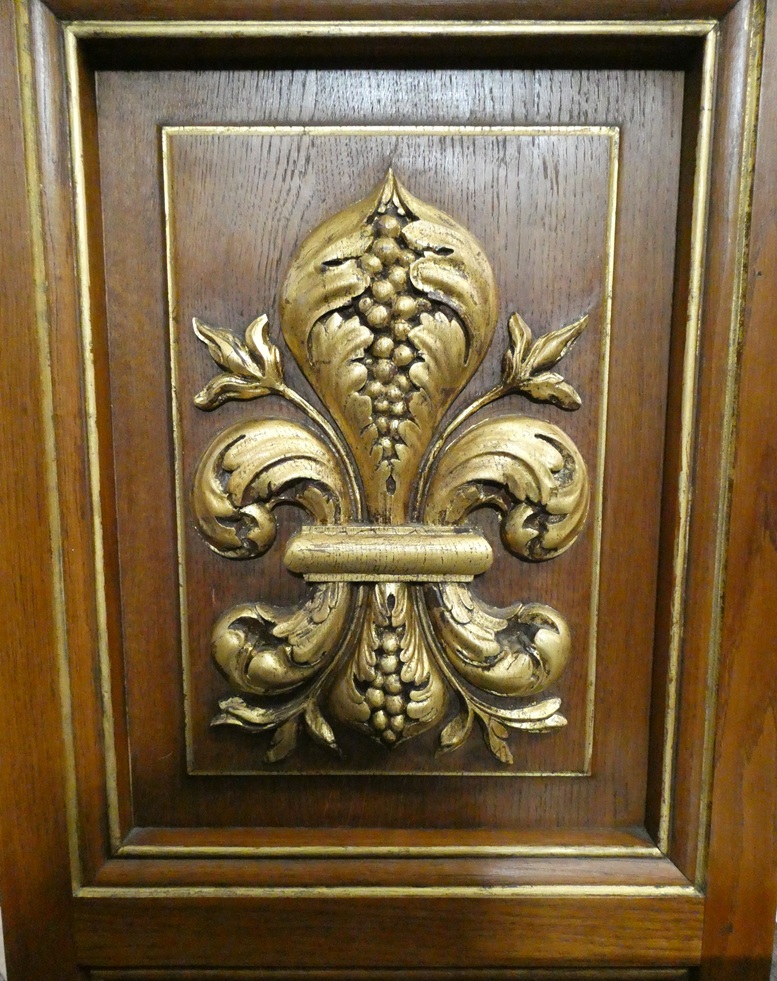
Although there is a strong connection between medieval French royalty and the fleur de lys, the motif of this flower with its three-part design appeared much earlier in history. It can be seen in Mesopotamian art as well as in depictions of stylized Egyptian religious figures. In ancient Greece and Rome, similar designs can be found in decorative patterns and on some coins.
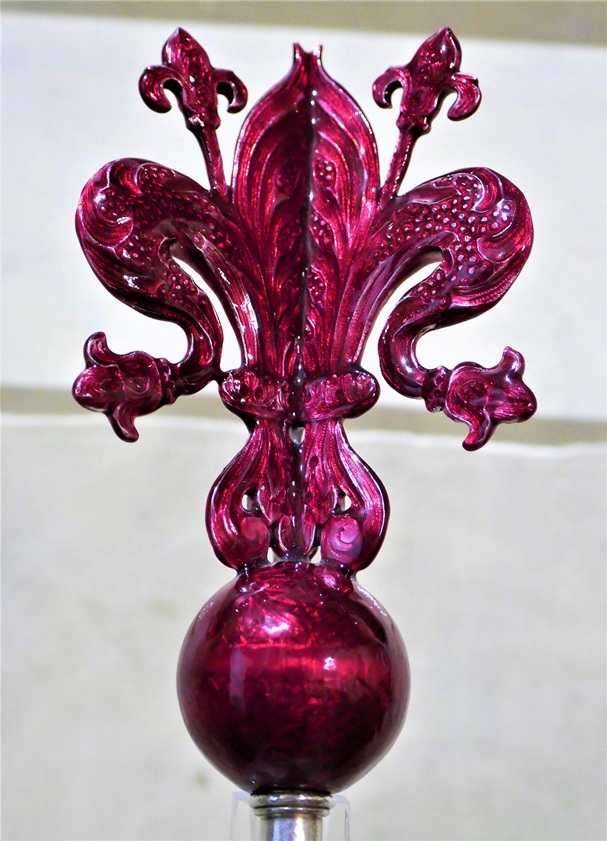
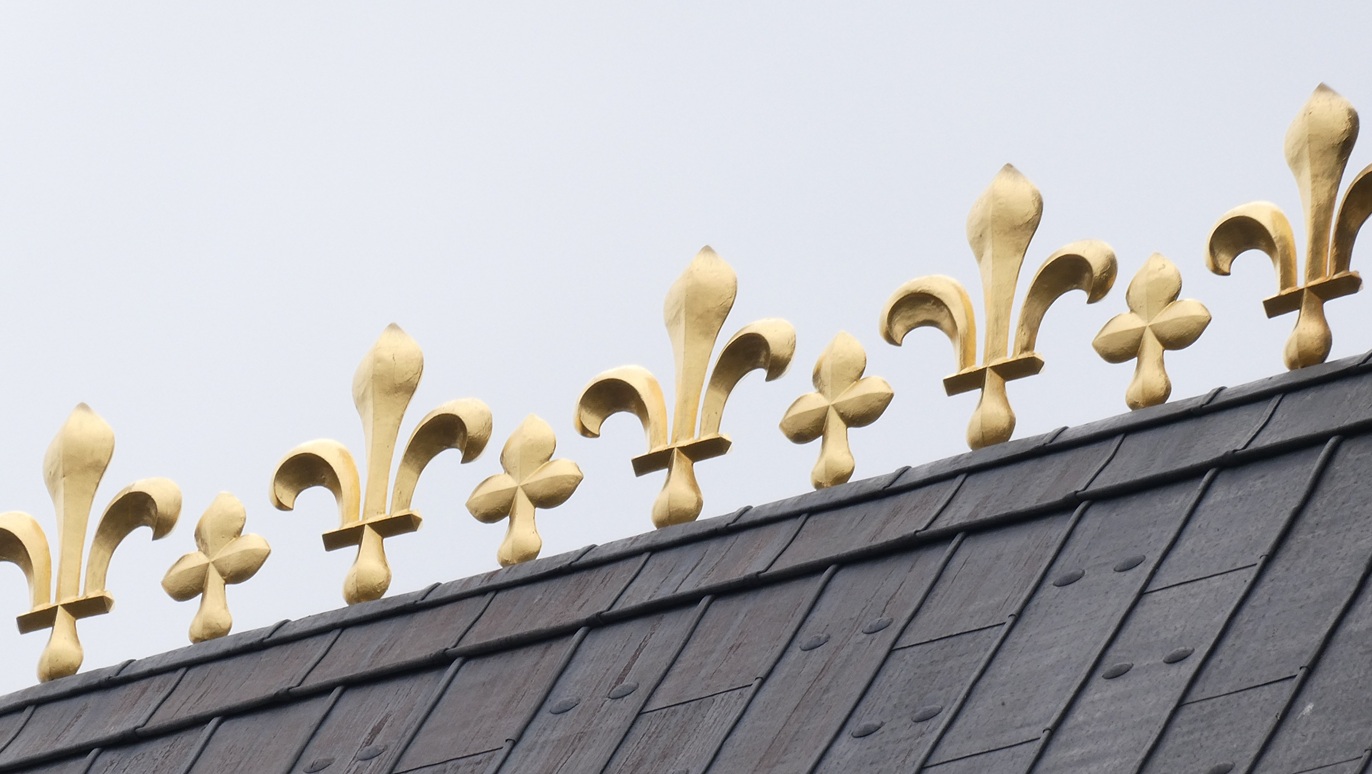
In our travels around France we’ve seen the fleur de lys on rooftops, church entrance ways, iron gates, and coats-of-arms. There’s at least one at the Medici Palace in Florence, Italy (photo in the first paragraph above) and we can’t leave out New Orleans, especially now during the Mardi Gras celebrations. “Laissez les bons temps rouler”! ⚜️⚜️⚜️
 Let's Live In France
Fascinating and informative as always
LikeLiked by 2 people
I’ve really enjoyed following your blog since you first moved to Carcassonne. My favorite posts are always the ones where you explore the history of France and your region—they’re both fascinating and insightful. Thanks for another great history lesson, and I look forward to reading more in the future!
LikeLiked by 1 person
Thank you for your kind words; it really makes a difference. We enjoy sharing our experiences and I believe that we all learn something along the way. See you next week!
LikeLike