


One of the nicknames for Chicago is the “Second City” based on its rivalry with New York regarding population, theater, restaurants, food and drink. When we lived there we found it less intimidating and just as vibrant as the “Big Apple”. In a sense, France also has a “Second City” although we’ve never heard of Marseille being referred to that way. From what we’ve read, however, the residents of this country’s oldest city might argue that it’s just as impressive as Paris. To get a firsthand experience, we spent a few days there last week to check out the historic sites, the museums, the shopping, the neighborhoods, and the general feel.
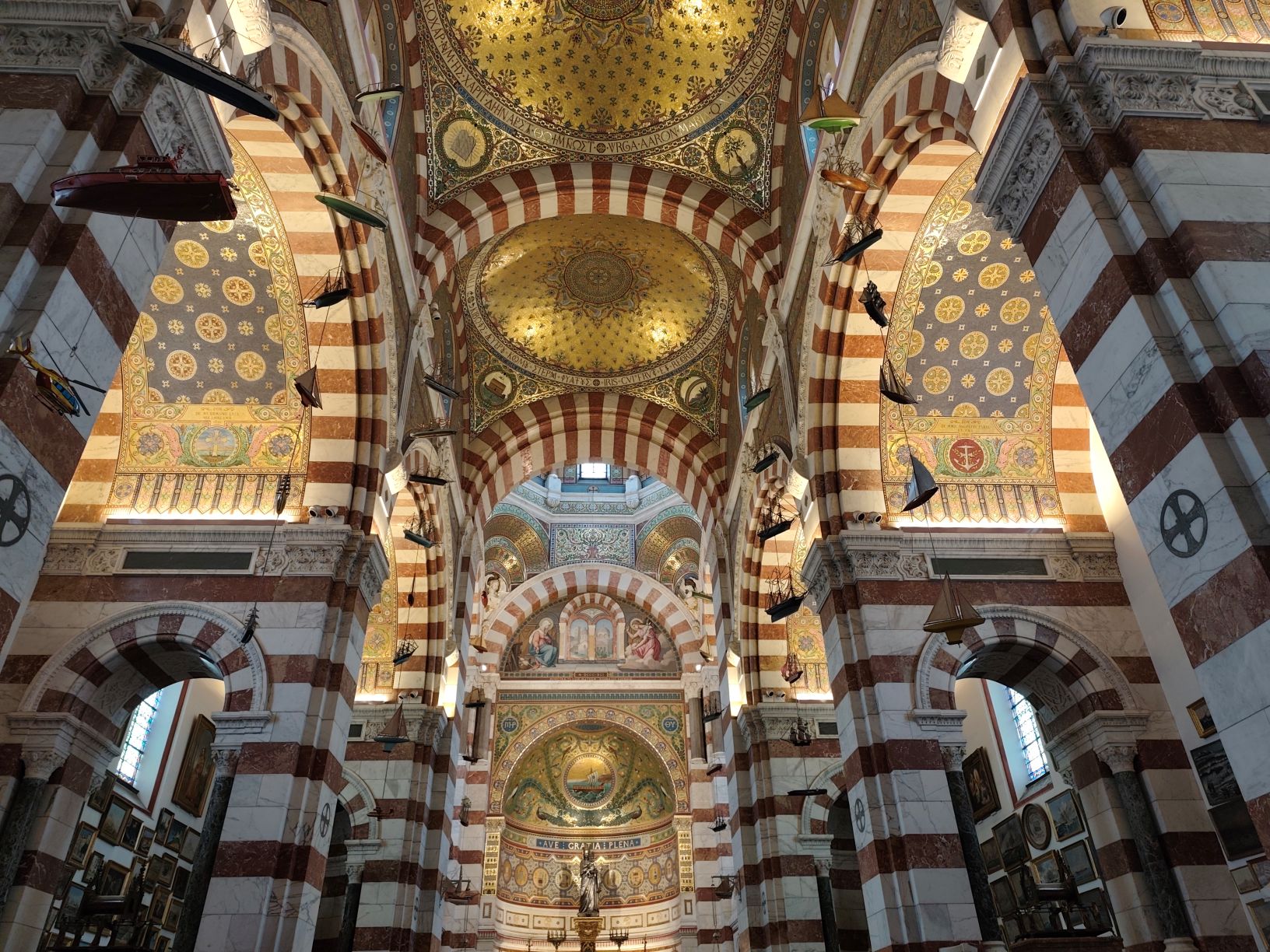
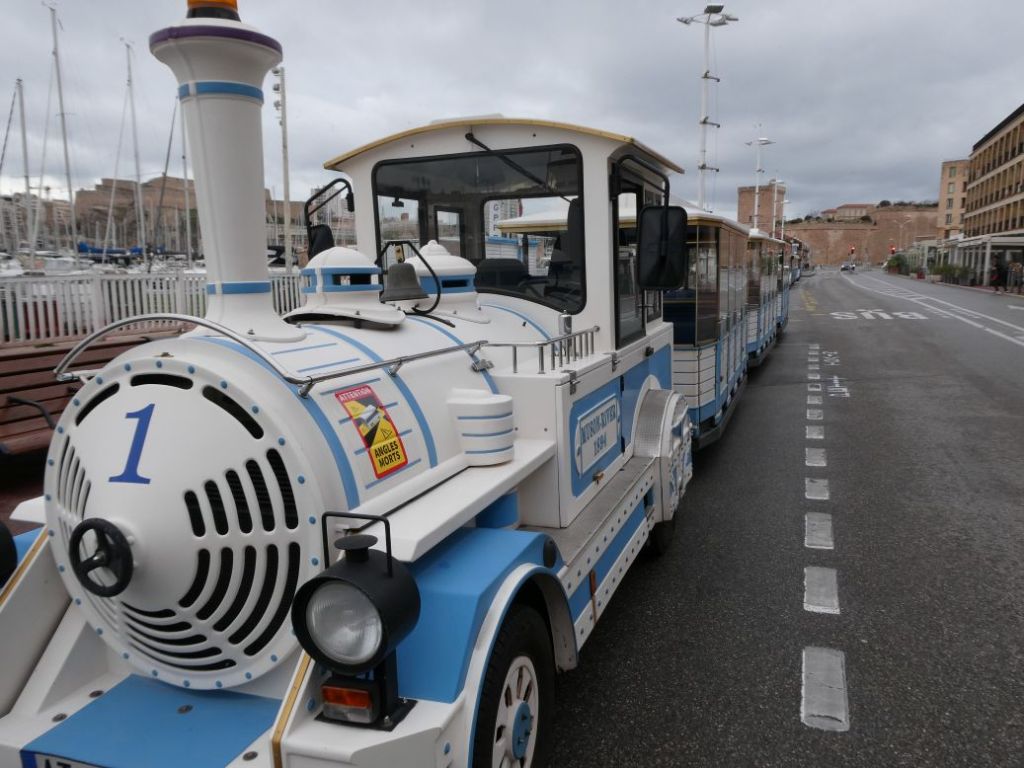
For an overview of the city, on our first morning we boarded the Petit Train—actually a motorized road vehicle with passenger carriages—that offered a narrated look at the city’s main attractions and historical landmarks. It was also an effortless way to climb from sea level at the harbor up the hill to the 19th-century Notre-Dame de la Garde Basilica that gives you a 360° view inland and out across the Mediterranean (featured photo above).
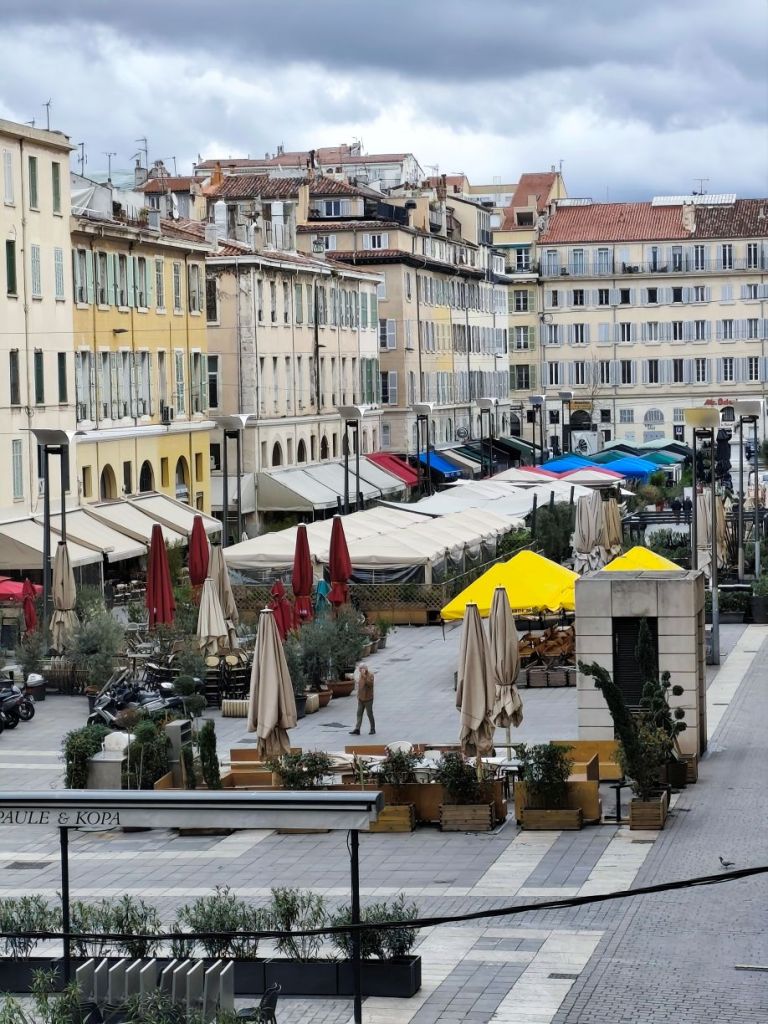
Despite having only half the population of Paris, Marseille covers more than twice the area, so limiting our sightseeing range was a challenge. We were staying in an apartment right beside the old harbor so Bill drew an arc on the map to see how far we could get on 30-minute walks from our front door. Once we compiled the list of restaurants, shops, museums, monuments, and historic sites that we might want to see just in that limited area, even then we had to decide how much we were really going to have time for.

If you were following counterclockwise along on a map of Marseille and started at the harbor’s entrance, you would encounter:
- Palais du Pharo—commissioned in 1858 by Napoleon III for his wife Empress Eugénie, only 4 years after he had ordered the impressive Villa Eugénie palace in Biarritz. Today it’s used as a conference center.
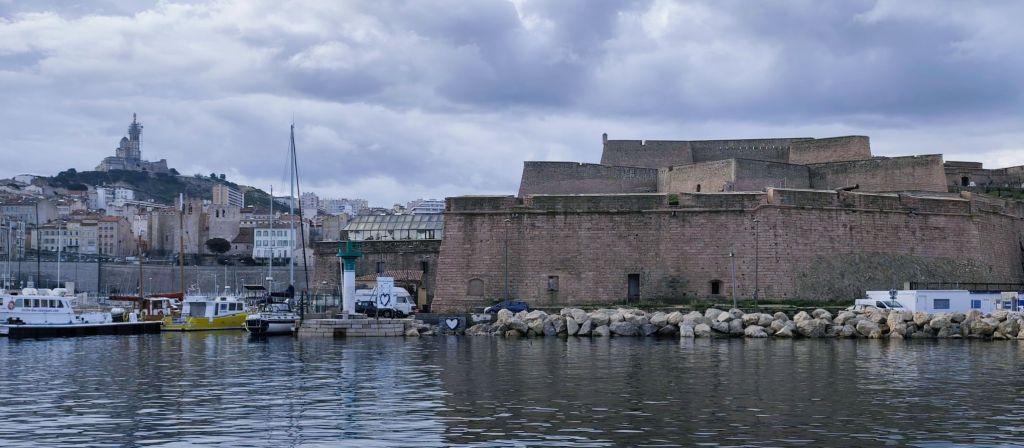
- Fort Saint-Nicolas (the Citadel)—constructed from 1660 to 1664 during the reign of Louis XIV, this massive fortress had a dual purpose: soldiers had to control the rebellious city residents and also defend against attacks from naval ships (Italian, Spanish, British) and pirates.
- Abbey Saint-Victor—founded in the 5th century with the still-surviving crypt from that period housing a collection of sarcophagi from the 4th and 5th centuries. The crenellated walls and towers that we saw were constructed beginning in the 12th century.
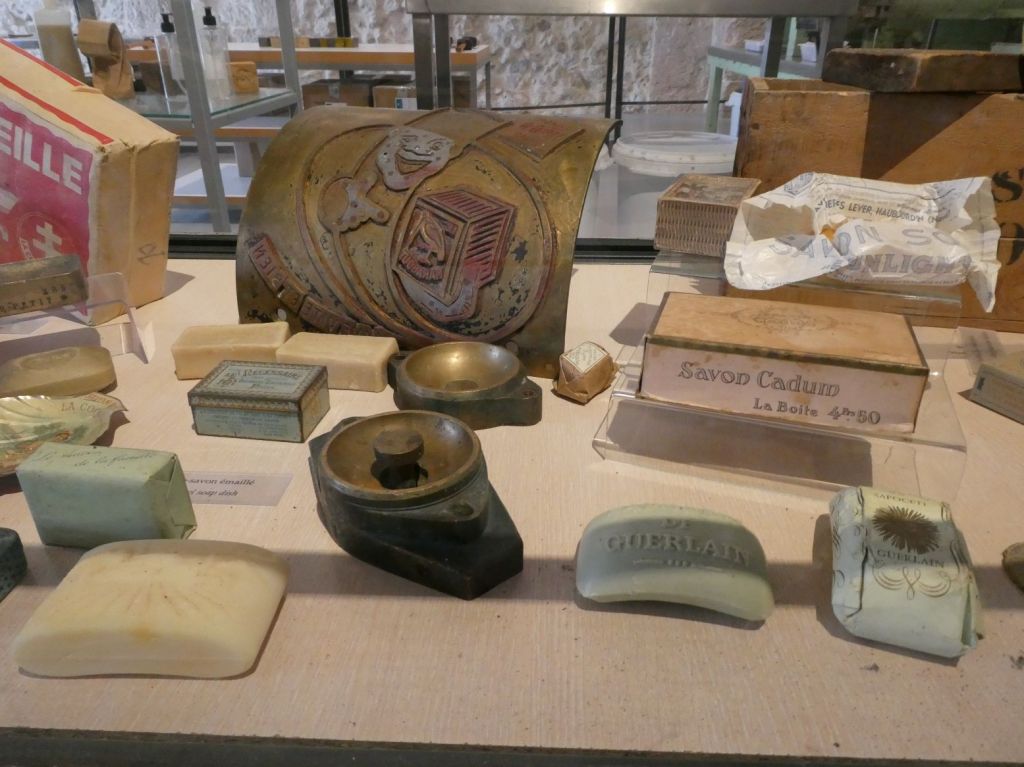
- Musée du Savon de Marseille—dedicated to the history and traditional manufacturing of this iconic soap through exhibits, tools, and demonstrations. This name is so ingrained in French culture, we’ll have a separate blog post about the soap.
- Fort Saint-Jean—we were now on the opposite side of the harbor from where we started, inside a 12th century stronghold. Defense was its main purpose although it was also a prison, a barracks, and a departure point for soldiers going to North Africa during the French colonial period in the mid 1800s.

Venturing away from the port, we walked to:
- Cathédrale de la Major—young compared to cathedrals from the Middle Ages in the rest of France since construction began in 1852 but still impressive with its towers and a 70 meter (230 feet) tall dome.
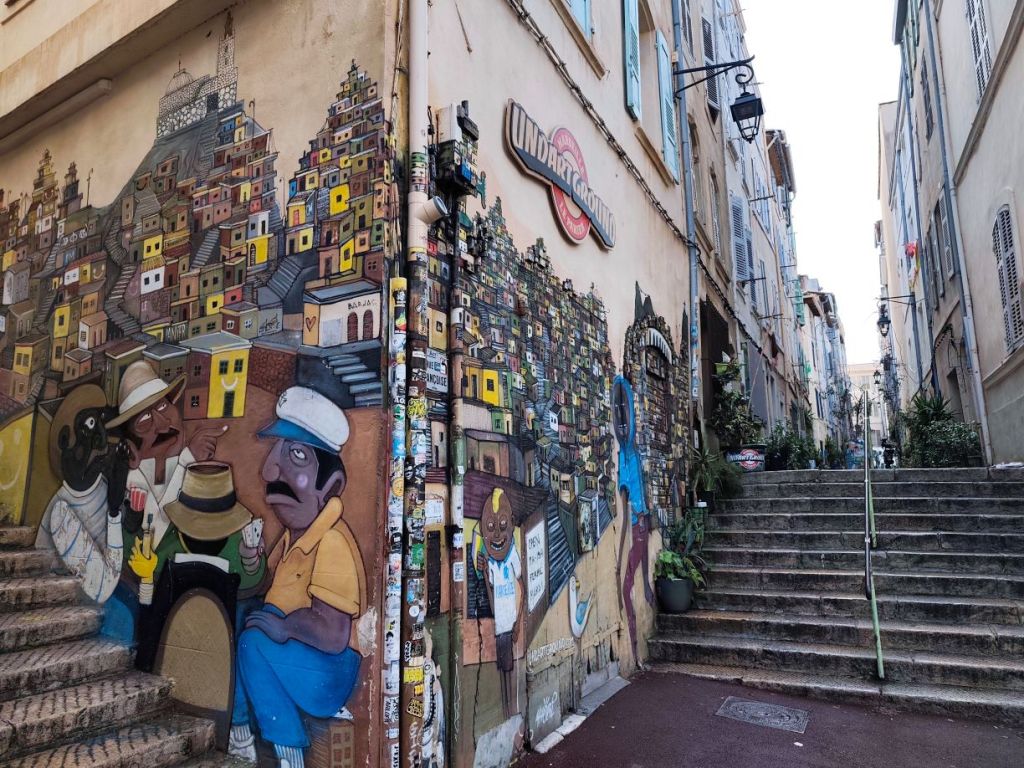
- Le Panier—the city’s oldest neighborhood was settled by the Greeks in 600 BC who called it Massalia, a name that evolved into the current Marseille. We saw lots of artisan boutiques, gourmet food shops, and art galleries located in ochre-colored buildings on narrow, canyon-like streets that provide some relief from this area’s hot summers.
- La Vieille Charité—located within Le Panier, this almshouse from 1640 provided the poor with shelter, a chapel, and a hospital, all within one complex.
- Port Antique—an archaeological site preserving the remains of the city’s ancient harbor, showcasing Greek and Roman era structures, dating back as far as 600 BC.
- We started this tour with a palace and we’ll end with one except the Palais Longchamp (photo in the first paragraph above and in the gallery below) was built not for one Empress but for all the city’s residents. This reservoir, inaugurated in 1869, celebrated the opening of an 85 km (53 miles) canal from the Durance river that ended the city’s centuries’ long water shortages. The Museum of Fine Arts and the Natural History Museum are located here as well.
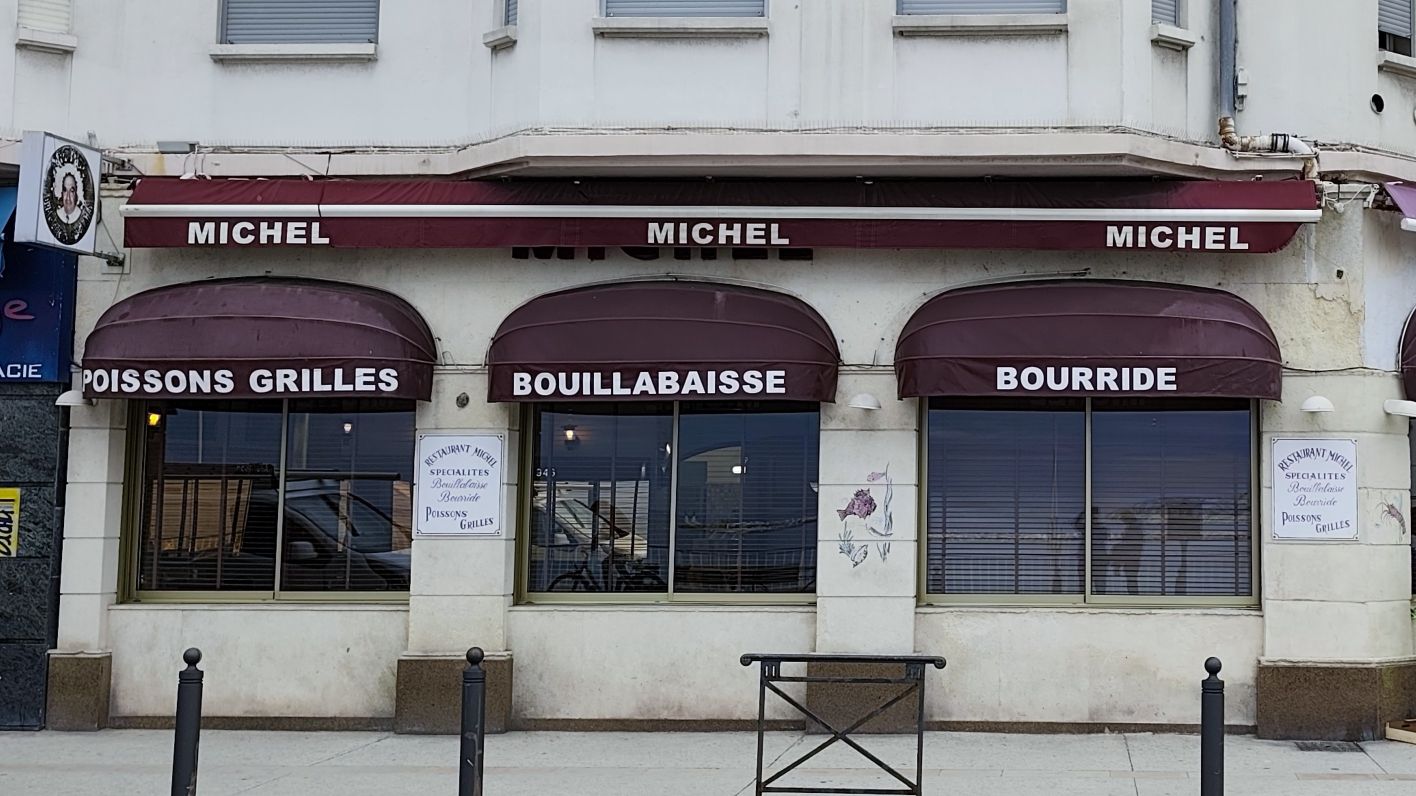
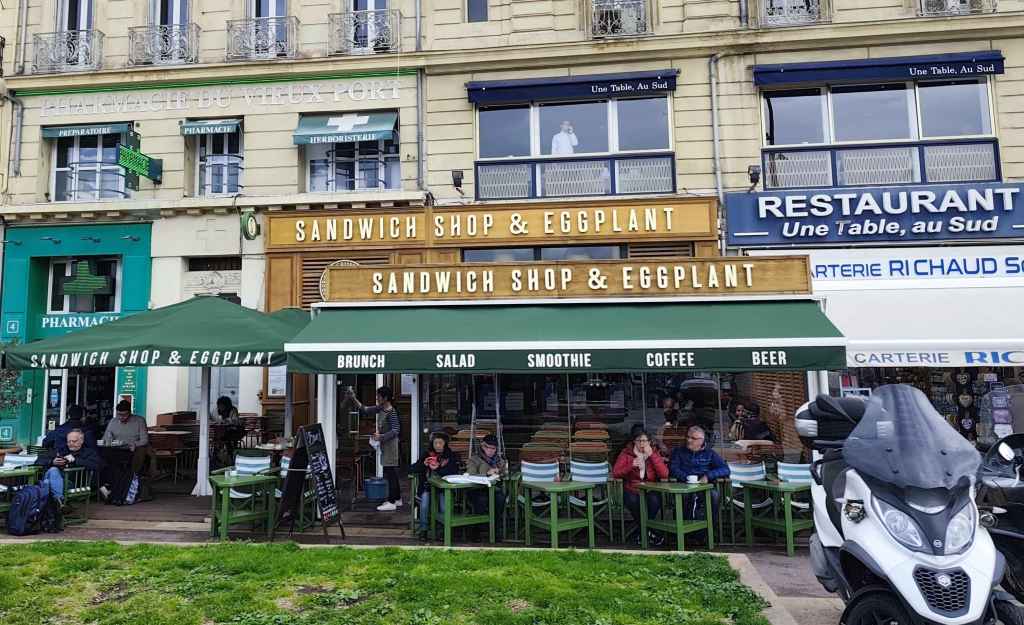
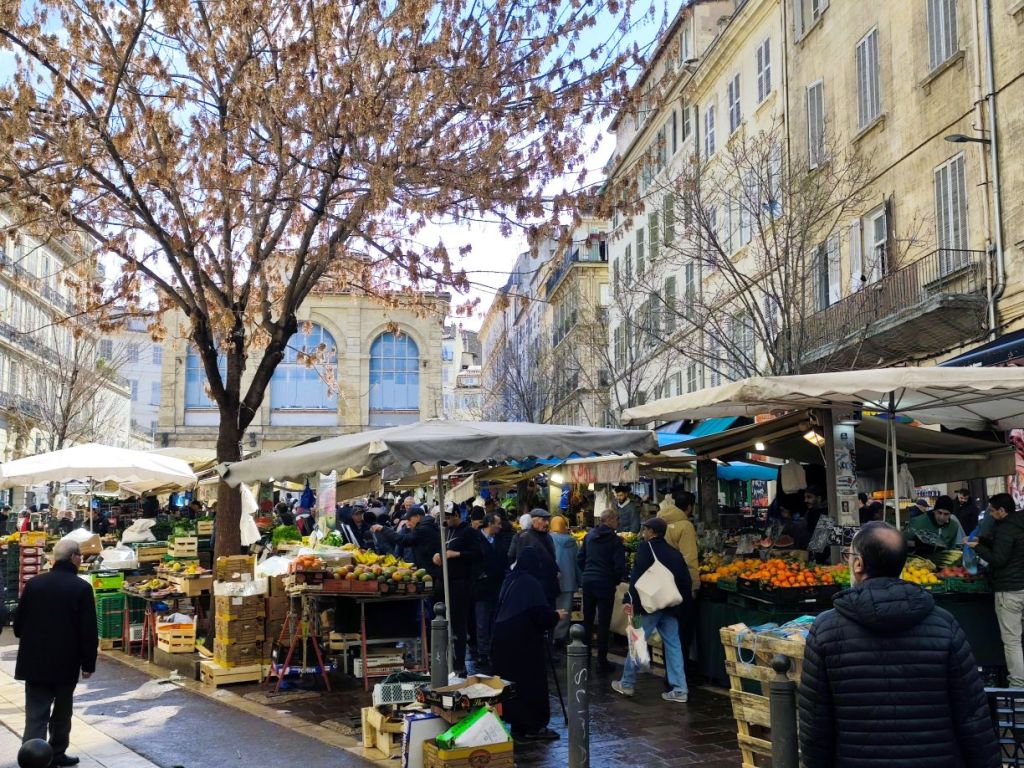
I’d read that Marseille is considered to be a cultural bridge between North Africa and Europe with lots of Algerians settling directly in this port city rather than moving further inland. We saw people dressed in traditional Arab attire walking with others who could have just stepped from a Paris fashion runway. One restaurant might be serving couscous while the bistro next door was featuring this area’s signature fish stew, bouillabaisse. Second city? Not at all.











Very informative and very tempting presentation of Marseille. Lot of media coverage is very negative these days – as with many big French cities – but important to remember there is another side to this great city
LikeLiked by 2 people
You’re right about the negativity, Gary, and that’s one of the reasons we went to Marseille to see for ourselves. Granted, we were there for only a few days and it was for vacation rather than to find a place to live, but if you found it tempting to visit then you got to see the positive side of the city, just as we did!
LikeLiked by 2 people
My OH had a client in Marseille whom we much enjoyed visiting though we were never too keen on the wind.
LikeLiked by 2 people
Ah yes, the wind, our ever-present friend even in Carcassonne. Not so easy to cycle into but at least it does keep us cool in the summer 🥵
LikeLiked by 1 person
😎
LikeLiked by 1 person
I went there a couple of years ago, I think for a week. My sister-in-law lived there, and so took me to see much of the interesting parts, as well as to the Calanques with their spectacular cliffs to the ocean, as well as Aix-en-Provence (a wonderful town). I enjoyed myself there very much. I’d expected to not care for it, but I liked it a lot. It’s not as clean as most French cities, but it wasn’t terrible by any stretch.
LikeLiked by 2 people
Hi Ron, funny that you should mention the Calanques and Aix-en-Provence since those are both on our “must visit” list for when we return to Marseille.
LikeLiked by 1 person
I’ve been told that visitation to the Calanques is limited now due to over-visitation (maybe only in Summer?). So, just check about that before going. I’ve heard it’s insanely busy in summer. But, I was there over Christmas/New Year’s, and it wasn’t over-busy at all. It is worth seeing if you can! I hope you get to see it all while you’re there. While in Marseille you should go to Parc Borély where they have a lovely older chateau, and an amazing porcelain collection. I had not known about Marseille’s history in both faïence and porcelain. Some spectacular pieces there. The collection approaches the pieces you can see in Limoges.
LikeLiked by 3 people
This looks like a reason to search for flights MUC to MRS! Nice for a few days city trip.
LikeLiked by 2 people
Great idea! As you read, we stayed pretty close to the harbor and took several interesting walks.
LikeLike
I thought I’d share our trip to Marseille from last year. We fell in love with that wonderful, exciting city! Here’s my recap: https://www.roaminretirement.com/uncategorized/whos-afraid-of-marseille/
LikeLiked by 2 people
Thanks, Sandy; we both loved and laughed reading your post!
LikeLiked by 1 person