
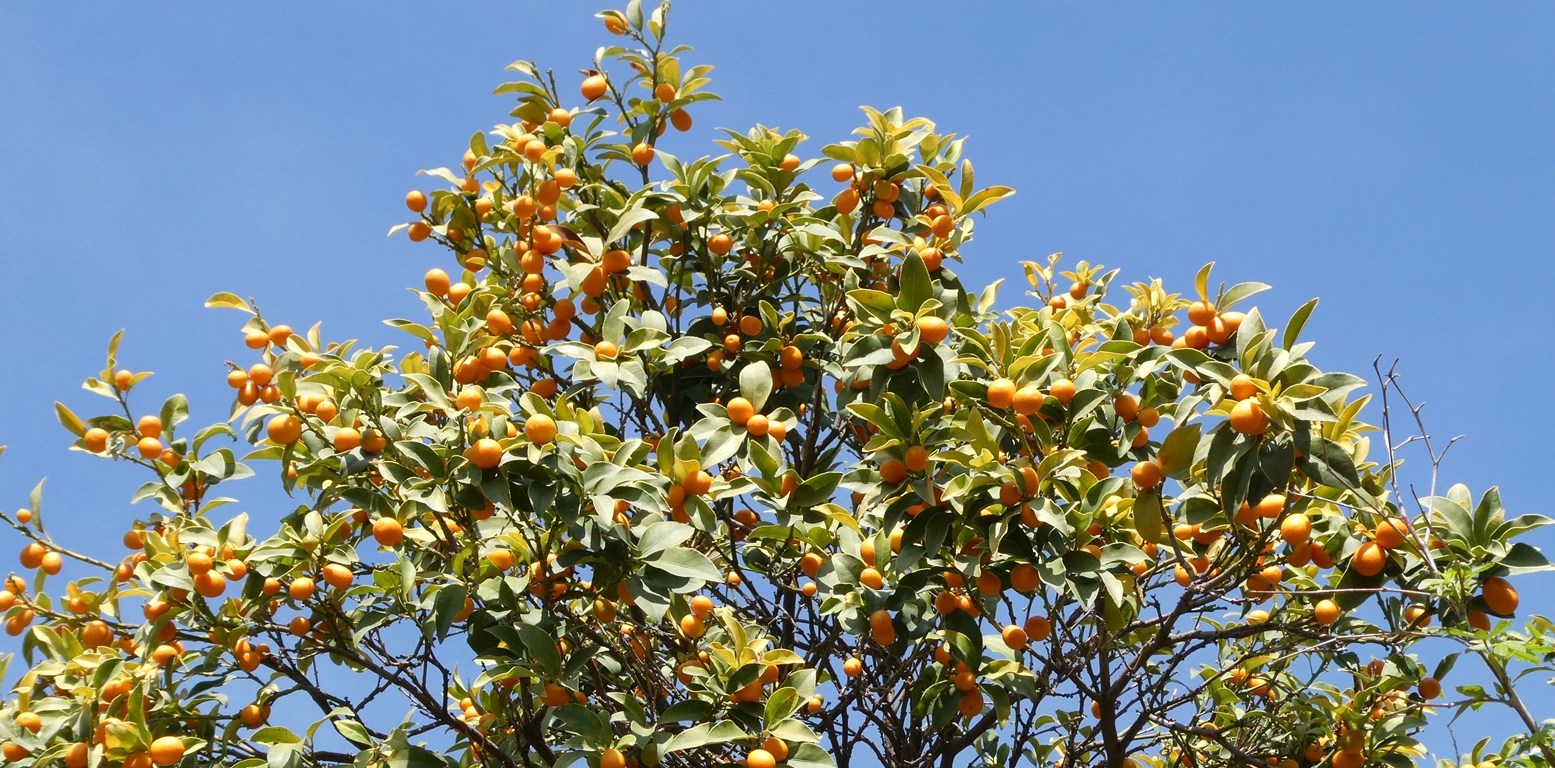
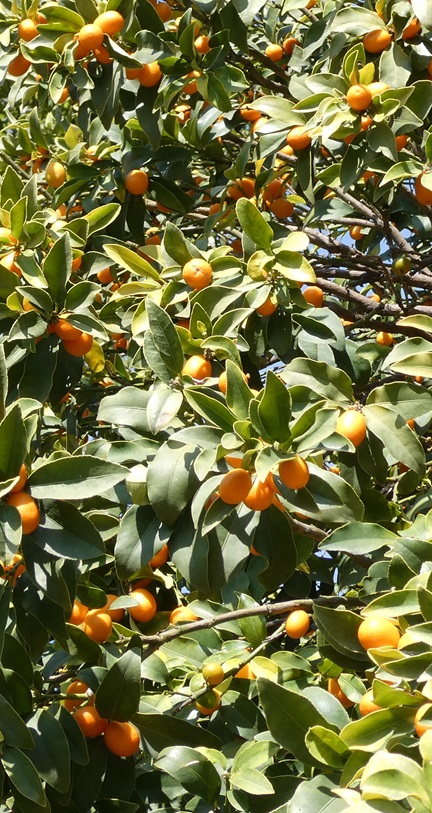
We were in Nice this time last year and took a day trip to the beautiful city of Menton. There in the botanical garden was a kumquat tree in full fruit (featured photo above and in this paragraph) well outside the normal season of November to March when we see them for sale at the market. This particular variety, Fortunella margarita, produces later than other trees, hence the display that we saw at the garden. Normally we try to avoid traveling during this month for a couple of reasons that I’ll highlight below; however, that doesn’t always happen and as they say…come what may!
Just like in the US, France has 11 public holidays (bank holidays or jours fériés) some of which are shared in common. Everyone seems to start the year with a day off but here you might wait another 2 or 3 months for Easter to roll around so that you can take the Monday after as a holiday. If you’re lucky, depending on the year, if the Easter Monday holiday is at the end of April, then only a week later you’ll be celebrating the Fête du Travail (Labor Day) on May 1. How about remembering the end of WWII on May 8, last year followed the next day by Ascension on the 9th finishing out the month with Pentecost on the 20th. This year that last holiday rolls into June but you still (every year) have 3 days off in May.

It’s fun to read the articles that always appear around the first of the year detailing how to maximize your days off from work by putting together public holidays, weekends, and your normal annual leave. The French call this “faire le pont” (to make the bridge) when you only need to use one day of leave or “faire le viaduc” for 2 or more days. Last year, for example, you could get 40 days away from work by only using 12 of your vacation days.
So why, in a country that is officially secular, are so many holidays—these in May plus Assumption, All Saint’s Day, and Christmas—tied to Catholic traditions? It might be politics. The French Revolution in 1789 gave birth to the separation of church and state but it wasn’t until 1905 that it became law. By then the calendar was essentially “fixed” and elected officials were hesitant to take days off from work away from the French.
The second reason that we try to limit our travels in May is that SNCF, the national railway of France, does major works on the tracks that can cause cancellations, delays, rerouting, and station closures. We’ve had friends stranded in Narbonne when there was no train to get them 30 minutes further to us in Carcassonne and we ourselves “had to” extend our vacation in Provence by a few days waiting for the tracks to reopen to get us home. Obviously we’re in favor of maintaining and improving the transportation infrastructure so we just try to take those possible disruptions into account when planning. Here’s a link to the SNCF website where they alert you to planned works: https://www.sncf-voyageurs.com/fr/voyagez-avec-nous/horaires-et-itineraires/informations-trafic/

As you can see, traveling in May offers its challenges: lots of people will be on vacation and trains might not be running. With planning, however, we think that the advantages of seeing France in the spring make it worth the effort.


Very true!
LikeLiked by 1 person
Thank you for the heads-up! There’s no way I would ever have suspected.
LikeLiked by 1 person