

Thank you John C. for sending us an article that appeared in the Wall Street Journal with the headline of, “What It’s Like to Retire in Paris”. It tells the story of Los Angeles couple Joe and his wife, who, on their 12th vacation in the beautiful French capital, decided that it was time to move there for retirement. They were both health professionals and had a correspondingly hectic life tied to making more and more money to maintain their lifestyle that included a house too large for their needs. Once the Covid restrictions were lifted, that big home and all of its contents went to the auction block and they were soon on their way to France. Our twin tale begins.
The couple first rented an apartment, reasoning that it was a good idea in any new location before committing to a purchase. It didn’t take long before they bought a 2-bedroom apartment in the 15th arrondissement, not far from the Eiffel Tower, “for between $1.3 million and $1.6 million” and they pay a monthly building maintenance fee (les charges) that includes heat and water of $400. Their monthly budget for electricity is $65, $110 for TV/phone/internet and a typical restaurant meal for the two of them, with wine, is $65.

They have no car and don’t want one since they walk almost everywhere or can easily take public transportation be it the bus, tram, Metro, funicular, regional or national and international trains. A weekly highlight is shopping at their neighborhood open-air market that focuses on food but also includes clothing, household goods, flowers, and sometimes antiques.

For healthcare, Joe estimates that they now pay about 10% of the costs they had in California and here that includes a top-up mutuelle that covers anything not taken care of by France’s universal healthcare-for-all plan. He needed a CT scan and in under an hour the radiologist was explaining the results to him and the fee was $80. According to Gateway Diagnostic Imaging, the cost of a CT scan has a national average in the US of $3,275.

Another benefit of living in the capital is having easy access to other cities across Europe by train and by plane. They can take a last-minute long weekend in Rome or Oslo, return home for a few days, and then hop aboard a fast TGV train to speed into the countryside, the mountains, or to the seashore. One place that they haven’t gone is back to the US; friends and family come here.
In a section called, “The Quirks of Paris” the author mentions bringing a dog with them from LA and noticing that Parisians take their pets everywhere but leave them nowhere. That is, kennels are not as commonplace as in the US. He also realized that everyone he encountered liked to gently correct any language errors he happened to make. That just gave him an even greater incentive to learn more French, saying that while you might survive without knowing the language, you will miss out on what he calls, “the full potential of life here.”

We may be 5 ½ hours by train from these folks in Paris but our experiences in Carcassonne are very similar. We rented before buying although we purchased a place that’s probably similar in size for about 10% of what they paid in the capital and you can see our monthly budget on the tab above. We have no car, walk everywhere or go by bus or train, and look forward to buying our fruits and vegetables at the Saturday market. We traveled locally with the dog we brought with us from the US because kennels are indeed rare. We’ve not been back to America. French friends and neighbors correct our language mistakes just as they do with each other and we continue to strive to learn more.
The subtitle of the newspaper article discussed above was “One suggestion for others…learn the language” and his conclusion was, “After three years here, I feel protective of the markets and boulangeries and meticulous window displays. I guess I feel at home.” We couldn’t agree more on both counts.
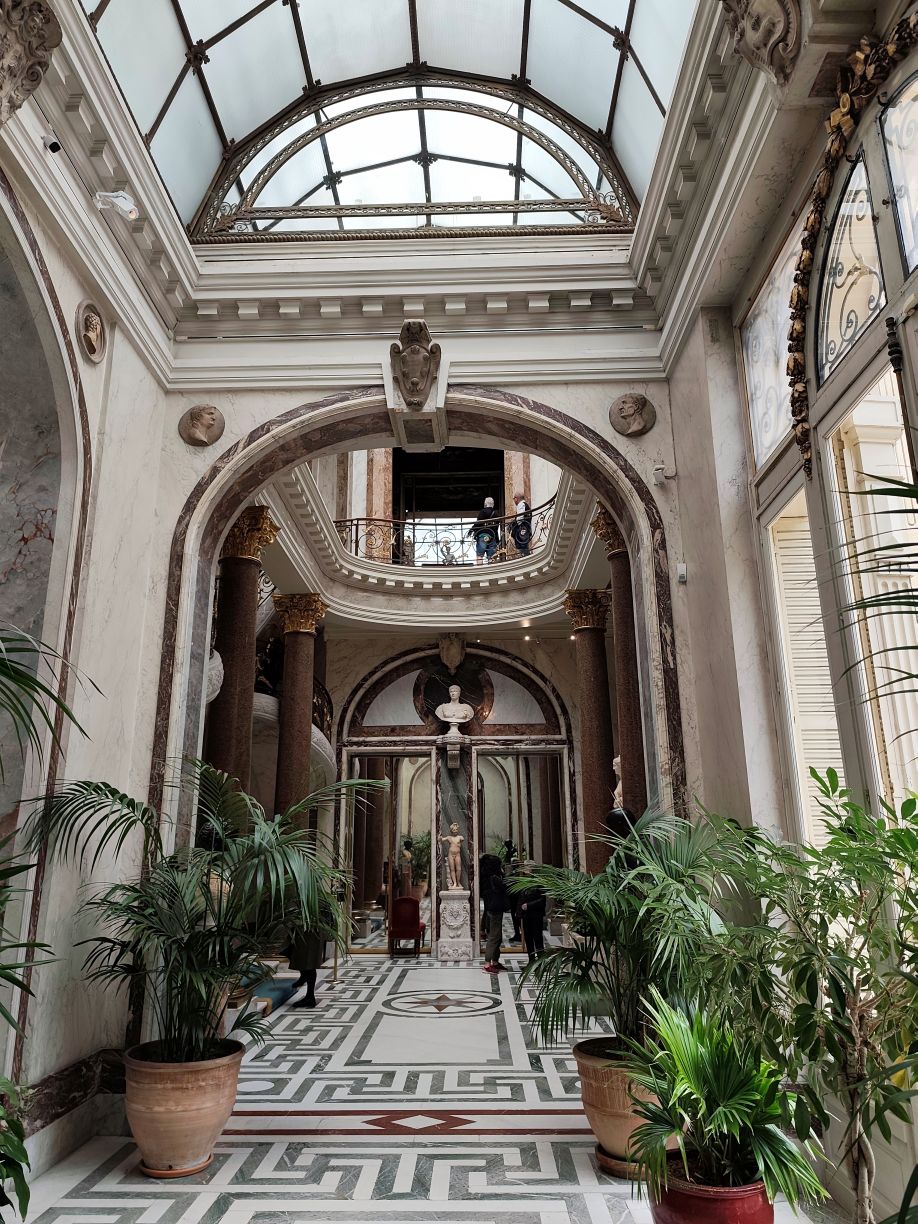
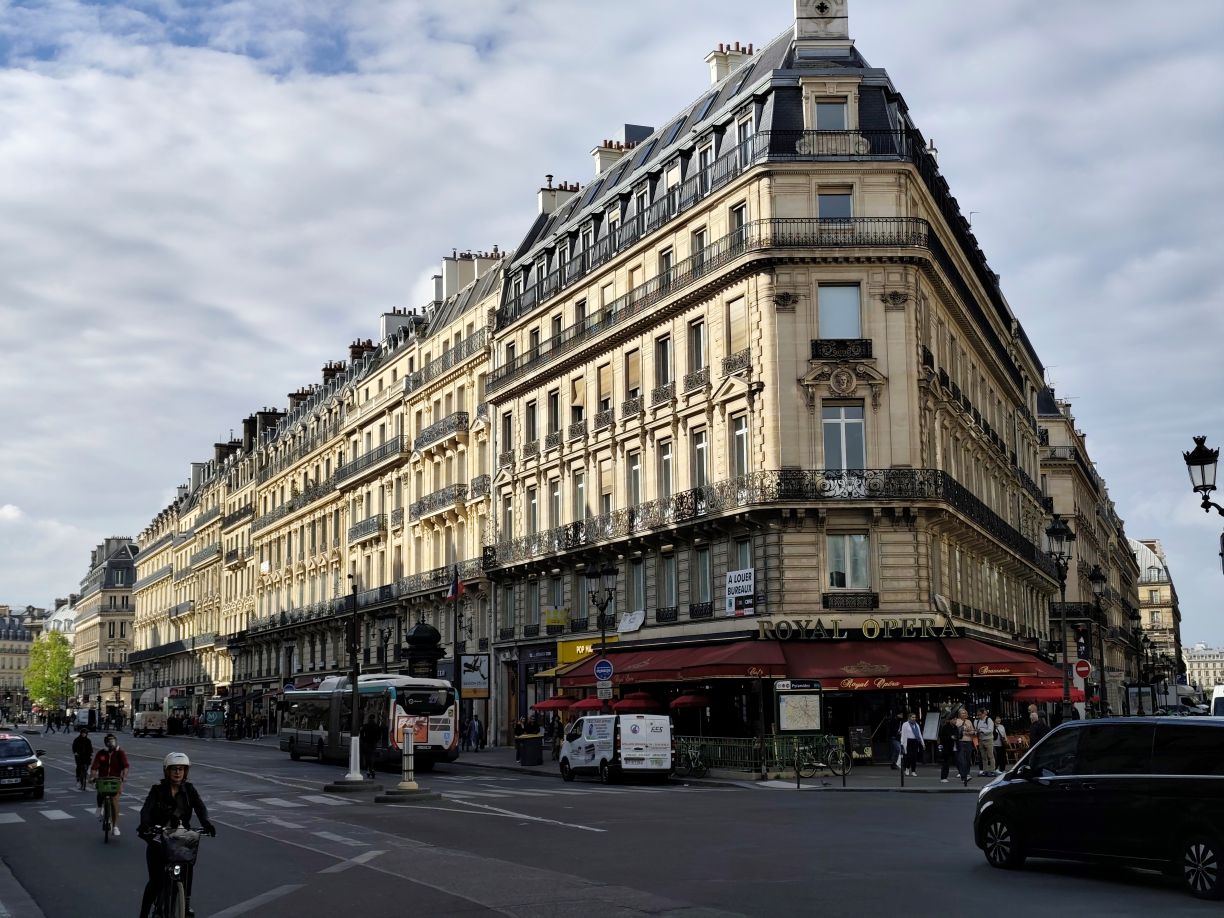
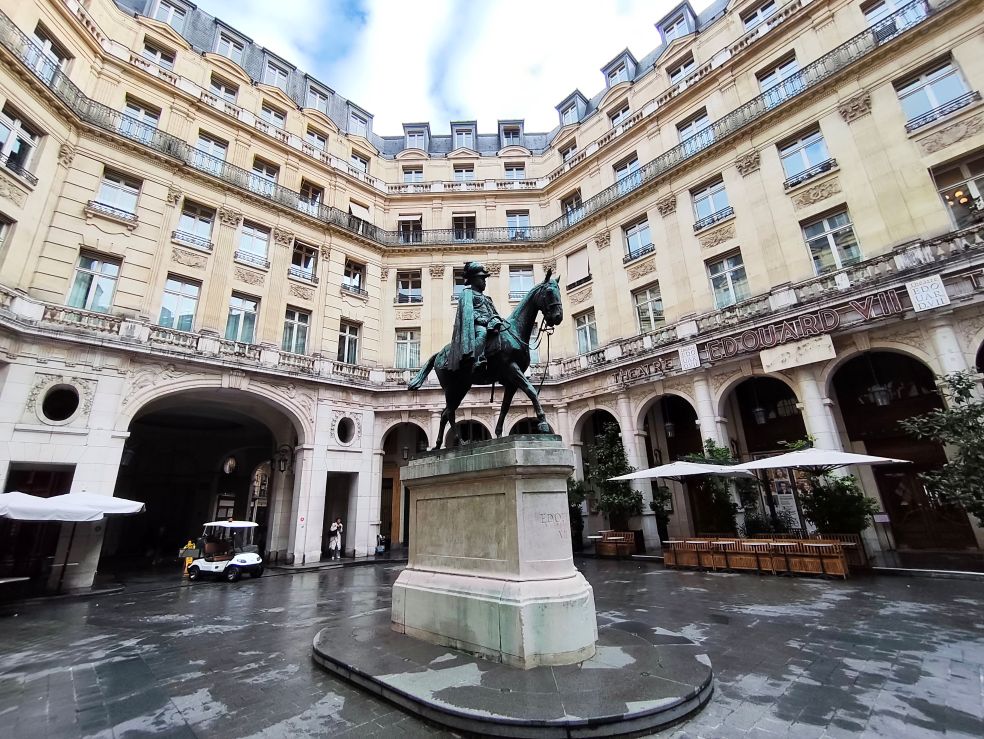
Note: Bill took all of today’s photos in Paris. The featured one is at the entrance to the restaurant Bouillon Julien opened in 1906 and in the first paragraph is inside the Jacquemart-André museum.
 Let's Live In France
Yes, definitely a premium to buy something in Paris. But, there are definitely perks to living there. I don’t know if I’d like it, I suppose it would depend upon what sort of place I had. Still, they did things smartly, and had the right idea to make life a success here. Like you and them, I don’t particularly want to go to the US. Since moving here permanently I’ve only been back once, and that was for work.
LikeLiked by 2 people
Another smart couple!
LikeLiked by 2 people
Same process worked for us too Bob! Great info on the resto Bouillon-Julien. It looks great.
LikeLiked by 2 people
Glad to hear that! The Julien was at least the 3rd Boullion that we’ve been to, each one giving you a pleasant step back in time.
LikeLike
I really enjoyed reading this twin tale! What struck me most is how both stories highlight not only the practical aspects of retiring in France — healthcare, markets, walking instead of driving — but also the deeper truth: to really feel at home, learning the language makes all the difference. As a French teacher, I couldn’t agree more. Thank you for sharing these perspectives, they’ll resonate with many in my community who dream of making France their home.
LikeLiked by 2 people
What a nice thing to say, thank you! We strive to learn a little more French every day to make life here even better 🥇
LikeLike