

Both of us were convinced that we’d already visited Aix-en-Provence, most likely on a quick visit to the area years ago. We’d been on a sleepless overnight flight from NY to Paris, a speedy train south, and still under the influence of jetlag early the next morning, a rail trip out into the countryside of Provence. As always, we took lots of photos but it was only upon returning to the US while reviewing our vacation pictures did we realize that we’d been to Arles and Avignon but not to that third “A” town, Aix. To remedy that, we scheduled a return stay in Marseille as home base with a bonus boat ride to the National Park of the Calanques.

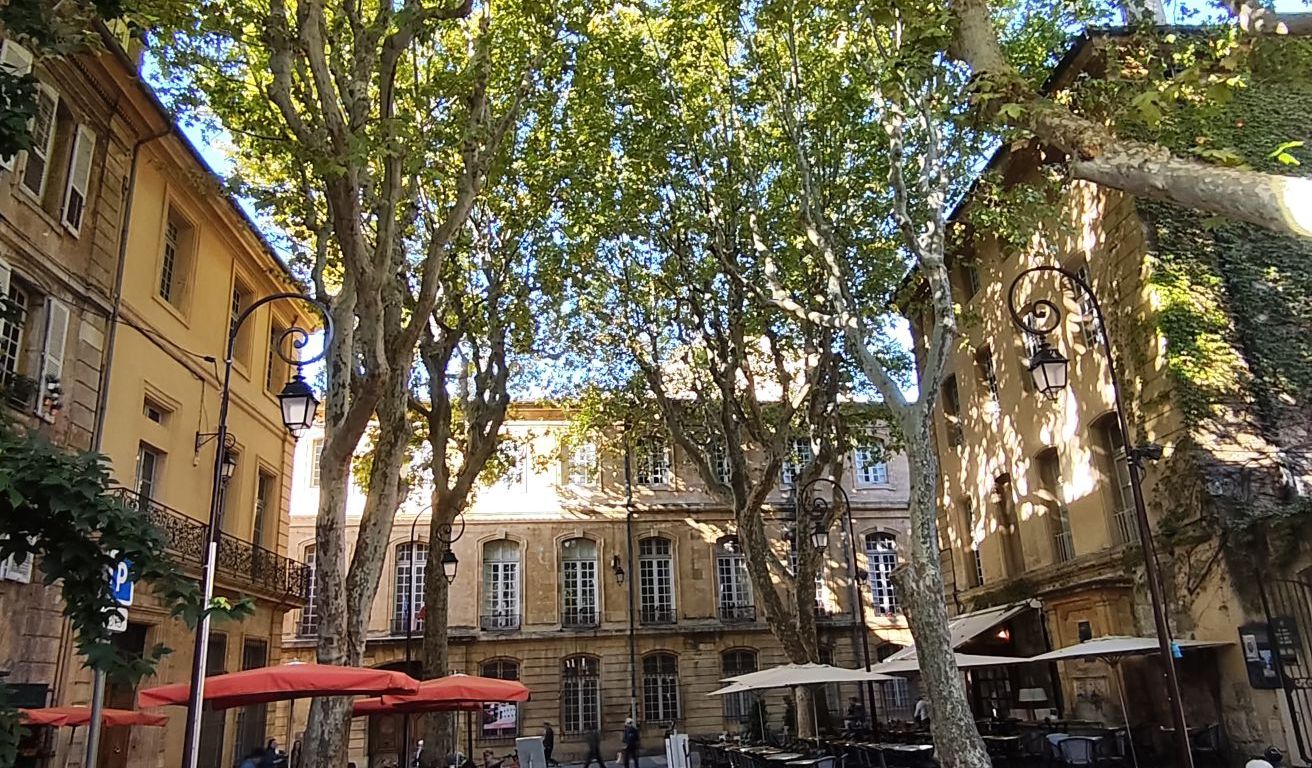
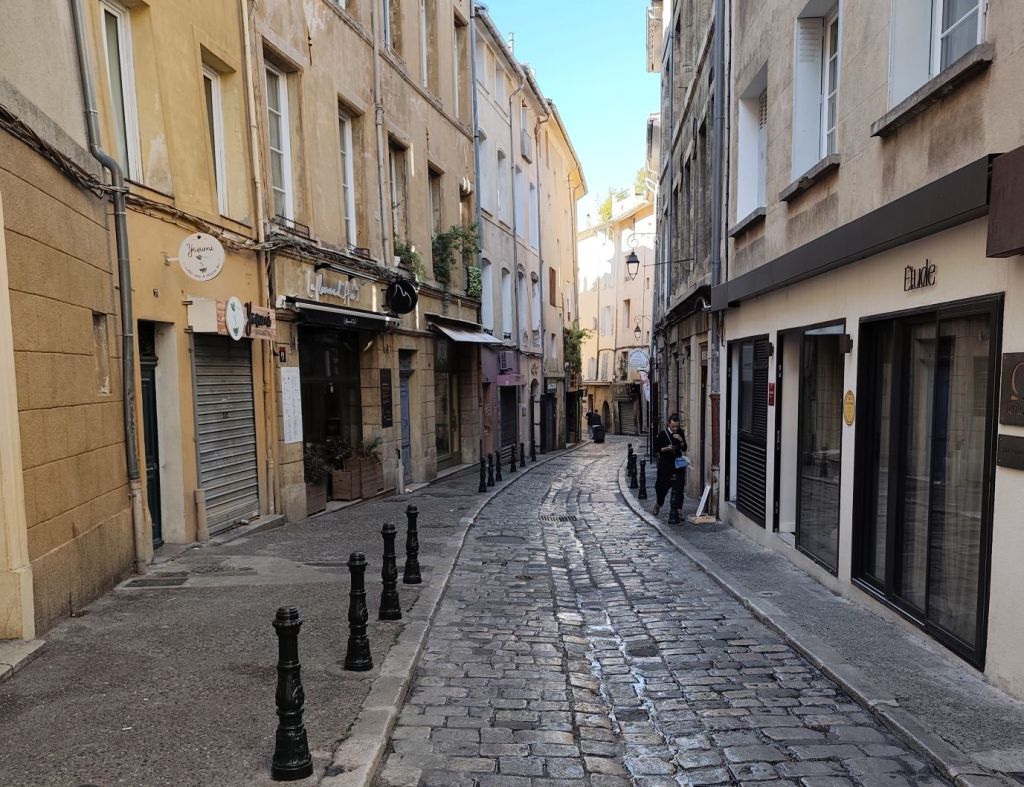
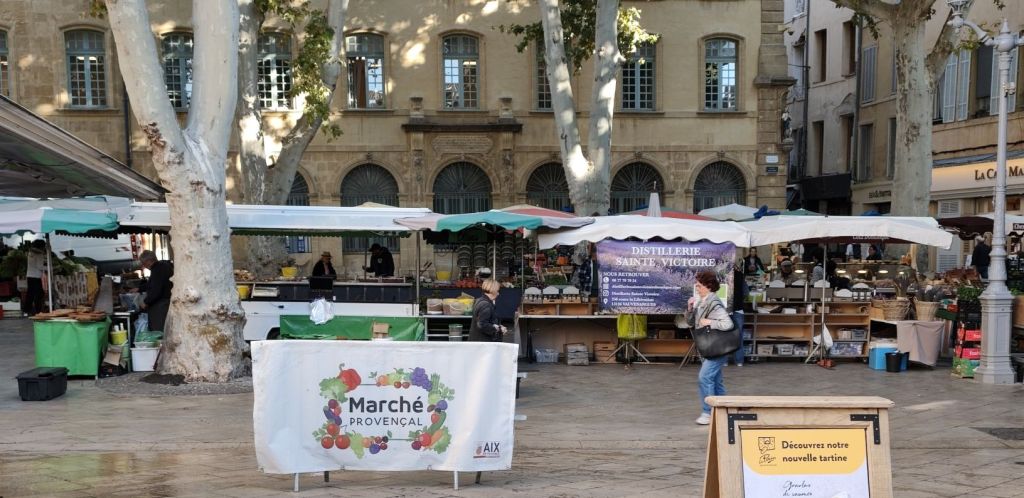
When a guidebook says that a street is, “one of the most utterly delightful avenues in Europe” then clearly that’s the place to start. Rows of ancient plane trees line Cours Mirabeau as do small shops and cafés on one side with elegant mansions opposite. Adding to the ambiance are several fountains along the way including Fontaine Chaude (Fontaine Moussue) that has been flowing with mineral-rich thermal water since the 17th century.
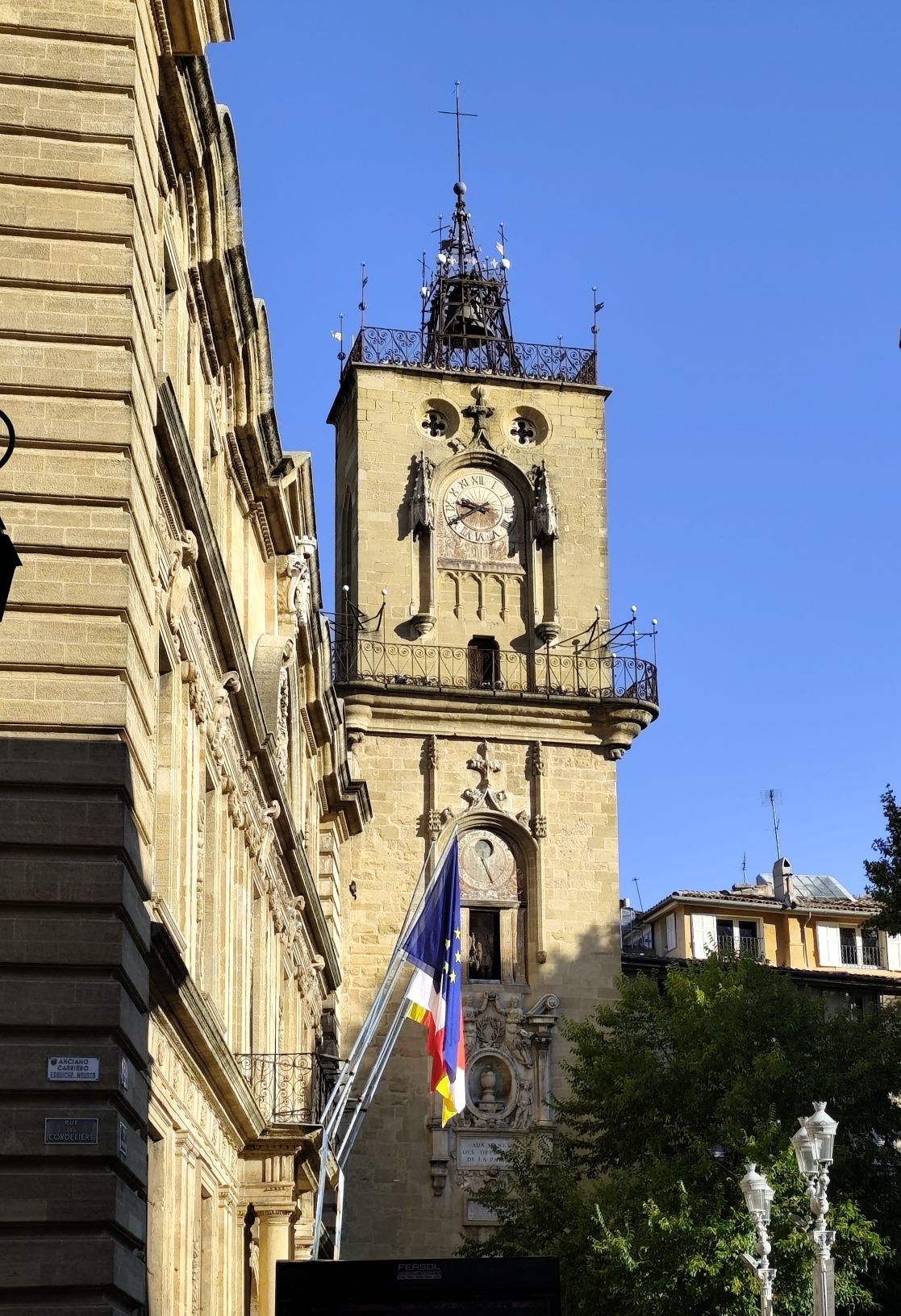
Staying with the 17th century theme we walked on to the Hôtel de Ville (Town Hall) where you can step into the courtyard and look across to the even older 16th century clock tower with its wrought iron bell cage. An astronomical clock was installed there in 1661 and although it no longer functions, 4 times a year when the season changes, the appropriate wooden figure is manually rotated into view.
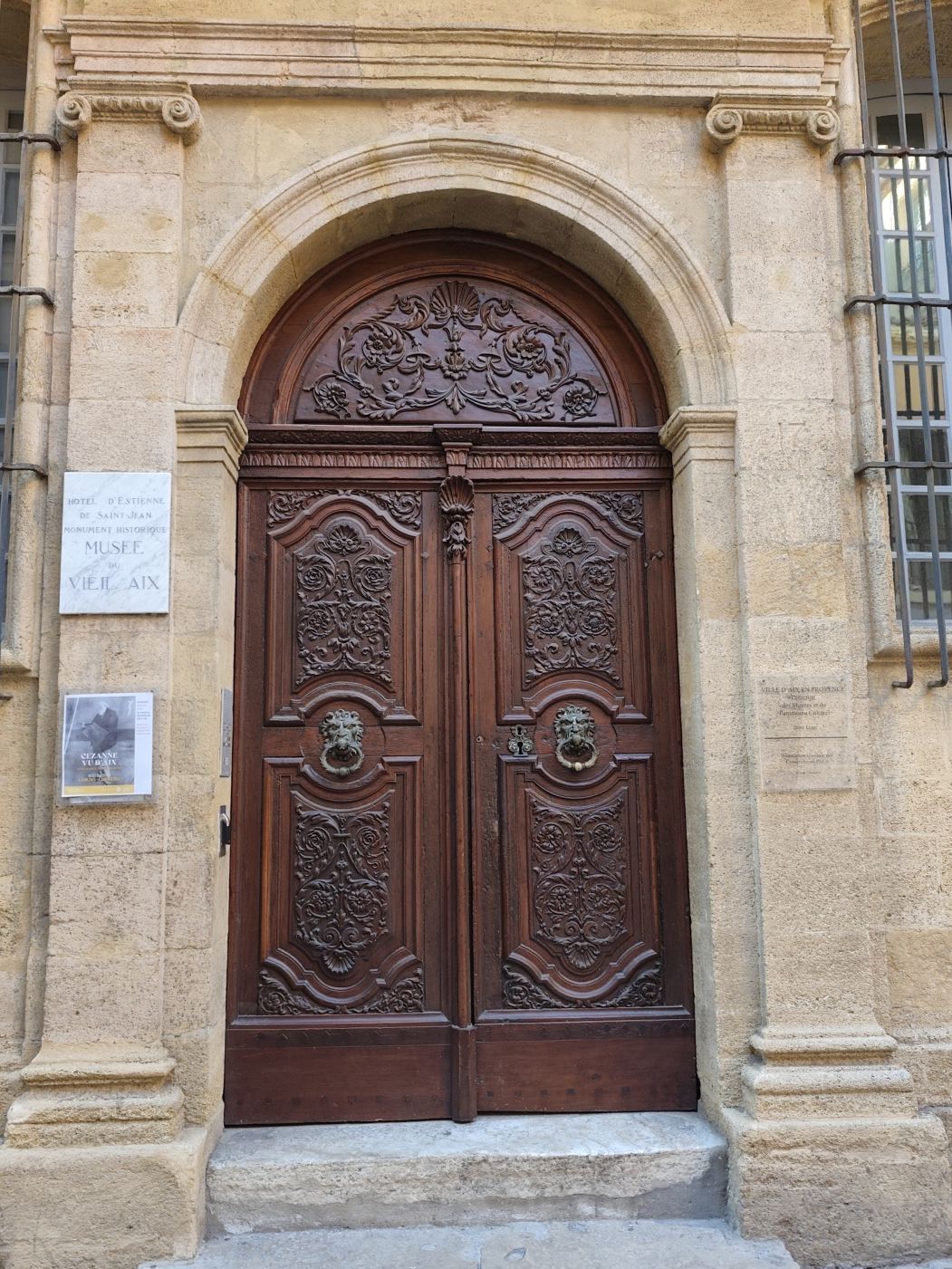
Our suggested itinerary next had two museums on the route. The Museum of Old Aix (Musée du Vieil Aix) highlights local folklore including the painted clay figures called santons that we see in displays throughout the south at Christmas. They typically depict the inhabitants you might find in any village like the baker, the miller, or the shepherd but there could also be a man with a giant cabbage, a smiling donkey, or a woman whose hat is being blown away by the Mistral winds of Provence.
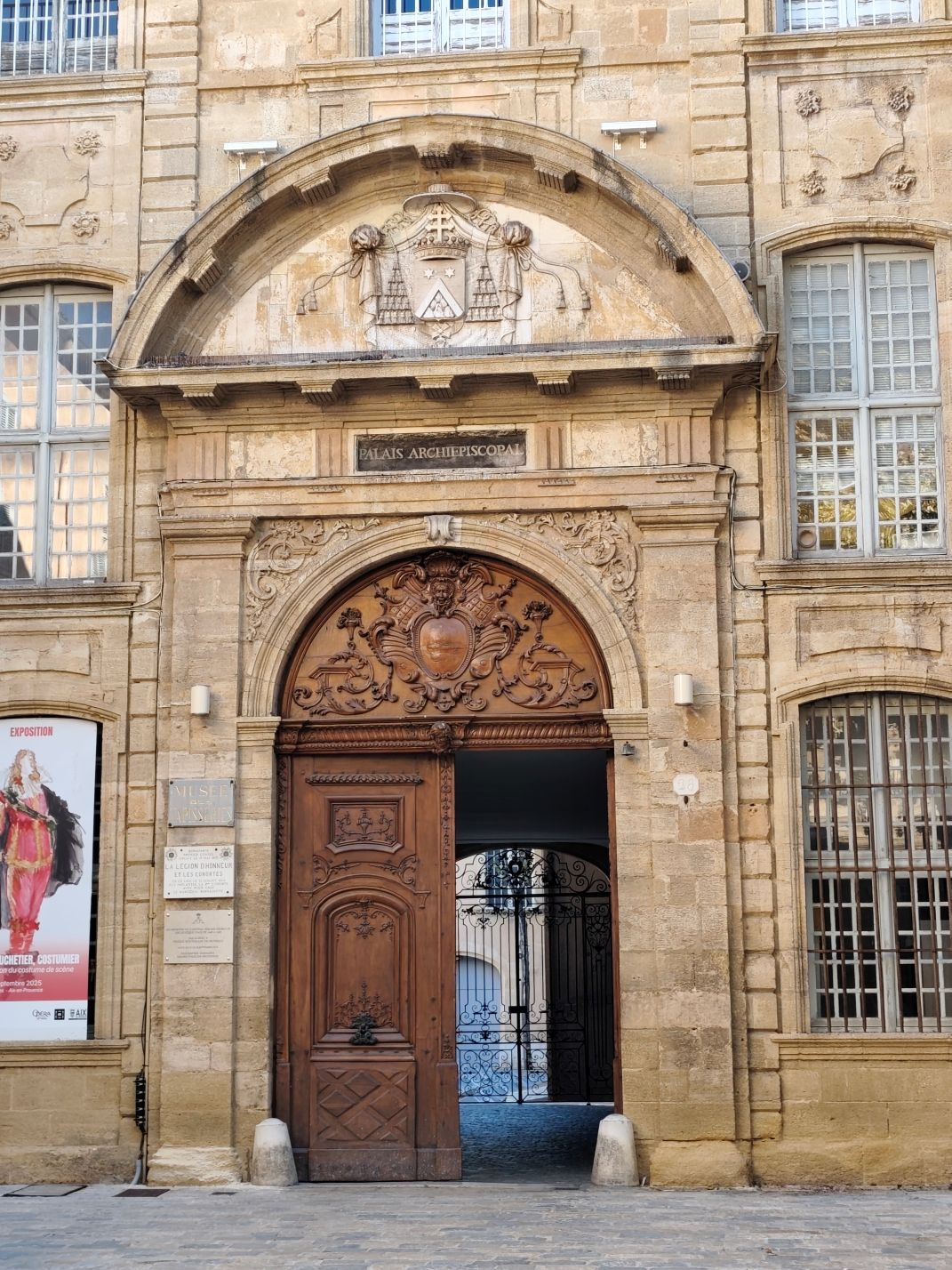
The former Archbishop’s Palace now houses the Tapestry Museum (Musée du Tapisseries) with its large collection of wall hangings from the 17th and 18th centuries. The most well-known of these come from the workshops of Beauvais, France, that depict the life of Don Quixote. During the French Revolution these were taken down to protect them and, as the story goes, were hidden in the palace’s attic.

As in so many other French cities, the Archbishop lived next to the cathedral and that’s where we stopped into next. Begun in the 5th century the Cathedral St.-Sauveur has as its main attraction the Triptych of the Burning Bush, painted about 1476 by Nicolas Froment for King René, who appears on the left panel, with his wife on the right panel. We can’t verify that because it was closed when we arrived and apparently open on a changing schedule.

Native son, artist Paul Cézanne, had his workshop about a mile outside the center of Aix that you can visit with a guided tour. Although we did not do that, his presence is still felt all over the city through a series of marked walking trails (photo in the first paragraph above of the sidewalk brass medallions) that guide you to the spots where he stood and painted. I saw a description of his painting style as a bridge from impressionism to modern art, “paving the way for artists like Pablo Picasso and Henri Matisse.”

We started today’s visit passing by several fountains and we had one more to see on the way back to the train station. The Fountain of the Four Dolphins (Fontaine des Quatre-Dauphins) that features artistic, mythical creatures has been splashing in this same spot since it was inaugurated in 1667. Now, back to Marseille for tomorrow’s boat trip to see the Calanques.
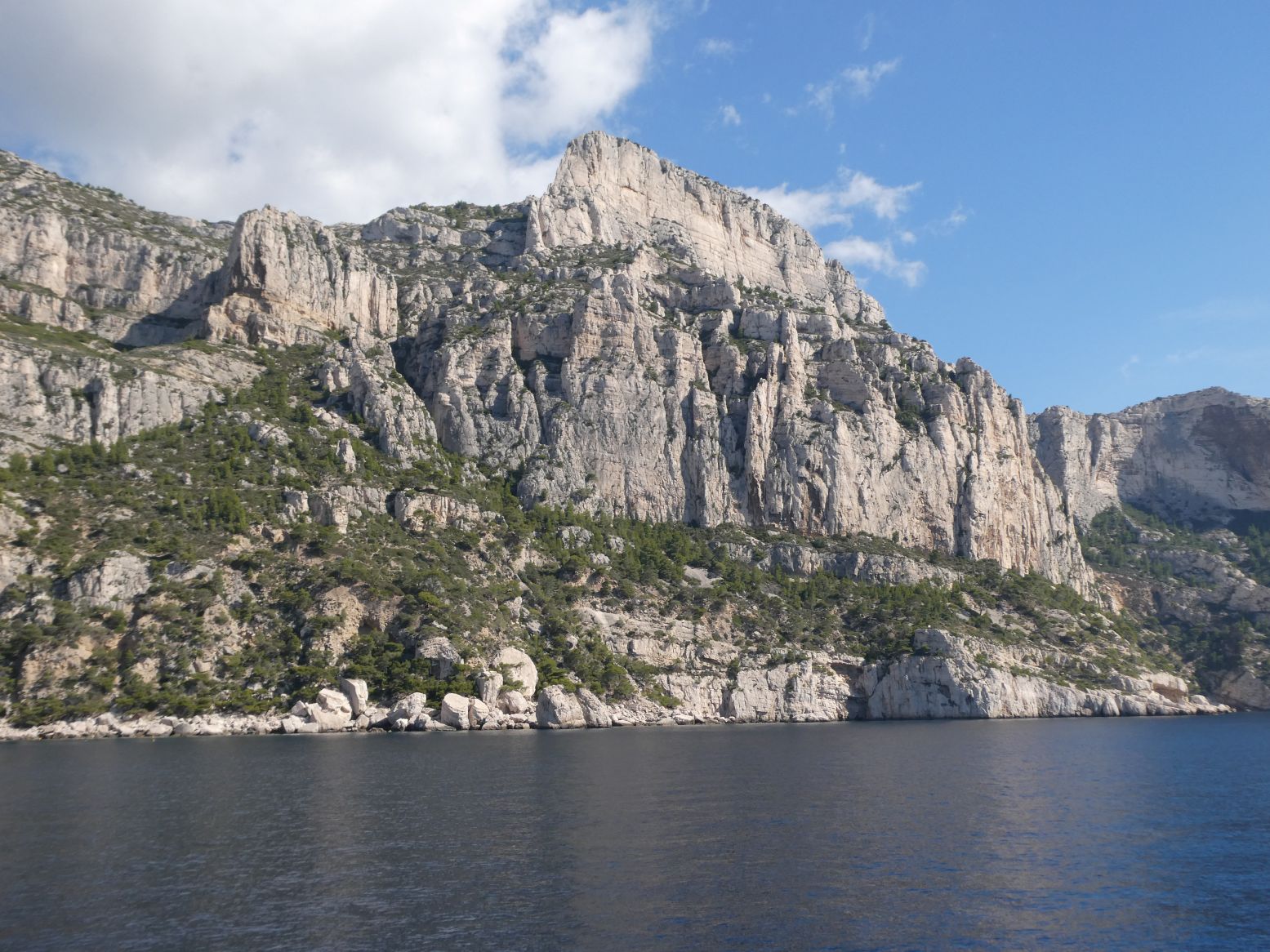
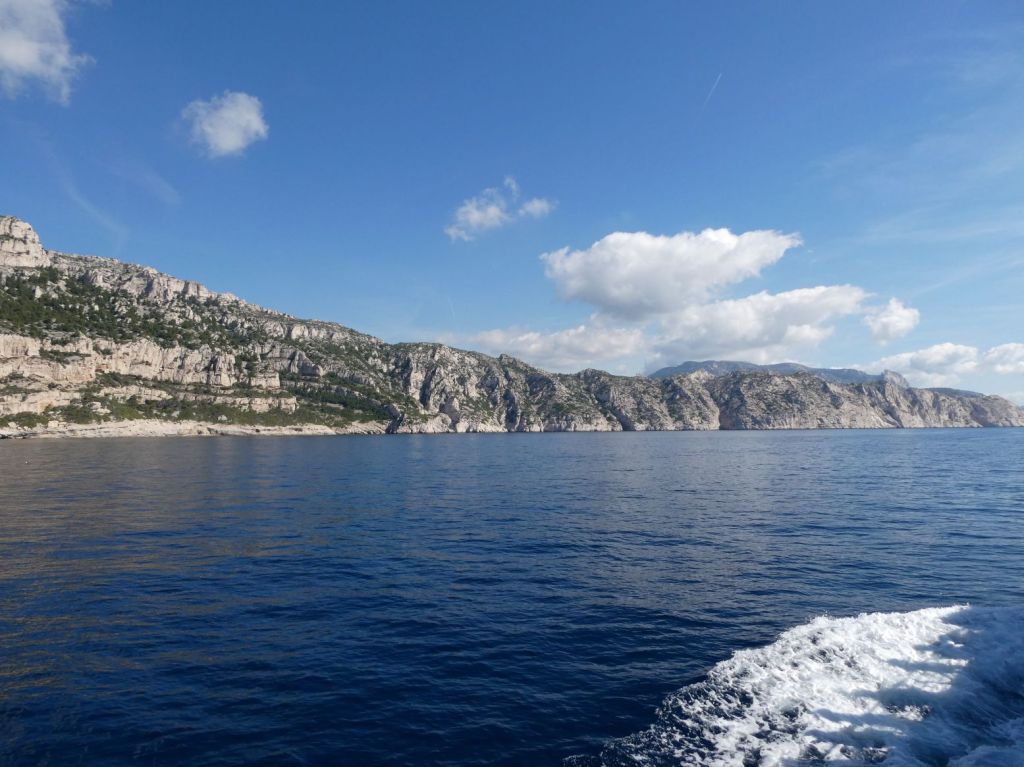
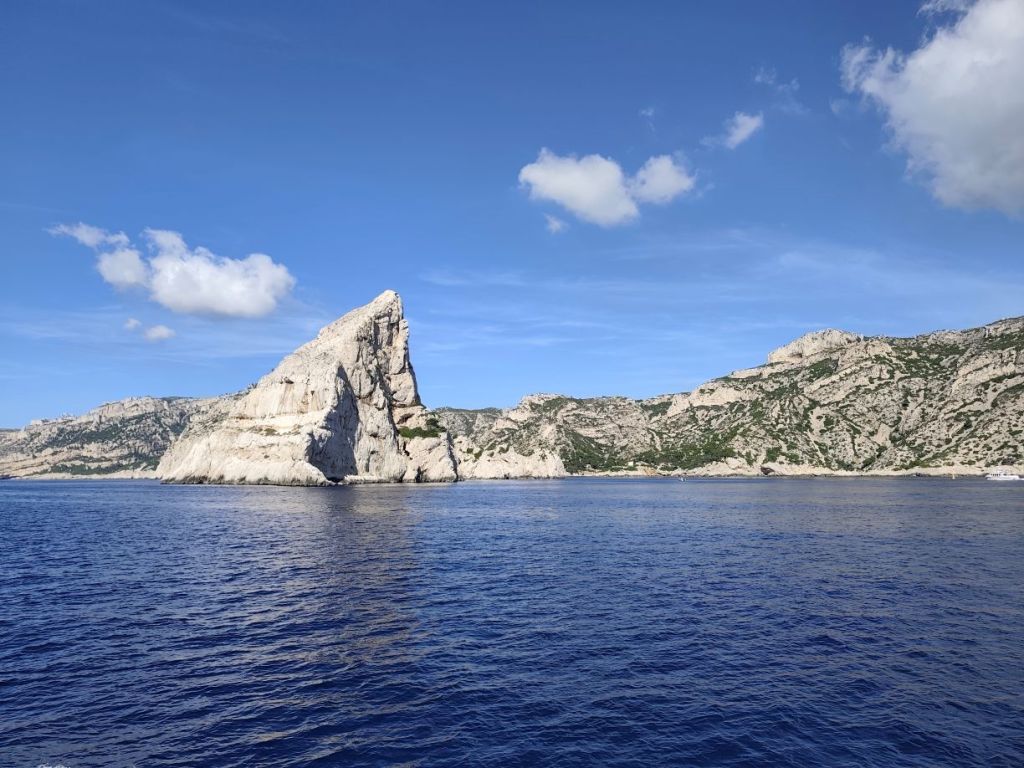
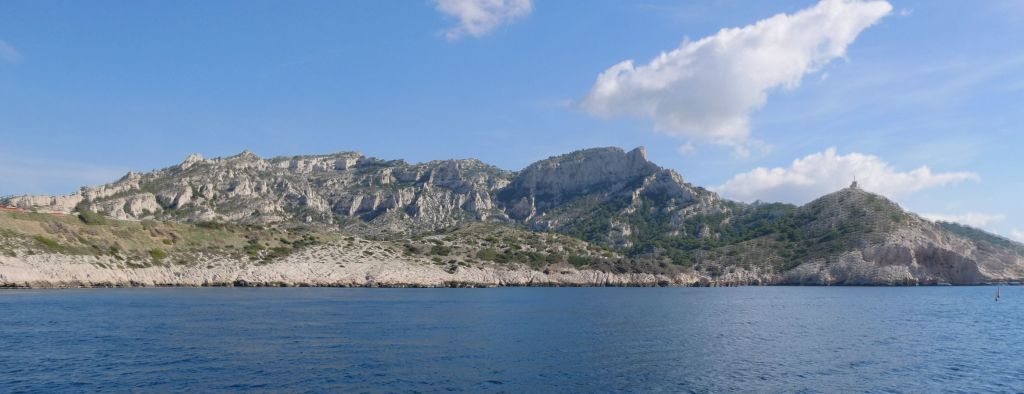
Off we sailed for a “🎵3-hour tour🎵” from the old port of Marseille along the limestone cliffs of the national park that stretches to Cassis. Inlets along the way are filled with turquoise, clear water that reflects the bright white rock faces. While it’s sometimes possible to hike in this protected area, we think that the best views are from the Mediterranean. You can see what we mean in the gallery below.







What a great recap–two of our favorite cities in France!
LikeLiked by 2 people
Thank you Sandy! Please stay tuned–more great destinations that you might already know are coming right up🛤️😊
LikeLike
I love, love Aix and you definitely chose the best way to see the Calanques.
LikeLiked by 2 people
i love this post. The beauty and history of that area call out to me.
LikeLiked by 2 people
Sounds to me, Katherine, as if France has you under its spell 🤩
LikeLike
What a lovely post about such an appealing and livable little city! I love Aix and your photos really depict its beauty.
LikeLiked by 2 people
Thank you! I’m so glad that we got to go there and share some of its beauty.
LikeLiked by 1 person