


Christmas dinner, that is, and to be more precise since we’re in France that’s typically Christmas Eve dinner. One of the advantages of living in a country where you didn’t grow up is learning about all of the local traditions and of course this time of year is filled with them. As kids we were used to the big meal being at midday on the 25th which was an interruption of playtime with the toys that we had unwrapped only a few hours earlier. In our household if Noël happened to fall on a Sunday that break was extended to cover a visit to church prior to sitting down to the feast that typically resembled what we had enjoyed a month before at Thanksgiving. Now, that is all so different.

Every year since we moved to Carcassonne we’ve heard the question, “What are you doing for Christmas” and our reply has almost always been, “Sitting in front of the fire, reading”. What the person really means is “would you like to join us on December 24 for dinner?”, a meal that was commonly served after midnight mass. Today, however, the timing for Le réveillon de Noël seems to more often conform to regular French dining hours of around 8 PM, at least with our friends.

Based on our own experiences, Bill and I already had fixed in our minds what a traditional French Christmas dinner should include but I wanted to compare that with what others thought. There are many blogs that give details about this festive meal and surprisingly to me, most seemed to agree in general about what to include and this reflects exactly the meals we’ve enjoyed:
First course: appetizers and champagne—These finger foods can include smoked salmon, charcuterie, and a spread for toasted bread. While champagne certainly remains popular, the sparkling wine crémant might be served and here we’re likely to see Blanquette de Limoux that’s produced about 25 kilometers (15 miles) south of Carcassonne.
Second course: starters—With all of the guests now present it’s time to move to the table and begin with foie gras, oysters, and escargot.
Third course: main—Turkey, it is, although some will choose some type of chicken, duck, or a ham. Potatoes and green beans on the side.

Fourth course: cheese—The more types, the merrier. After all, the French dairy association CNIEL estimates the country produces at least 1000 different types of cheese.
Fifth course: desserts—With an “s” to make that plural since we’ve always seen at least 3, one of which must be a Bûche de Noël, the rolled and filled cake that looks like a yule log. In Provence you’ll get those plus 10 more like candied fruit, nuts, and nougat.
Sixth course: chocolates—What goes better with that final bottle of sparkling wine? But wait, there could now be coffee and then a digestif (an after-dinner drink), as the name suggests, to help with digestion.
As you might expect, regional and family differences will be reflected in the final meal just as various budgets will determine how elaborate, or not, the table becomes. All of the sources I consulted mentioned how important that mainstay of French culture, la boulangerie (the bakery), is to this meal, providing the baguettes for all the courses plus the Bûche de Noël at the end. Whether totally homemade or simply served at home (with a nod to the various frozen food supermarket chains), le réveillon de Noël remains a cherished tradition. Joyeux Noël !
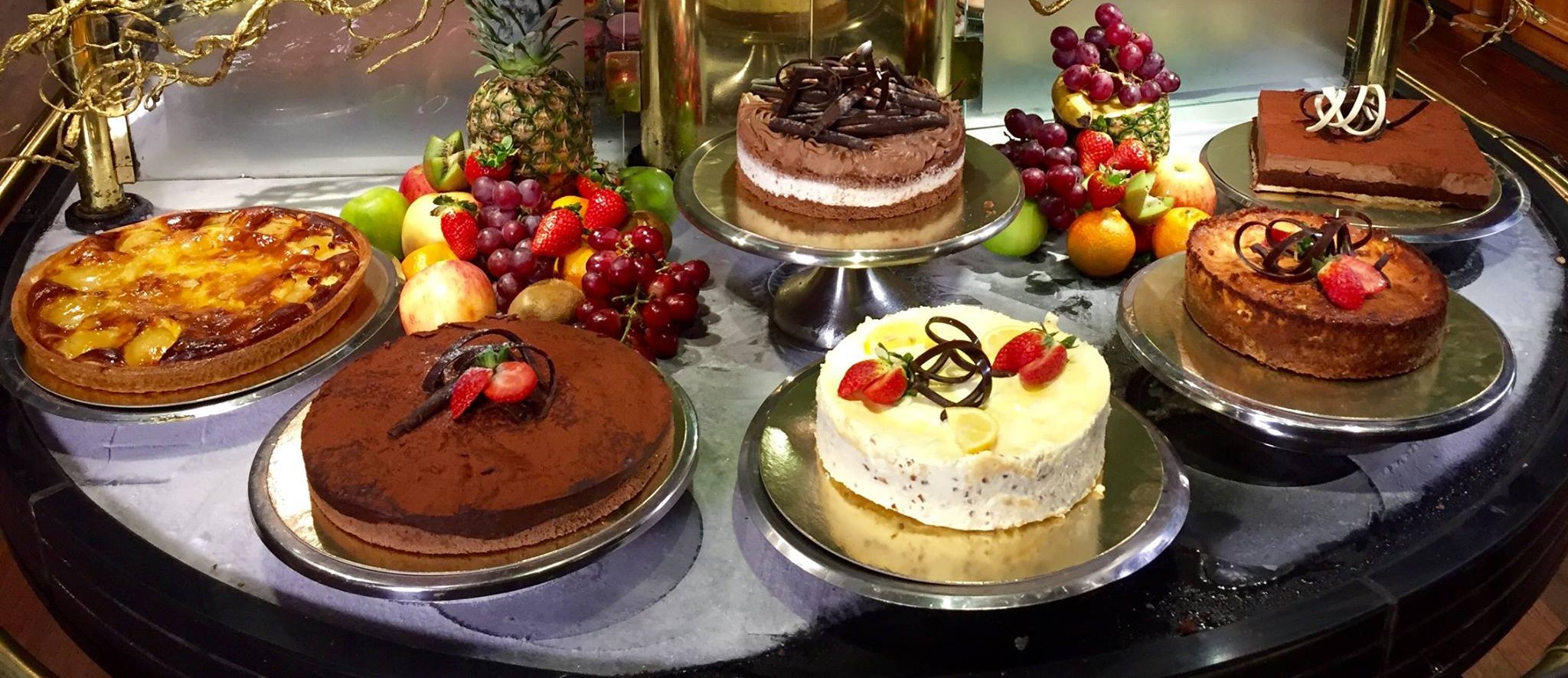
Notes: One blog that I found especially useful (with recipes, too) was Pardon Your French and all of today’s food photos come from the Facebook page of Les Grands Buffets, thank you!)
 Let's Live In France
I love champagne and oysters (nothing else) on Christmas Eve followed by a buffet lunch on Christmas Day.
LikeLiked by 2 people
Merry Christmas to you both. Enjoy
LikeLiked by 1 person
Thank you, Katherine, and a special “woof” to you know who 🐕
LikeLike
Wishing you both a spectacular Christmas and a darkened room to lie down in after all those courses !
LikeLiked by 2 people
And a very Merry Christmas to you!
LikeLike
Enjoyed your blog post today! I also find Pardon Your French a lovely site for info on French food.
Enjoy your Chirstmas! Bon Fete!
LikeLiked by 1 person
Thanks, Ed! Wishing you two a great holiday season too ⛄
LikeLike
That sure is elaborate. How lucky you are for having such great neighbors and friends in France.
LikeLiked by 1 person
Thank you, we are indeed grateful!
LikeLike
Wishing you and Bill a beautiful Noel with special friends! Ohh those desserts!!!! Enjoy!!
xoxo
LikeLiked by 2 people
Thanks, Elaine, and a Merry Christmas to you as well! 🍰
LikeLike
Back from our Christmas escape to Germany, where traditions are, unsurprisingly, taken very seriously—and done rather well. Christmas Eve was celebrated in style with friends around a properly German menu of Rouladen and Rotkohl (Beef roulades with braised red cabbage), setting the tone nicely. Christmas Day was reserved for family: our sons, the grandchildren, and the inevitable star of the lunch table—the traditional goose. A fine reminder that festive meals are best judged by how hard it is to move afterwards.
That said, I firmly believe your French Christmas Eve menus could benefit from borrowing one Provençal essential: the famous thirteen desserts. A non-negotiable tradition in our household, and one that conveniently ensures no one ever leaves the table hungry—or quickly.
LikeLiked by 2 people
I would love the thirteen desserts but not all the preparation in addition to the rest of the meal.
LikeLike