
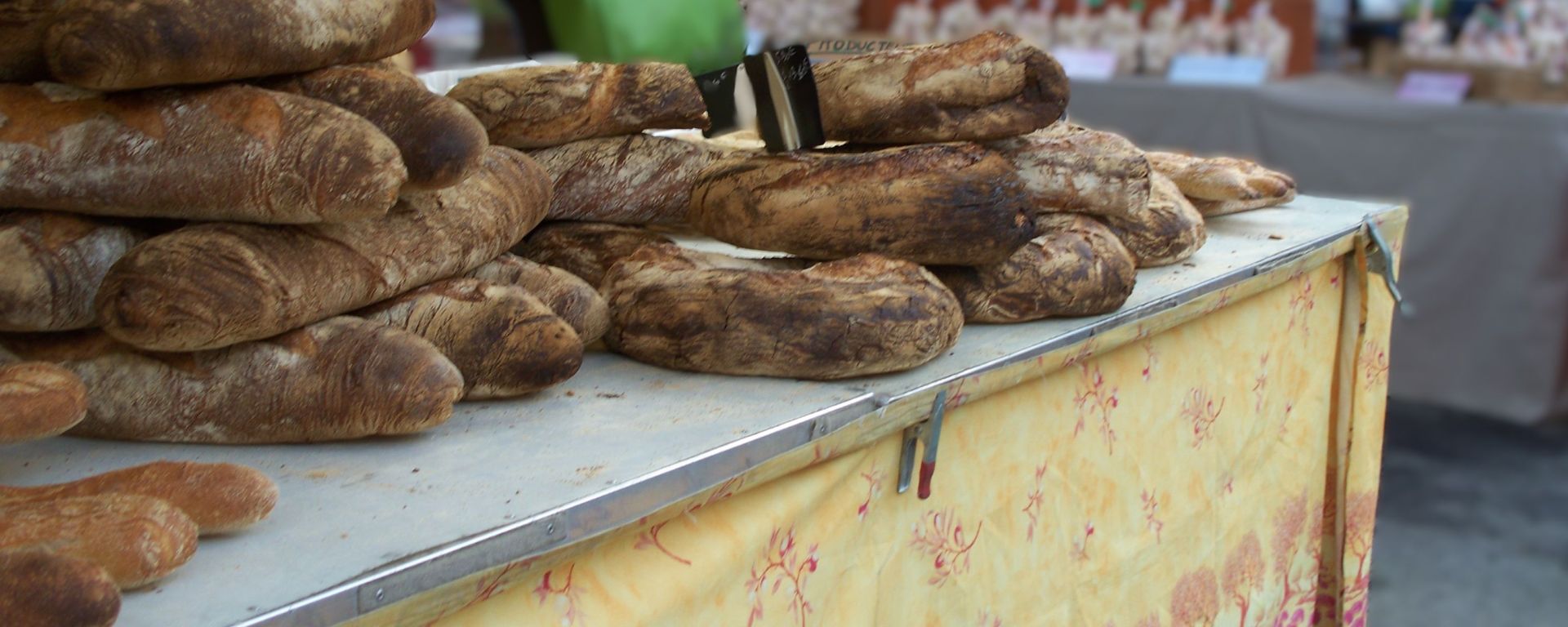
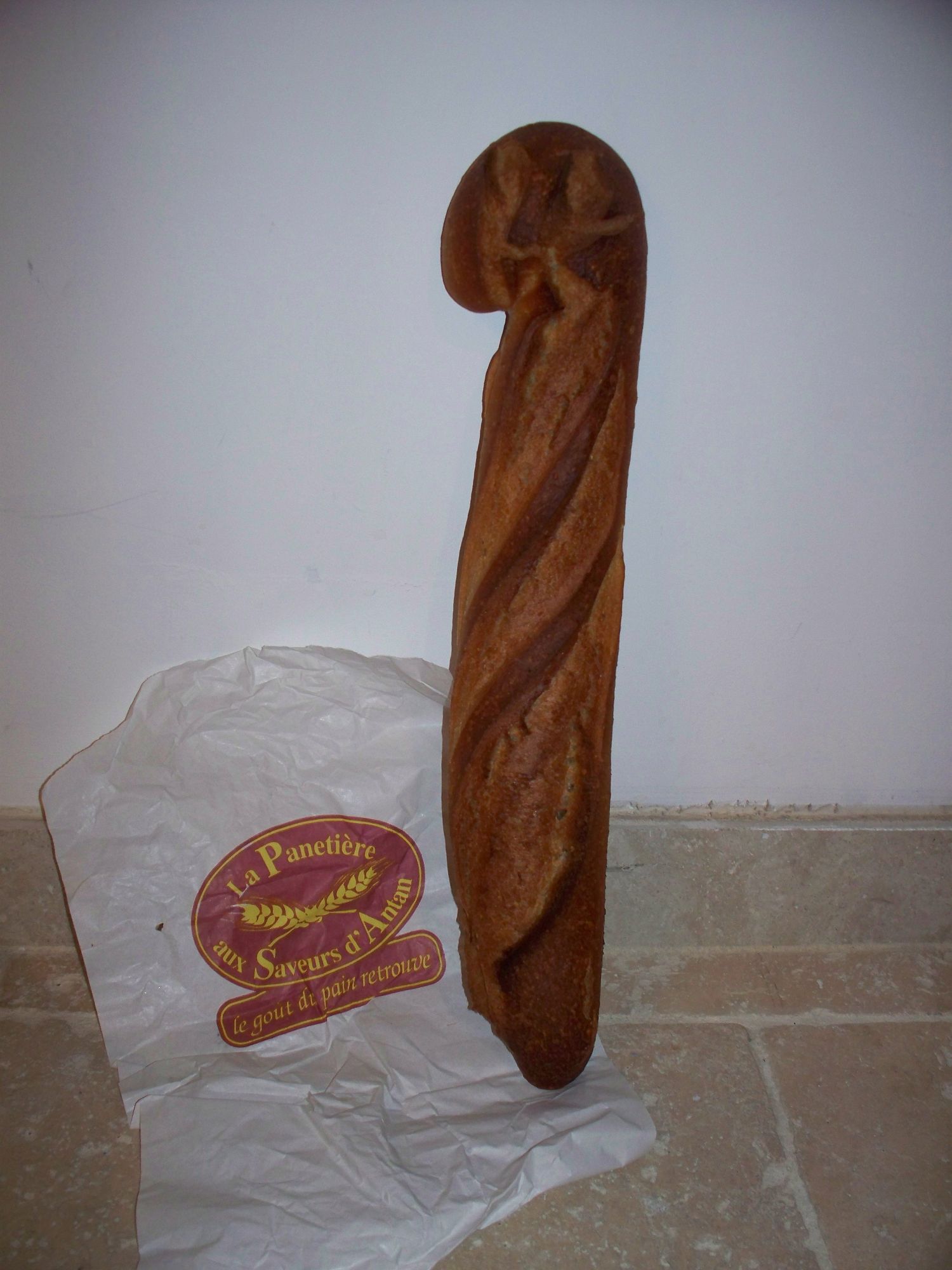
If you know a bit of French, you’ll understand the play on words with today’s title since “pain” translates to “bread” in English. And if you’ve ever enjoyed a fresh, crunchy baguette still warm from the oven of a boulangerie (bakery), then you’ll also comprehend why a podcast entitled, “Why the French are obsessed with bread” piqued my interest. Narrator Pierre begins his story by saying, “in France, there are bakeries on every street corner. Literally.” and we can attest to that. It takes about 15 minutes for us to walk from our house to the center of downtown, and along that direct route we pass four bakeries—plus two more if we take just a one-street detour. Somebody is always selling bread.
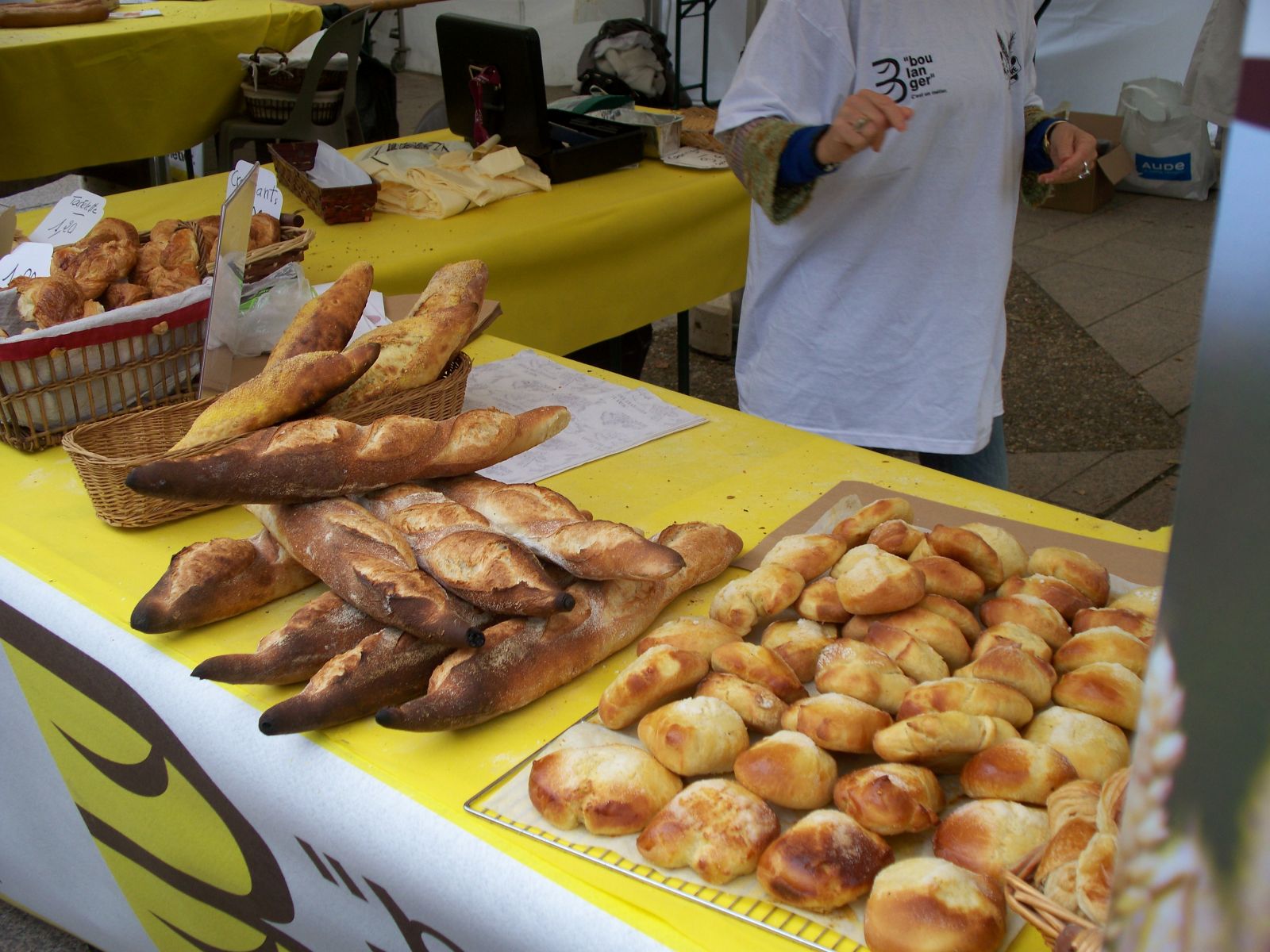
Pierre continues by talking about how traditionally every meal must have bread—yep, breakfast, lunch, and dinner. Of course to meet that expectation, somebody has to go to the bakery three times a day to pick up one of those just-baked delights. We see it on our street, like clockwork at 6 AM, noon, and 6 PM, some of our neighbors walking up to the bakery at the end of our rue. They even have a printed “fresh now” window sign that reminds me of the Krispy Kreme “Hot Now” flashing neon alert when donuts are ready.
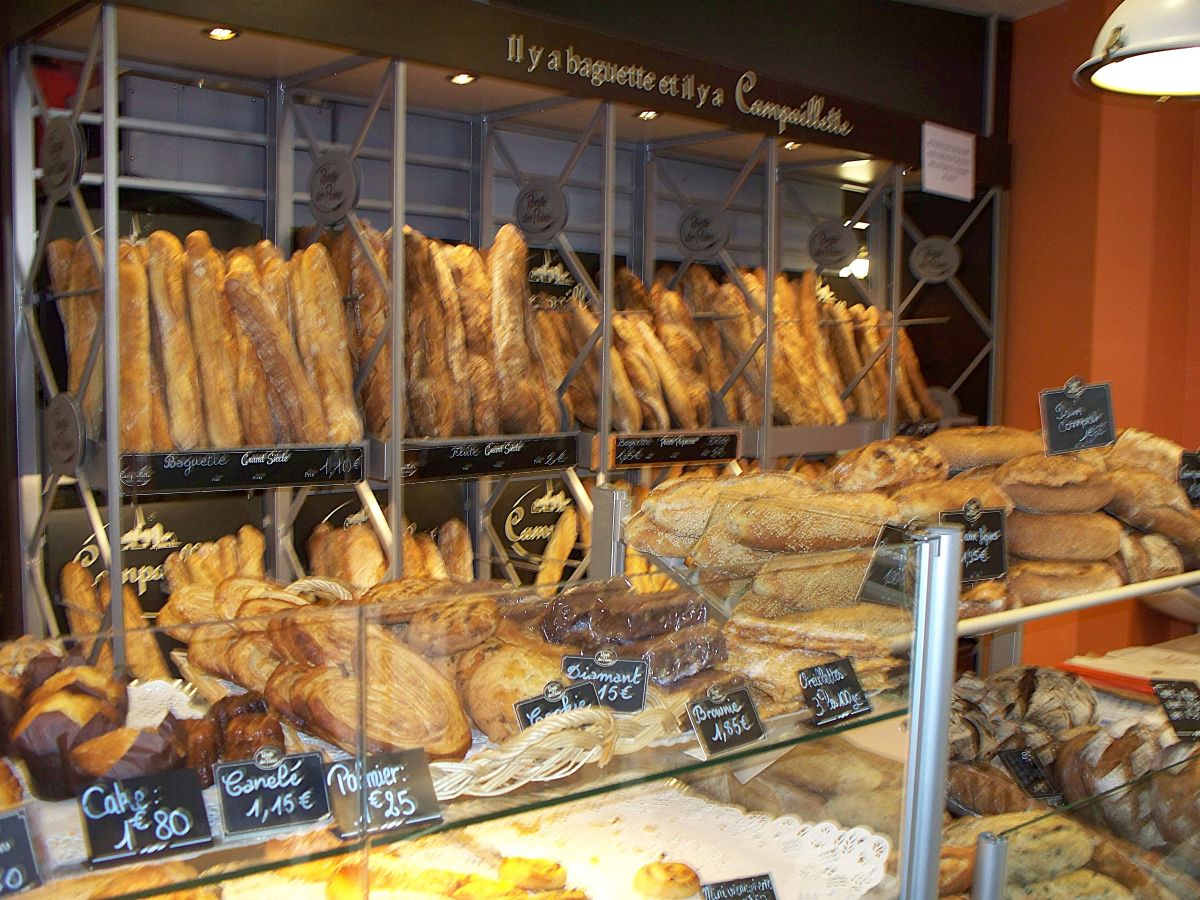
There are more than 30,000 boulangeries in France and it’s said that in Paris you’re never more than five minutes away from one. Generally, they will all sell at least the basic baguette and several derivatives such as the wider flûte, the narrower ficelle, and the oval bâtard. There might be whole wheat, rye, nut, and flax. I once counted 17 choices on a display board and that was before you got to the listing of the viennoiseries like a croissant or a pain au chocolat.
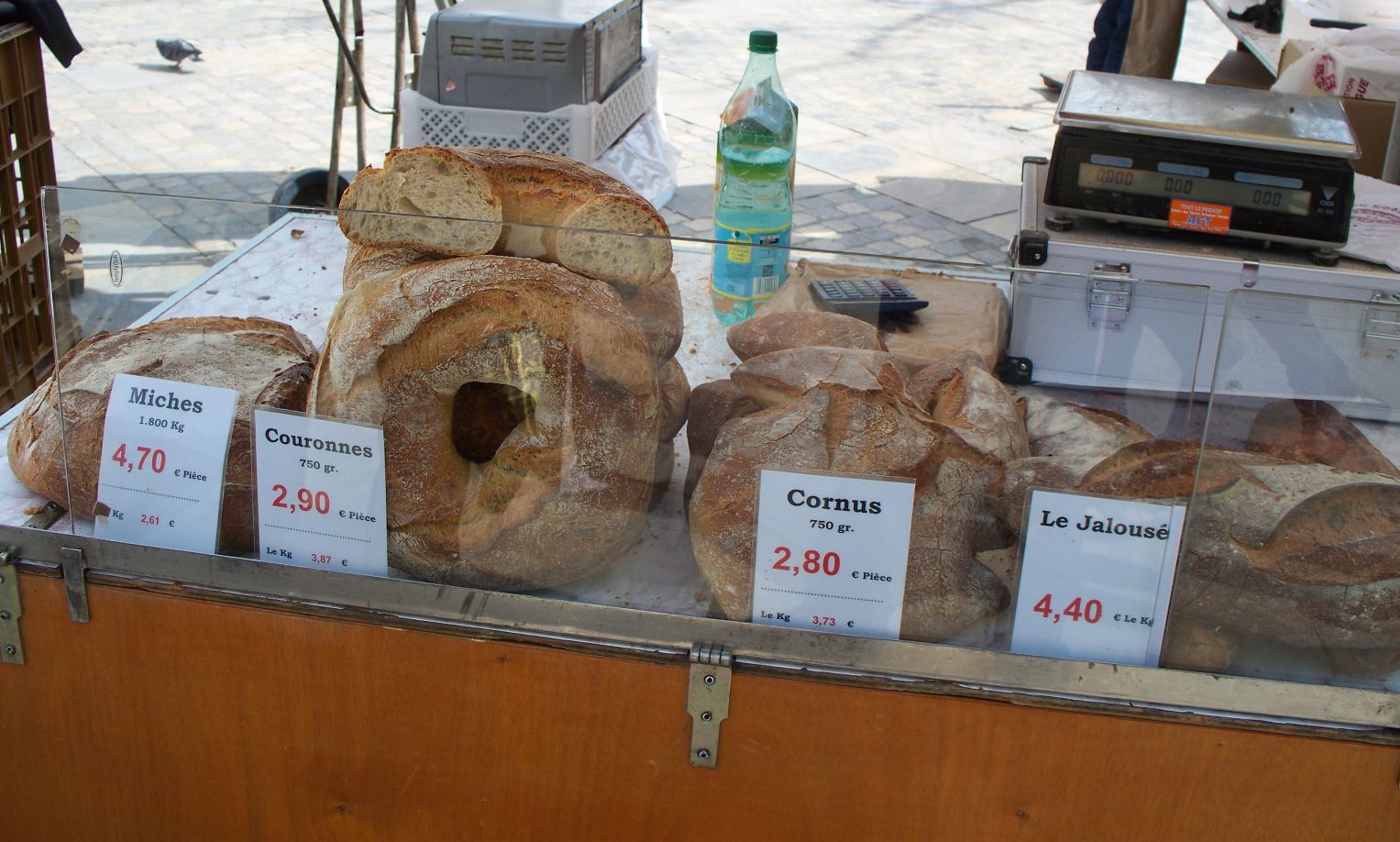
Although bérets are a French cliché that we really don’t see often on the street, a baguette in someone’s hand or under their arm is quite common—ourselves included, although Bill bakes most of the time. To prove how tempting those crusty loaves can be, there’s even a competition between the north and south over what word to use for the heel of the loaf that so many people bite off on their walk home. Whether it’s le quignon or le croûton, at least everyone agrees that they are too tasty to wait.
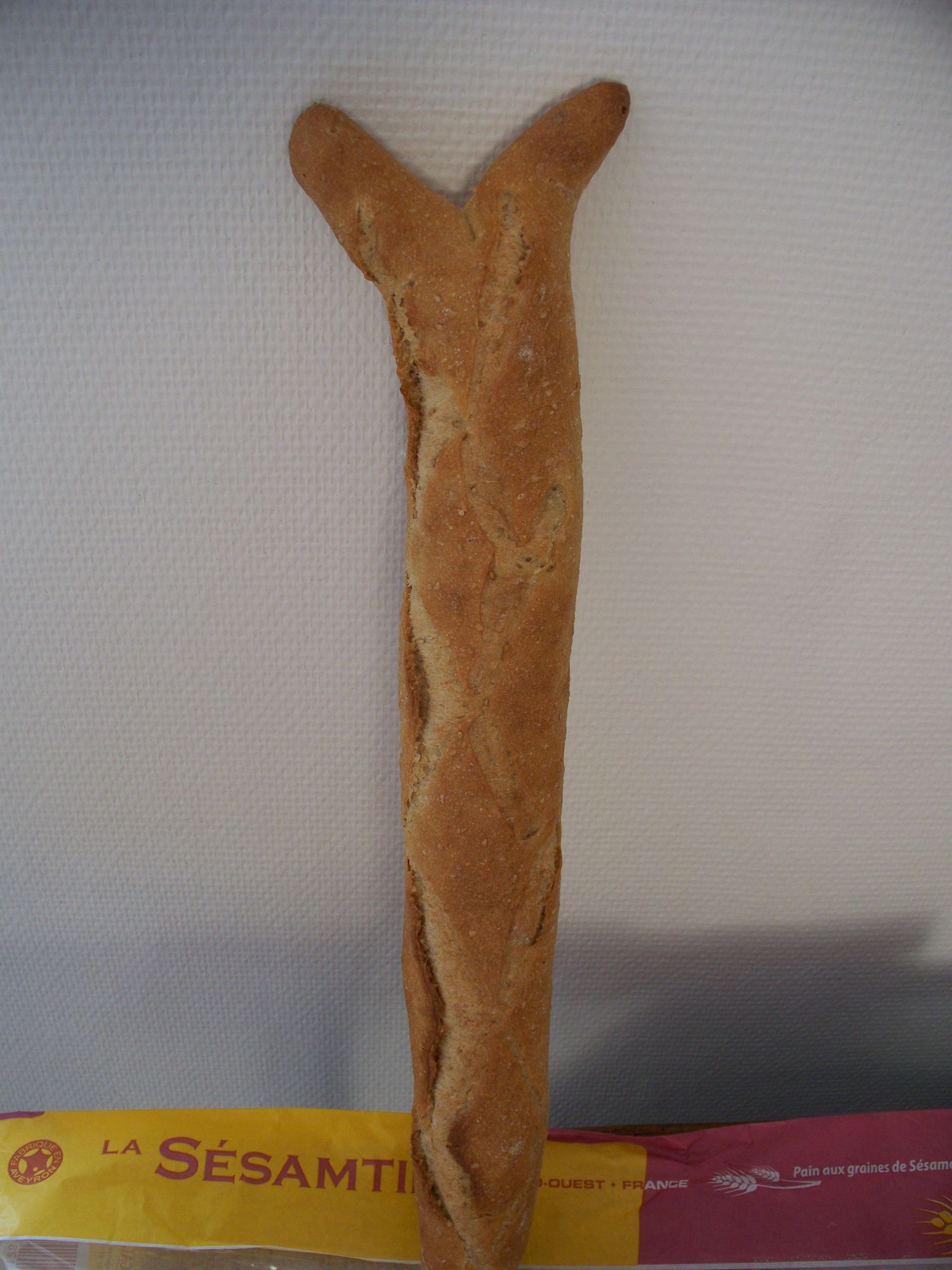
While the podcast ended there, I wanted to include a few more facts about baguettes that are sometimes only whispered. While lots of people make that daily (or more often) trip to the bakery for fresh bread, others buy several at once, freeze those loaves and oven warm them as required. Want to keep a half baguette from turning into a rock overnight? Wrap it in a plastic bag. Bread vending machines exist, sometimes right beside an instant coffee machine, oh-la-la. And if you’re in Paris on rue Rambuteau and you stop into the Boulangerie – Pâtisserie LeGay Choc, be careful if you ask for a “baguette magique“. Mature audiences only!
Podcast note: Thank you, Sally, for the link to this broadcast available to subscribers to Learn French With Clémence.


Napoleon’s bread policy laid the foundations of French bakery regulation, certain principles of which (price controls, obligations on bakers) endured well beyond the First Empire. France remains today one of the few countries where bread — the baguette in particular — is as much a symbol of national identity as it is a daily staple.
The relationship between Napoleon and bread runs deep — touching on politics, economics, and the very survival of the French people. Bread as a Major Political Issue
The French Revolution had broken out largely because of bread shortages and sky-high prices. Napoleon, a shrewd politician, understood perfectly that controlling the price of bread meant controlling public order.
He is said to have declared: “Bread must be cheap, otherwise I cannot be sure of governing.” Napoleon’s Measures
Strict Price Regulation Napoleon maintained a ceiling on the price of bread in Paris, a revolutionary-era legacy he kept out of pragmatism. The prefect of police kept a close watch on bakers.
The Bakery Decree (1801) He required Parisian bakers to deposit a bond in order to practice their trade — thereby guaranteeing their solvency and the continuity of supply.
Flour Reserves He made it mandatory to build up flour stockpiles in Paris (equivalent to several weeks of consumption), to guard against any sudden shortage.
Tolls and Mills He organized control over mills and grain flows to prevent speculation. War Bread and Military Campaigns
For his armies, Napoleon had developed:
It was in this context that Nicolas Appert developed food preservation by canning in 1809, spurred by a prize offered by Napoleon himself to solve the problem of supplying his troops
The hardtack biscuit, a dried and hardened bread that could be carried over long distances
Mobile field ovens that followed the troops
LikeLiked by 3 people
Wow, JJ, quelle histoire !
LikeLiked by 1 person
When we were house hunting, I said I wanted to be no more than 10 minutes walk from my nearest boulangerie which the estate agent found very amusing!
LikeLiked by 2 people
French bread – one of the joys of living here and enough to ruin any diet 😳
LikeLiked by 3 people
But oh-so worth it, LOL!
LikeLiked by 1 person
🤣
LikeLike
Boulangeries are definitely one of the many joys of living in France. The breads are just so delicious, and I appreciate the care taken in making them.
LikeLiked by 2 people