
With two weeks in Rome, we had enough time to make a one-hour train trip south to Naples with the ultimate destination being Herculaneum. In keeping with our “let’s see something different” visit to the capital city, we decided that instead of going to the world-famous site of Pompeii, another excavated city in the same area would be better. It takes about 20 minutes on a commuter train to get to Herculaneum and with a suggested visit time of two hours, we were going to have the chance to see a bit of Napoli before returning to Rome later that afternoon.
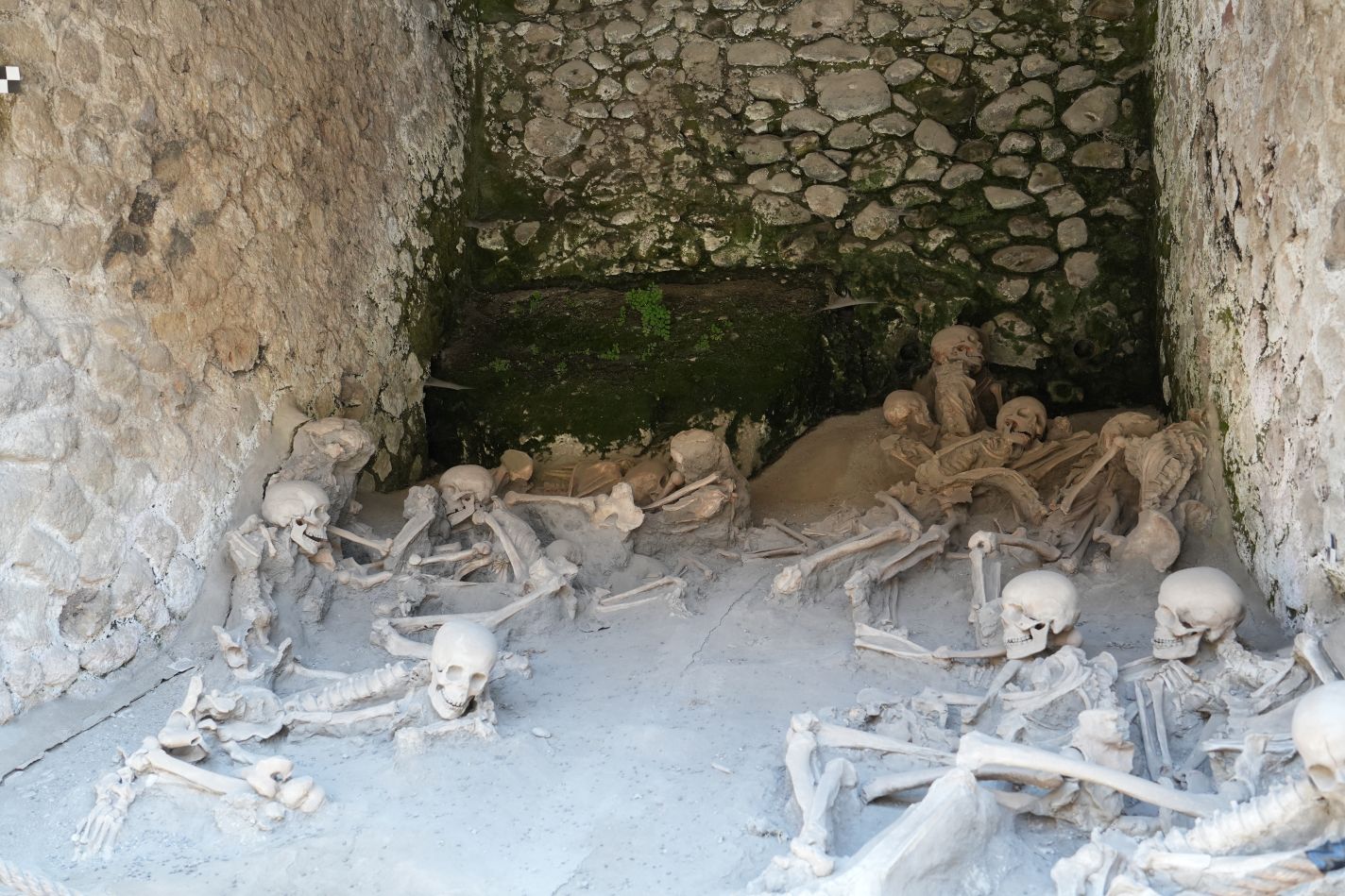
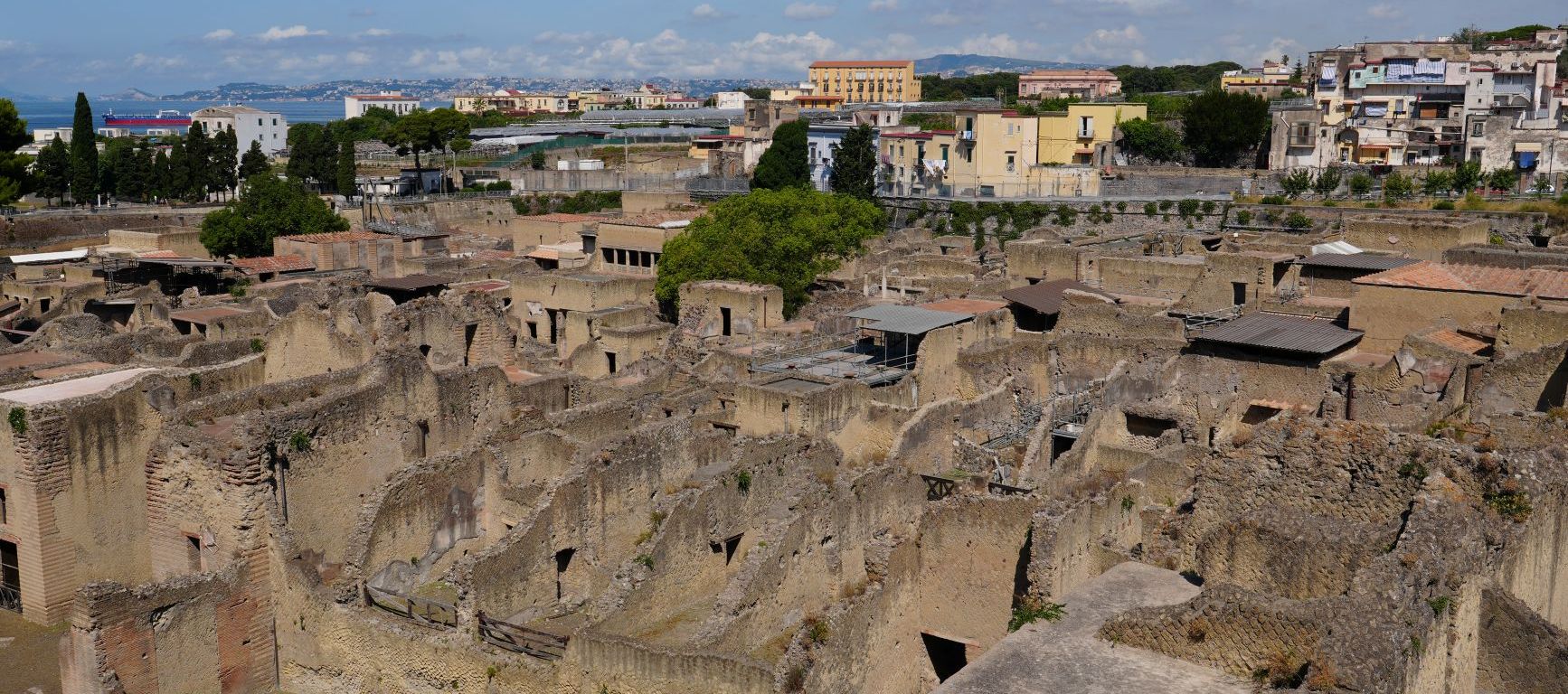
The eruption of Mount Vesuvius in 79 AD buried Pompeii in ash and pumice that collapsed roofs and upper floors before deadly clouds of hot gas killed any survivors. About 16 kilometers (10 miles) northwest of there another city was also being destroyed, but instead of ash, a sea of superheated mud to a depth of 20 meters (66 feet) flowed in and filled the buildings from the ground up. Wood, food, and clothing were carbonized, preserving them, and homes remained intact, surrounded by mud that slowly turned to stone. While early tunneling began in the 18th century, it wasn’t until 1927 that modern open-air excavations began uncovering the town—and roughly three-quarters of it still lies buried beneath the modern city today.
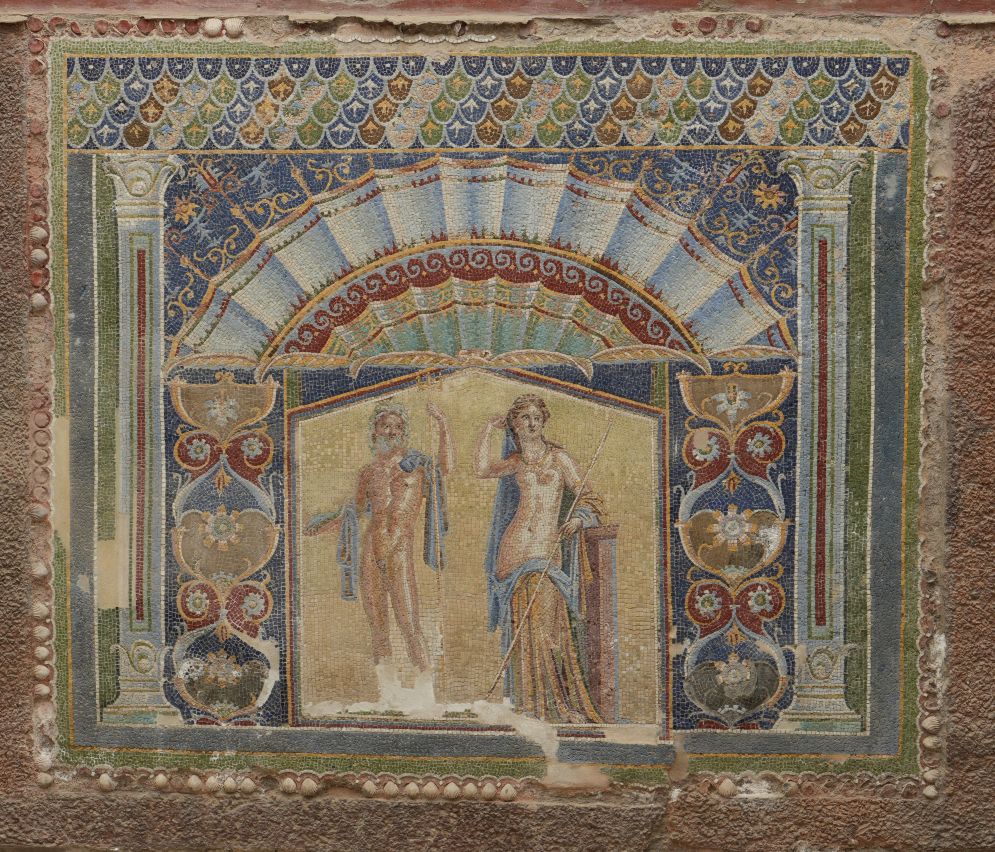
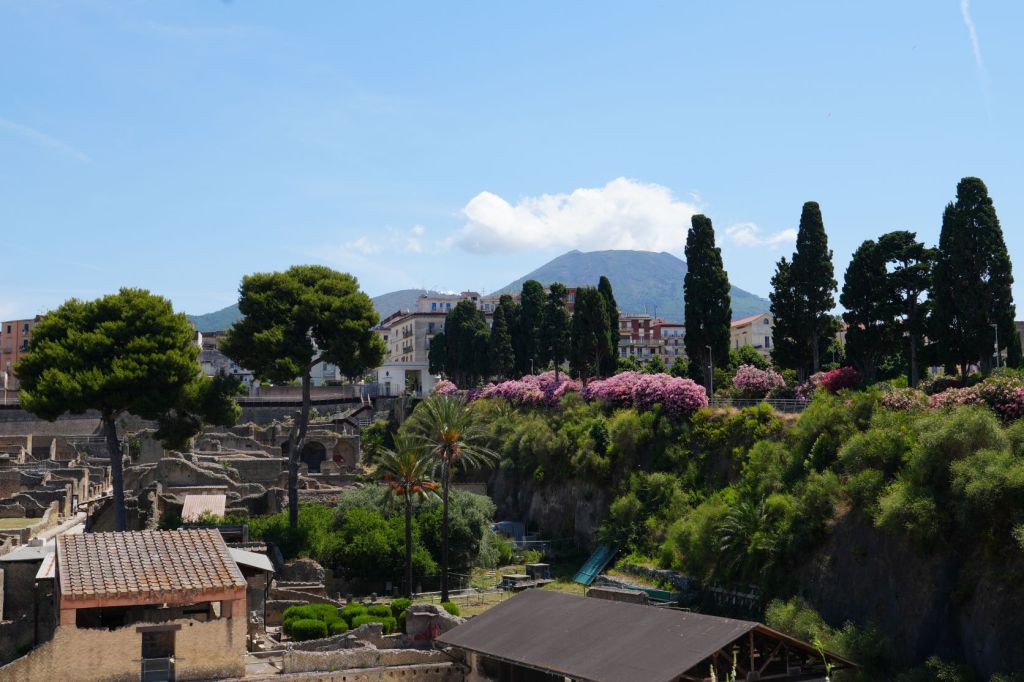
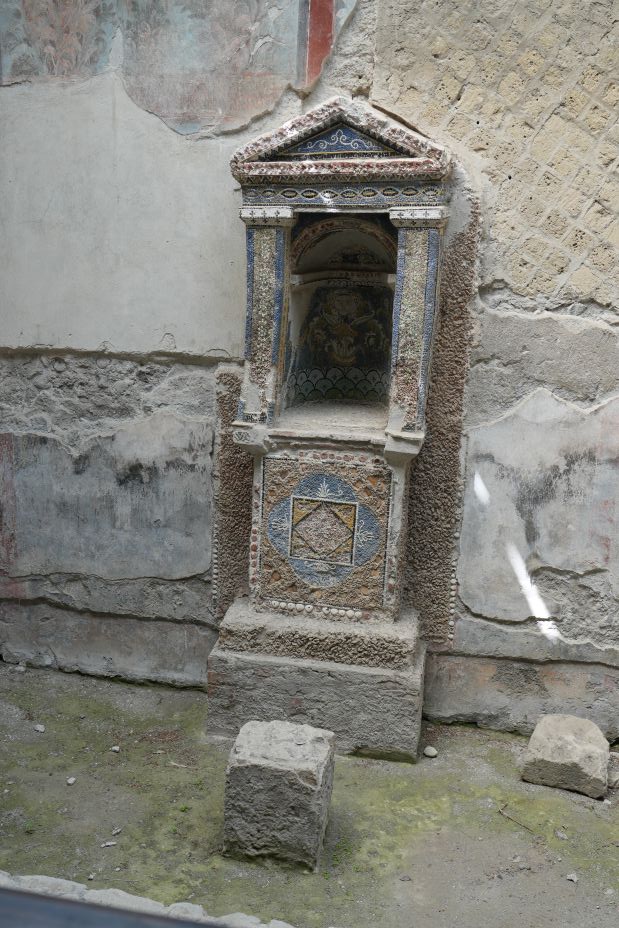
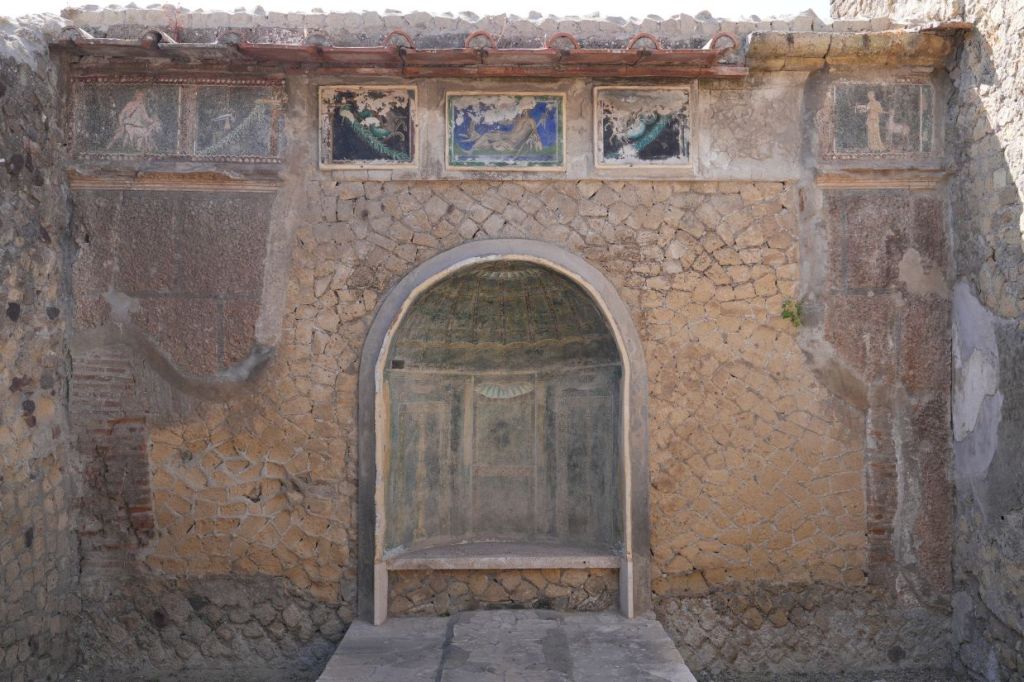
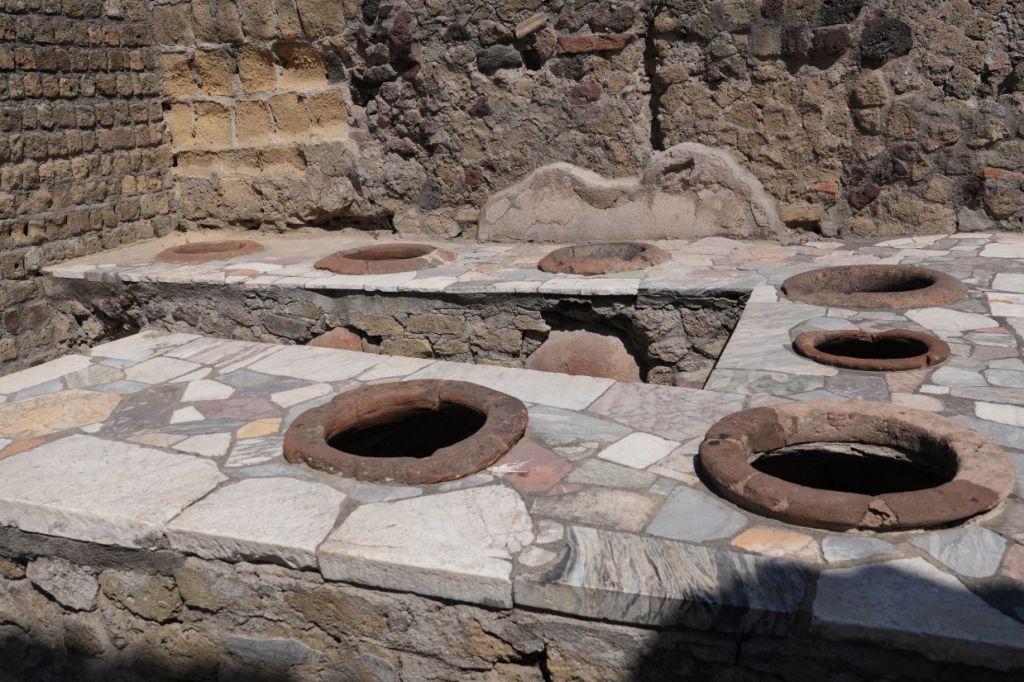
Although many structures in Herculaneum are still standing as they were 2000 years ago, not a lot is known about the individuals who lived there. Consequently, many buildings are designated as “House of” followed by a descriptor such as “the trellis, the wooden partition, or the charred furniture”. A favorite of ours was House of the Neptune Mosaic because of its colorful interior and intricate designs. From there we saw the House of the Beautiful Courtyard, walked by a public fountain, the baths, and finished at the House of the Deer that once had a panoramic sea view. Here are a few more photos that Bill took in Herculaneum and below that are details and photos from our quick visit to Naples:
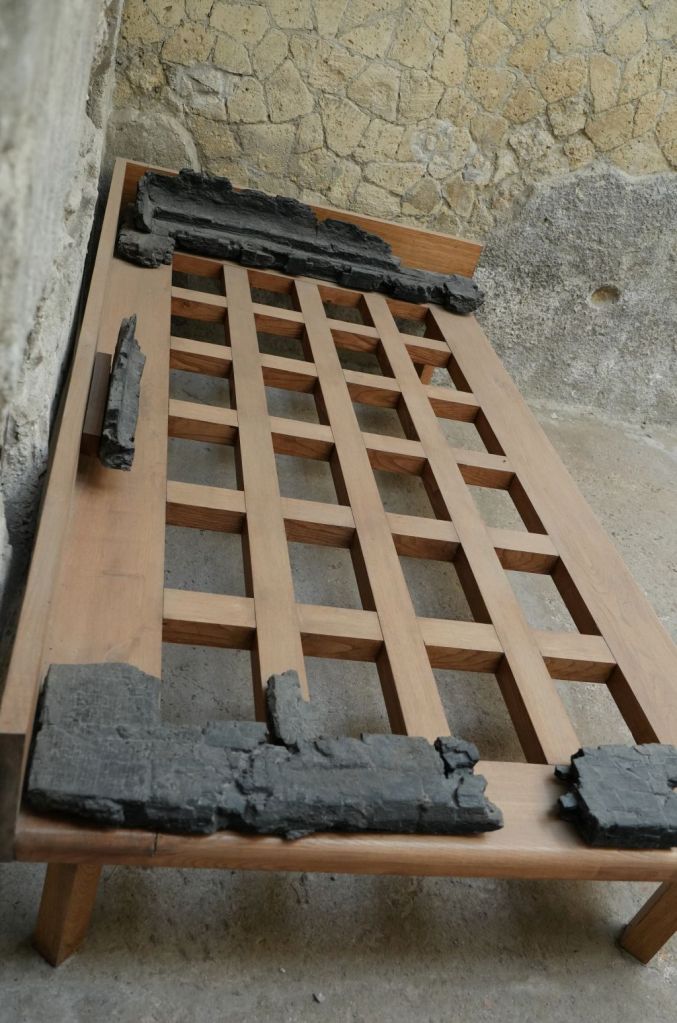
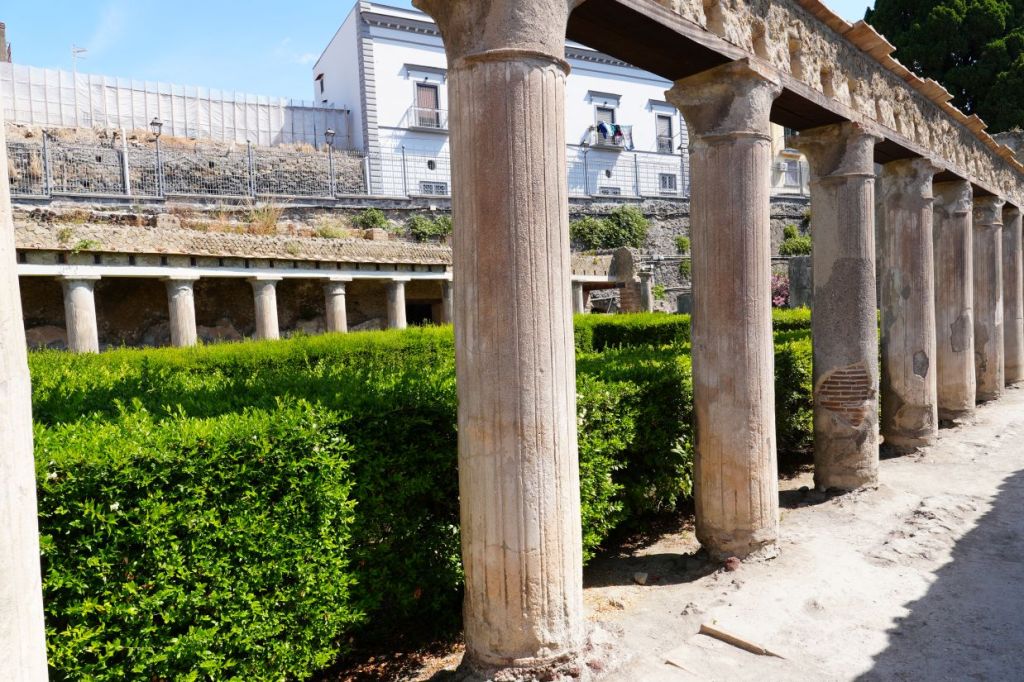
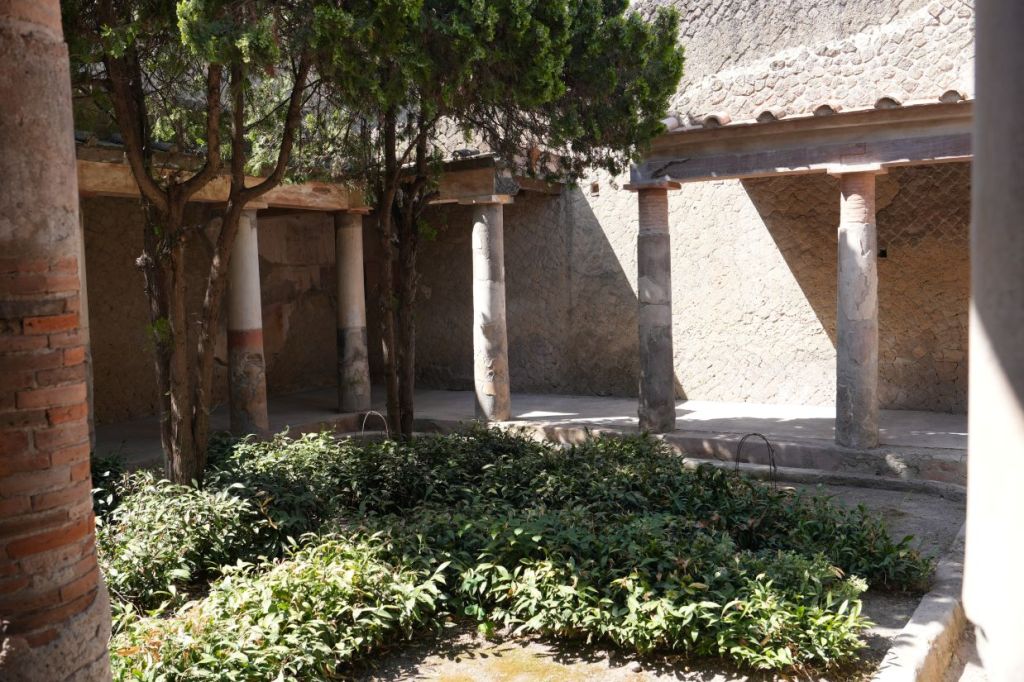
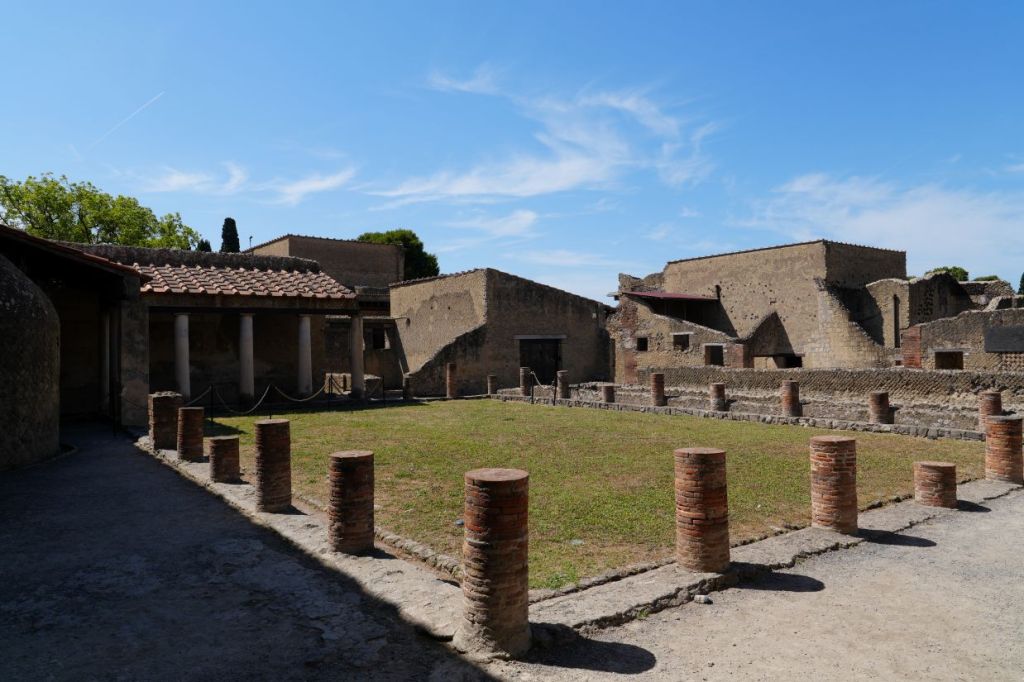
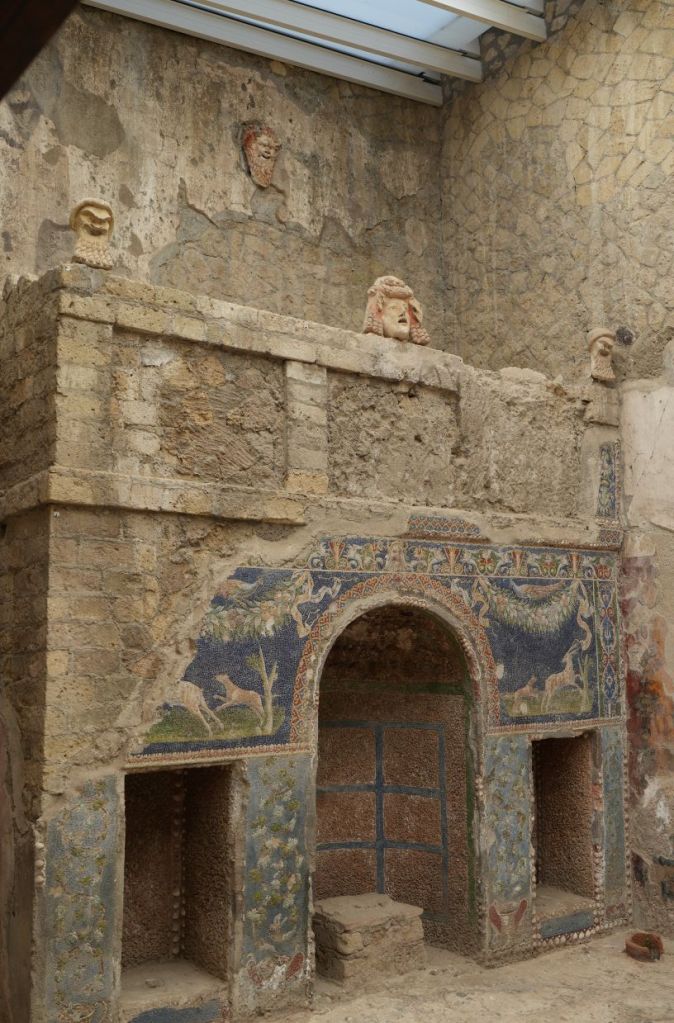
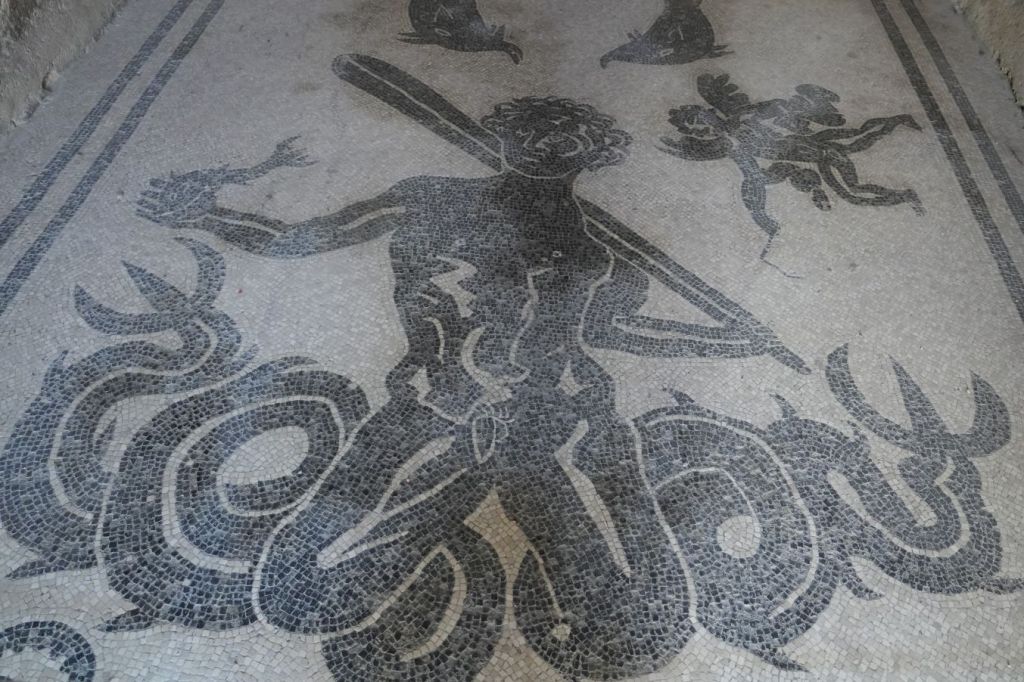
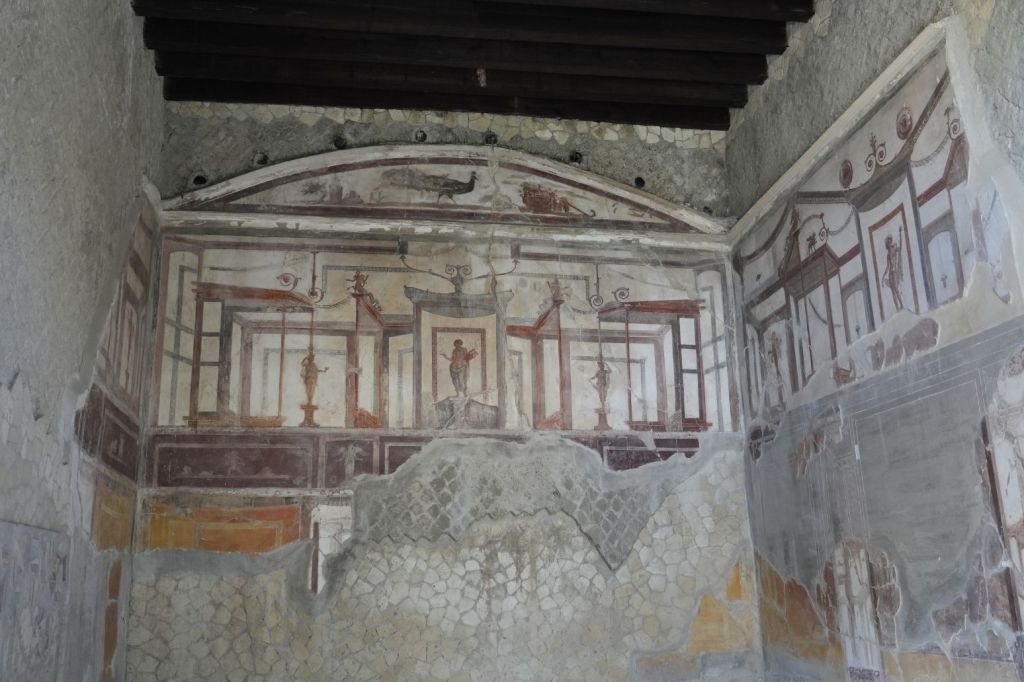
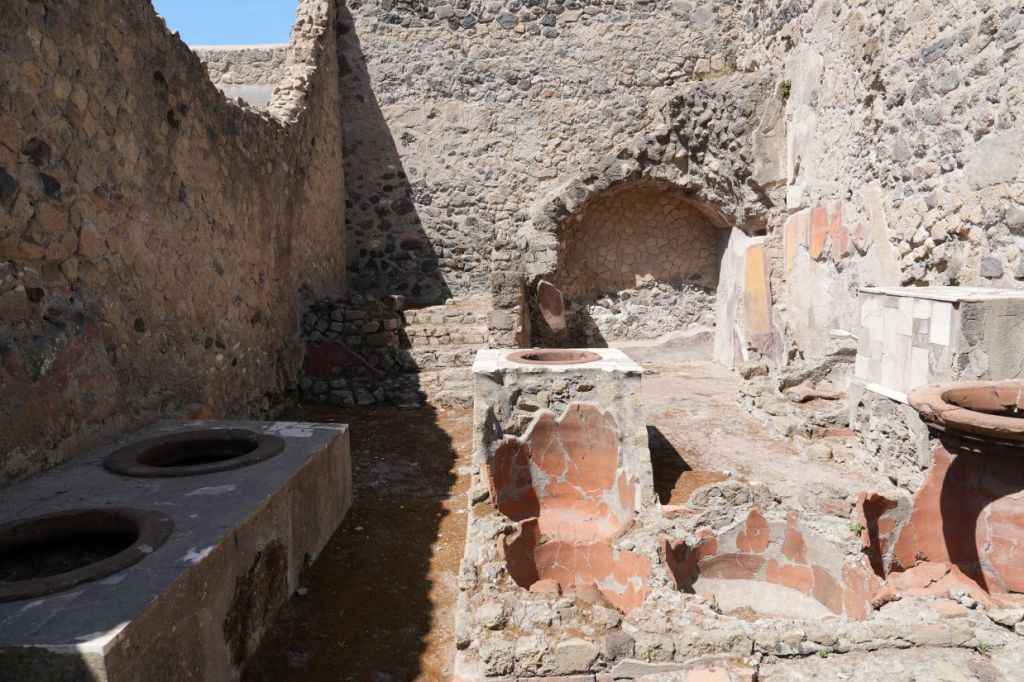

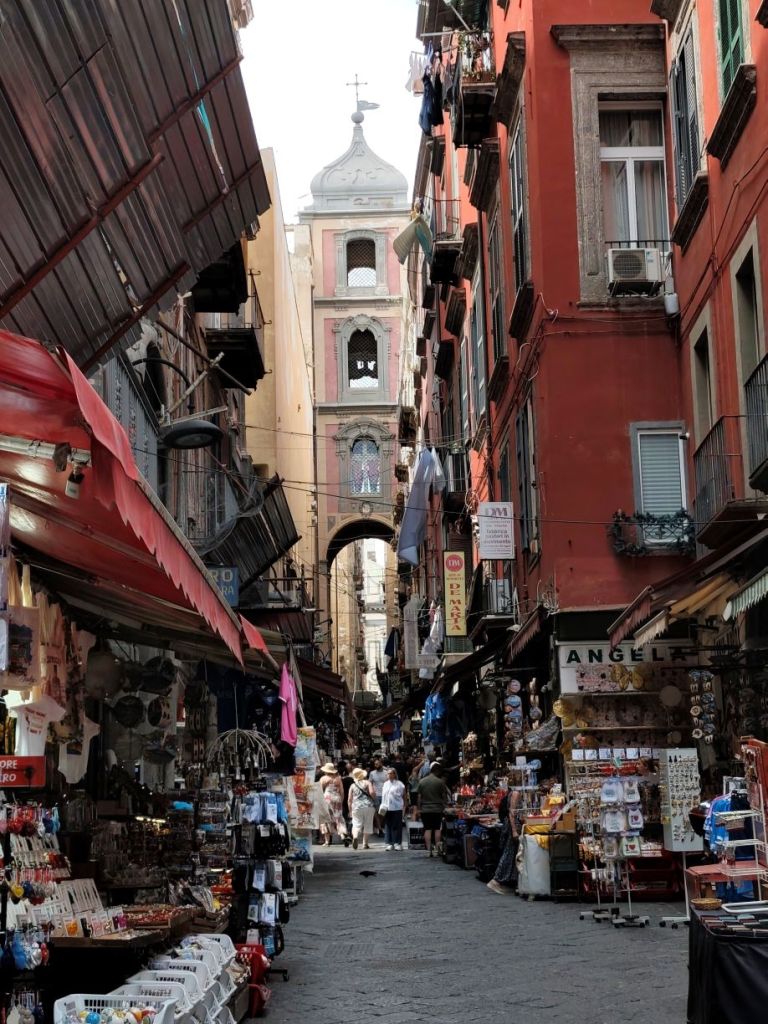
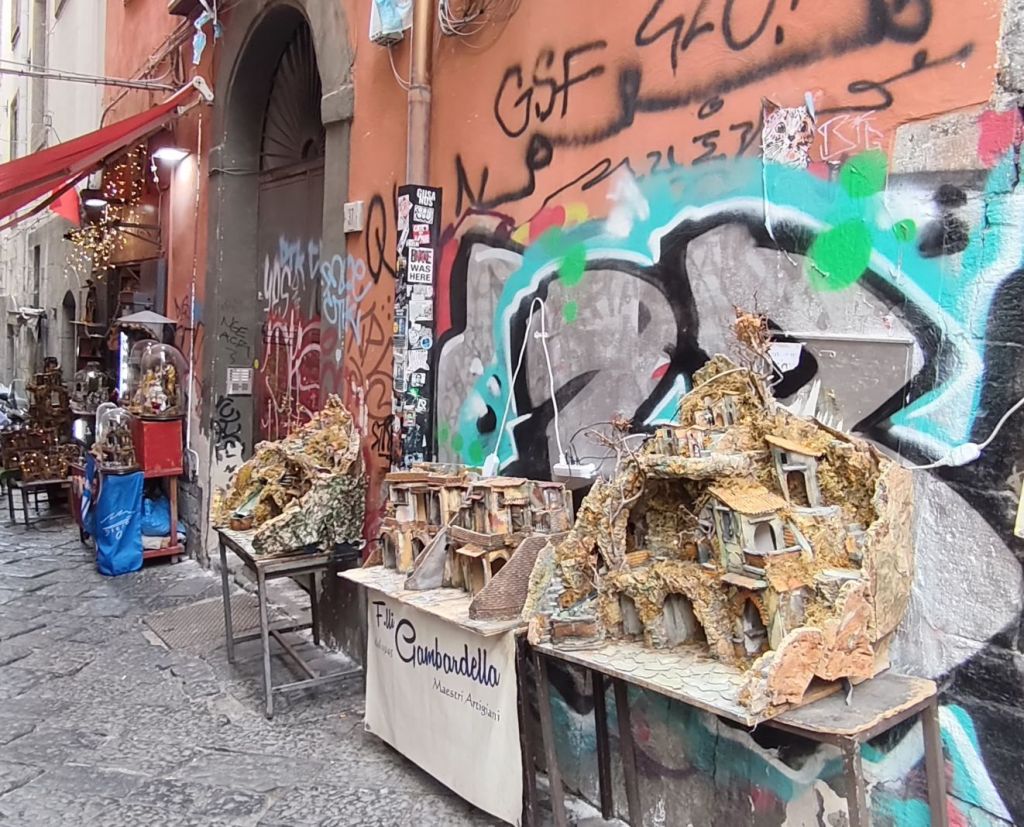
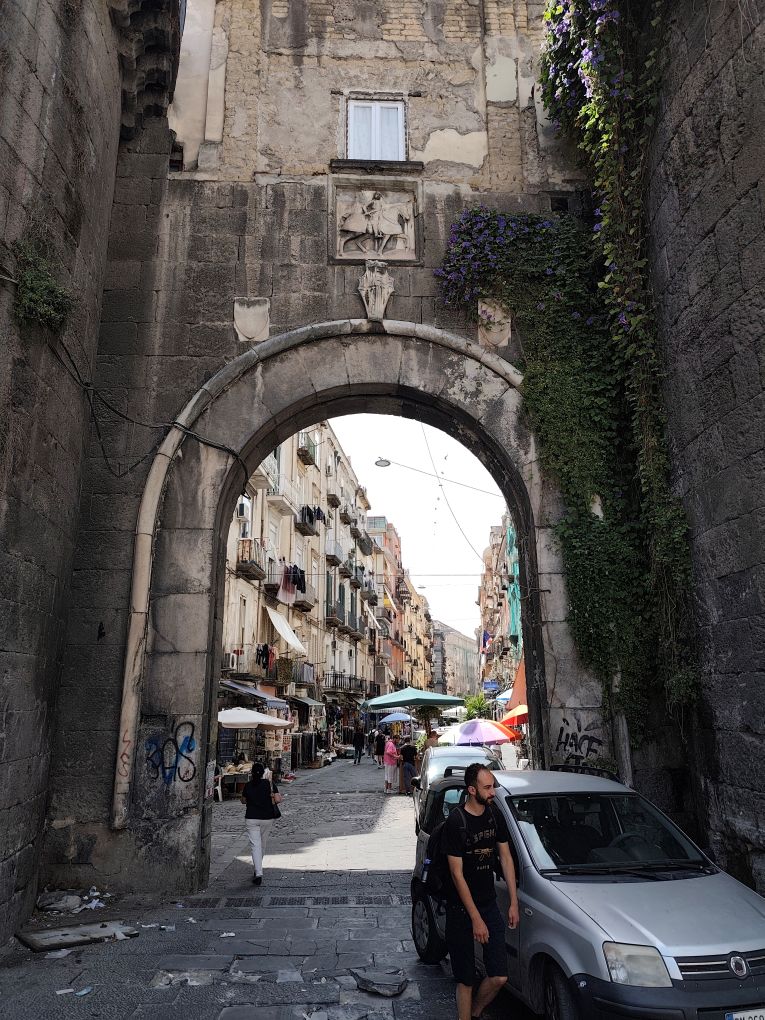
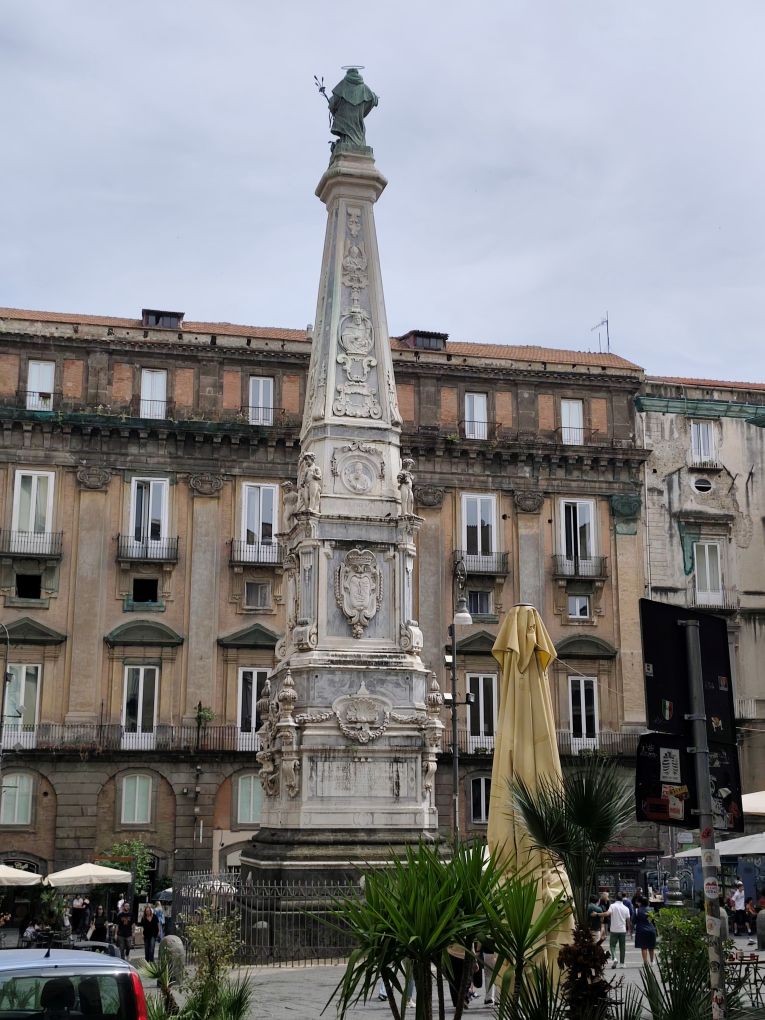
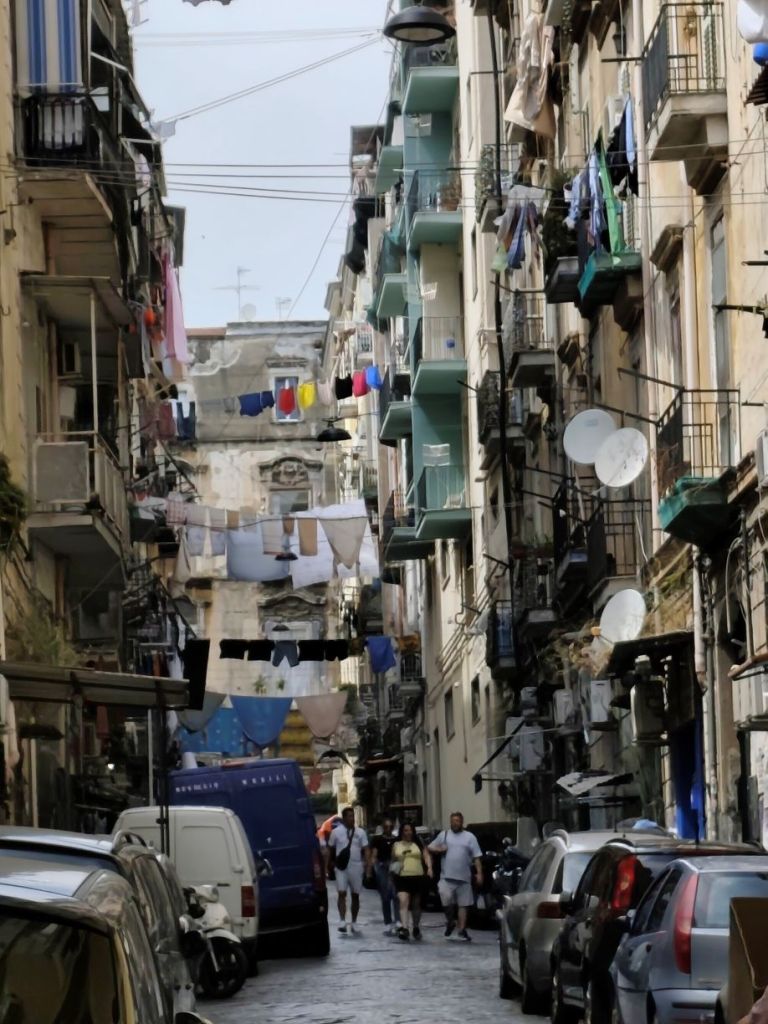
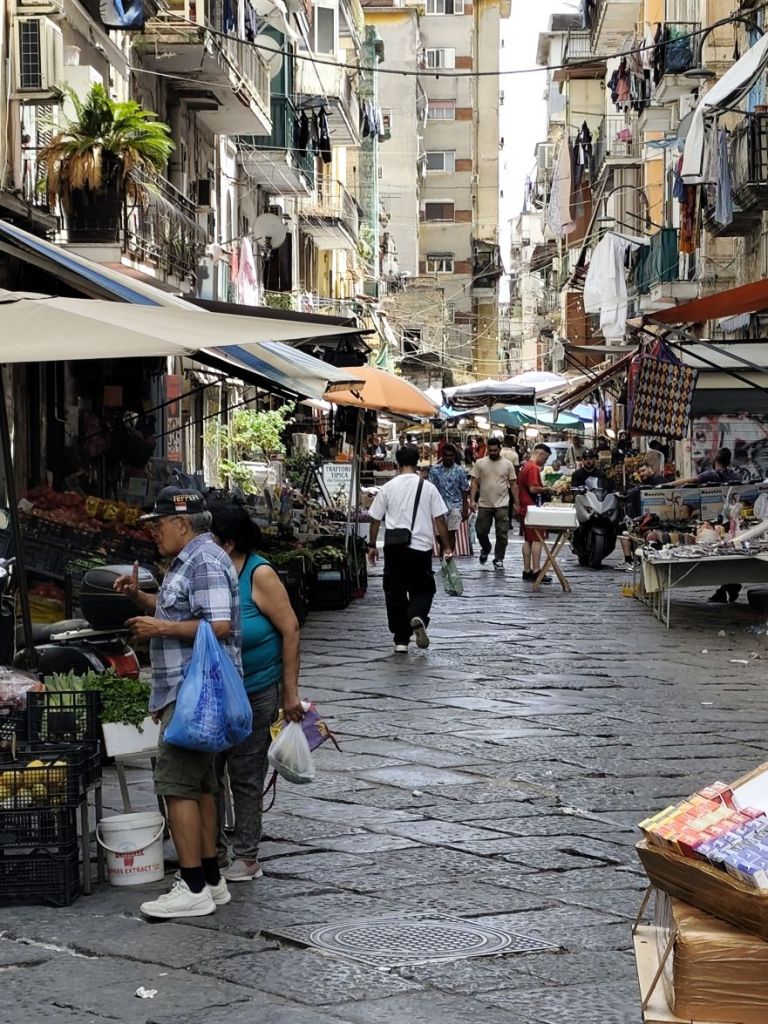
Because of our proximity to Naples, we returned there in search of lunch, for what else—Neapolitan pizza! After that nod to something well-known, we went back to the original plan of seeking out the less-visited, which was made easier by exploring during the afternoon siesta period in the oldest part of the city. With some of the usual crowds cleared, we ambled down the narrow main street, popularly called Spaccanapoli. There we saw a bit of the “authentic” part of the city that guidebooks had suggested: a scene packed with churches, graffiti/street art, scooters, and hanging laundry fluttering overhead.
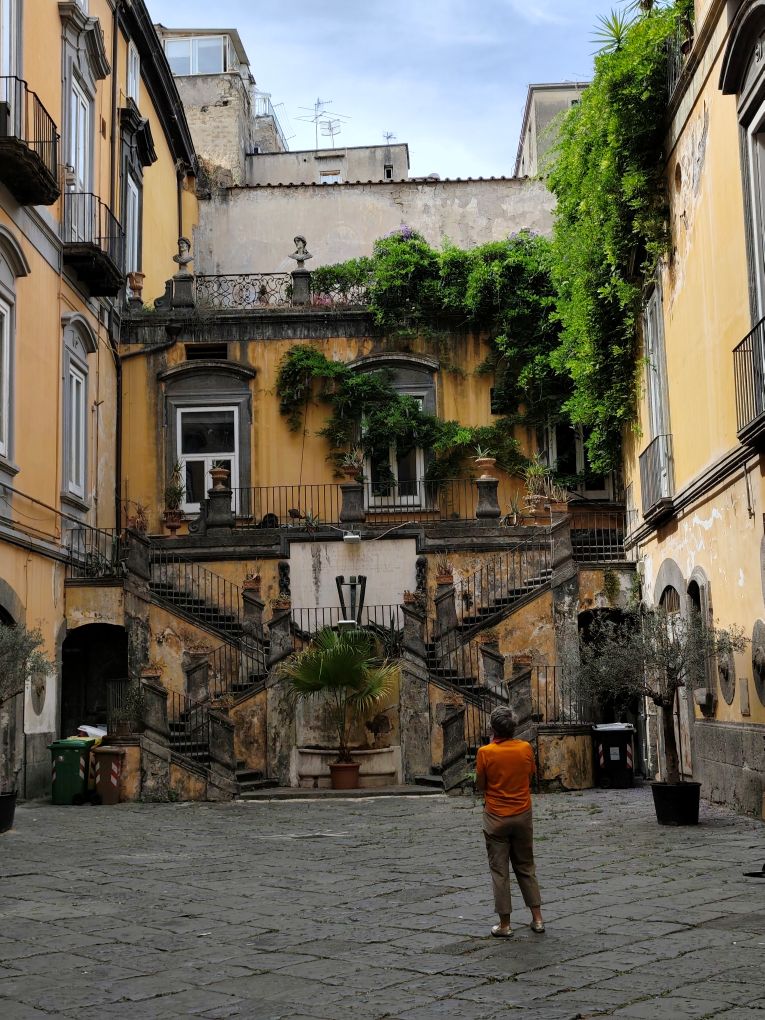
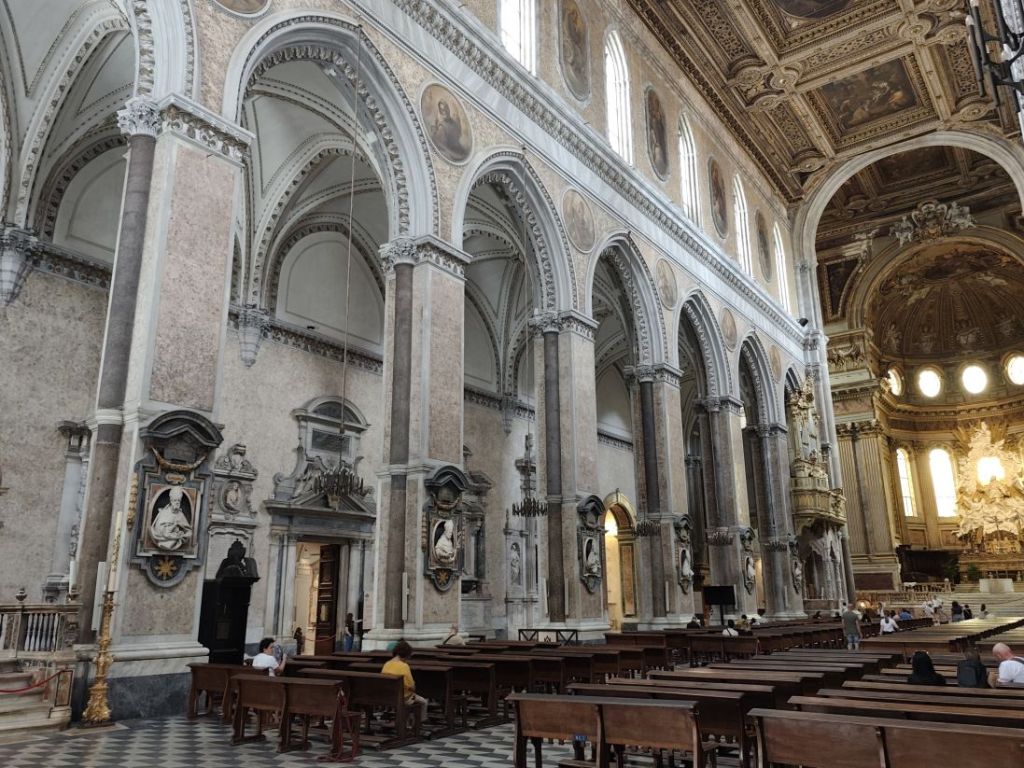
In the second gallery below, you’ll see photos of our ramblings in “old town” that included a street where artisans carve nativity figures, an ancient Roman marble statue dedicated to the Nile River god, a chapel museum with marble carved to appear transparent, and a 14th-century monastery complex featuring hand-painted majolica tiles. We returned to the train station by walking past the Cathedral of Santa Maria Assunta said to house the blood and head (encased in a gold and silver bust) of San Gennaro (Saint Januarius).
If you go: We followed the advice from the folks at the blog Along Dusty Roads who have put together an excellent guide. A quick search for their post, “How To Get from Naples to Herculaneum,” will give you all the information you need. Unfortunately, on the day we were there, some of the trains were on strike so we opted to take a taxi between Naples and Herculaneum at 70€ each way.
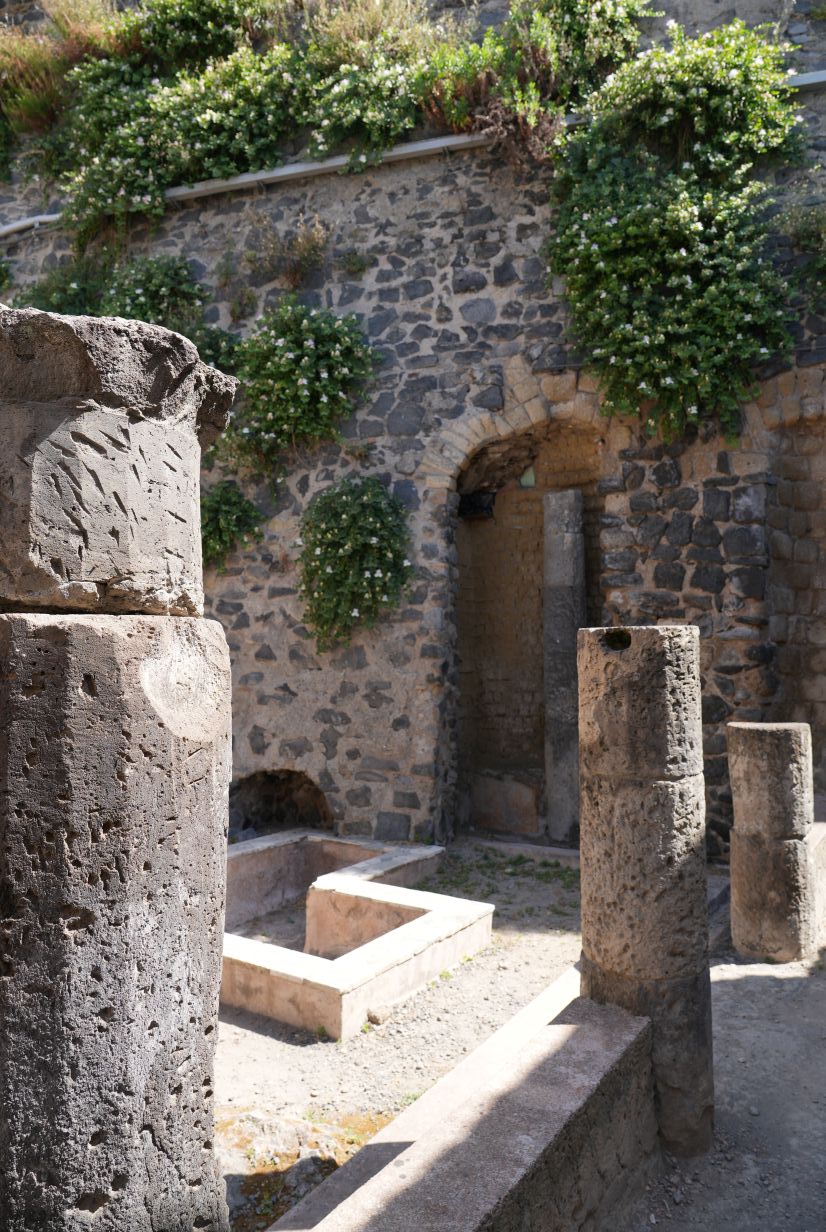
Photo notes: The featured photo across the top of today’s post is an overview of Herculaneum looking out to sea and in the first paragraph is an interior courtyard with a shallow pool in one of the town’s homes.
 Let's Live In France
Great day trip from Rome.
LikeLiked by 2 people
Love the pics! Just watched a documentary about Rococo art and it said Naples used to be a very wild place! Lots of criminals. Lots of art!
LikeLiked by 2 people
Hmmm, it’s still pretty wild!
LikeLiked by 2 people