
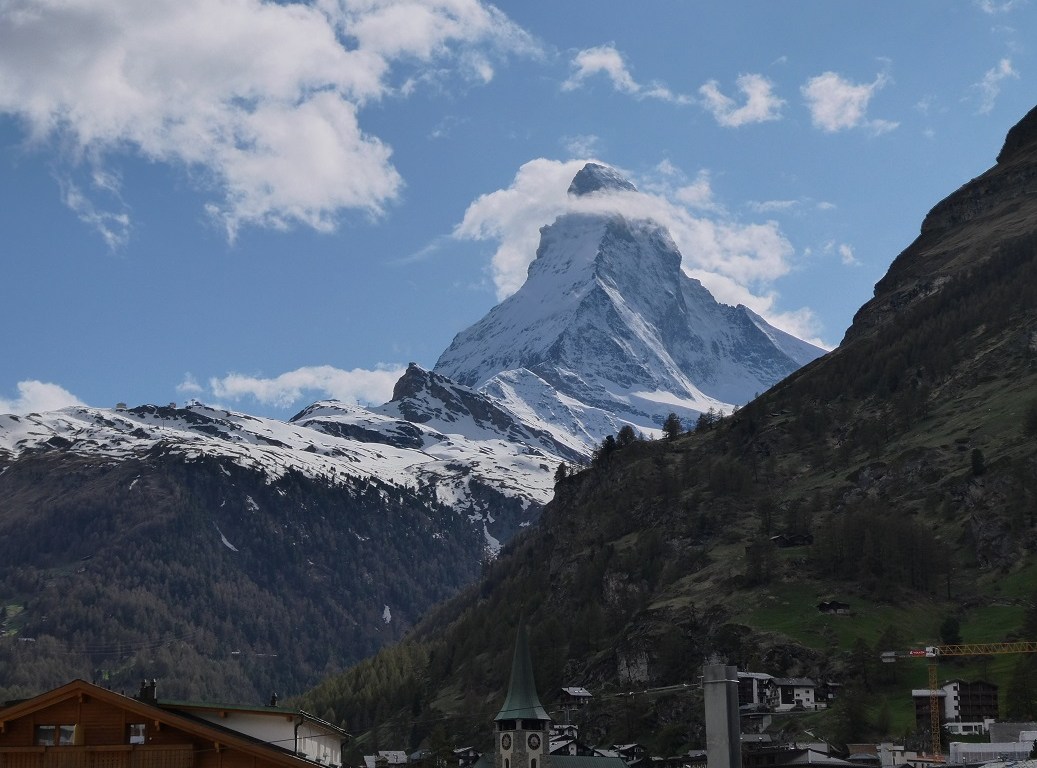

It didn’t take more than a glance at a photo similar to the one across the top of today’s blog post to convince me that we had to return to Switzerland. We had been there for a week last July, mostly in Geneva, but this time we were going to be on the opposite end of the lake and beyond, enjoying spectacular views while riding luxurious trains through mountain passes and across aqueducts in the Alps. Those details I’ll save for next week while today we’ll concentrate on our 4 stopover cities that definitely have name recognition: St. Moritz, Zermatt, Interlaken, and Montreux.
We’re not skiers, although those city names would be well-known to anyone who enjoys the slopes, especially during the high season between October and March. That explains why we visited in May although there was still snow in the higher elevations and the possibility of it in the daily weather forecast. To start the adventure we took a train from Carcassonne to Geneva (with a change in Lyon) and the next morning continued on to Tirano, Italy to be in place for the 10 AM departure of the Bernina Express for St. Moritz.
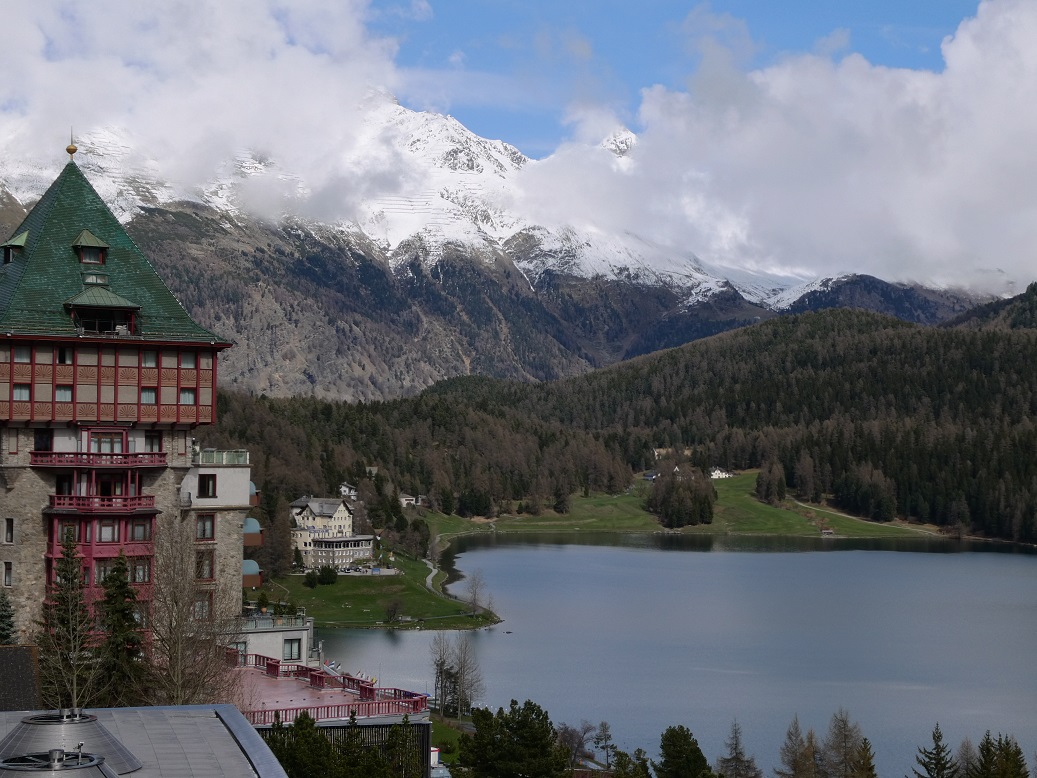
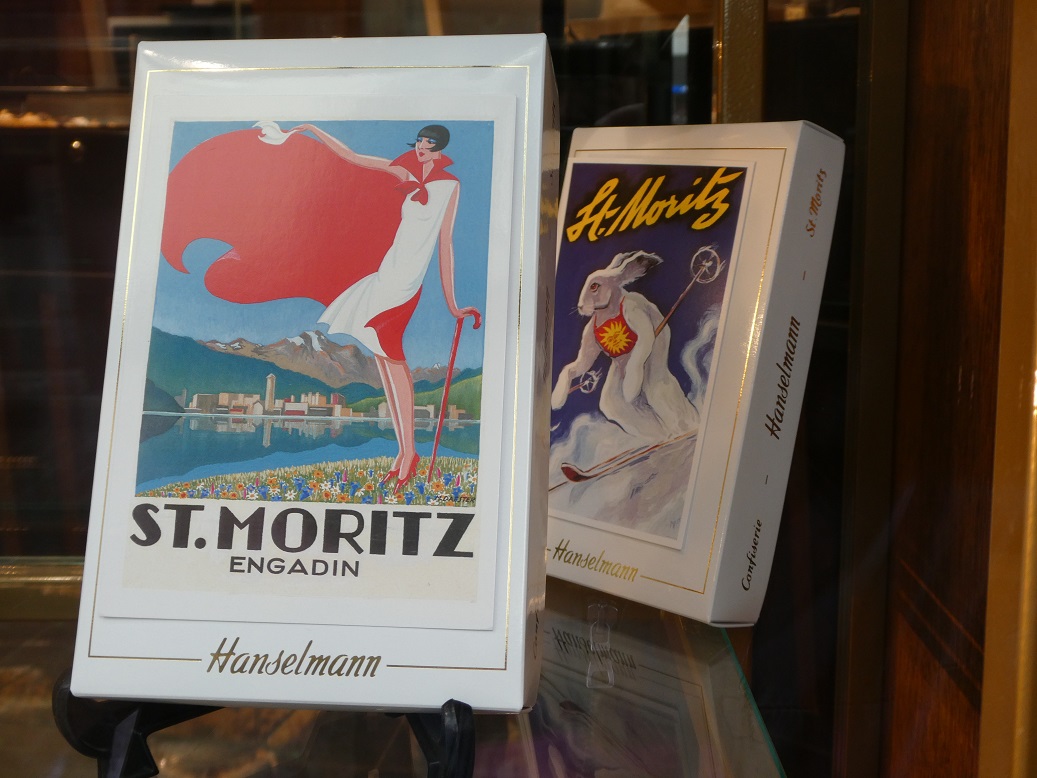
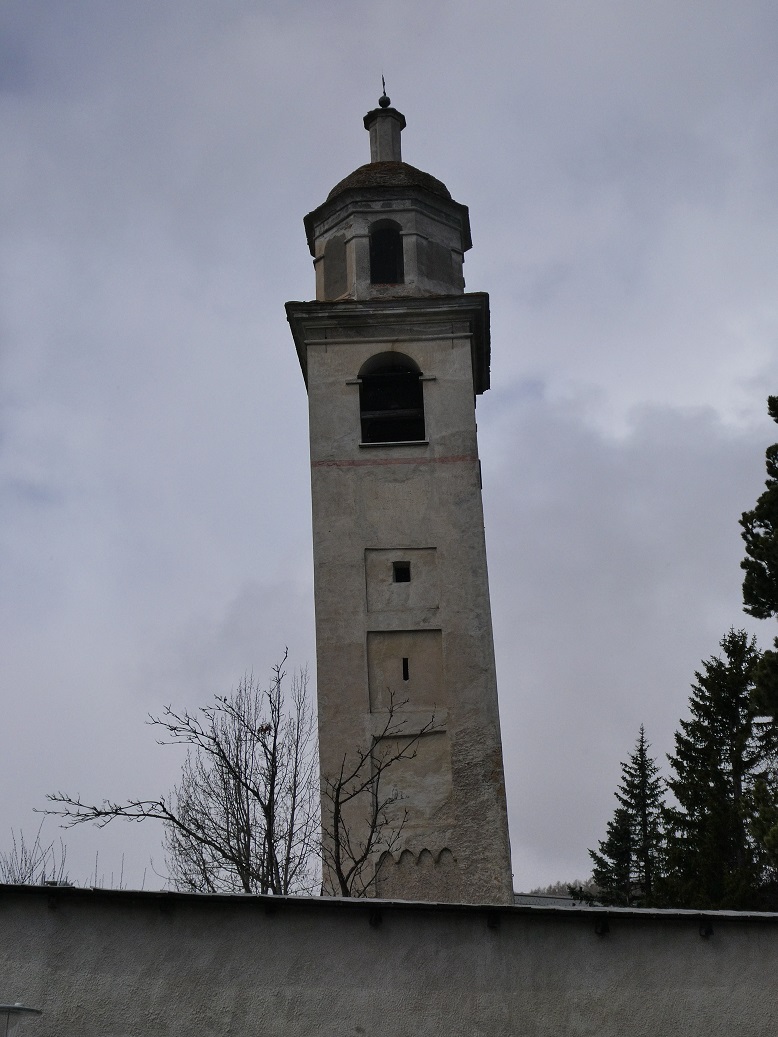
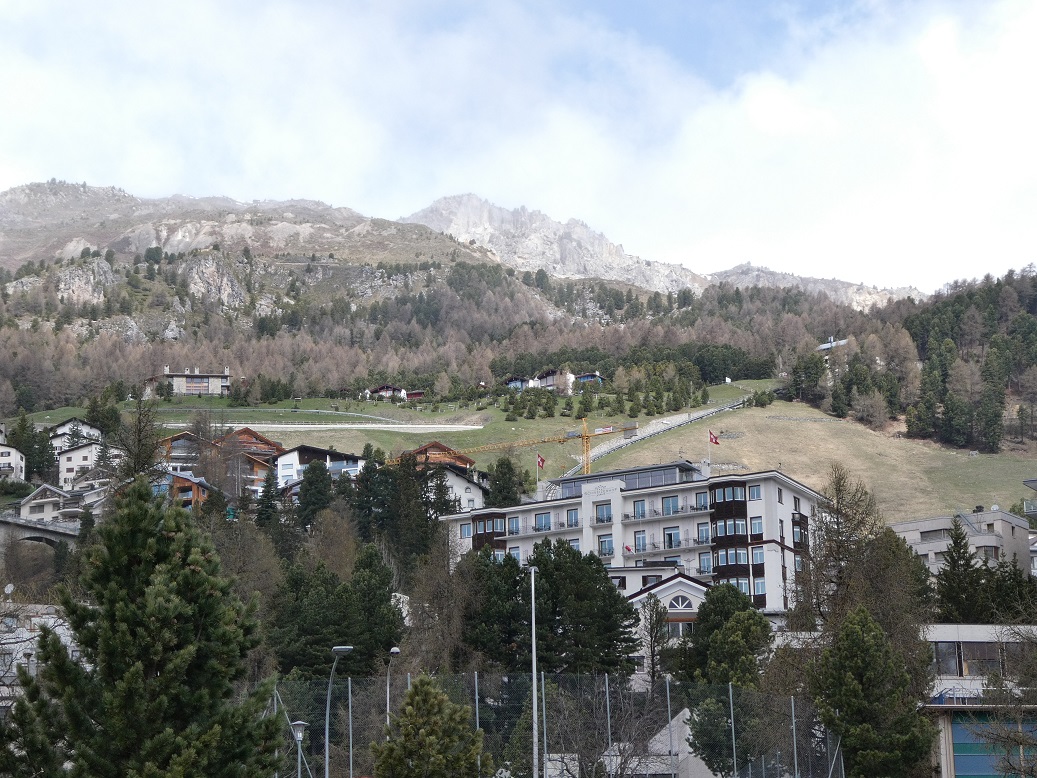
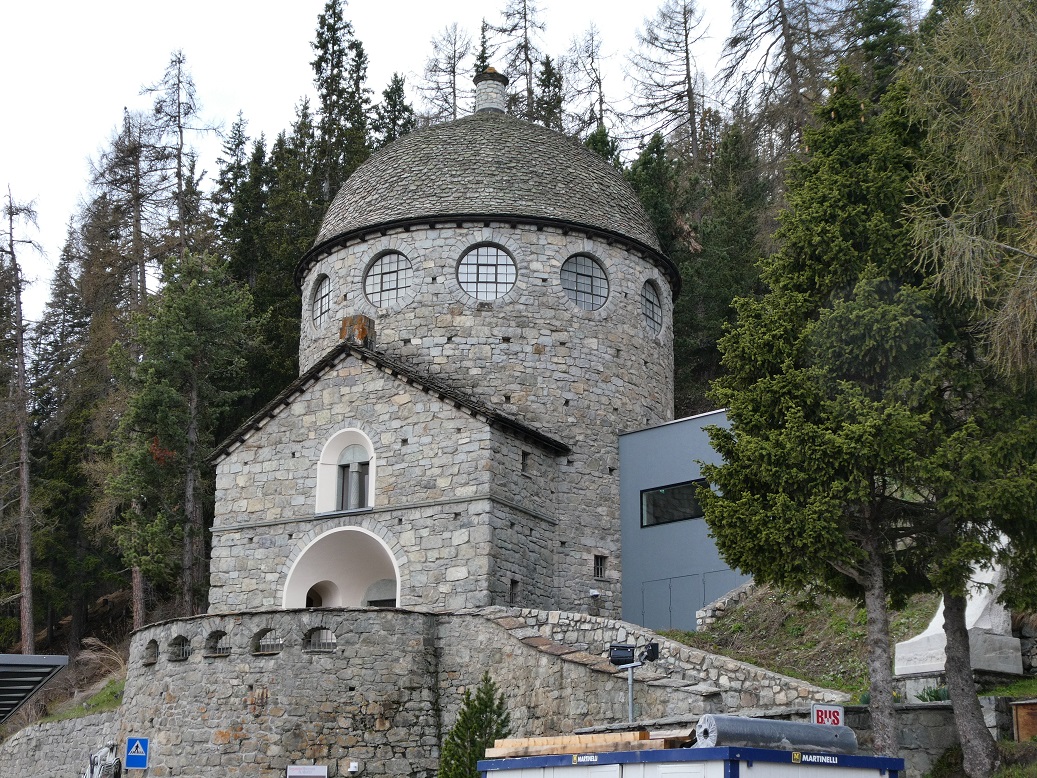
St. Moritz—Alpine winter tourism is said to have gotten started here with the hosting of the Winter Olympics, first in 1928 and then again in 1948. As you might expect with 350 kilometers (217 miles) of ski runs in the vicinity, there are lots of gondolas and funiculars to take you “into the sky” even in the summer. That’s apparently how landscape painter, Giovanni Segantini, whose museum is located downtown, discovered a favorite vantage point. Not far from there is the Engadine House that replicates Alpine life from as far back as the 13th century, and the Leaning Tower—on a slant greater than the one in Pisa—that was once attached to the now-destroyed Church of St Mauritius that was built in the 1570s. Our favorite local treat was the shortbread torte called Engadiner Nusstorte made with caramel, cream, and lots of walnuts.
Two mornings later we were back at the station to board a train for a daylong journey in “the most sought-after seats in Switzerland” on the Glacier Express to Zermatt.
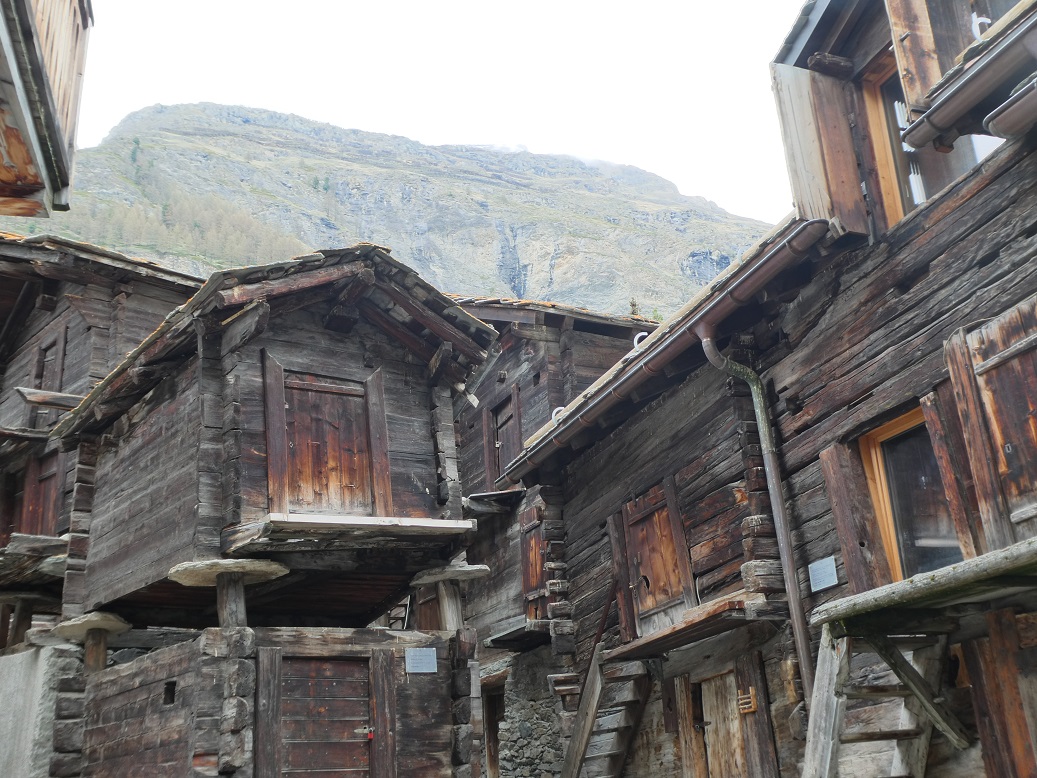
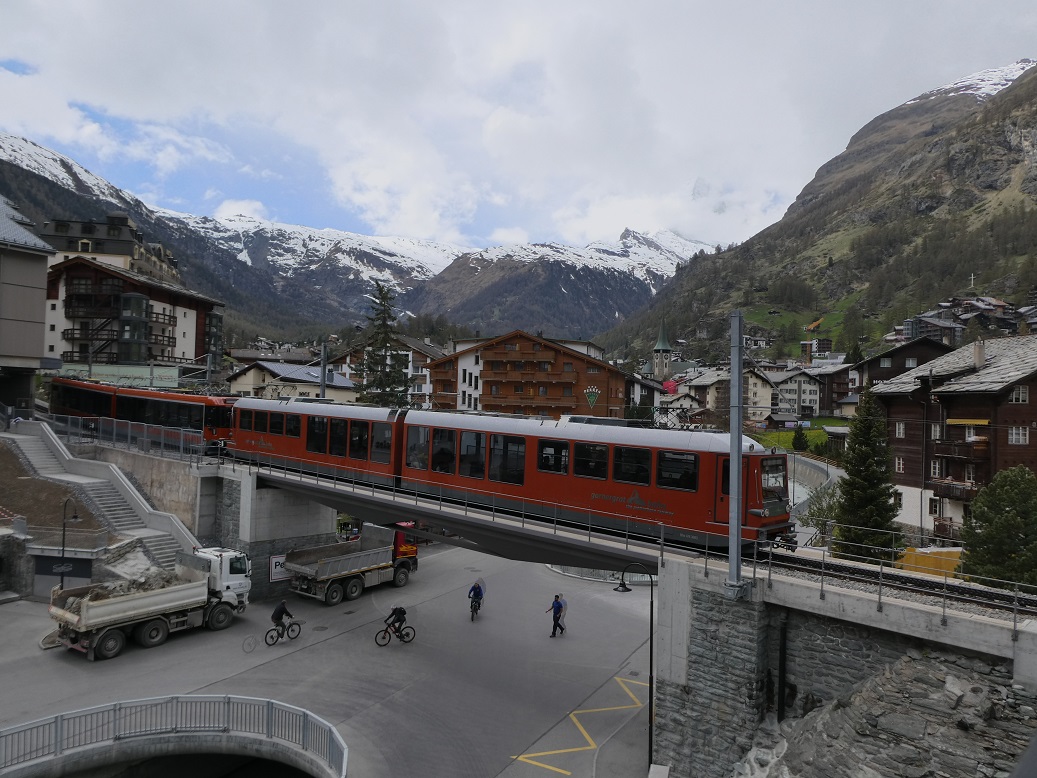
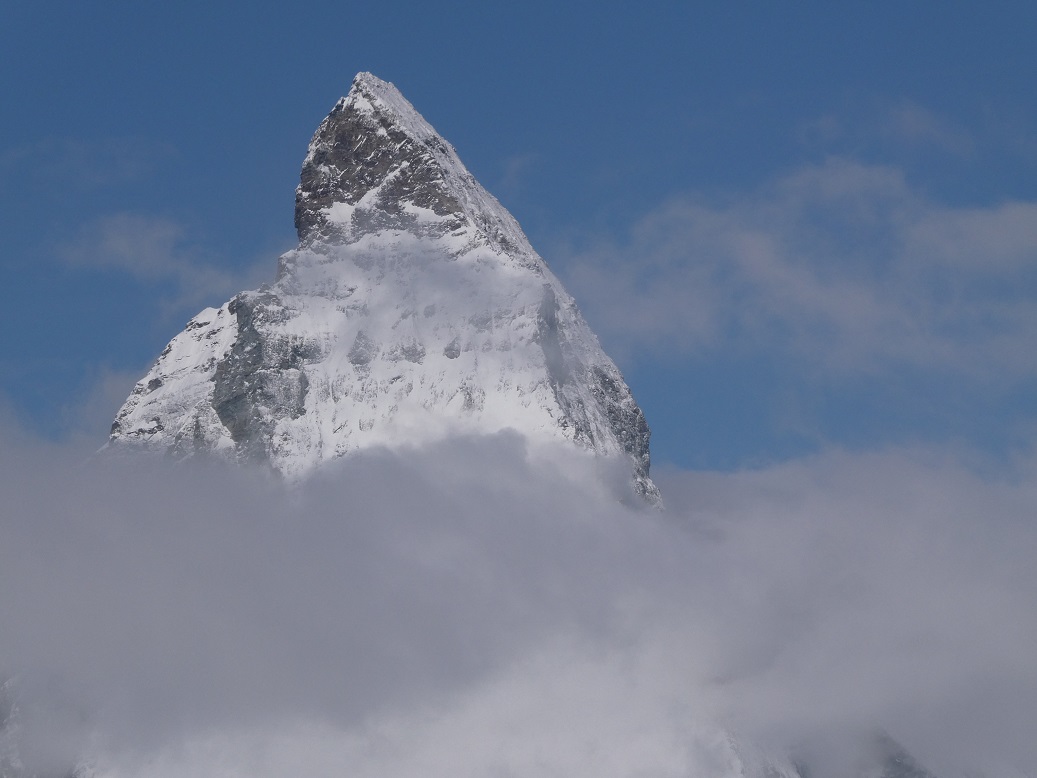
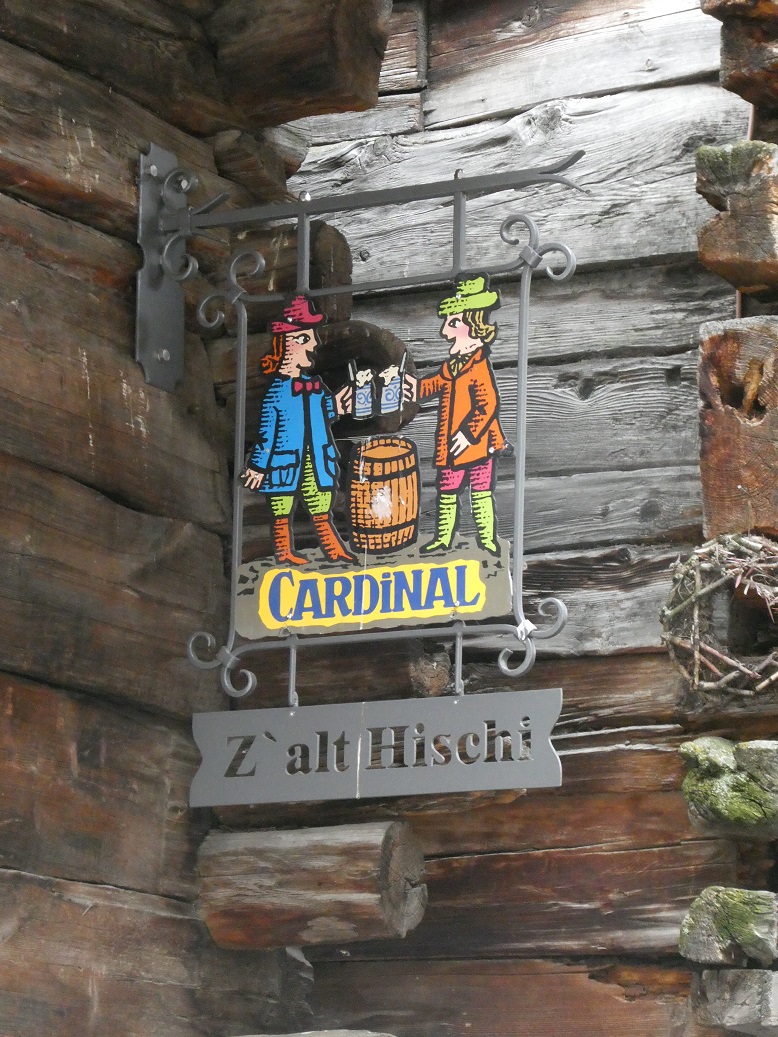
Zermatt—If something is going to outshine skiing here in the Alps then it has to be big and at 4,478 meters (14,692 feet) tall, the Matterhorn does the trick. The first ascent of the mountain was in 1865 and the details of that plus the history of Zermatt are well covered in the museum downtown. A 3-minute walk from there put us in the heart of “old town” known as Hinterdorf where homes, barns and storehouses have withstood the crushing weight of snow since the 16th century. The local wood is especially dense and when combined with stone slabs they keep out not only the snow but also the mice.

For a morning excursion we returned to just across from the main train station to take the Gornergrat Bahn, Europe’s highest mountain cog railroad running over open country. In about half an hour we went from Zermatt’s altitude of 1620 meters above sea level (5300 feet) to the summit at 3089 meters (10,135 feet), took some photos, and hopped aboard the next train down. We purchased our tickets online for a specific date and departure time. It was worth paying extra for “priority boarding” that had its own uncrowded waiting area and gave us the time to secure a right-hand Matterhorn-view seat for the ascent before the train was quickly filled to capacity.
Since we were between the winter and summer seasons the restaurants at the mountain top weren’t open but we booked something special in its place: a fondue dinner on our hotel balcony with a view of the Matterhorn, today’s featured photo at the top. In the morning the walk back to our next train was carefree since no private cars are allowed on the streets.
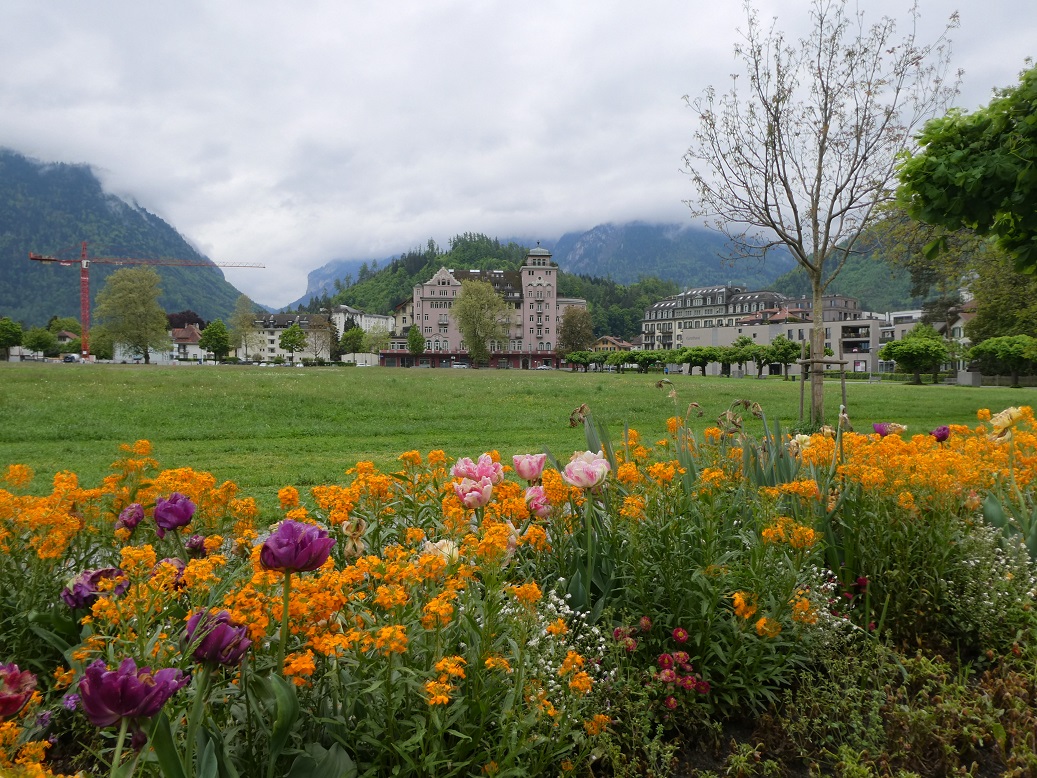
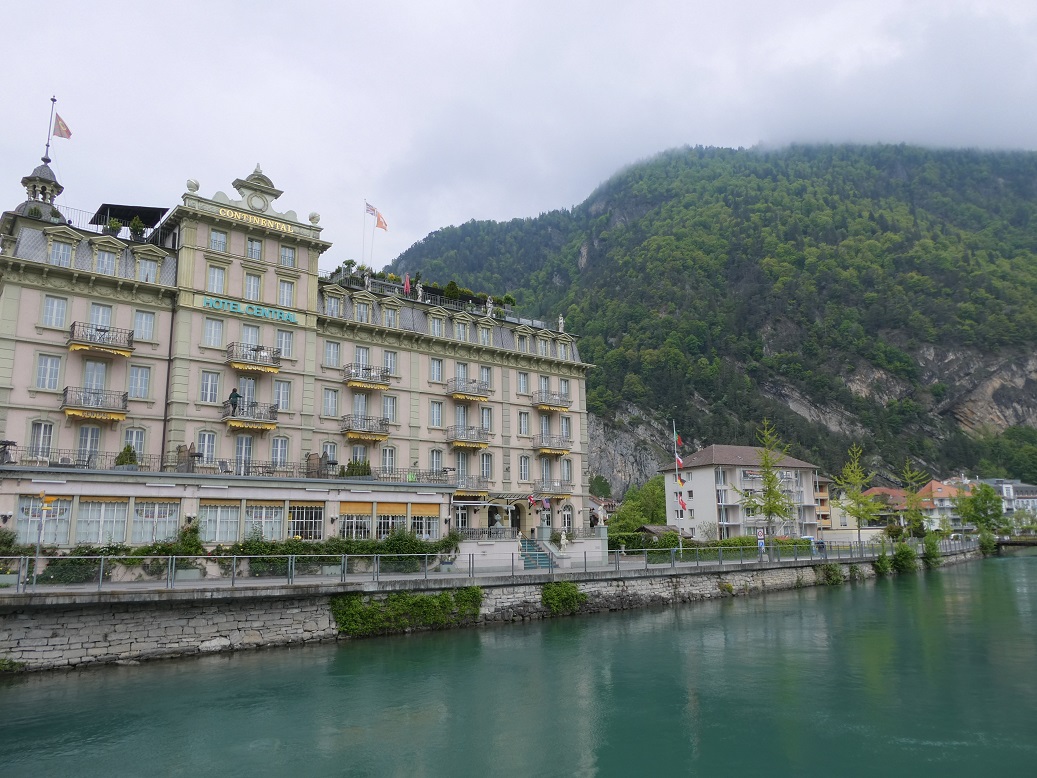
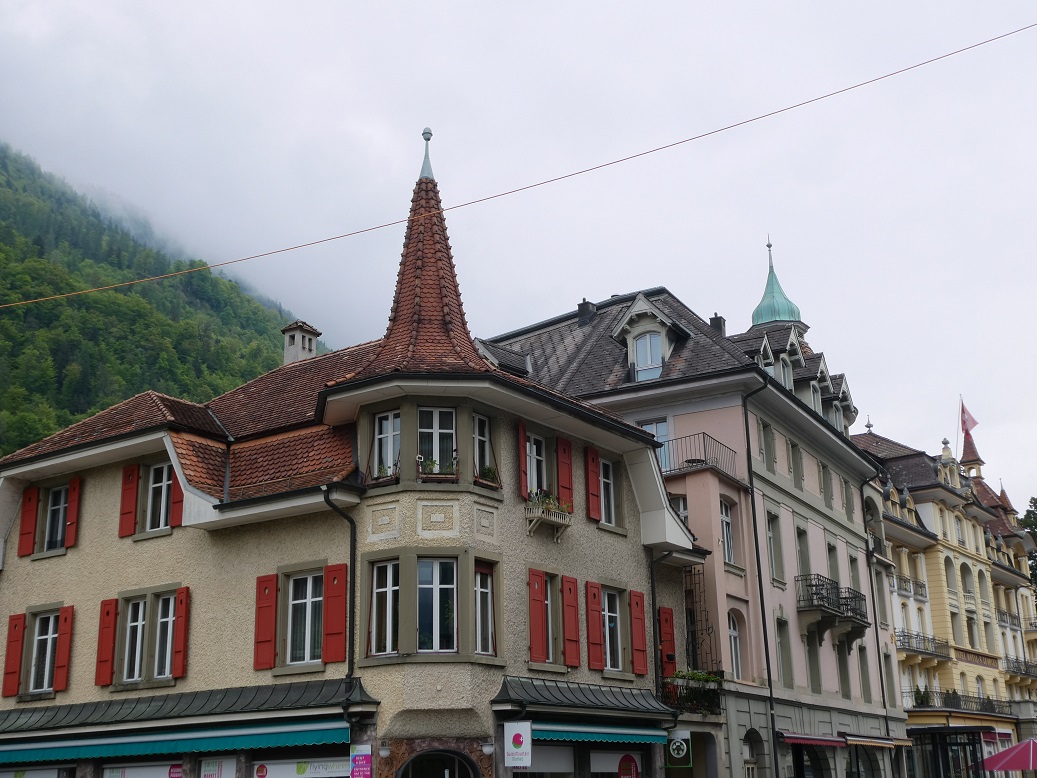
Interlaken—As the name suggests, we were now between two lakes. A monastery was built here around 1133 but it was not until 1800 that this area welcomed the first tourists seeking fresh mountain air. Soon, luxury hotels and spas were filled by those arriving initially on steamboats and then from connecting trains beginning in 1872. That was about the same time that grande dame hotels such as the Victoria-Jungfrau were built along a 14 hectare (34.5 acre) Hohematte Park that the city’s hotel owners jointly purchased to ensure that their guests would have a pleasant place to promenade.

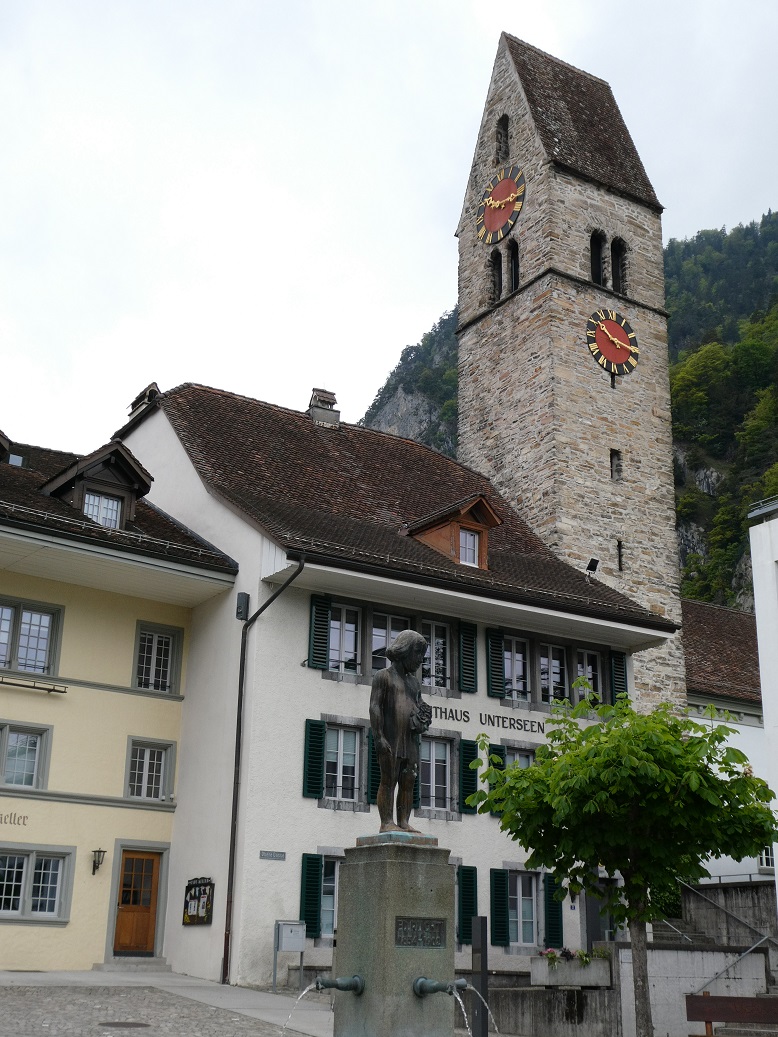
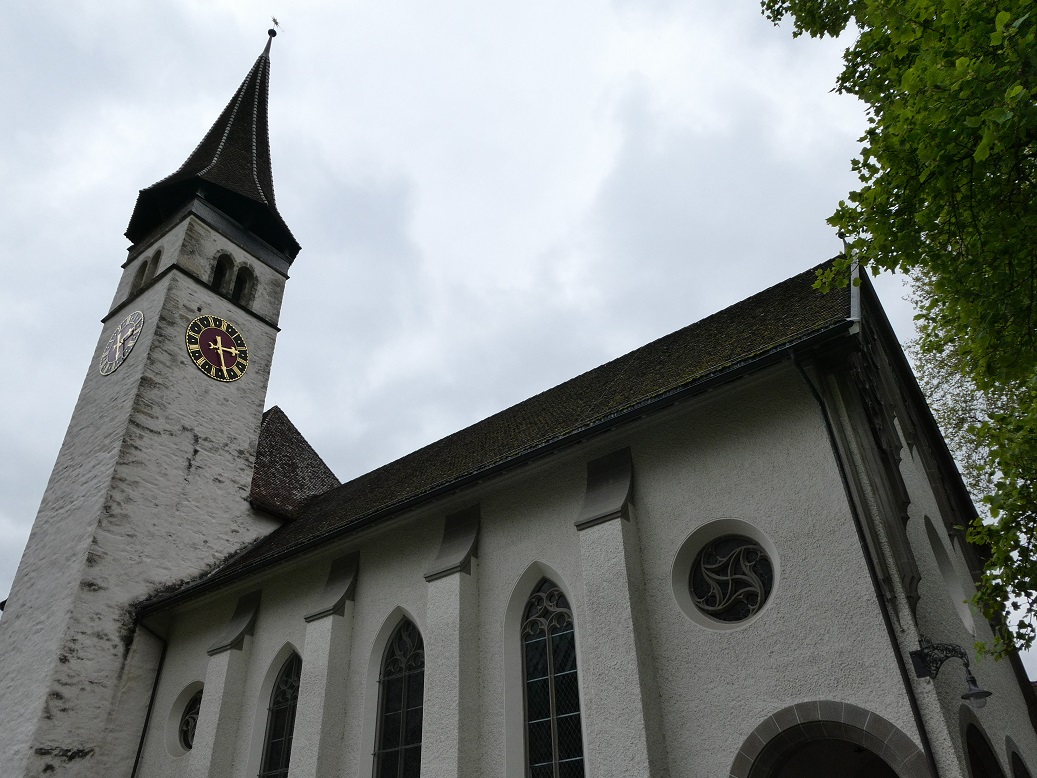
To see some traditional wooden chalets we crossed over the river to the neighborhood of Unterseen where there is the small Parish Church from 1471. We’d been told to be on the lookout for grazing farm animals on front lawns on our way to Stadthausplatz for lunch at one of the many restaurants that serve local dishes around this square. For the afternoon we were back downtown to see what remains of that original 12th century monastery that served as a stopover point for pilgrims on the Way of St. James, the route that passes through Carcassonne on its way to Santiago de Compostela in Spain.

For a mountain top view of Interlaken, the lakes, and the surrounding countryside we took a funicular up the side of Harder Kulm that took only 10 minutes to make the 730 meter (2395 feet) trip. Once there we were able to walk out on a viewing platform that hangs over the edge of the cliff that even has a metal grate floor so that you can see the valley below. Our online ticket was valid for a specific date but no reservations were accepted; that is, first-come, first-served. We arrived 20 minutes before the 9:10 AM departure and were the second in line.

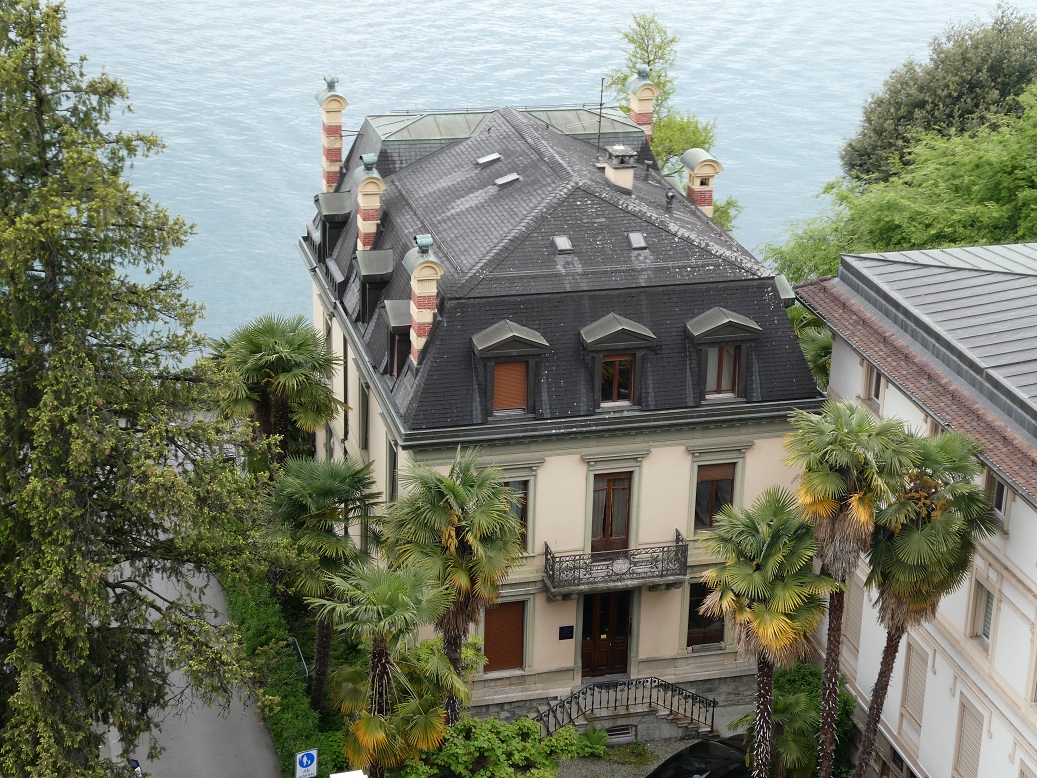
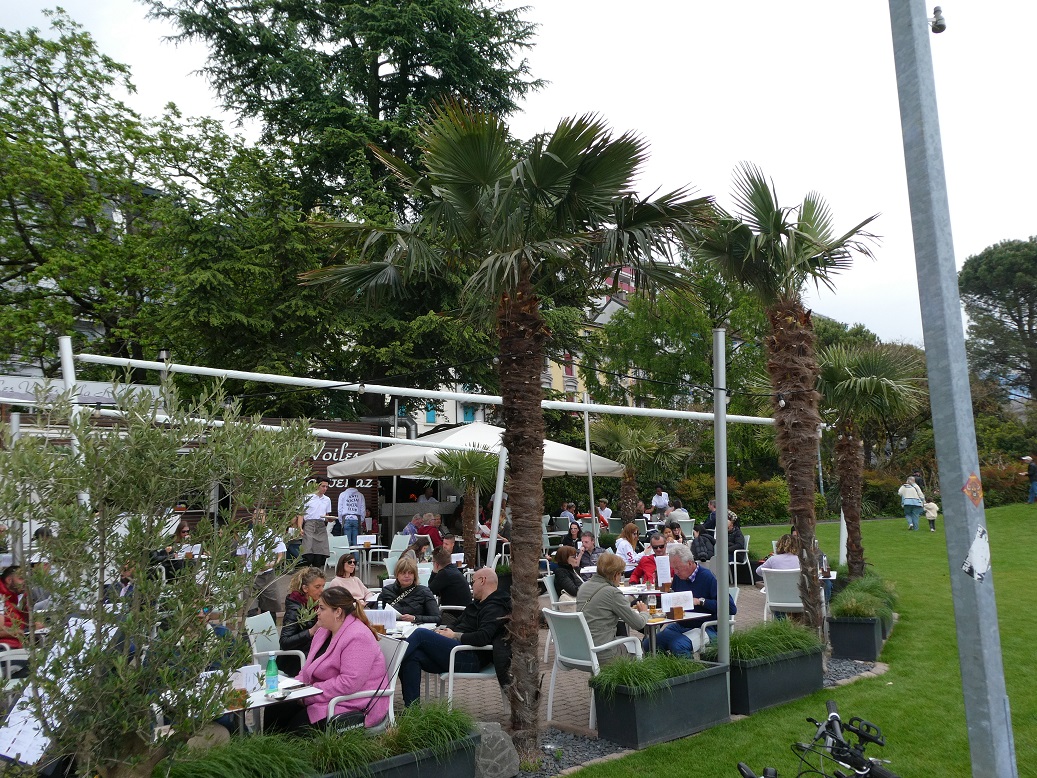
Montreux—As fans of jazz music, we knew the name of this city famous for its festival that was founded in 1967 and has since included performances by Nina Simone, Miles Davis, Aretha Franklin, Ella Fitzgerald, and Marvin Gaye. A famous resident of Montreux was Freddie Mercury who recorded 6 albums there with Queen and there’s a bronze statue of him on the waterfront. It was along this lakeside walkway that we spent most of this trip’s last day in Switzerland simply admiring the view. We could have gone as far as the 13th century Château de Chillon, Switzerland’s most visited historical building, but we stayed closer to downtown.
We enjoyed visiting all of those beautiful Swiss cities but in reality, for us they were the stopover points between some spectacular train routes—more on those next time. As writer Ursula K. Le Guin said, “It is good to have an end to journey toward; but it is the journey that matters, in the end.”
Four photo galleries below:













 Let's Live In France
I’ve just come back from Switzerland after an intense week of rail travel, using a discounted interrail pass I bought last year (interrail were celebrating their 50th anniversary and offering their 1, 2 and 3 month global passes at 50% discount). I went from Basel to Bern and then Lucerne, followed the route of the Gotthard Panorama Express with a boat across the lake to Fluelen and train down to Lugano, then Bernina Express starting with a bus around lake Como to Tirano, train to St Moritz, followed the route of the glacier express to Zermatt, then spent the final day in Zurich before the train back home.
I used the local train alternatives to the panoramic tourist trains (each has advantages and disadvantages) and absolutely loved it – it was fantastic. It’s such a beautiful country even though the weather wasn’t great and the train system is IMO the best in Europe – frequent, regular, clean, well integrated with other public transport and always seems to arrive on time.
I’ll look forward to your report on the train journeys.
LikeLiked by 2 people
What a wonderful trip! We’ll compare notes next week
LikeLike
Fabulous trip down memory lane to places in Switzerland I know well – I am a skier – thanks.
LikeLiked by 2 people
Fabulous. Jazzhead here, always wanted to get to Montreux Jazz! Lovely photos, thank you.
LikeLiked by 2 people
Looks like we’ll have even one more place to meet up with you two!
LikeLike
Oh, I hope so! 😘
LikeLiked by 1 person
Great pictures!
LikeLiked by 2 people