


New Orleans, Louisiana is a favorite US city for us. It’s one of the few places in America where you can walk out of a bar in the French Quarter with a “go-cup” (a plastic cup containing an alcoholic beverage) and not get arrested. The nonchalant atmosphere of the Big Easy gives you a sense of freedom not found in a lot of other locations around the country. With that as a background, we wondered what the original Orléans would be like so we returned to the city where, almost 9 years ago, we spent our first night as permanent residents of France.

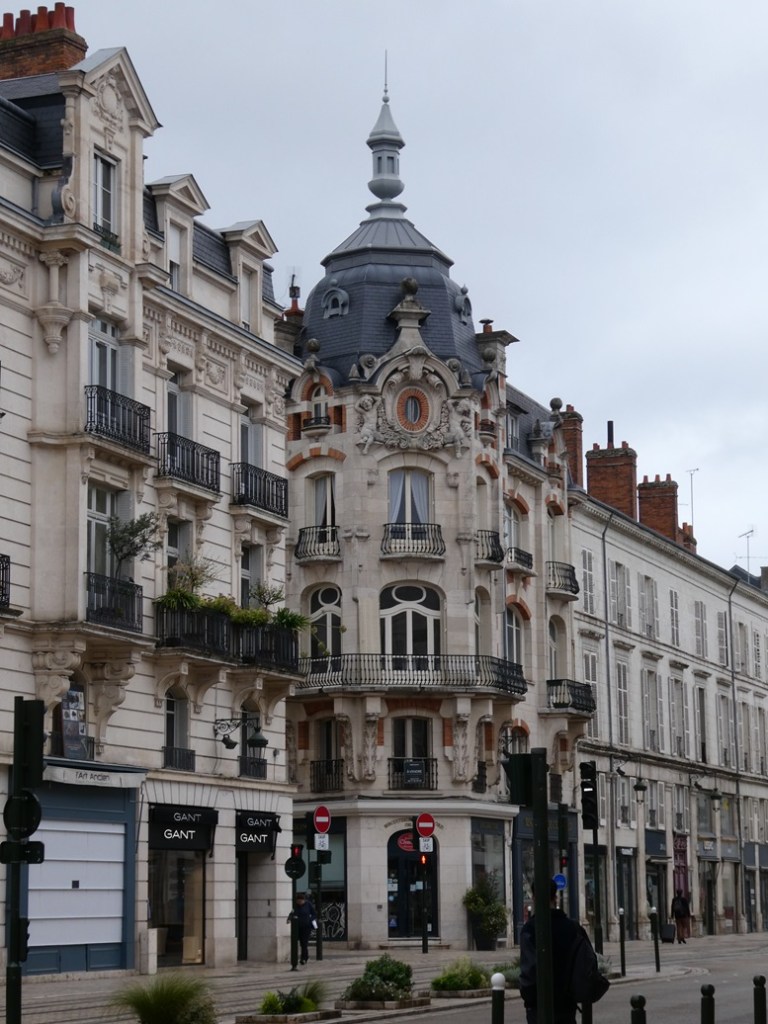
References to Joan of Arc can be found all over Orléans. Their relationship started in 1429 when she successfully led the French troops against the British who had laid siege to the city for months, but were forced to retreat. As you might expect, you can “follow in the footsteps” of this national heroine (first paragraph photo) and we started at the cathedral where she is known to have gone to mass. In reality, not much of the original building remains since it was mostly destroyed by the Huguenots during the Wars of Religion in the 16th century. Extensive restoration work was begun in the 1700s including adding beautiful stained glass windows that recount Joan of Arc’s life.
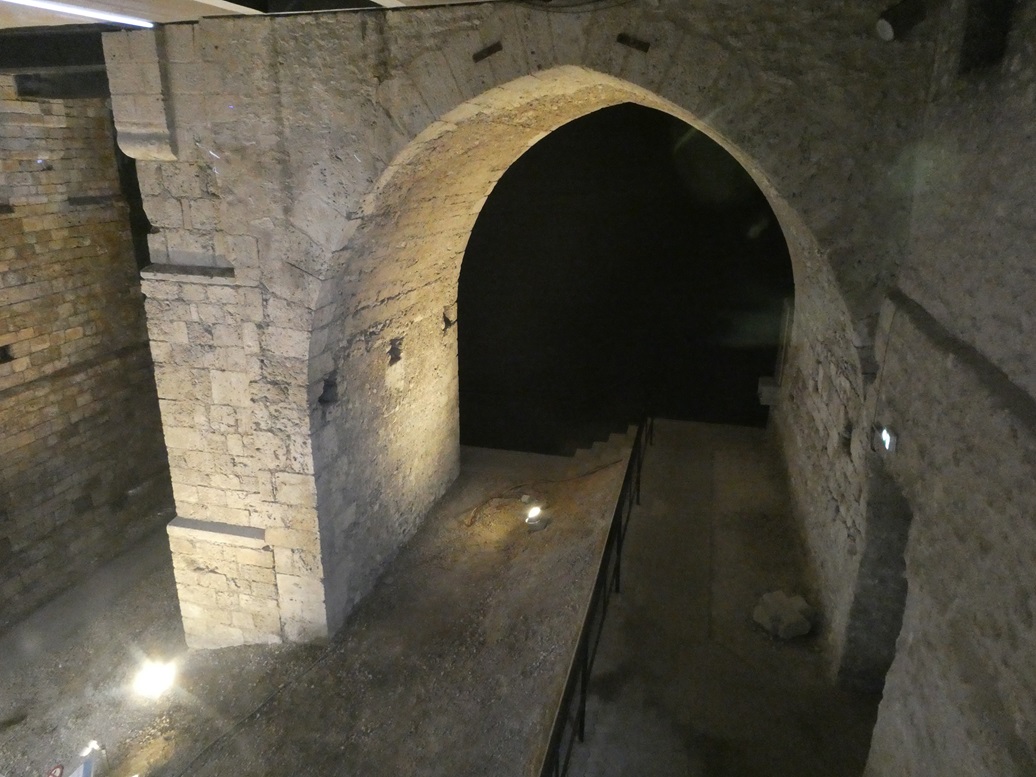
The path next took us across the center of the city to Place du Martoi, a big open square dominated by a statue of Joan of Arc on horseback created in 1855 by Foyatier. In medieval times this was the grain market, safely inside the town’s walls, remnants of which, including the gate Bannier we could see from the underground parking garage.

In a “George Washington slept here” moment we went to see the reconstructed La Maison de Jeanne d’Arc where she apparently really did stay between April 29 and May 9, 1429. Like the cathedral, much of the structure we were seeing was rebuilt because of bombing damage in WWII.
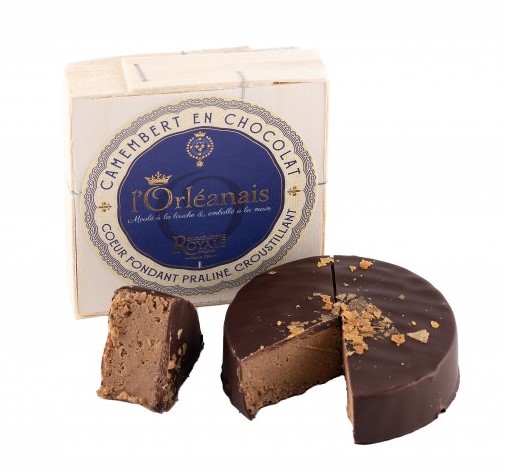
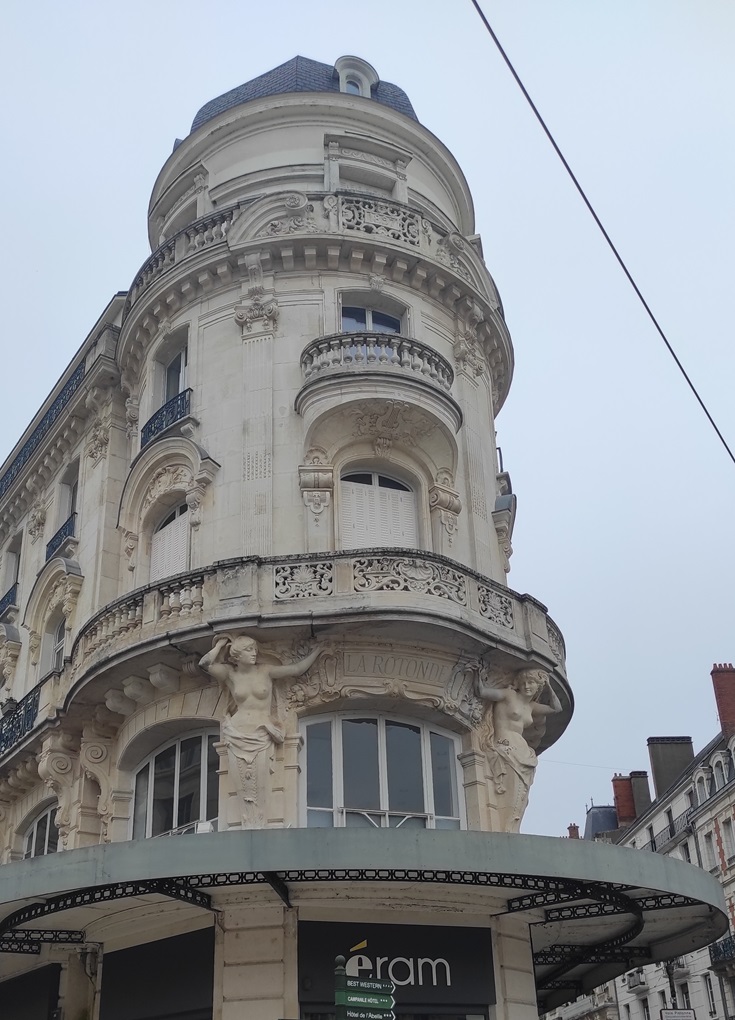
This led us onto the 18th century arcaded shopping street, rue Royale, (featured photo above) with a required stop at Chocolaterie Royale, a chocolate shop opened in 1760 and known to have been a favorite of King Louis XV. Their specialty is L’Orléanais, advertised as Camembert en chocolat praliné, that does indeed resemble the famous cheese from the outside but once you cut into the luscious center all you see is chocolate.
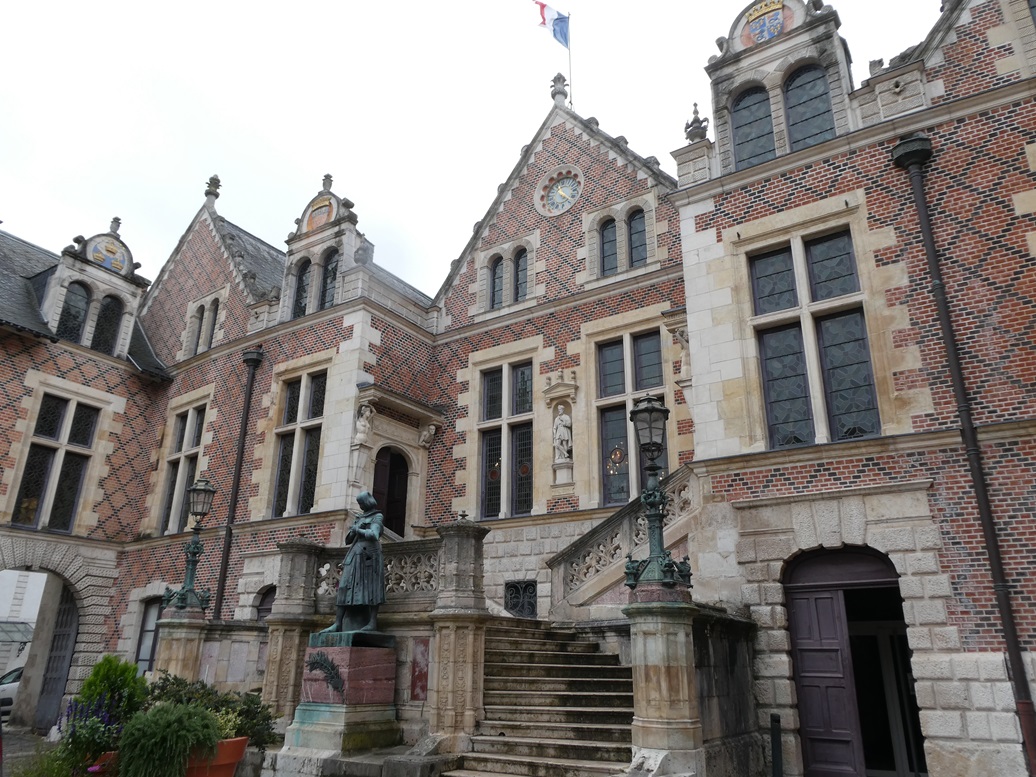
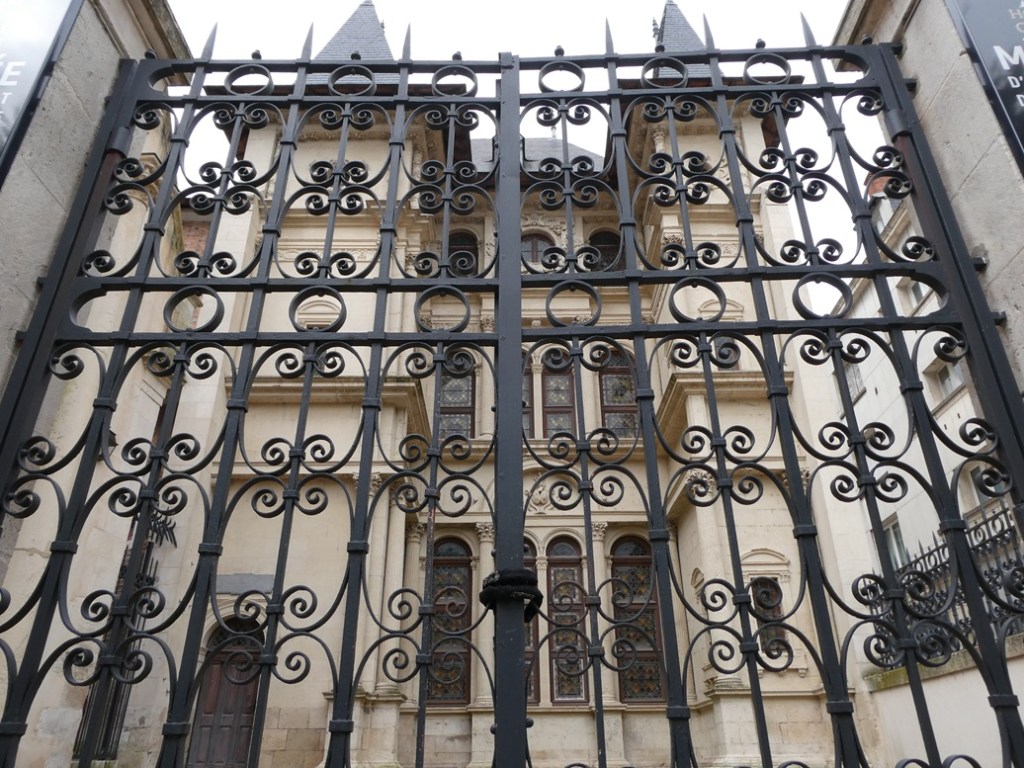
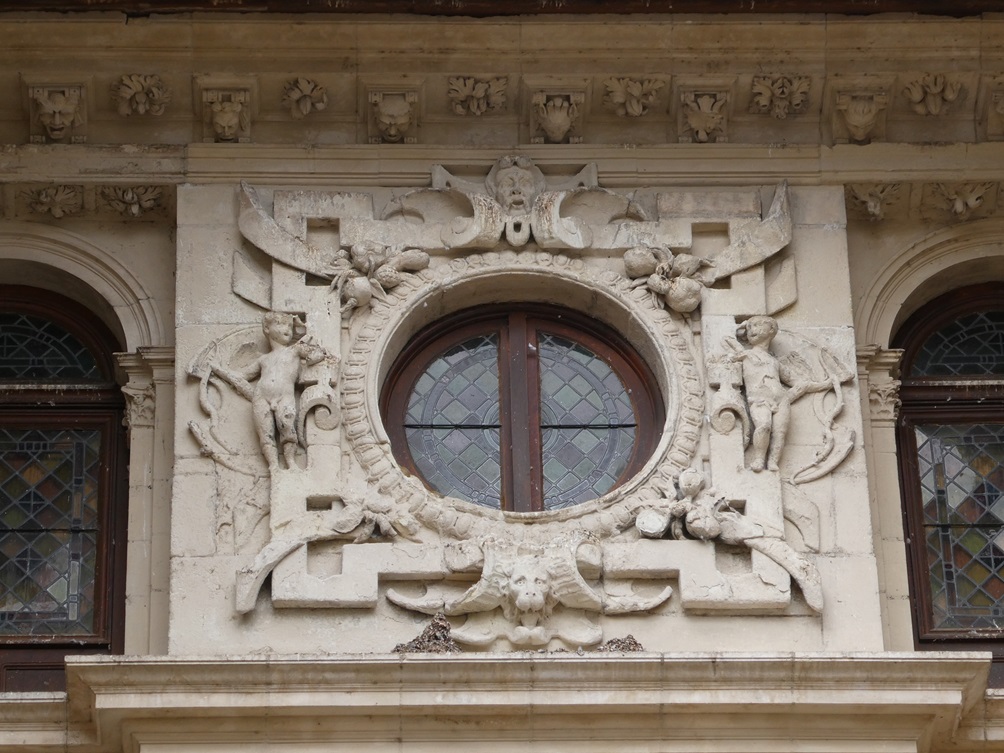
The Hôtel Groslot is a 16th century mansion built for Protestant reformer Jérôme Groslot that was requisitioned for use by Catholic king François II and later by Charles IX and his mother, Catherine de Médicis. It was eventually returned to the Groslot family and today serves as the Wedding Hall for the city.
So, does this original Orléans have a Bourbon Street like the new one in the USA? Sort of, in the form of Burgundy Street (rue de Bourgogne) where you can find a concentration of bars and restaurants but we didn’t see a single “go-cup”. That’s just not the French way, in our experience, but we can still enjoy both cities, new and old.









 Let's Live In France
Yet another charming place in France
LikeLiked by 2 people
Thank you for those incredible photos !!
LikeLiked by 2 people
It may not have been sunny most of the time but we did enjoy exploring the city. It seemed so clean with the white stone streets. The Joan of Arc windows in the cathedral were outstanding and we were told where to start to view them in the correct order by a woman who ran the gift shop.
LikeLike
A true beauty of a city, it appears. Thanks for the lovely tour!
LikeLiked by 2 people
Your introductory paragraph gave me a good laugh. You nailed it! I attended Tulane University in New Orleans for four years, and one of my first (shocking!) impressions when I moved there was seeing people walking around town, including in grocery stores and in other mundane, everyday locations, with beers and cocktails in hand. Then came the drive-thru daiquiri vendors, exponentially adding to the nonchalant vibe.
LikeLiked by 2 people
Oh yes, daiquiris on the go and we must not forget the drive-thru complete liquor stores!
LikeLike
Thanks for the trip!
LikeLiked by 2 people
Please stay tuned, Wendy. Next week we’ll be in Bourges, said to be, “one of France’s best-preserved medieval towns” !
LikeLike
I’ll be waiting…
LikeLike