
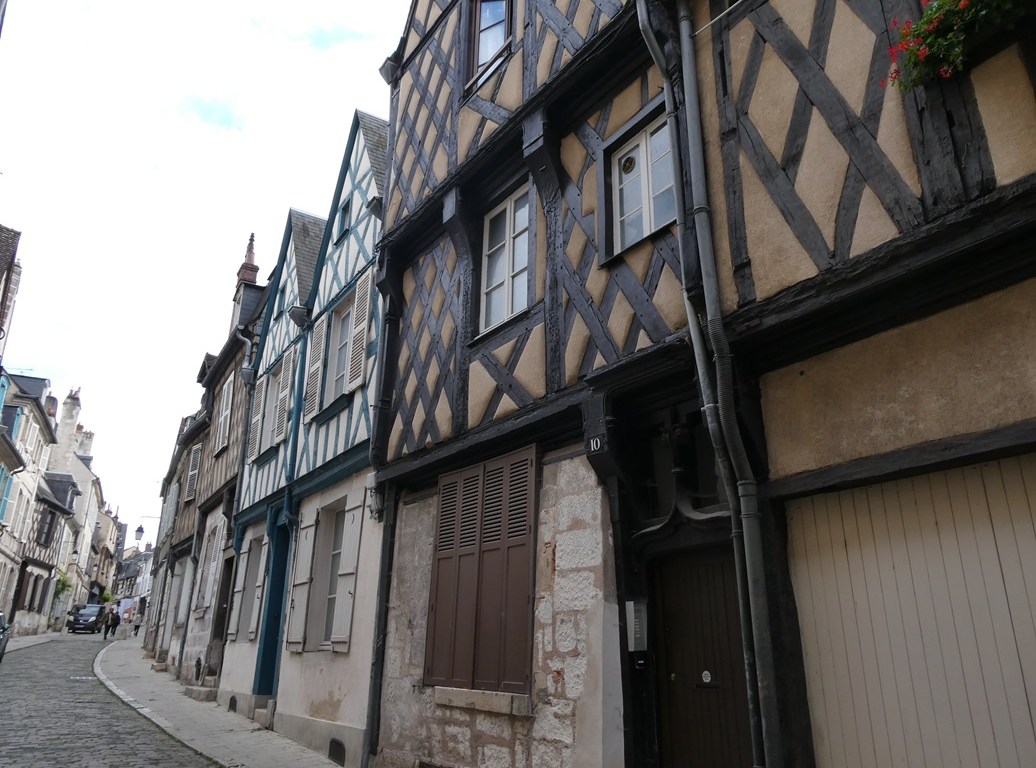
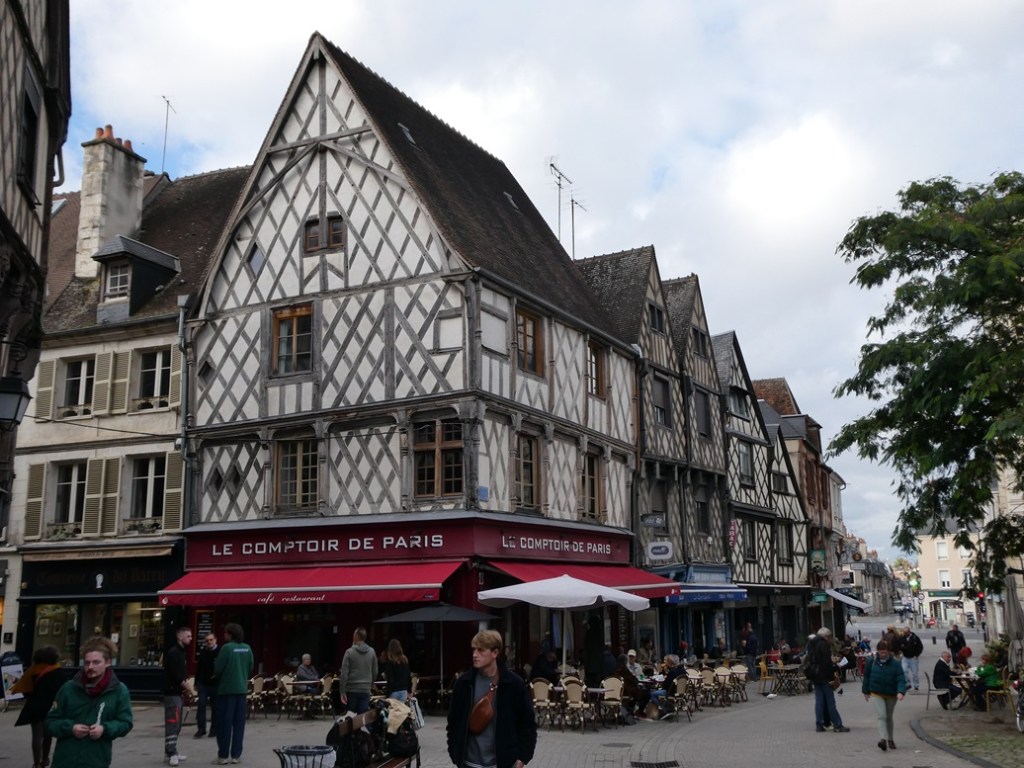
How’s this for a travel show’s recommendation for someplace to visit: “one of France’s best-preserved medieval towns” that was followed by scenes of half-timbered buildings, ivy-covered stone walls, meandering cobblestone streets, and a towering 12th-century cathedral. Based on that, it was an easy decision to book the train tickets to go to Bourges while we were in the area, having stayed about an hour away in Orléans after a wedding in Paris. The description came from the France TV 5 program called “Les 100 lieux qu’il faut voir” that we would translate as—and agree with—”The 100 Places that you must see”.

In 11 seasons of the show (and thanks to reruns I think we’ve seen them all) they’ve highlighted some of France’s most captivating destinations, many of which we’ve put on our must-see list. To jump right into those scenes from television, we started our tour by walking down rue Pelvoysin that’s lined with 15th-century stone and half-timbered houses. Around the corner, and still from the same time period is the former guildhall, now an art museum, that features an octagonal stair tower. Just steps from there, continuing the art and history theme, is a wealthy cloth merchant’s mansion, Hôtel Lallemant, that was “updated” in the 17th century to the Renaissance style.
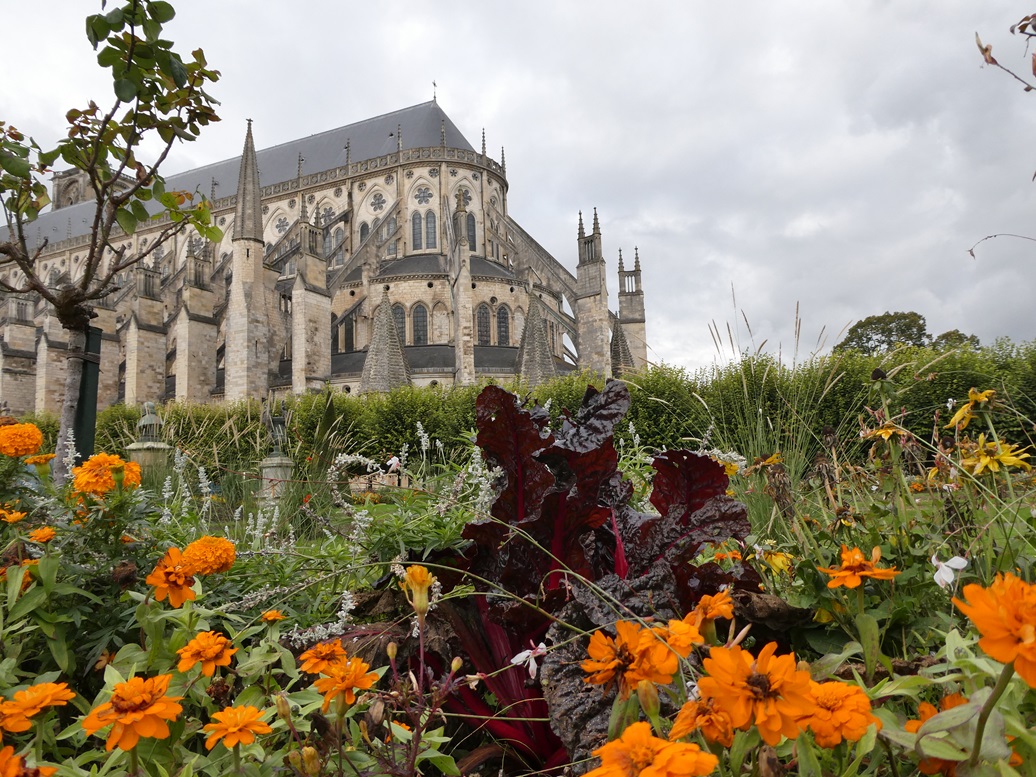
Next was the aptly-named Grange aux Dimes, a 13th-century tithe barn that once held one tenth of the parishioner’s produce collected by the Cathedral. According to the online Etymology Dictionary, the US chose the word “dime” in 1786 for the 10-cent coin. As you would expect, essentially next door to this warehouse we found the Cathedral St. Etienne. Construction began around 1192 but wasn’t consecrated until 1324. Thanks to a large number of flying buttresses, the walls could be taller and thinner with large openings for windows, all of which allow more light to enter the massive interior space.

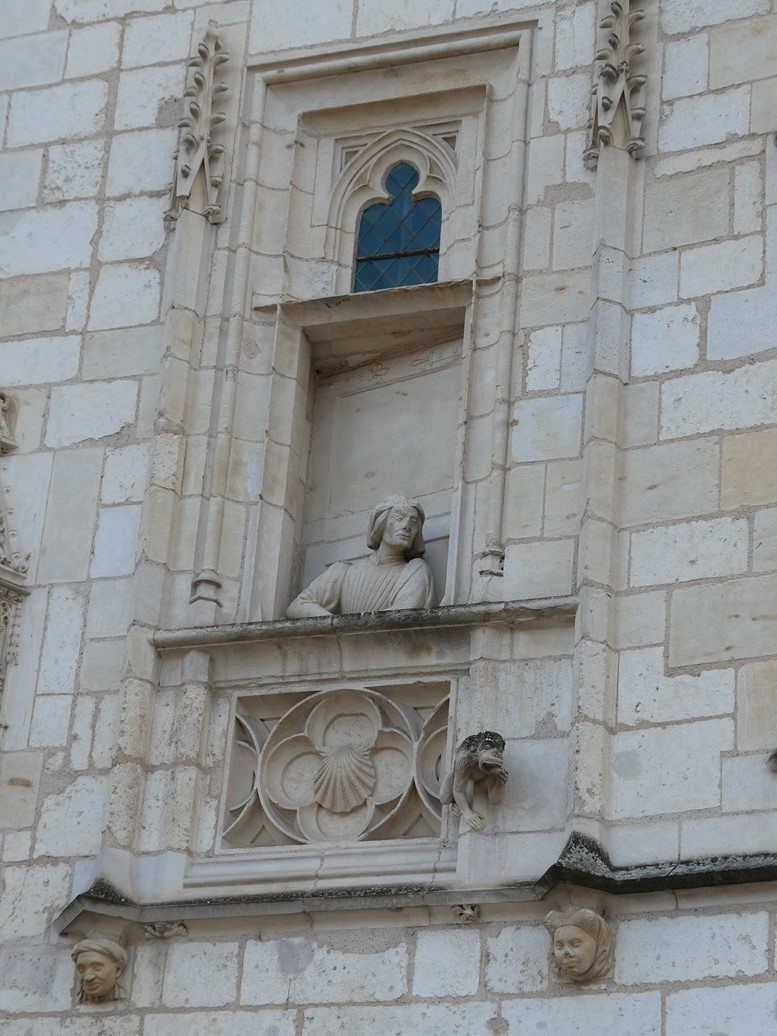
As in most cities where there’s a cathedral, the Bishop’s Palace can’t be far away and in this case it was right next door, set within the impressive formal gardens where the plants were used for both beauty and healing . From there we went on to an even more extravagant palace, this one having been built for Jacques Coeur, the finance minister for Charles VII. Begun in 1443, it took 10 years to complete and sadly for the owner, by then he had fallen out of favor and it became royal property in which he never lived. Eventually the palace was returned to his heirs and now it has been restored to its 15th century grandeur.

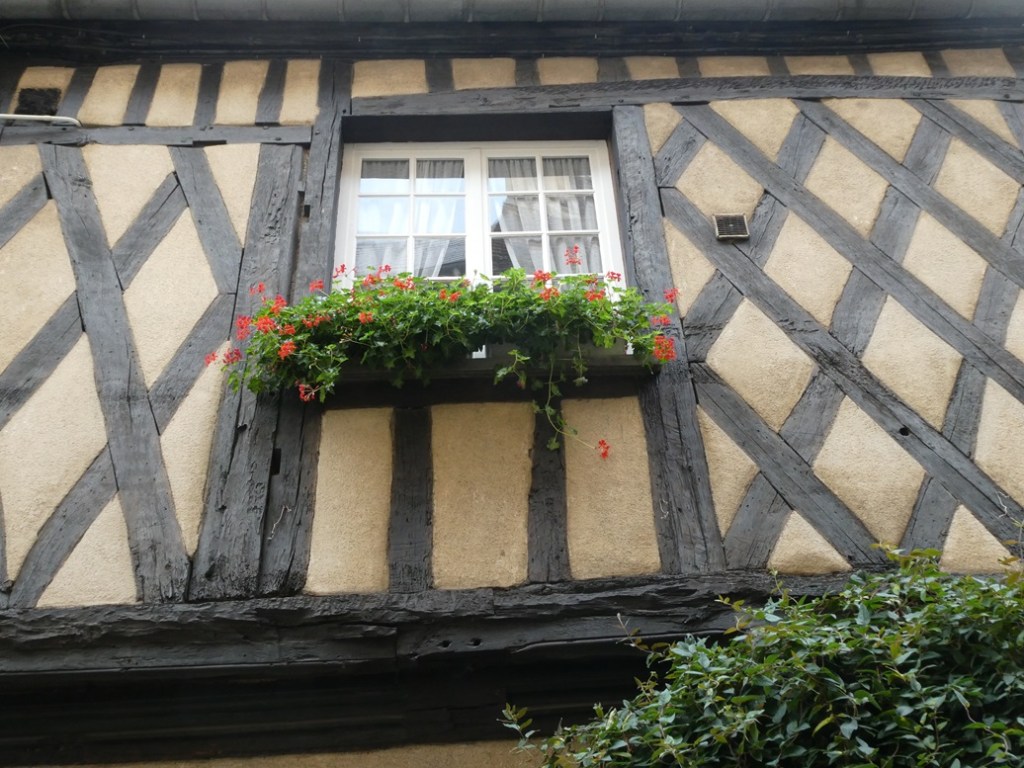
Smaller in size but still impressive, the Hôtel Cujas was a wealthy merchant’s mansion built in 1515 and today houses the area’s historical museum. From the same era but with a totally different look from the stone facades we’d seen so far is the Maison de la Reine Blanche where the entire front of the house is decorated with carved wooden figures and designs from the 16th century.
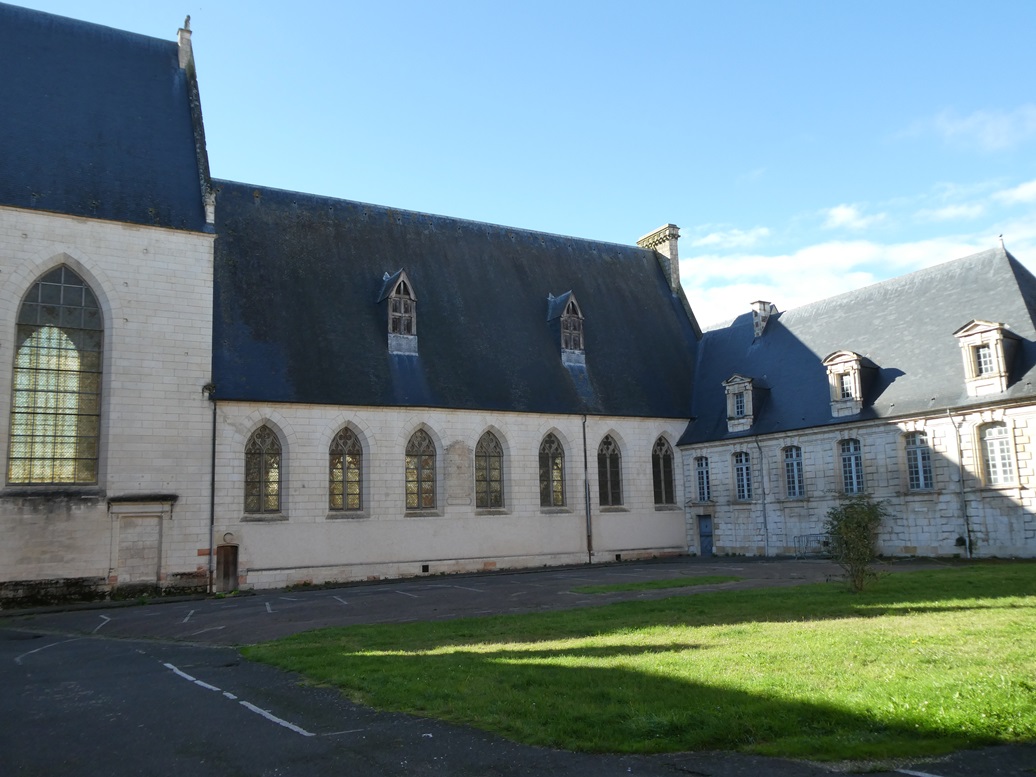
Our last stop for the day was the city’s former hospital, Hôtel Dieu, that was put into service around 1527 and was still helping patients until 1994. While we were impressed with that longevity record, this might not have been the first place of healing in Bourges. One source that I saw said that the first Hôtel Dieu was located near where the cathedral currently stands and was put in place by the Archbishop of Bourges during his rule from 584 to 591. Those medicinal plants growing in the Bishop’s garden would have come in handy.
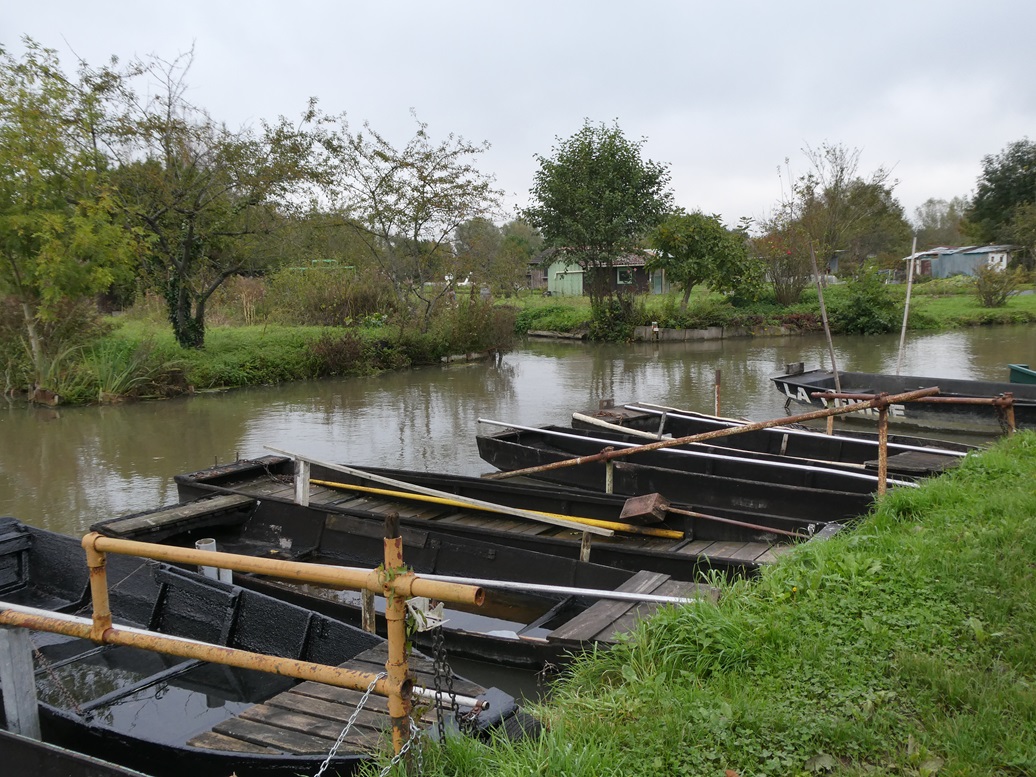
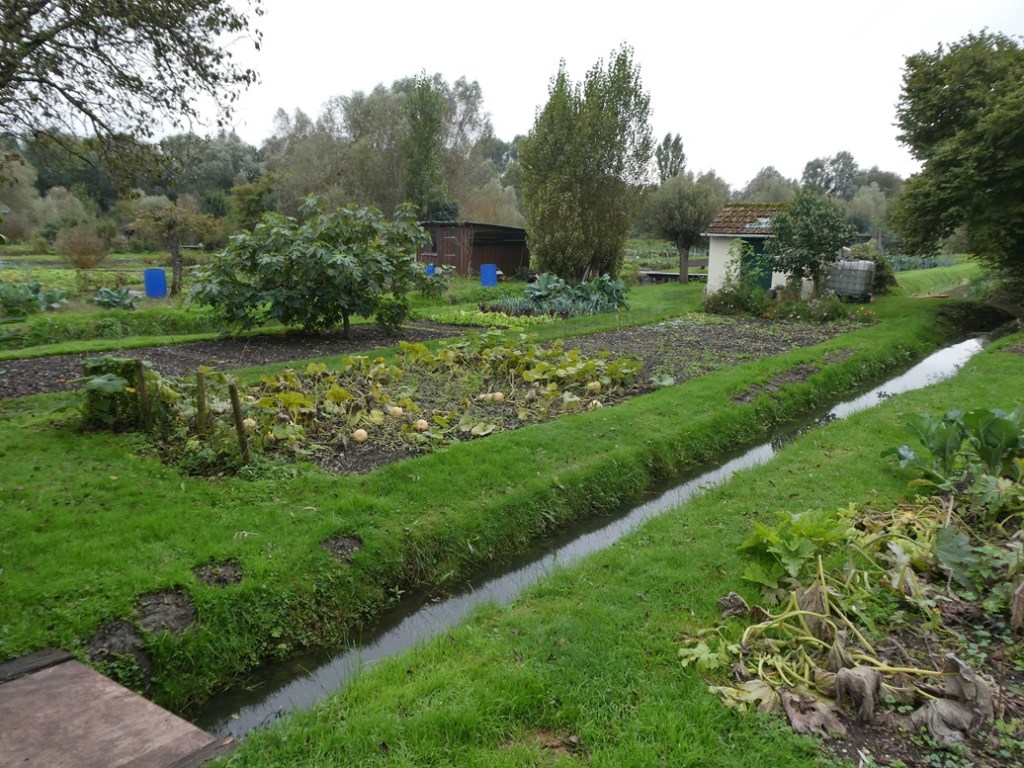
The next morning we had a couple of hours before our train left so we walked out into the Marais, that technically translates to “swamp” in English but we found much more welcoming than the name might suggest. It’s a 135-hectare (333-acre) urban wetland park, with cultivated fruit and vegetable gardens, walking paths, and a peaceful atmosphere, right on the edge of town.
TV note: If you’re looking for some destination inspiration for France, there are many episodes of “Les 100 lieux qu’il faut voir” on YouTube and you can even display subtitles, if you wish.
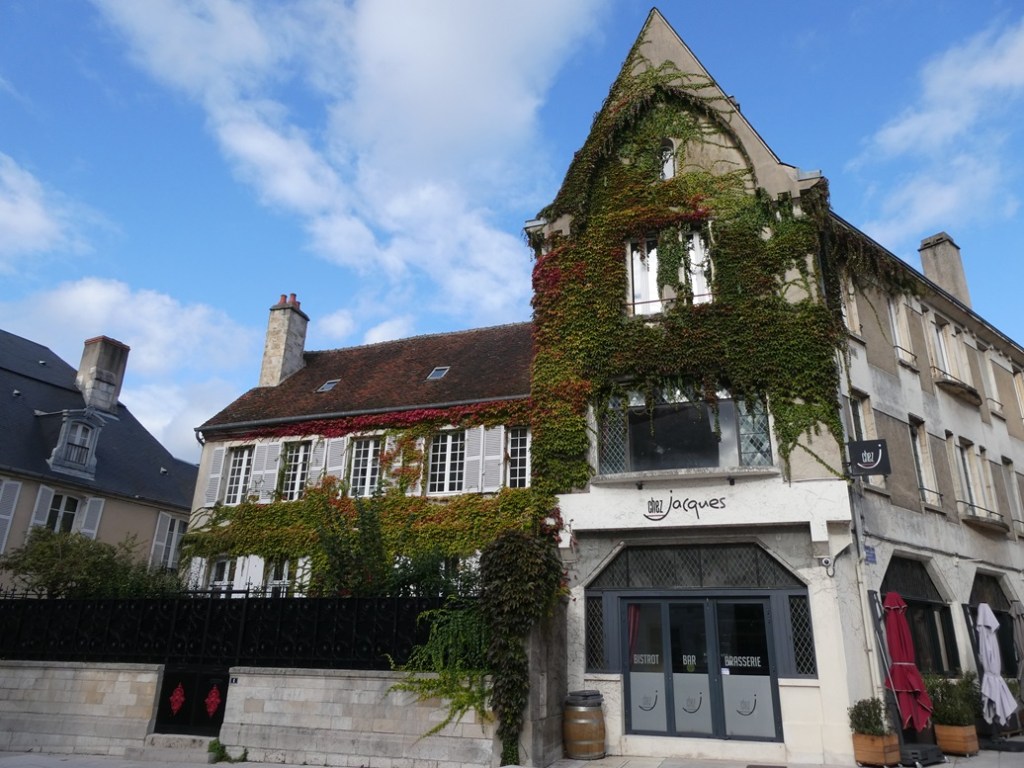
Photo notes: The featured photo is on rue Mirebeau and in the first paragraph is the lookout statue on the front of the Jacques Coeur palace.






 Let's Live In France
Absolutely agree, Bourges is fantastic! And if you love medieval towns – have you done Dinan yet? It’s a corker! Best to you both,
LikeLiked by 2 people
We did spend a week “living” in Dinan on rue du Petit Fort and loved it. The people were so open and friendly there and were even invited to share a glass of wine or two with a shop owner on the rue.
LikeLike
What a delightful place but then France is full of them.
LikeLiked by 2 people
Gorgeous!
LikeLiked by 2 people
Thank you for yet another place to experience! Bourges happens to be in the heart of my ancestral region of France. My mother’s family tree is well-documented in the Canadian Maritimes, but I only recently discovered that Les Acadiens are crazy for genealogy, and they’ve traced the various family trees back to specific villages and towns in that region of France in the 16th and 17th centuries. Bourges is now on a growing list of destinations to experience when I’m living there! In the meantime I’ll continue to live vicariously through your travels!
LikeLiked by 2 people
Ever get the feeling that you were destined to live here? I thing that we already know the answer to that 😊
LikeLiked by 1 person
Terrific recommendation – thanks as always
LikeLiked by 2 people
Another great blog, full of interesting facts and beautiful photos. Thanks for sharing. Lots of love to you both. Lady G.xx
LikeLiked by 2 people