
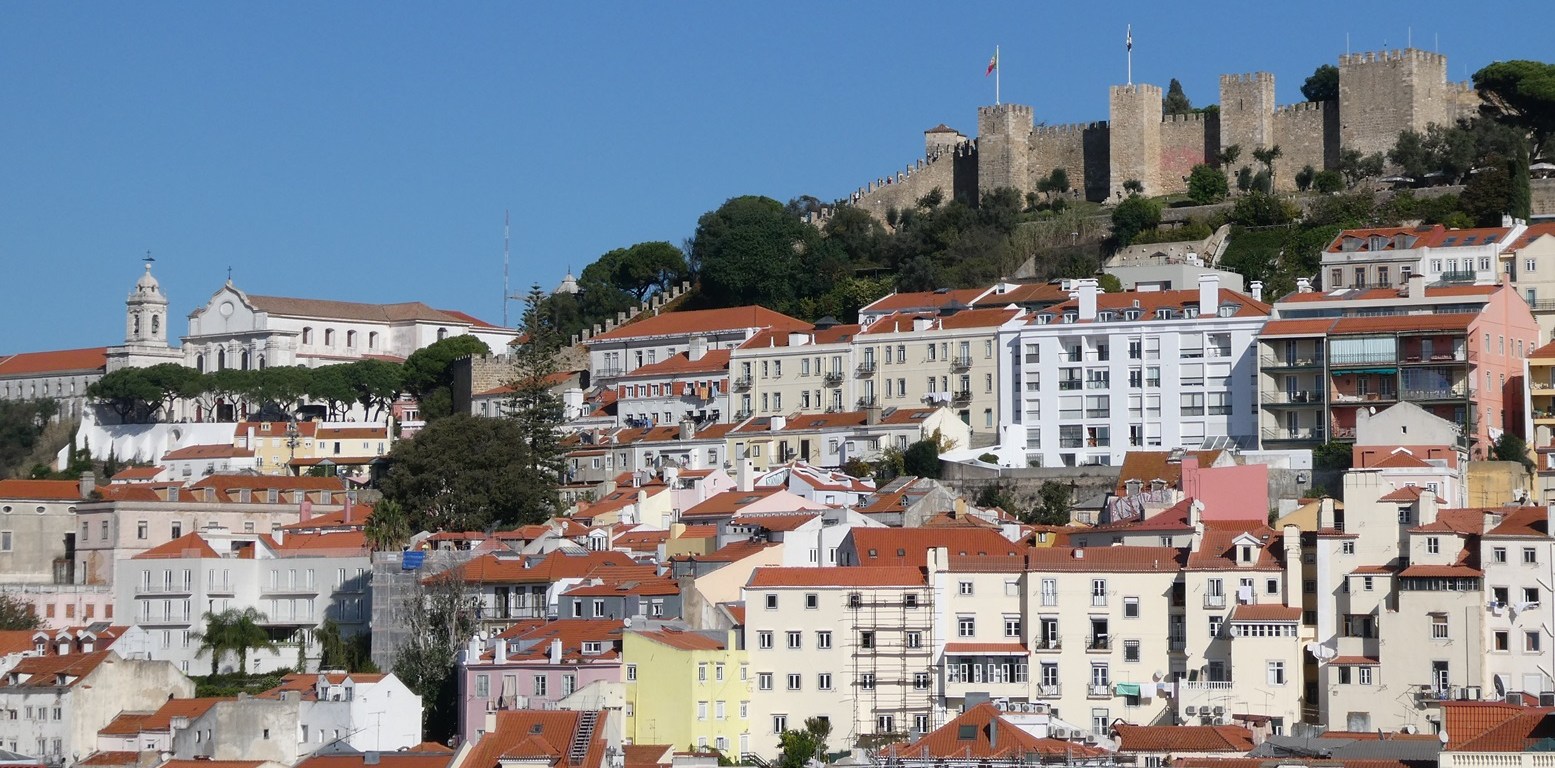
When we first visited the capital of Portugal a few years ago, we were staying about a 40-minute walk from the waterfront, so we made extensive use of the city’s public transit system. Going downhill was easy enough; however, for getting back up to the equivalent height of a 16-story building, the Metro (subway) was a welcome relief. This time our apartment was closer to the sea so we were able to see much more on foot, with plenty of time to stop along the way to admire the views, the shop windows, and even stop for a coffee or a beer. Thanks to a Rick Steves guidebook we had our own do-it-yourself walking tour of the neighborhoods, complete with maps.
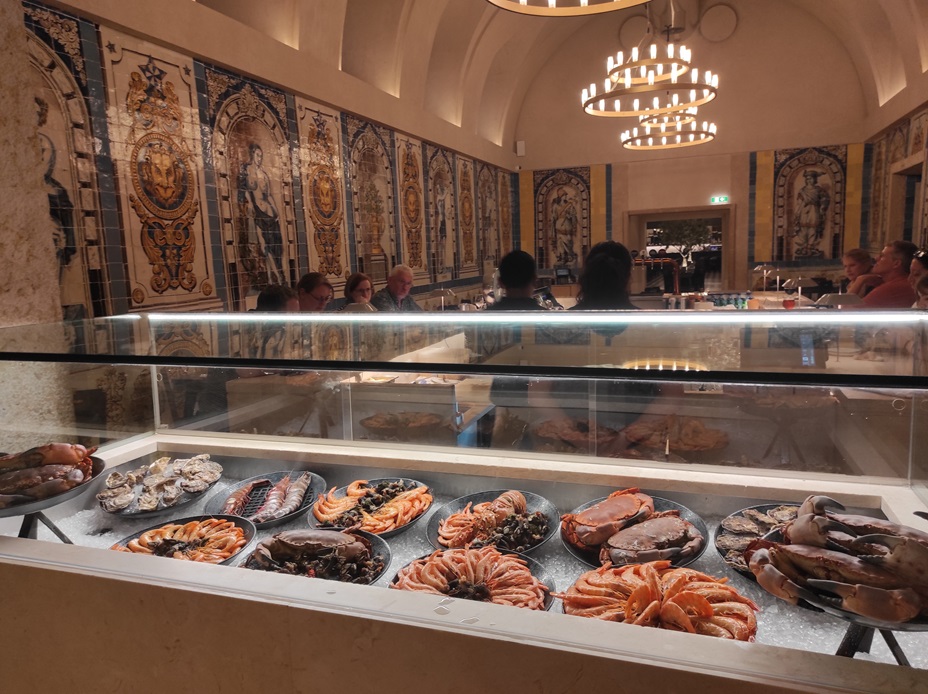
Since we were staying in the Bairro Alto part of town, let’s start just outside our front door to see what’s on the horizon, literally:
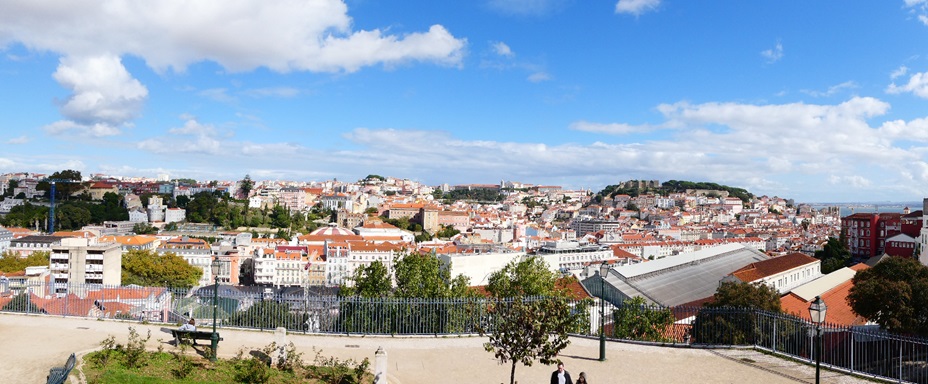
- Miradouro de São Pedro de Alcântara—from this viewpoint much of Lisbon lies below including the São Jorge Castle, the cathedral, and even the Tagus River in the distance flowing to the Atlantic.
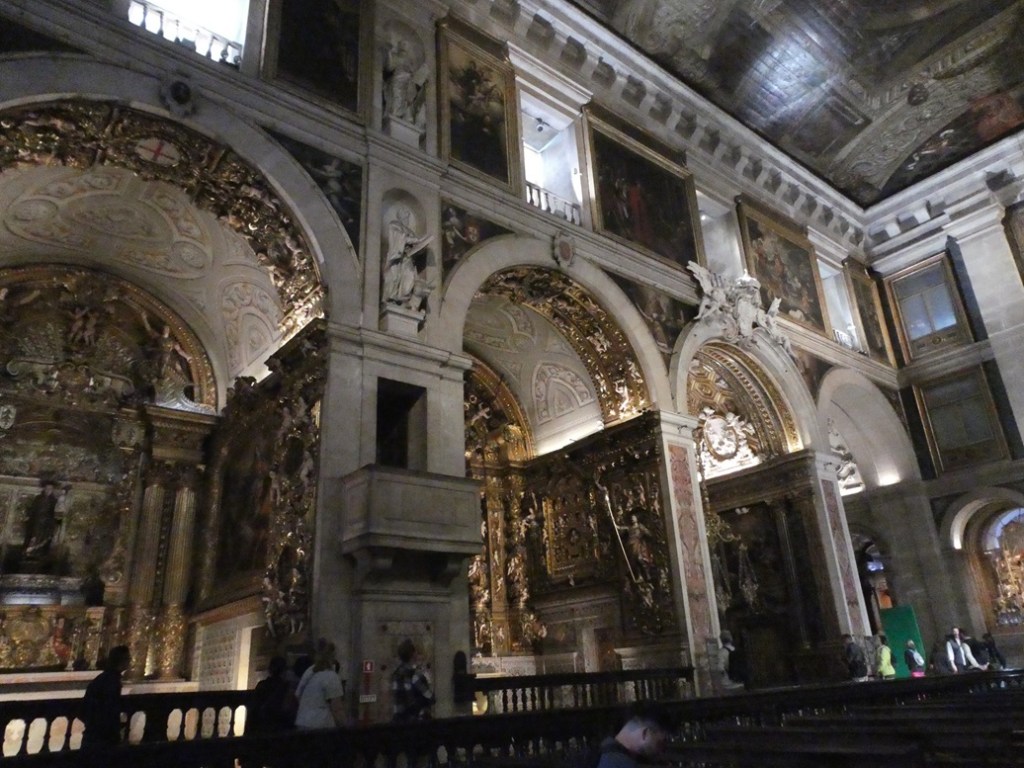
- São Roque Church—16th century, with a painted trompe-l’œil “domed” flat ceiling and elaborate side chapels.
- Cervejaria da Trindade—established 1834, oldest beer hall in Lisbon, formerly a monastery.
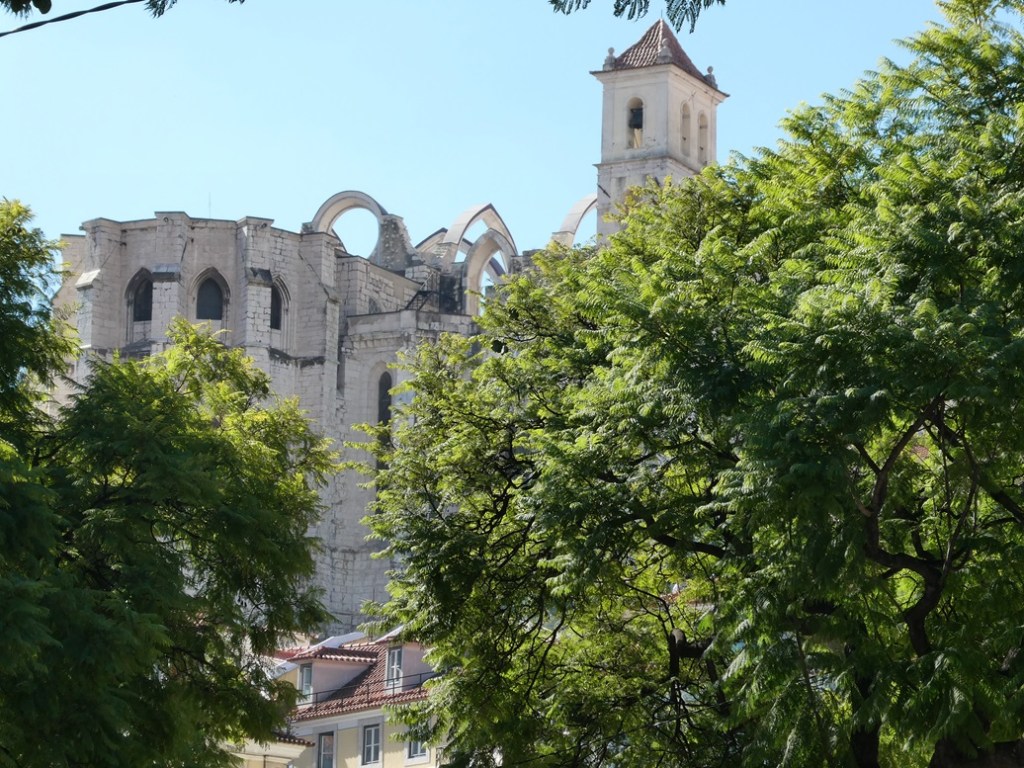
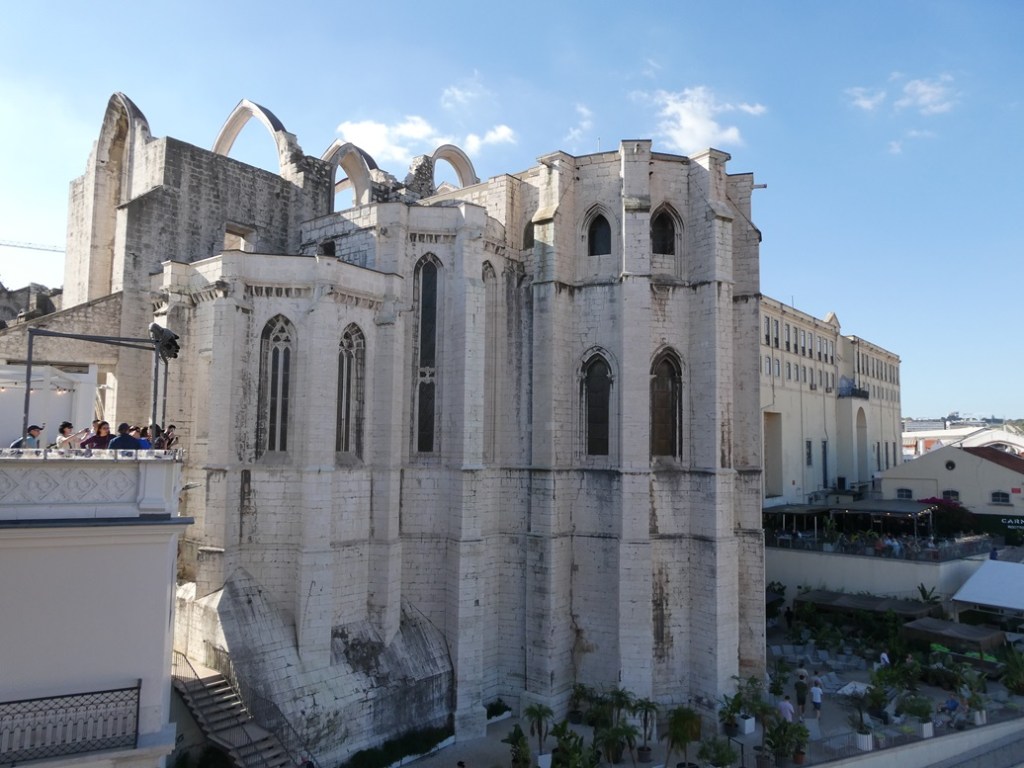
- Largo do Carmo—adjoining this square are the ruins of the convent Convento do Carmo that was destroyed during the earthquake of 1755.
- Café A Brasileira—a genuine Art Nouveau café from 1905.
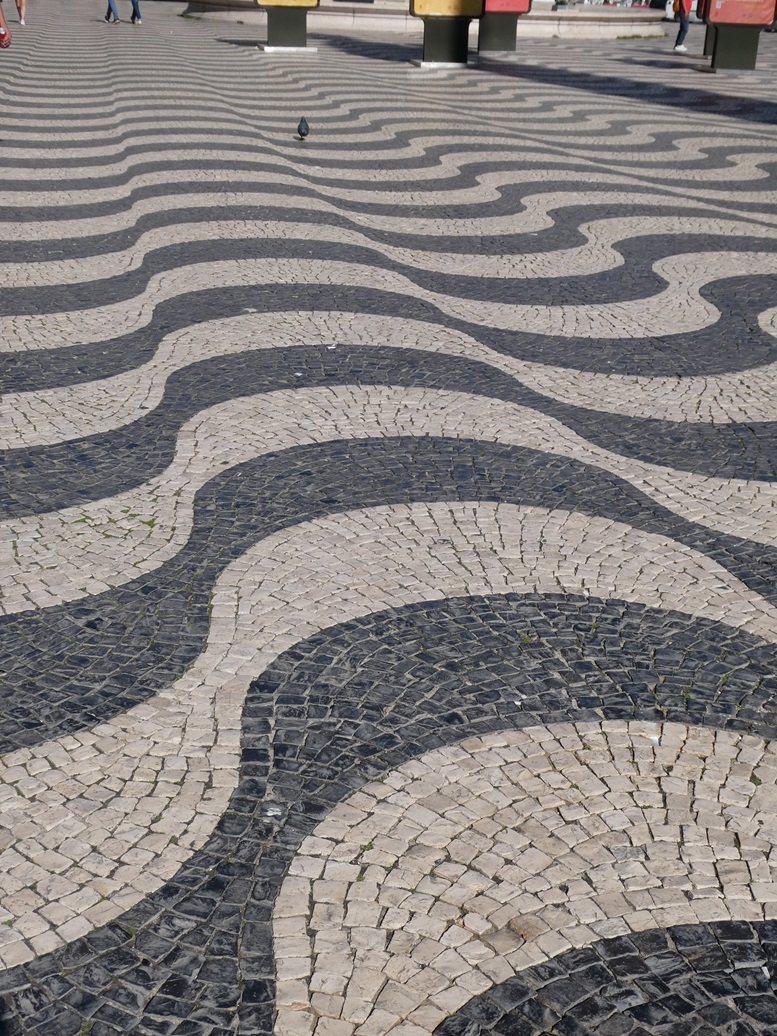
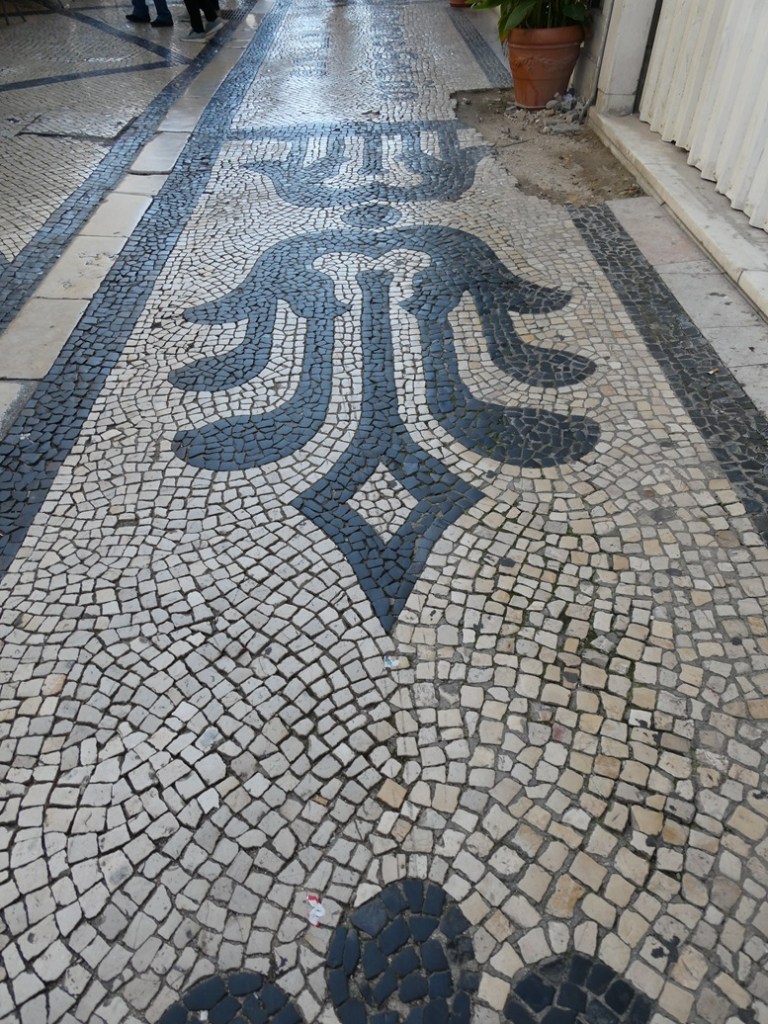
That brings us into the Chiado district known for its shopping and theaters. We continued strolling downhill on Rua Garrett to see its mosaic sidewalks, ironwork balconies, and classy shops.
- Armazéns do Chiado—6-floor shopping center.
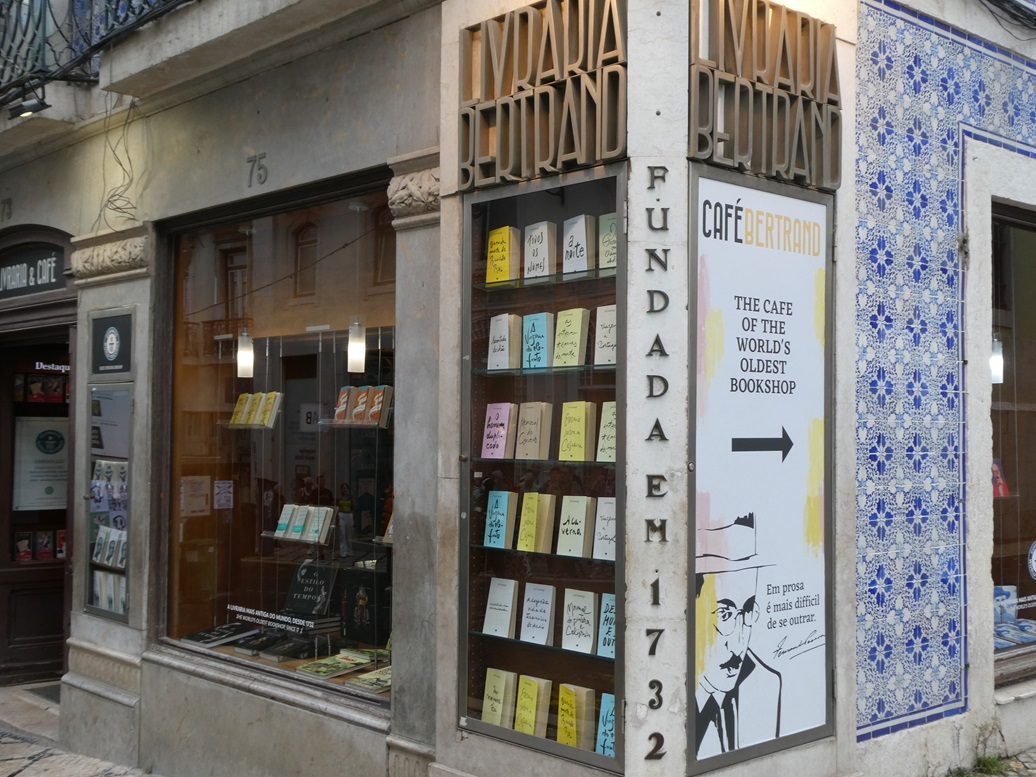
- Livraria Bertrand Chiado—opened in 1732, believed to be the oldest bookstore in the world.
To explore the historic downtown section called Baixa we went all the way down to the waterfront and started with:
- Praça do Comércio—a giant open square that once housed the Royal Palace until it was destroyed in 1755 by the earthquake.
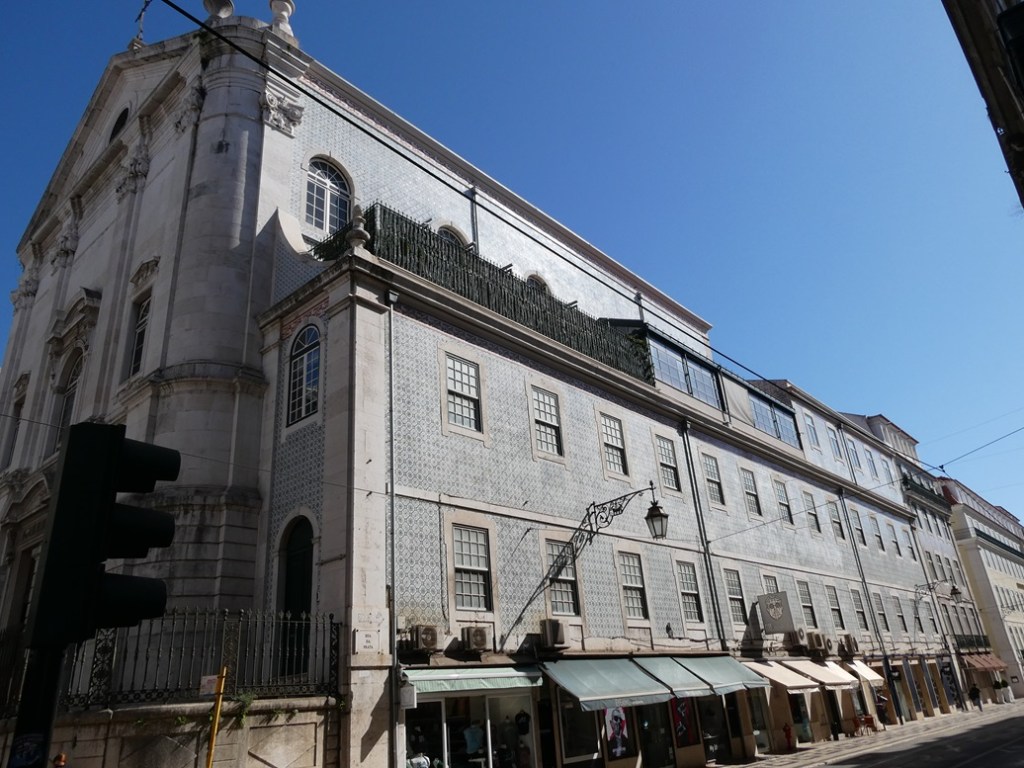
- Rua do Comércio and Rua São Julião—two streets that demonstrate the austere building style adopted for reconstruction after the earthquake; no exterior wall tiles, black and white cobbled sidewalks, and a military style.
- Church of St. Nicola—one of the few churches to be rebuilt but even it had to blend in with the buildings around it.
- Church of São Domingos—a center of the Inquisition in the 1600s with executions taking place next door on the:
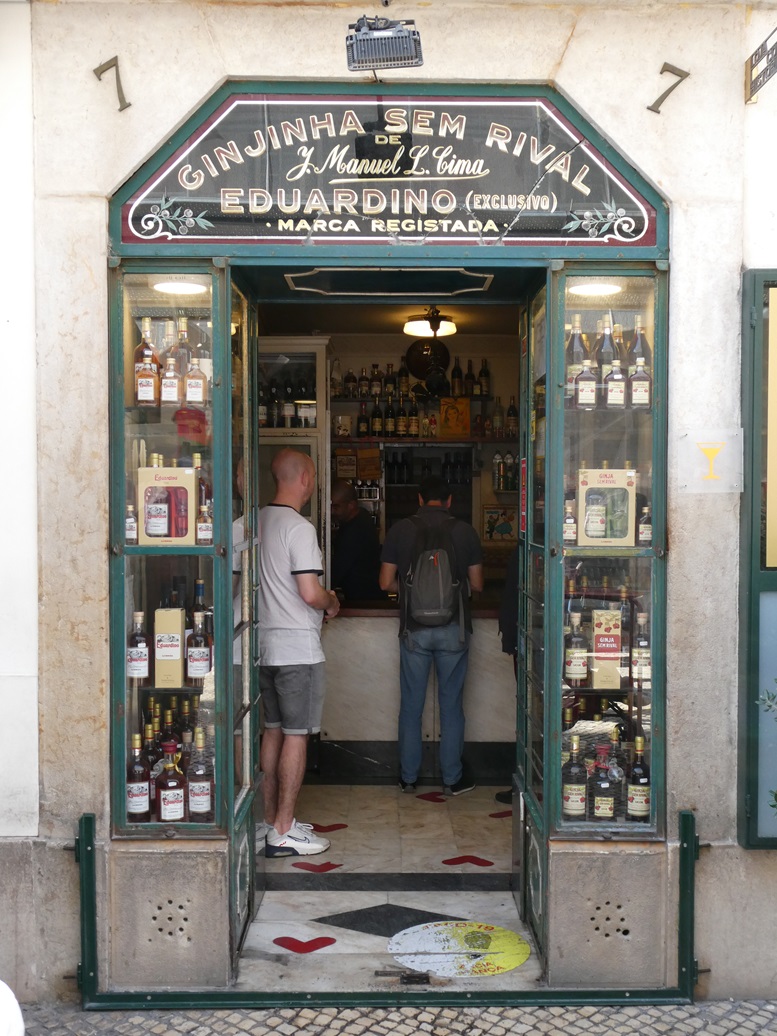
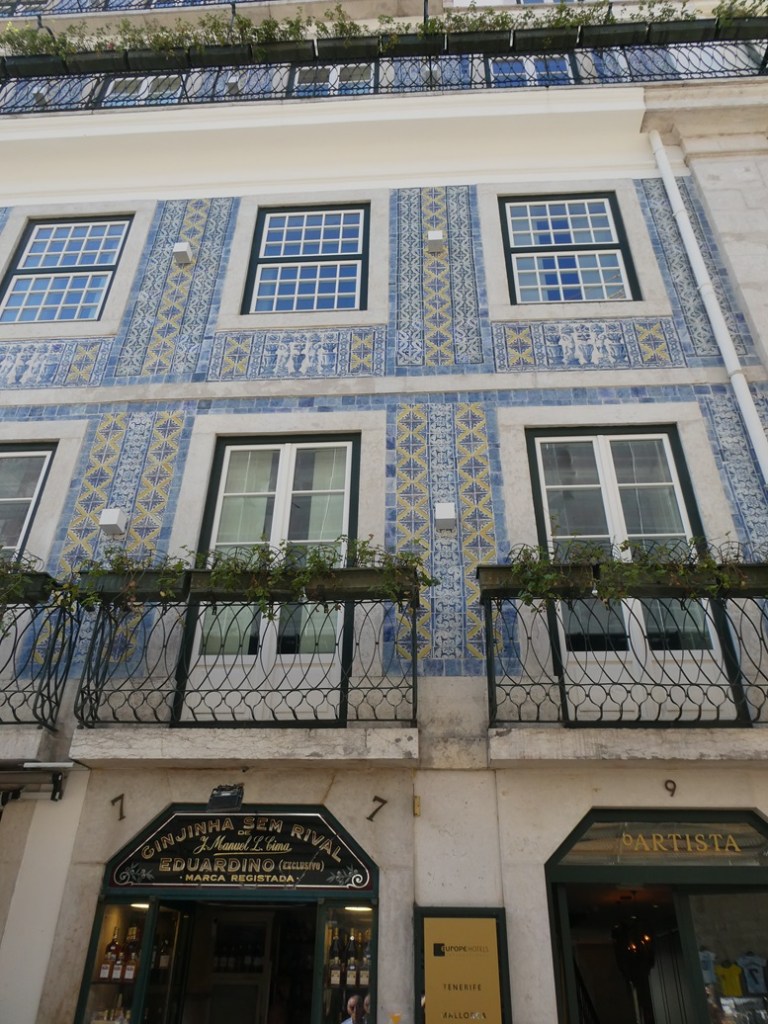
- Largo de São Domingos—a square that now is surrounded by classic bars that serve the traditional Ginjinha, a sour cherry liqueur. We’d heard that enterprising grandmothers sometimes sell their own homemade version from their kitchen windows for 1€ a shot. Our taste came from the Ginjinha shop pictured above.
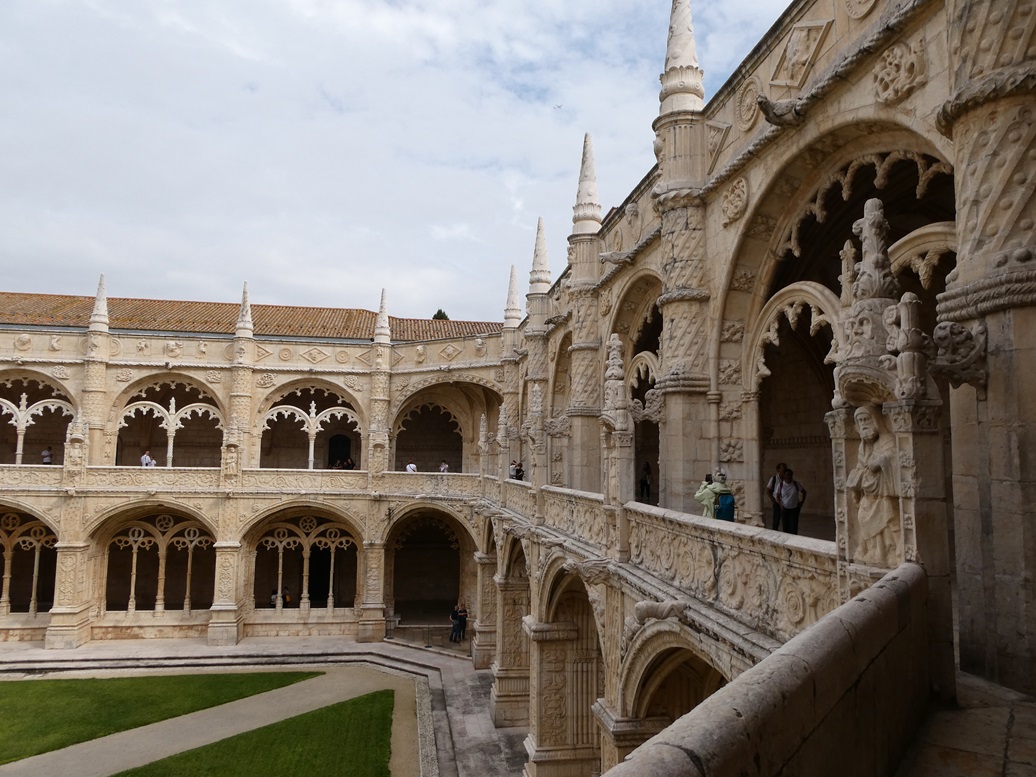
The destinations for our final two days in Lisbon were a bit far to walk so we first took a train out to Belem to visit Jerónimos Monastery (Hieronymites) that began construction in 1501 in time to house the tomb of Portuguese explorer Vasco da Gama in 1524.
Our other day out was a bit further to the town of Sintra and that’s on the blog next week.
Travel note: We joined the direct train in Narbonne that started in Marseille and continued all the way through to Madrid where we stayed overnight. The next morning we continued with a Spanish train and then a change of Portuguese trains to arrive in Lisbon that afternoon. Details on the Man in Seat 61 website: https://www.seat61.com/trains-and-routes/madrid-to-lisbon-by-train.htm
 Let's Live In France
I knew you’d have let the train take the strain
LikeLiked by 2 people
On the bucket list! Very nice photos, thank you.
LikeLiked by 2 people