
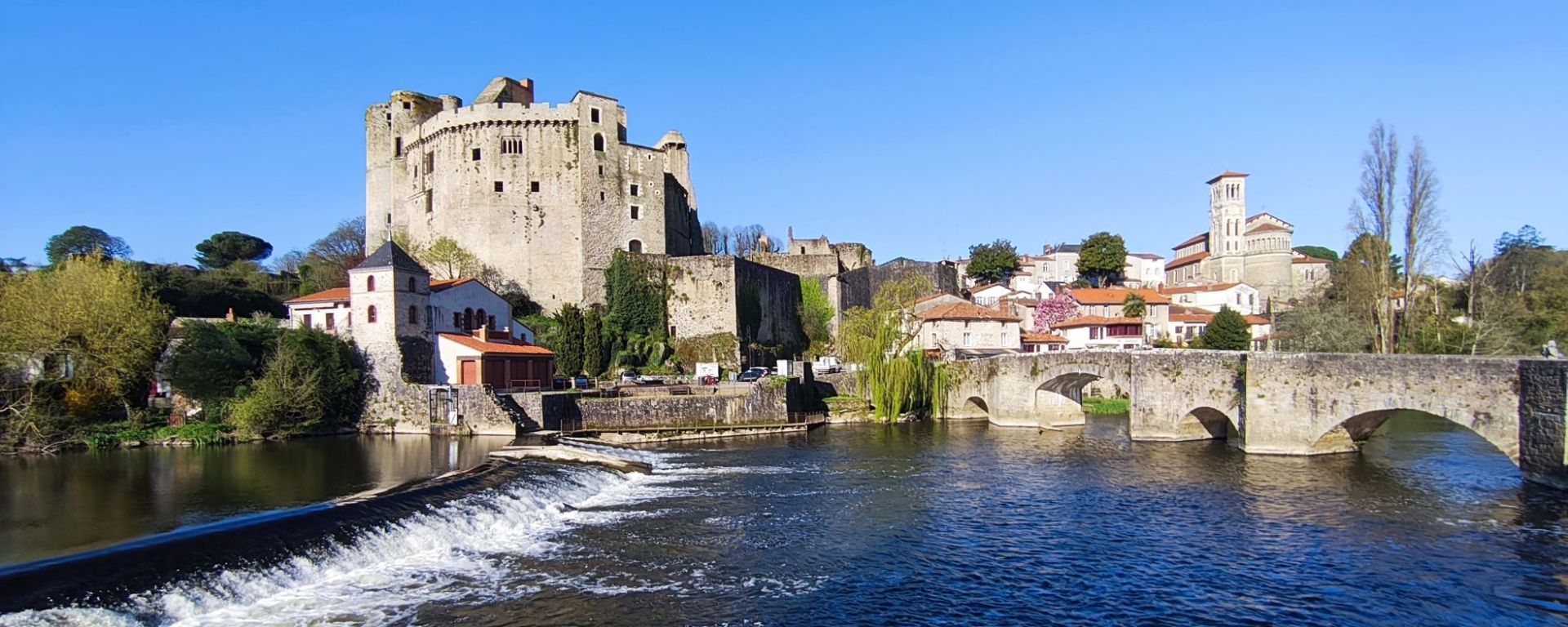

Nantes had served as our home base for a couple of day trips to the Atlantic coast and now it was time to explore a bit more inland. Our travels took us to a picturesque town nicknamed “the Tuscan village of France,” and then on to Angers, home to the world’s largest surviving medieval tapestry. These train journeys were even shorter than the others, only about 30 minutes each, but like the previous ones everything we wanted to see was within a short walking distance from the station.

Despite being devastated during the French Revolution’s Vendée civil war (1793-1796), the town of Clisson was rebuilt in the early 19th century with a distinctly Italianate vision incorporating terracotta roofs, arched doorways, and decorative brickwork. This transformation was largely due to the efforts of sculptor François-Frédéric Lemot and the financial support of the Cacault family, originally from Nantes. It didn’t take us long after walking out of the train station to see their impact on the town.

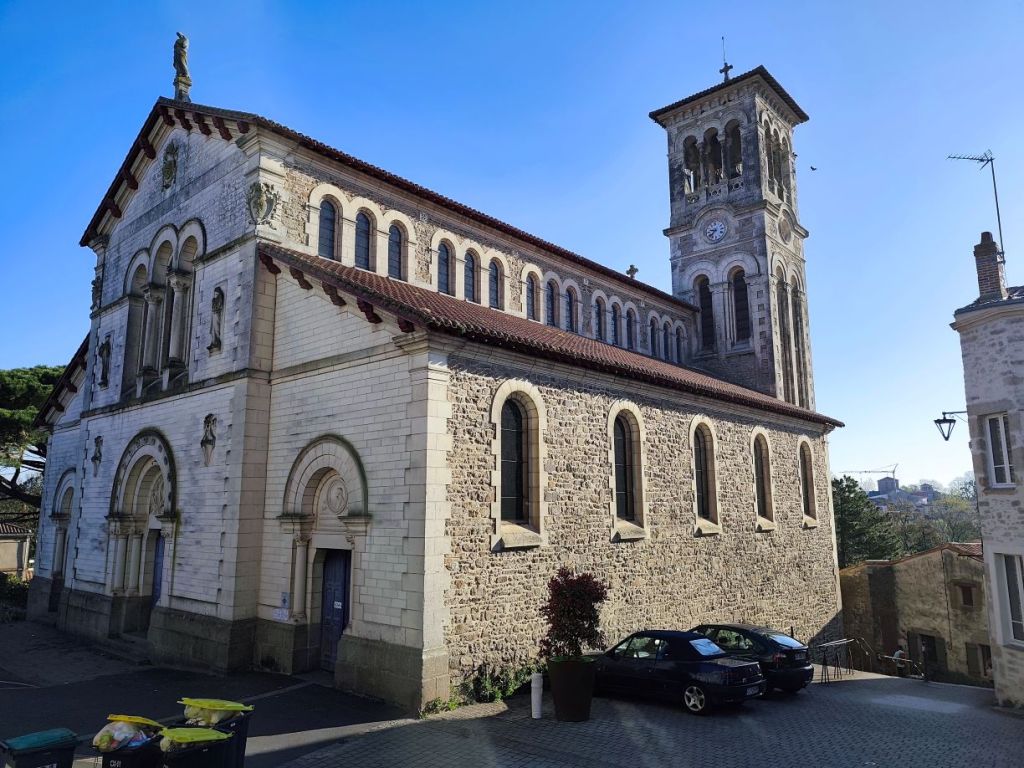
First up was Les Halles, the covered market with an intricate wooden roof from 1376. From there we walked to the Notre-Dame church with a foundation believed to date from the 9th century although like much in the city was destroyed during the Vendée war and rebuilt in the 1800s. Close to there is the château that’s been sitting in its strategic riverside spot, protecting the town since the 11th century. To get across the river Sèvre Nantaise we used the Pont de la Vallée from the 15th century that originally incorporated a drawbridge and two wooden footbridges that could easily be destroyed as a defensive move.

Once on the other side our destination was Le domaine de la Garenne Lemot, a park incorporating a château that sculptor Lemot bought in 1805 to recreate his own personal impression of Italy. Along with the villa are landscaped gardens, a lake, and walking and cycling trails throughout. It was a great place to stroll before heading back to the station.
With one day of vacation left, we still had an additional visit to make.
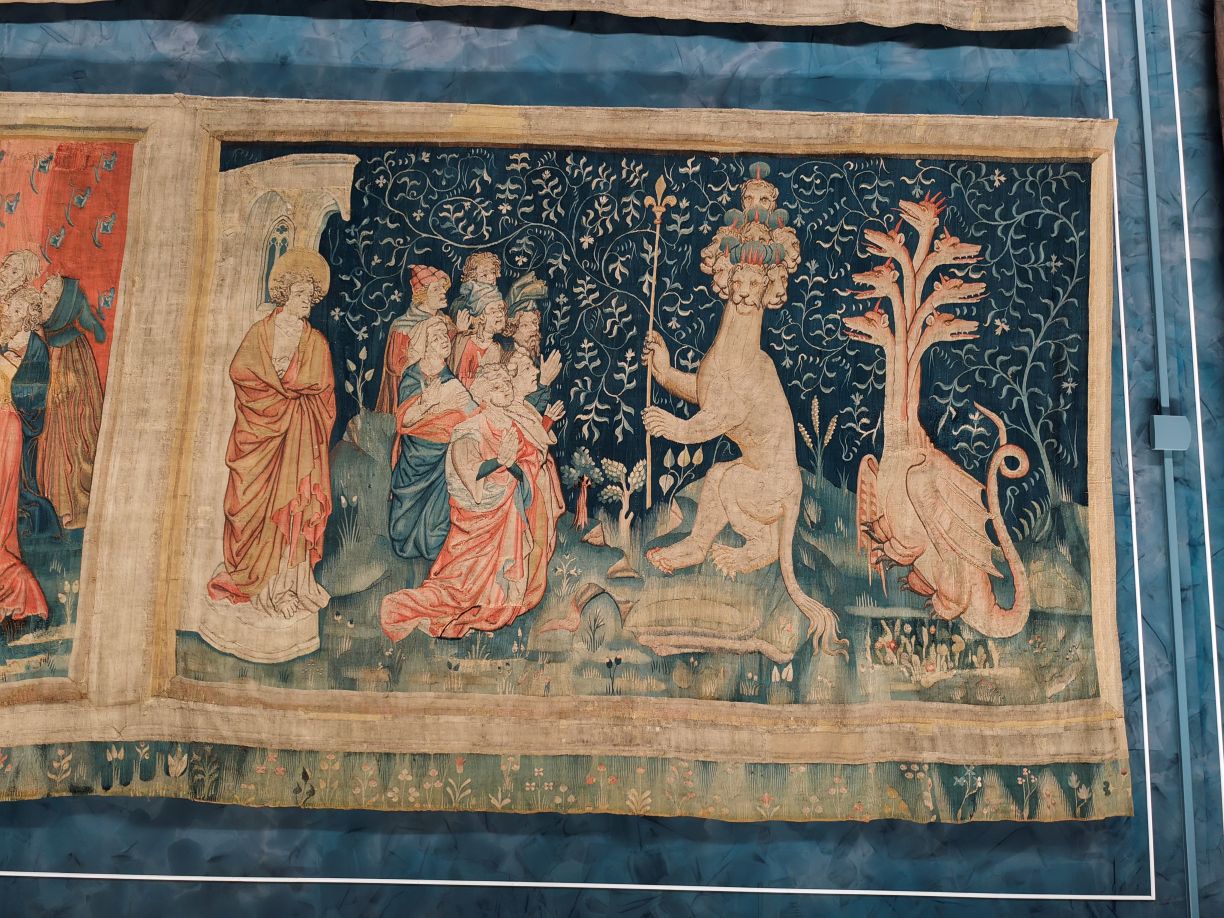
No matter the age of any of our French friends, they all light up when you mention names like Tintin, Asterix, or Lucky Luke—all beloved cartoon characters. Because our first names resemble another cherished imaginary duo, Boule et Bill, we are sometimes playfully called that because it’s easy to remember. The devotion to this art form even has its own international festival each year in the city of Angoulême. Knowing all of that, it was no surprise to see on the city of Angers’ official website a reference to “A true medieval comic book” when describing the 14th century Apocalypse Tapestry.
Woven in Paris between 1377 and 1382 and now displayed within the solid walls of a castle, it depicts the story of the Apocalypse from the Bible. In a sense, it resembles a comic book because there are 67 scenes woven into woolen panels that would have helped anyone unable to read to understand the story. At 103 metres (328 feet) in length, it’s the largest surviving set of medieval tapestries in the world. We saw life-size depictions of dragons, angels, demons, and knights. Despite the religious background, there is a mix of Christian mythology and 14th-century reality; plenty of wars, plague, kings, and castles.
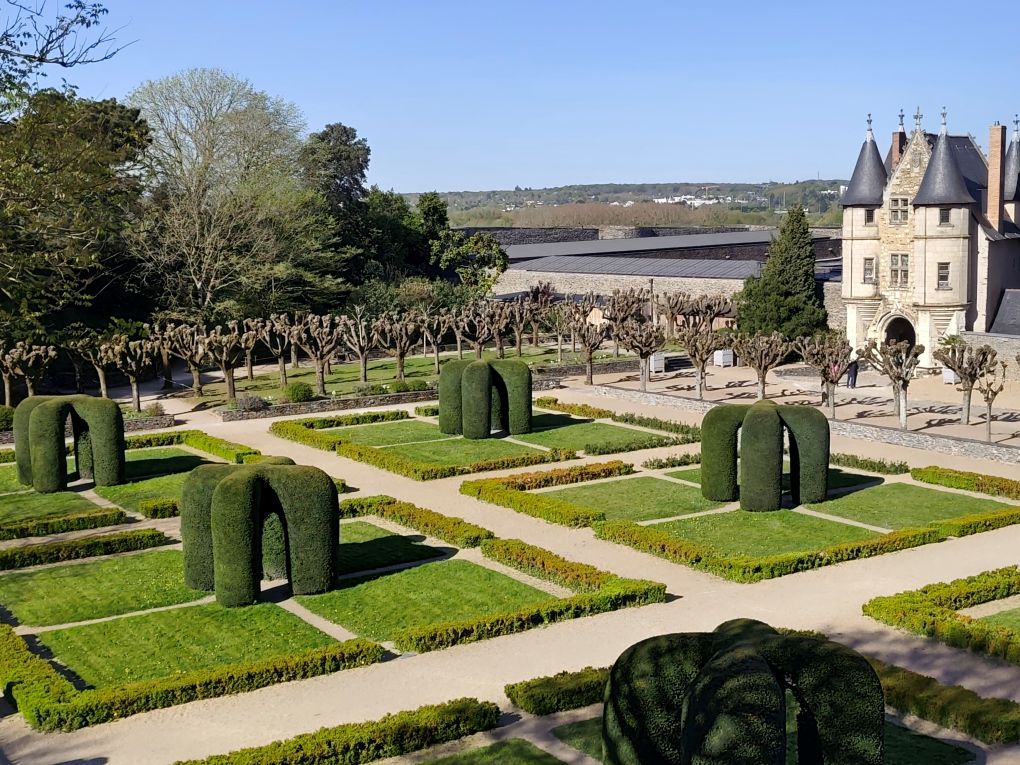
While the tapestry itself is reason enough to visit Angers, we were in for a treat because we’d been invited there by blog readers, D & J, to enjoy lunch at their home and joined by their friends, R & M (also blog readers, thank you!). There’s much more of the city to see, so we’ll just have to return 😉
Photo notes: The featured photo across the top of today’s post is a view of Clisson across the river and in the first paragraph is a side view of the Clisson castle.


Another of your fabulous trips
LikeLiked by 1 person
Simply magnificent. The tapestry is woven with dyed silk threads? I am guessing. Thank you for sharing.
LikeLiked by 1 person
This tapestry is wool which has apparently helped it survive. Others did indeed include silk and even some silver and gold threads making them more vulnerable to being melted down.
LikeLike
What a fabulous tapestry! I will have to take a trip to see it!
Cherri
LikeLiked by 1 person
Boule et Bill. Love it, the blog needs rebranding with new names ❤️
LikeLiked by 1 person