


A bit of poetic license gives us today’s title since the Belgian city of Liège actually has an accent grave but “siege” is a true part of its history. Given that there’s evidence of 9000 years of human habitation in the city, there have been plenty of opportunities for invaders to take over, notably in the 15th century and again in WWI. All of those conflicts meant that much of the city has been destroyed over the centuries yet museums have flourished to maintain a link to the past. The guidebook we were following suggested starting with the cathedral since it was one structure that has remained fairly intact and can provide a tangible historic connection.

Although Liège was founded in the 6th century, the current cathedral didn’t appear until the 900s, greatly altered in the 14th and 16th centuries, and only finally given cathedral status in 1801. The treasury holds many medieval manuscripts, paintings, ivories and gold pieces that were moved from the former Cathedral of St. Lambert when it was demolished in 1793 during the French Revolution. An especially interesting piece, I thought, was a gold reliquary donated by a repentant Charles the Bold after destroying the city in 1468—a donation perhaps more significant for his guilt than for the reliquary itself. Because of his destructive actions, few medieval structures now remain.
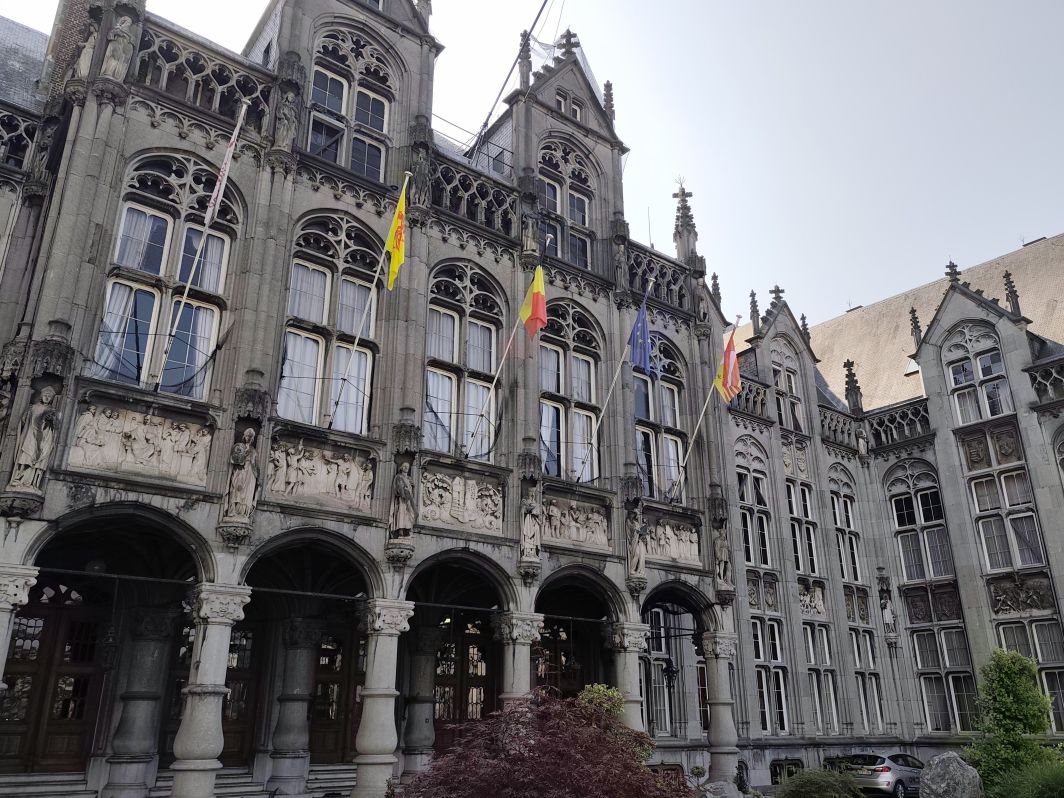
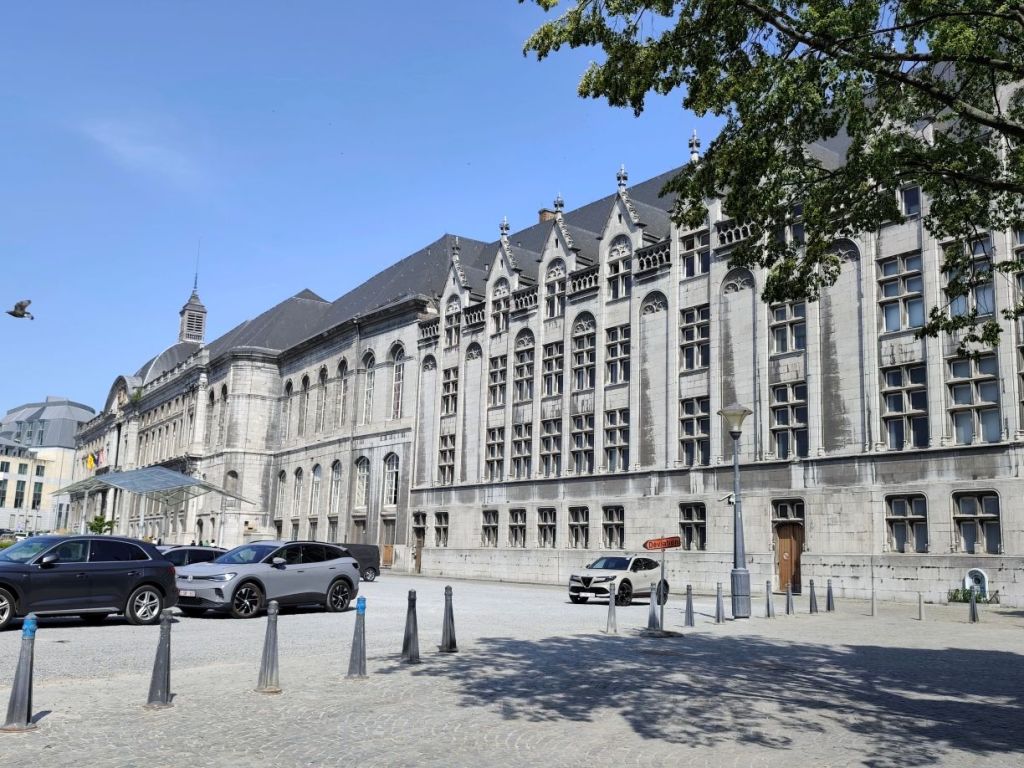
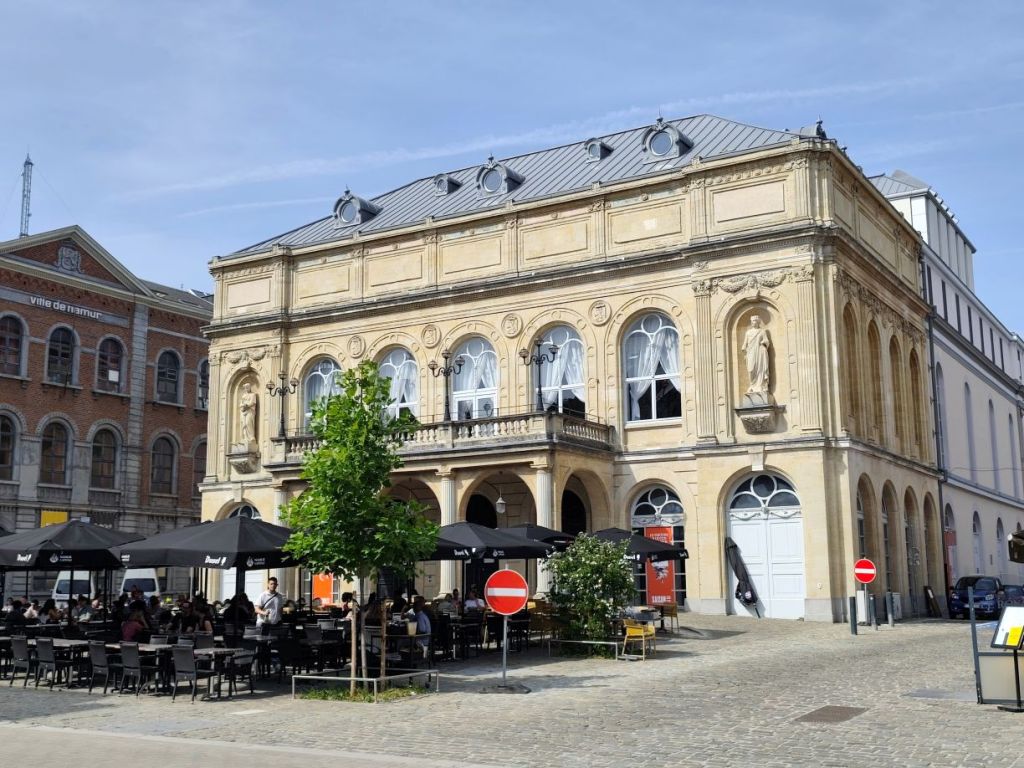
Walking along a series of pedestrian shopping streets took us past the Royal Theater of 1818 and then directly to the gigantic Palace of the Prince-Bishops. This was the original seat of government in the 11th century that was rebuilt in 1533 and “refreshed” in 1737 and now used as the Court of Justice. Nearby is its modern and modest counterpart, the Town Hall dating from the 18th century.
At this point the guidebook sets you free to explore some of those museums I mentioned above that highlight subjects including art, archaeology, music, aquatic life, lighting, glass, armaments, and public transportation. There are at least 2 museums dedicated to this area’s predominant cultural and linguistic group, the Walloons.
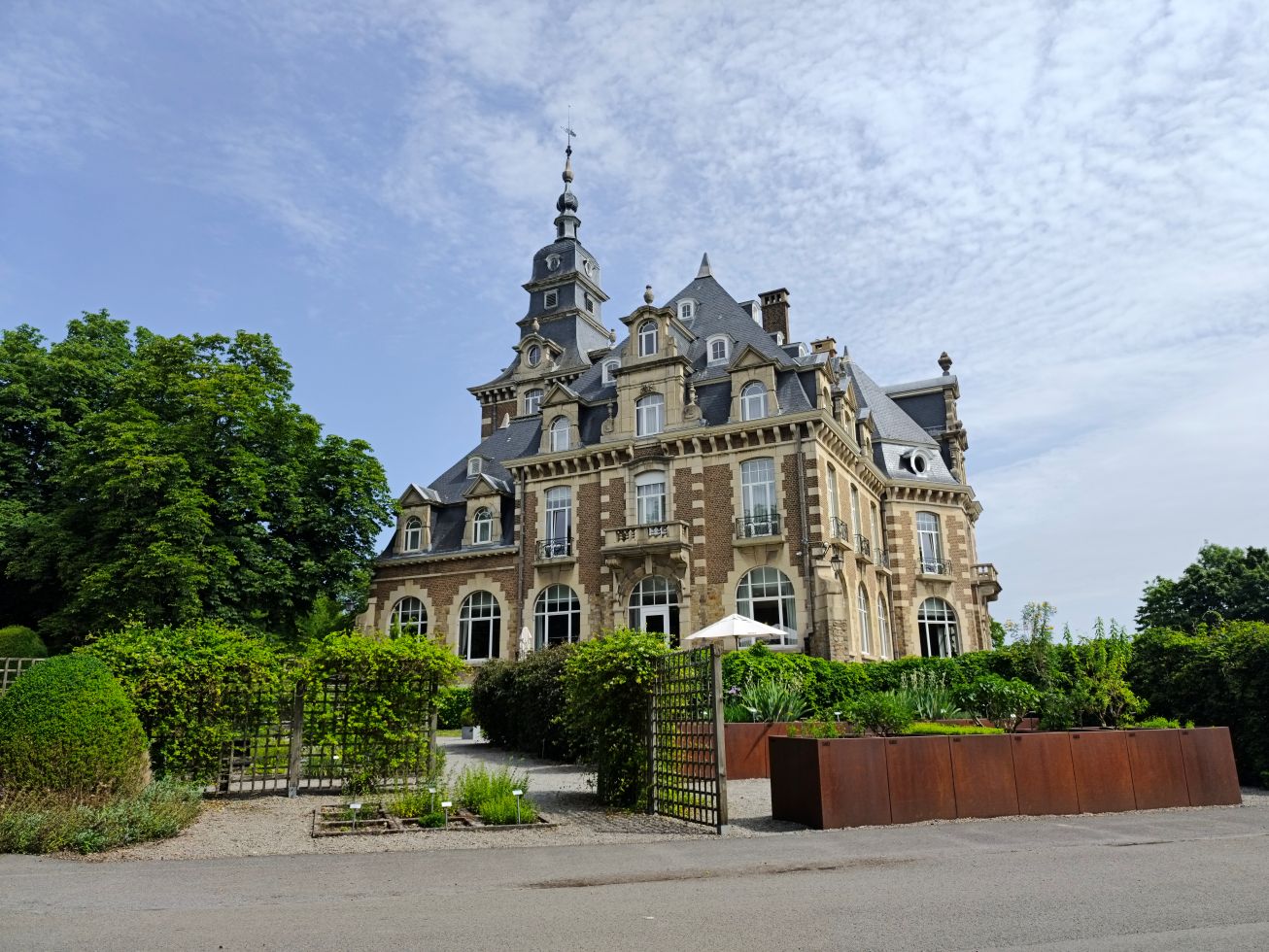
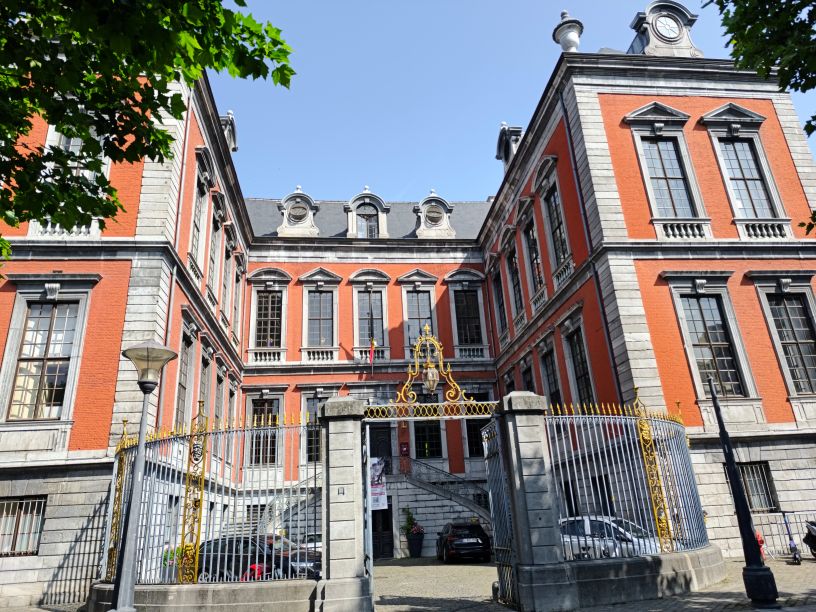
The next day we moved on from this large industrial city that developed with coal mining, ironworks, and the building of a canal to what could be described as a more elegant and refined city. My favorite quote from the guidebook we were using to describe Namur was, “The town itself is unusually pleasant” and that’s exactly how we found it. The first indication of this for us was when I noticed on the map the Ecole Hotelière de la Province de Namur, this area’s hotel/restaurant school. Excellent food, attentive service, and a good value (in Belgium, anyway) at 73€ per person for a 3-course lunch including wines, water, and coffee. The restaurant is located inside the school’s hotel built in a grand style in 1930 and known as the Château de Namur.
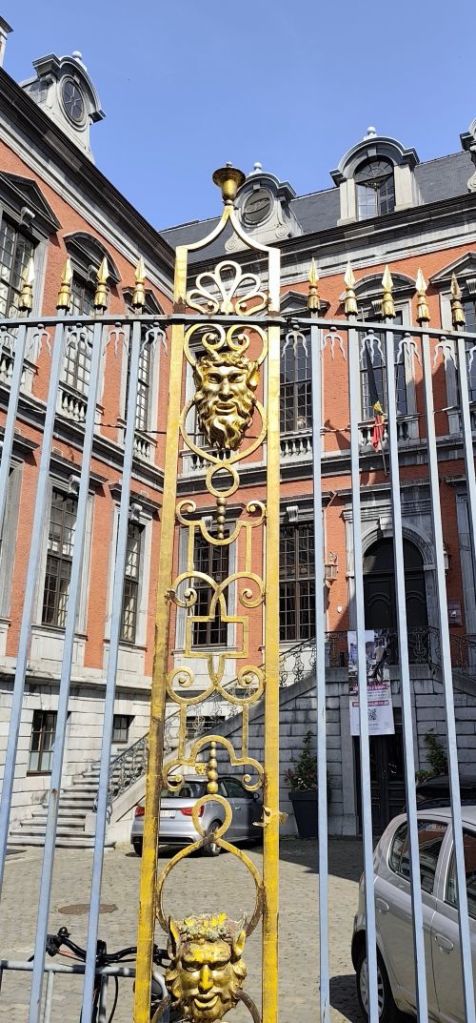
Just the day before, we had been in Dinant looking across the Meuse River up at its Citadel and now we had a very similar view here (that’s today’s featured photo above + a riverfront apartment closeup in the 1st paragraph) with the same waterway and an even bigger fortress. This complex of walls and towers covers 20 acres (8 hectares) and some type of fort has been in this strategic location since Roman times.

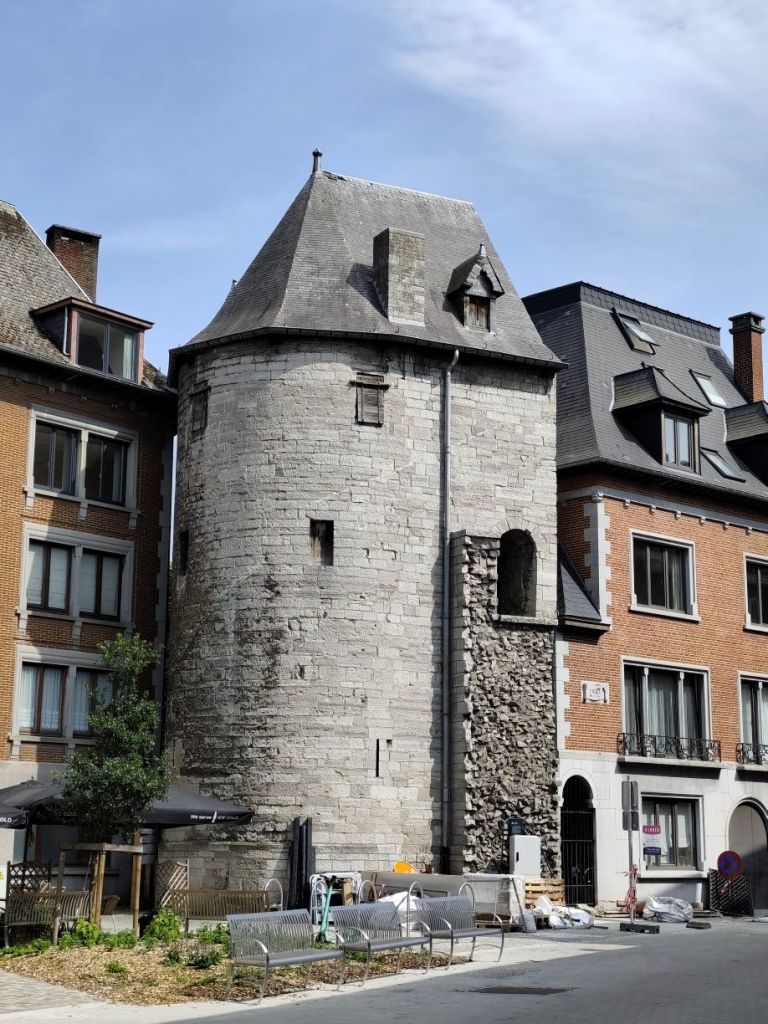
Crossing back across the river took us into the town square Place d’Armes where we were told to look for the bronze sculptures of Djoseph et Françwès, two elderly men from local folklore with their pet snails. They were easy to spot standing directly in front of the Palais de Congres, now a conference center but once the stock exchange. After passing through a stone archway we were at the foot of a former watchtower that was acquired by the city in 1388 as the bell tower, Beffroi de Namur.
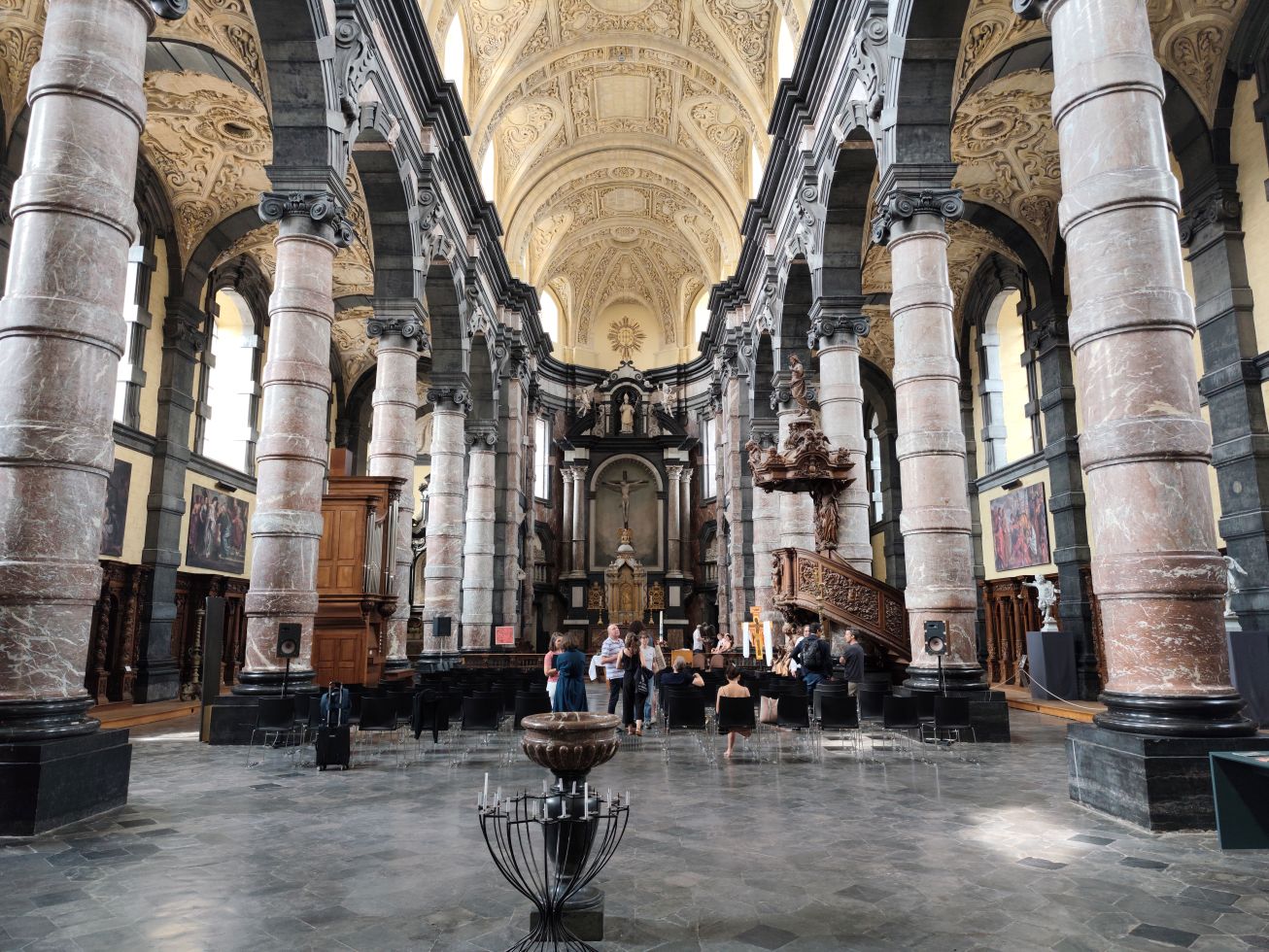
Last stops for the day were at the 17th-century Baroque St. Loup Church and the Cathedral St. Aubain, consecrated in 1772. Now, time for a break to look for that most famous of Belgian products: beer! Lucky for us, the map showed four bars within a three-minute walk from the cathedral and eight more if we were willing to walk an additional five minutes. Makes perfect sense to me, given that the country produces some 1,500 different beers and the beverage is recognized as a UNESCO Intangible Cultural Heritage. Clearly, it was our duty to respect that heritage!







Good morning to you Bill and Bob,
I see that you were very close to Maastricht and Aachen. We call that the “Dreiländer Eck” or the “Three Corners Area”, with the Netherlands, Germany and Belgium.
From what I read Namur takes claim for Vlaamse Friten, the Wallonian Fries. Yummie!
LikeLiked by 2 people
Vlaamse Friten, huh? Sounds like a tasty reason to return to Namur!
LikeLike
Lovely Tour! This is an area we’ve visited while watching various bike races.
LikeLiked by 1 person
I always love your travelogs.
LikeLiked by 2 people
Thanks, David! Maybe an enticement to revisit even more of Europe?
LikeLike
I can’t wait to visit in person these places you’ve described so beautifully.
LikeLiked by 1 person
Thank you! We enjoy researching each destination in advance and then finding exactly the right spots for photos once we’ve arrived.
LikeLike