


If you saw last week’s blog post you’ll know that we spent about a week on the northwest coast of France in the Pas-de-Calais departement in the city of Boulogne-sur-Mer. The object was to have some time to visit a part of the country that previously we’d only glimpsed from a railway carriage on our way from London to Paris, initially from a ferry port or years later after passing through the Channel Tunnel on the Eurostar. Once we’ve arrived in a city by train, our favorite method of transport is on foot, so we chose some destinations that were easily walkable from the station.

Although Montreuil-sur-Mer still includes “on the sea” as part of the town’s name, it’s been a while since this medieval city was actually a seaport. In fact, by the 1500s the estuary of the River Canche had silted up so much that Montreuil was essentially landlocked. However, that may have helped preserve much of what inspired Victor Hugo during his visit in 1837 to include characters, buildings, events, and landscapes described in his “Les Misérables”. The Tourist Office has tours, self-guided or accompanied, to point out references to Fantine and Monseigneur Myriel, Thénardiers’ Inn, and the runaway cart incident, for example.

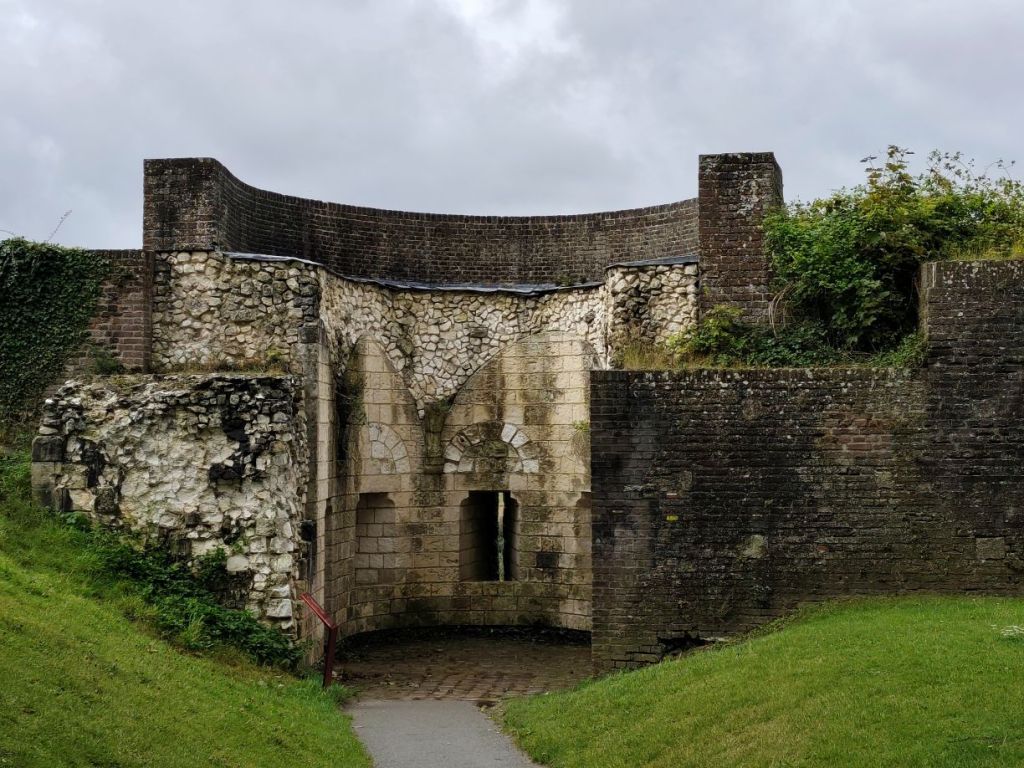
What really interested us, however, was to discover why this place was called the “Carcassonne of the North”. Once we saw its circuit of defensive walls that entirely encircle its historic upper cité (today’s featured photo is on rue Clape en haut) and noted the presence of a more residential lower town, we began to understand. While our hometown is bigger and more widely known, Montreuil-sur-Mer has also kept its charm and state of preservation.
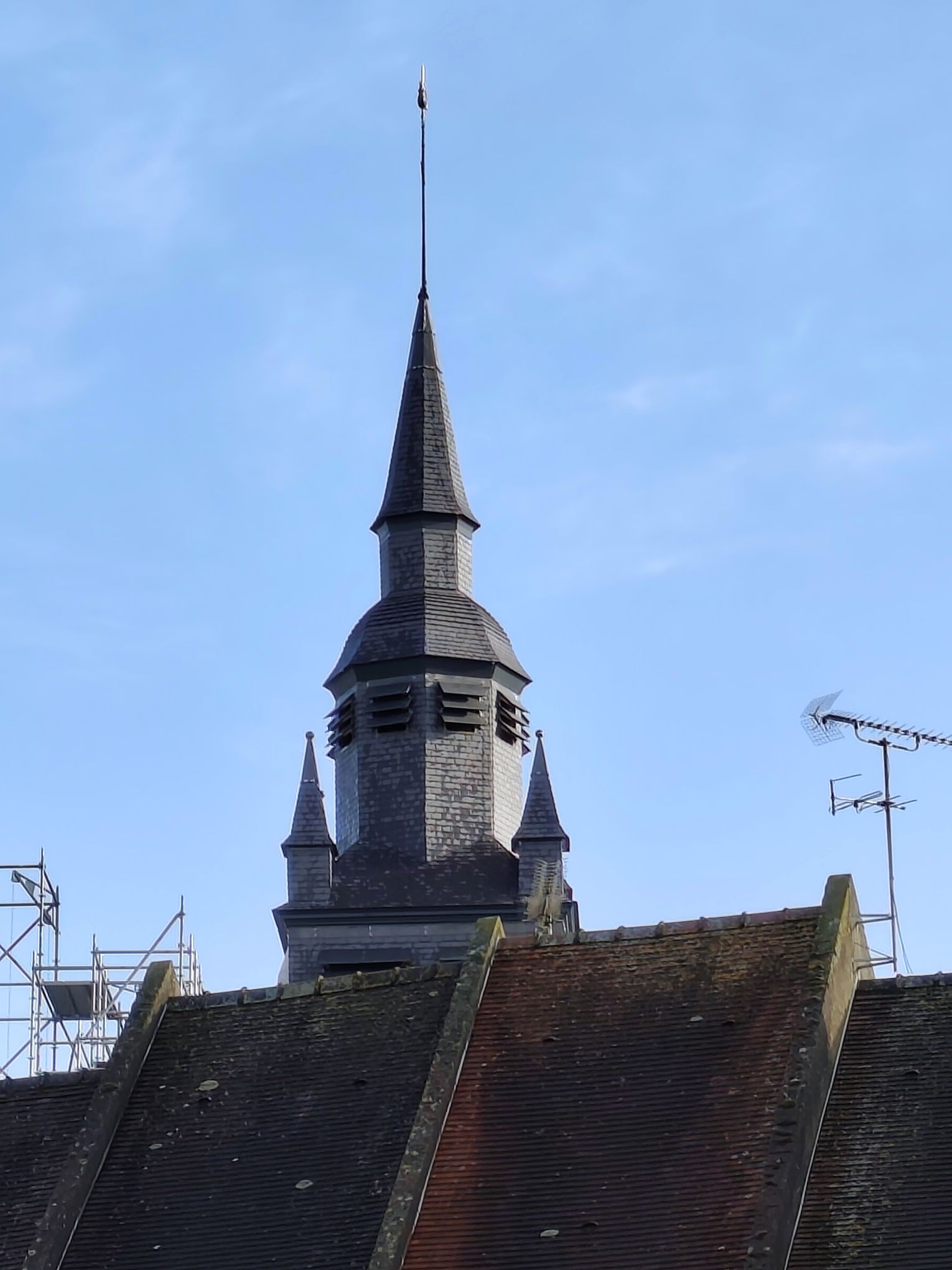
About 20 minutes further down the rail line was Hesdin, our next destination. There’s an annual contest in France to elect the country’s favorite village and each region gets to nominate one candidate. Three years ago the town of Hesdin achieved second place nationwide so we went there to see what made it so special.
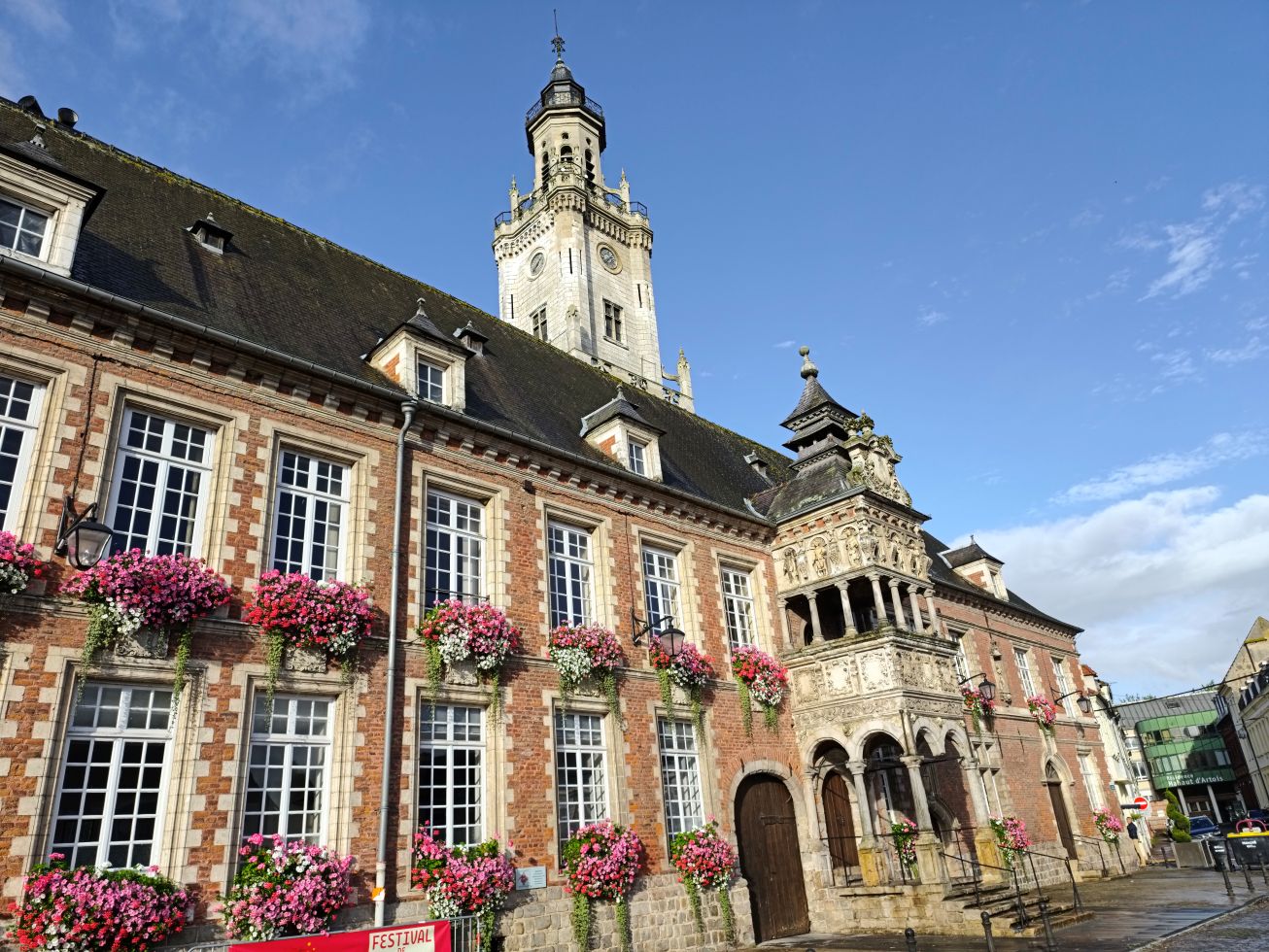
An advantage of visiting villages is that they tend to be compact, so within 10 minutes of walking out of the train station we were standing in Hesdin’s large central square, Place d’Armes, dominated by a 16th century palace that today serves as City Hall. Rising 70 meters (230 feet) behind there is a UNESCO World Heritage site, the Belfry, a bell tower constructed in unison with the palace, then rebuilt or restored at least 6 times over the centuries.

The route back to the station took us past the church Notre-Dame, opened in 1568 and across Pont Blondin, a bridge named for the Niagara Falls tightrope walker born in Hesdin in 1824. Strolling through the old town’s cobbled streets, with their traditional French houses, some with half-timbered features, offered a glimpse into the town’s well-preserved history.
Bonus website: While researching today’s destinations, we found an association of 104 small towns across France, The Most Beautiful Detours, that highlights the country’s diverse, less-frequented areas like Montreuil-sur-Mer. https://www.plusbeauxdetours.com/
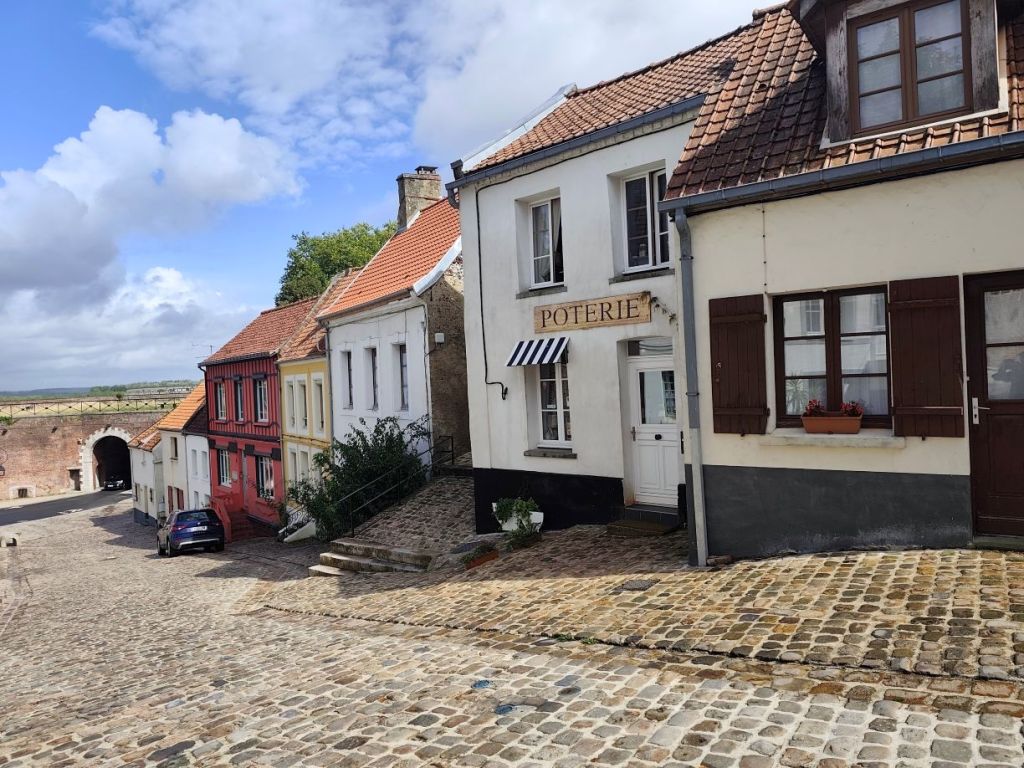


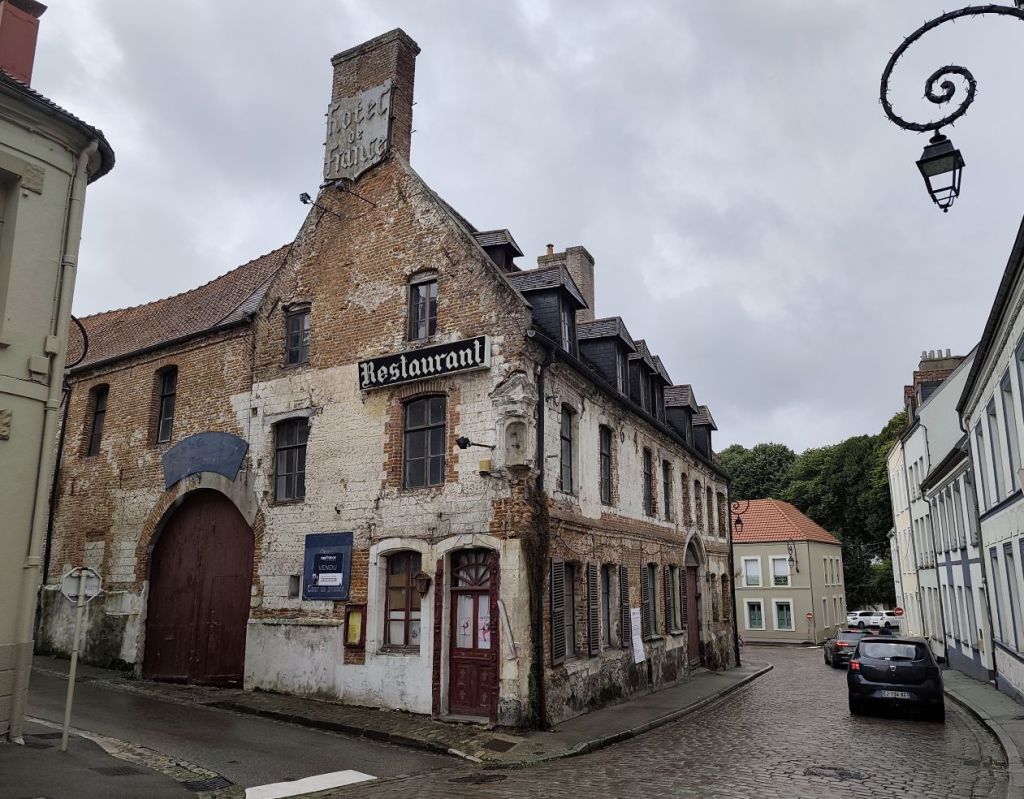



Looks like a wonderful destination! One thing I notice is the difference in roofs from one part of France to another. In my area it’s nearly all slate roofs (with a few really old places that have a schist [I believe that’s what that stone is called] roof). I think a lot of Normandie is slate until you go inland a bit. Then in Bretagne it’s also slate. But, aside from the roof materials, there are also differences in roof pitches, how gables are finished, etc. It makes me wonder what were the reasons for these regional differences, because often the building underneath is pretty similar throughout the country in layout and style.
LikeLiked by 2 people
You’re right, Ron, and it’s a difference that we’ve noted as well. From what I understand, it’s a combination of what’s available locally (slate, where you are; clay for tiles down here in the south, for example) plus weather conditions (steep roofs to minimize snow accumulation; flatter roofs in warmer areas to provide more shade). I even remember reading about taxes on the number of windows or the number of floors having an influence. 💶
LikeLiked by 1 person
Lovely spot
LikeLiked by 2 people
Nice photos of a lovely trip! Thanks for the list of towns to visit, too!
LikeLiked by 2 people
Only a train ride away….😉
LikeLike
Montreuil-sur-Mer looks so atmospheric—I love that connection to Les Misérables! And Hesdin sounds like such a gem too, especially with its UNESCO-listed belfry. Adding both to my list for my next northern France trip—thank you for uncovering these “less-traveled” spots.
LikeLiked by 1 person
It’s a pleasure to share and we hope that you’ll have as much fun in these two (formerly 😉) hidden spots as we did!
LikeLike