

Although Vichy has been on our “must visit” list for years, I was reluctant to go because of the city’s connection to Nazi Germany. French Marshal Philippe Pétain, leading an autocratic government during World War II, dismantled the democratic institutions of the French Third Republic and consolidated power by creating a cult of personality around himself. His government, based in Vichy, collaborated with Hitler’s regime by imposing a police state controlled by censorship and propaganda. Luckily that ended 80 years ago, leaving behind a city where the painful memories of that era remain, but the beautiful Belle Époque architecture endures.
When discussing architectural styles, you might divide this walkable city into 3 parts that concentrate on one style yet include buildings from the others. We started with what one guide called, “a feast for the eyes”.
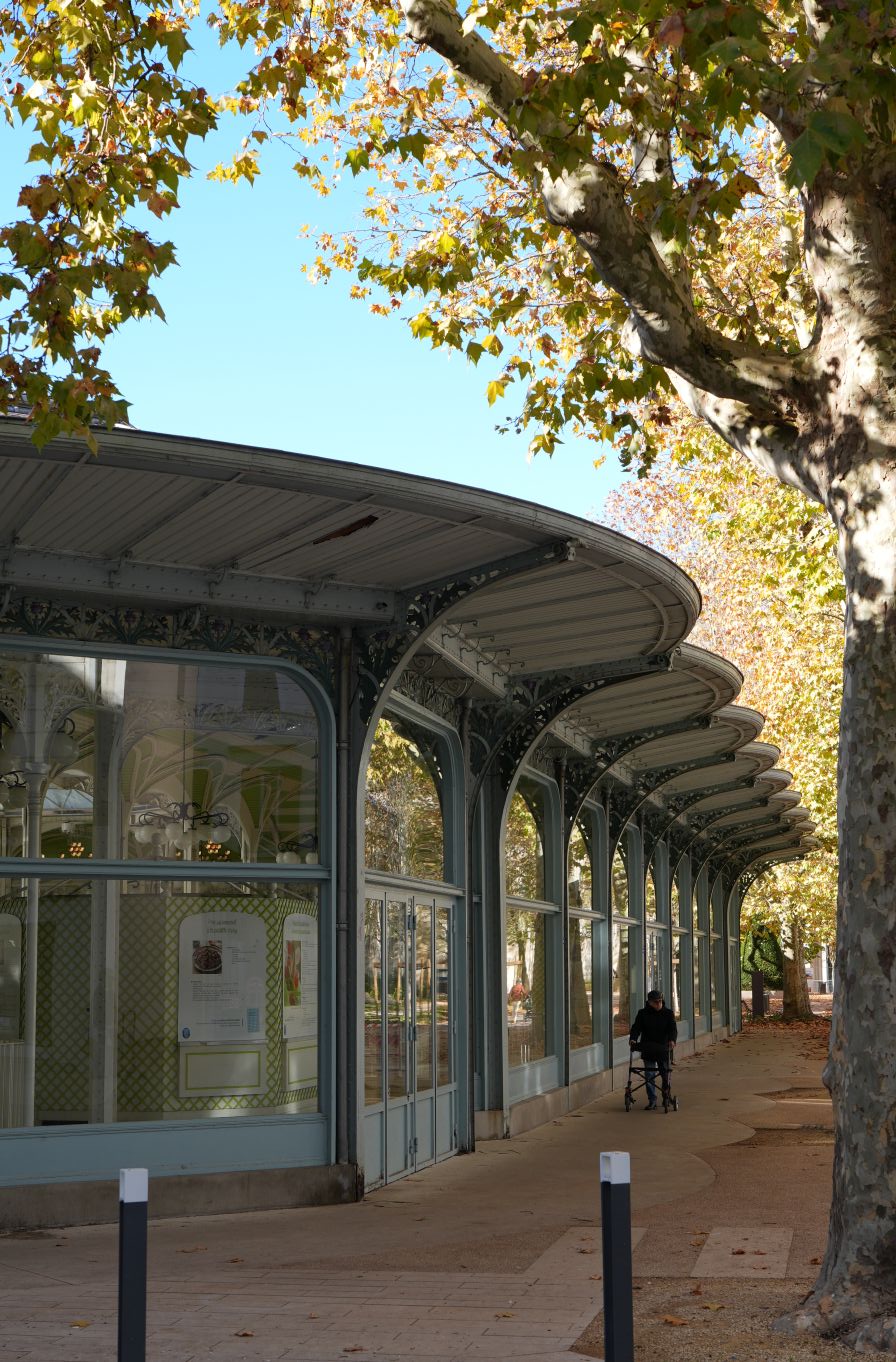
The Spa District—The Belle Époque (Beautiful Era), which spanned from the late 19th century to the start of World War I, was a time of peace, prosperity, and cultural flourishing in France. During this period, Vichy was a fashionable spa town, attracting wealthy visitors from all over Europe who came to take the waters and enjoy its grand hotels, casinos, and parks. We were now standing in one of those parks, Parc des Sources, created by Napoleon in 1812 where there was a concentration of the famous mineral springs (sources in French).
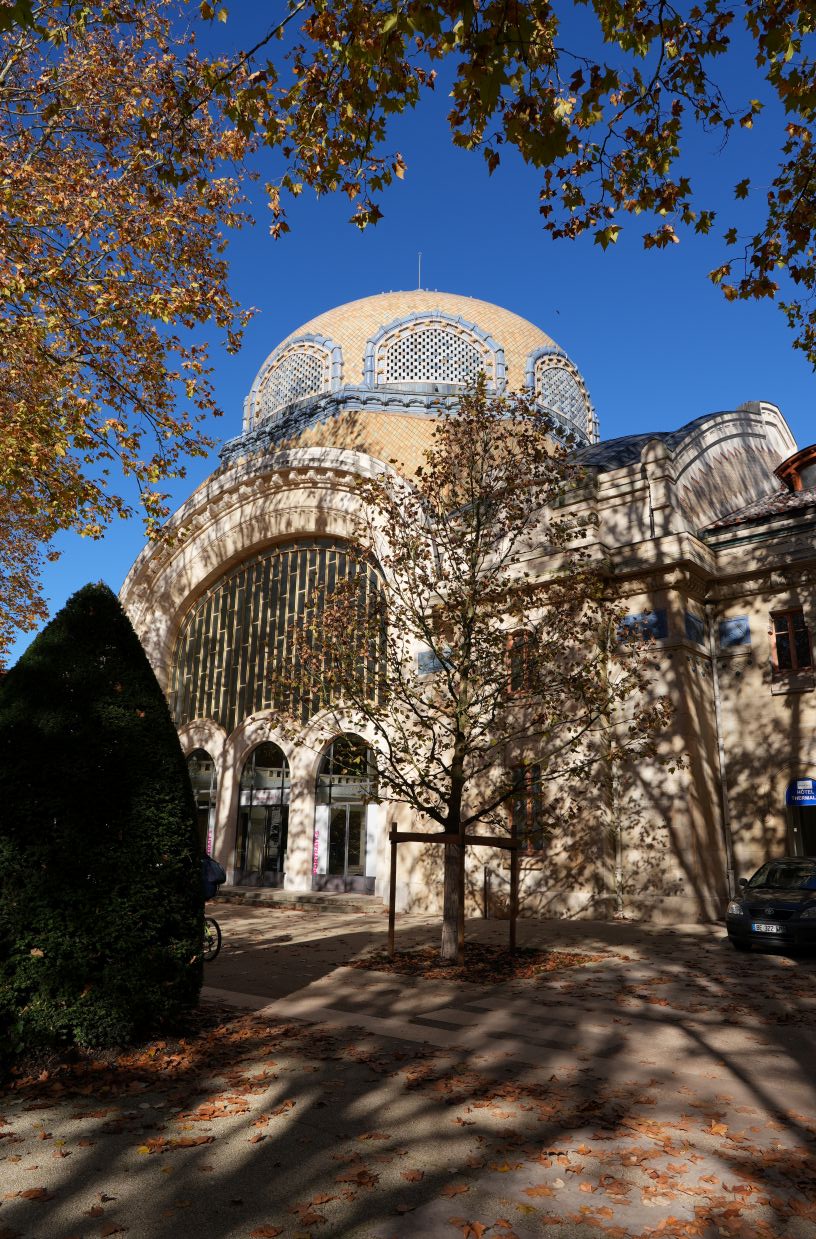
The concept was to have a central location that would connect spa-related buildings in a beautiful, restful environment for those taking “the cure”. The Hall des Sources, constructed in 1903 from cast iron and glass, is where you can still drink the thermal waters that are said to have healing powers. For a full-fledged treatment plan, the Grand Établissement Thermal complex has offered hydrotherapy, mud therapy, and other cures for digestive, metabolic, and rheumatological conditions, since 1903.

Once you’ve spent the day relaxing in the waters, you might be in the mood for some entertainment. Still within the Parc you could attend a performance at the Opéra de Vichy, the second largest in France behind the Palais Garnier in Paris. It’s a great example of Art Nouveau, with its intricate floral motifs and a balanced color scheme of gold and ivory. If you’d prefer something more of a “risk” there’s the Grand Casino inaugurated in 1865. While it’s now operated as a convention center (today’s featured photo across the top) the building itself still reflects the city’s golden age blending 19th century architecture with Belle Époque elegance.
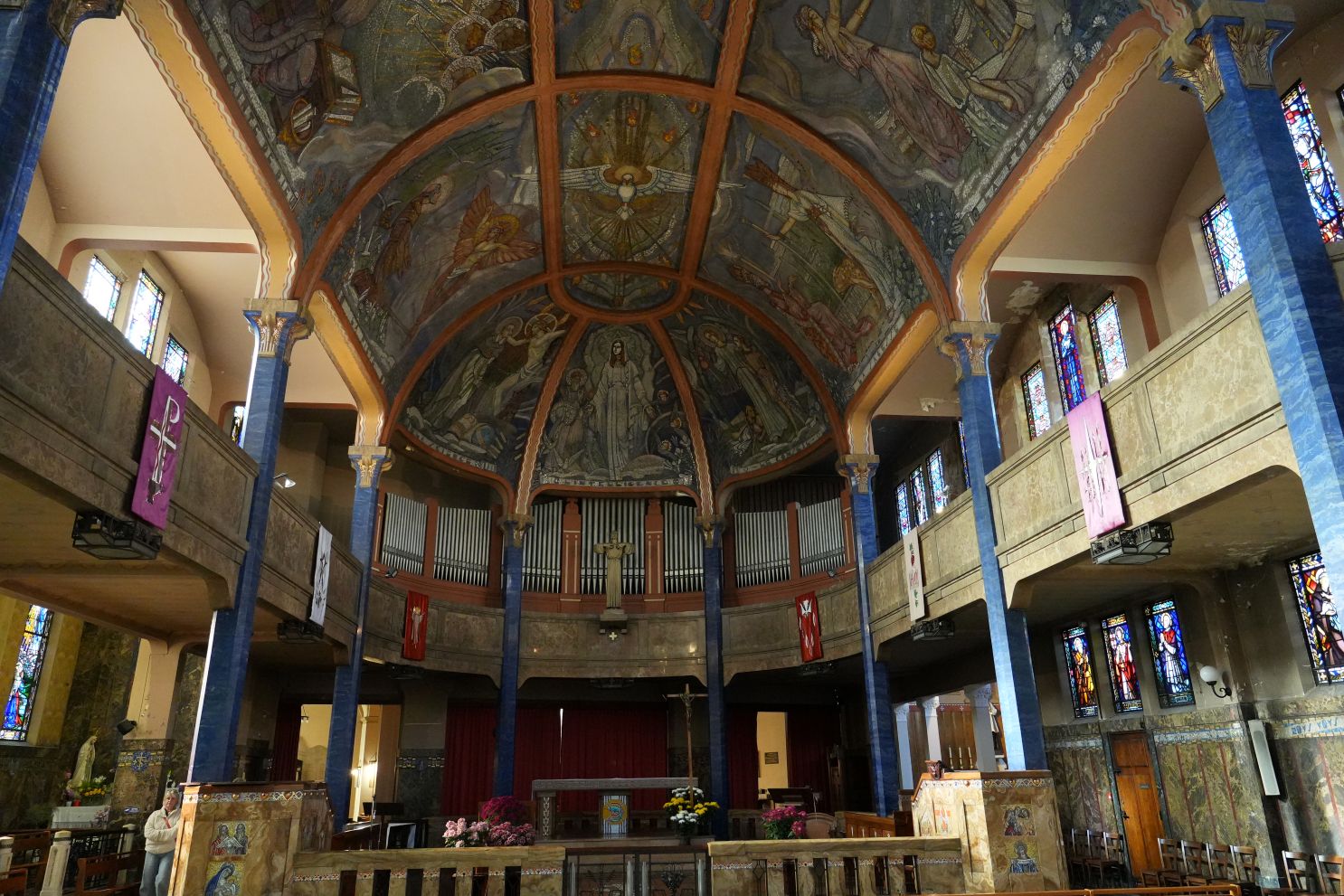
Old Vichy—just outside the Park’s south end is the historic medieval core of the city that includes the Sources des Célestins, a spring discovered by monks in the 15th century, and now the emblematic water of Vichy. In the same neighborhood is the Church of St.-Blaise that blends a structure from 1672 with an Art Deco one from 1925 that the tourist office calls, “the jewel of Old Vichy” referring to the mosaics and stained glass windows from the 1930s.
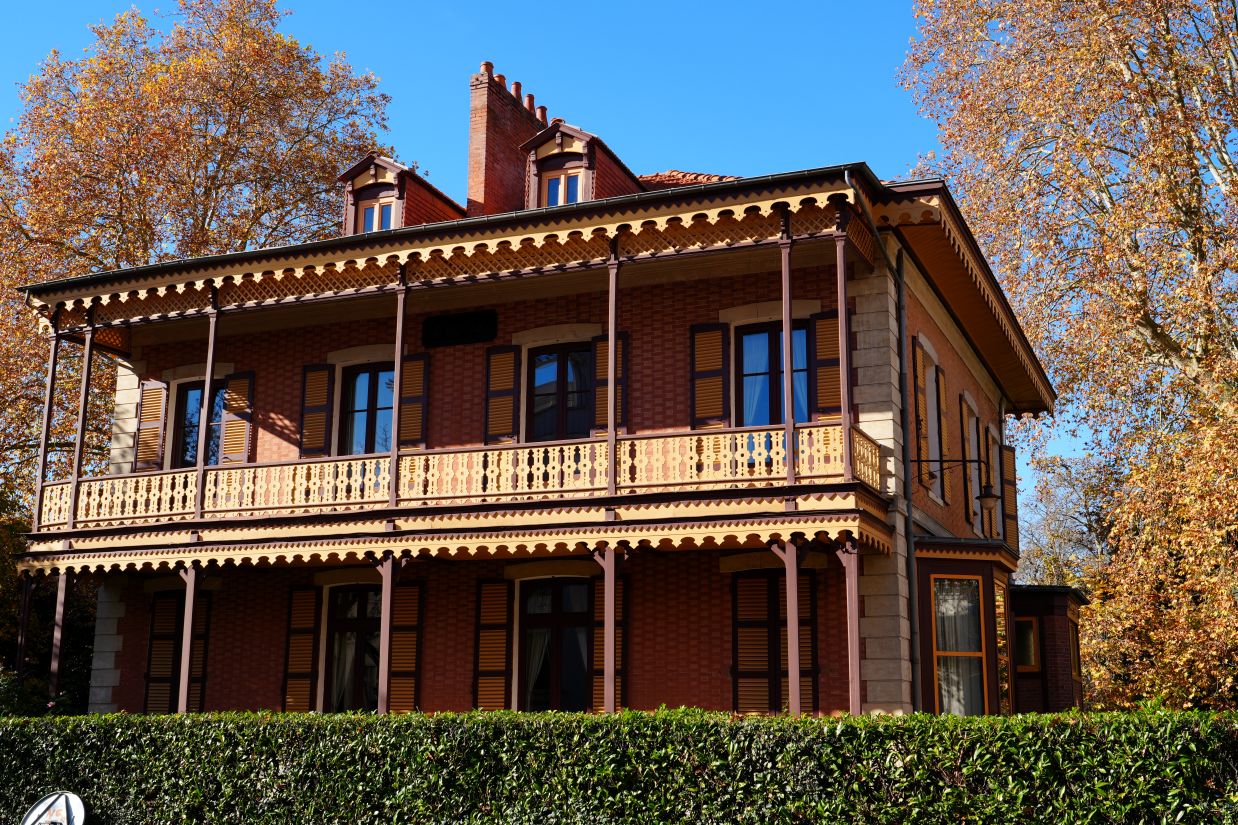
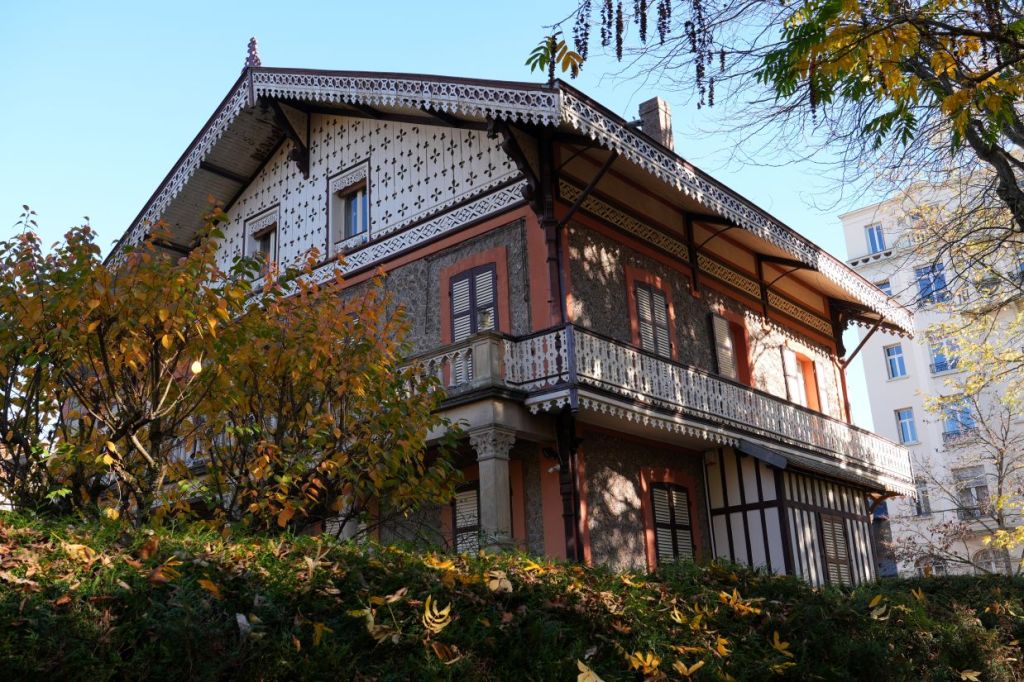
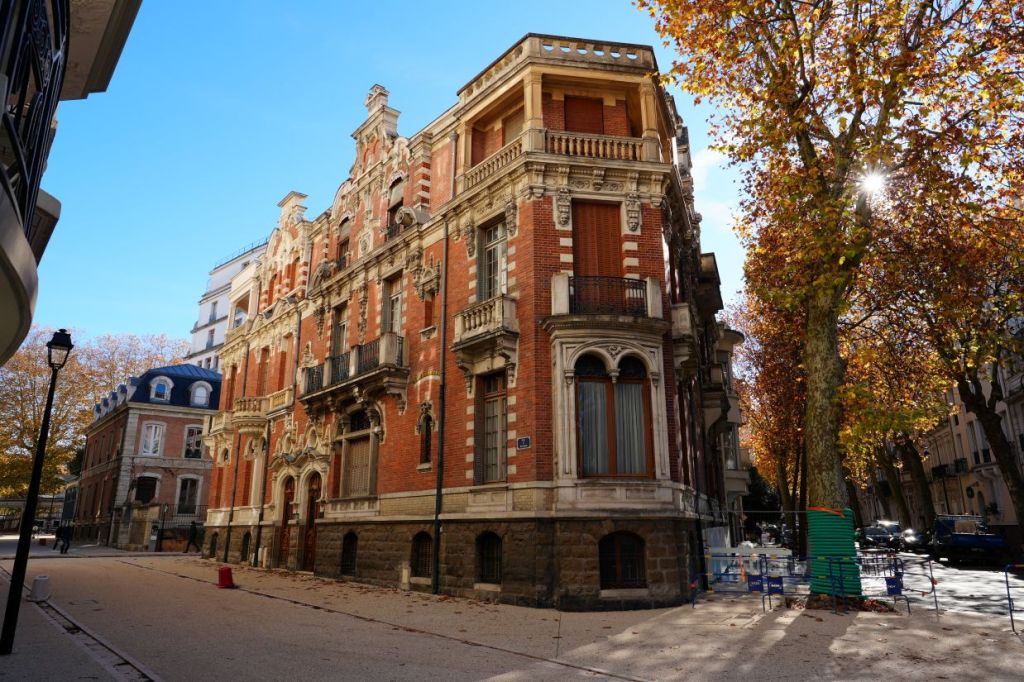
The Villas and Chalets—many streets close to the Park are lined with impressive buildings that I think of as any early version of AirBnb. According to the tourist office, “The common purpose of these residences: to attract tenants so they could be rented to seasonal visitors who came to take the waters.” However, 3 cottages/chalets that would have been only for imperial visitors were built in 1863 for Napoleon III.
Despite my reluctance to travel to Vichy due to its association with a former fascist government, I’m glad we went; it’s an excellent example of the Belle Époque.
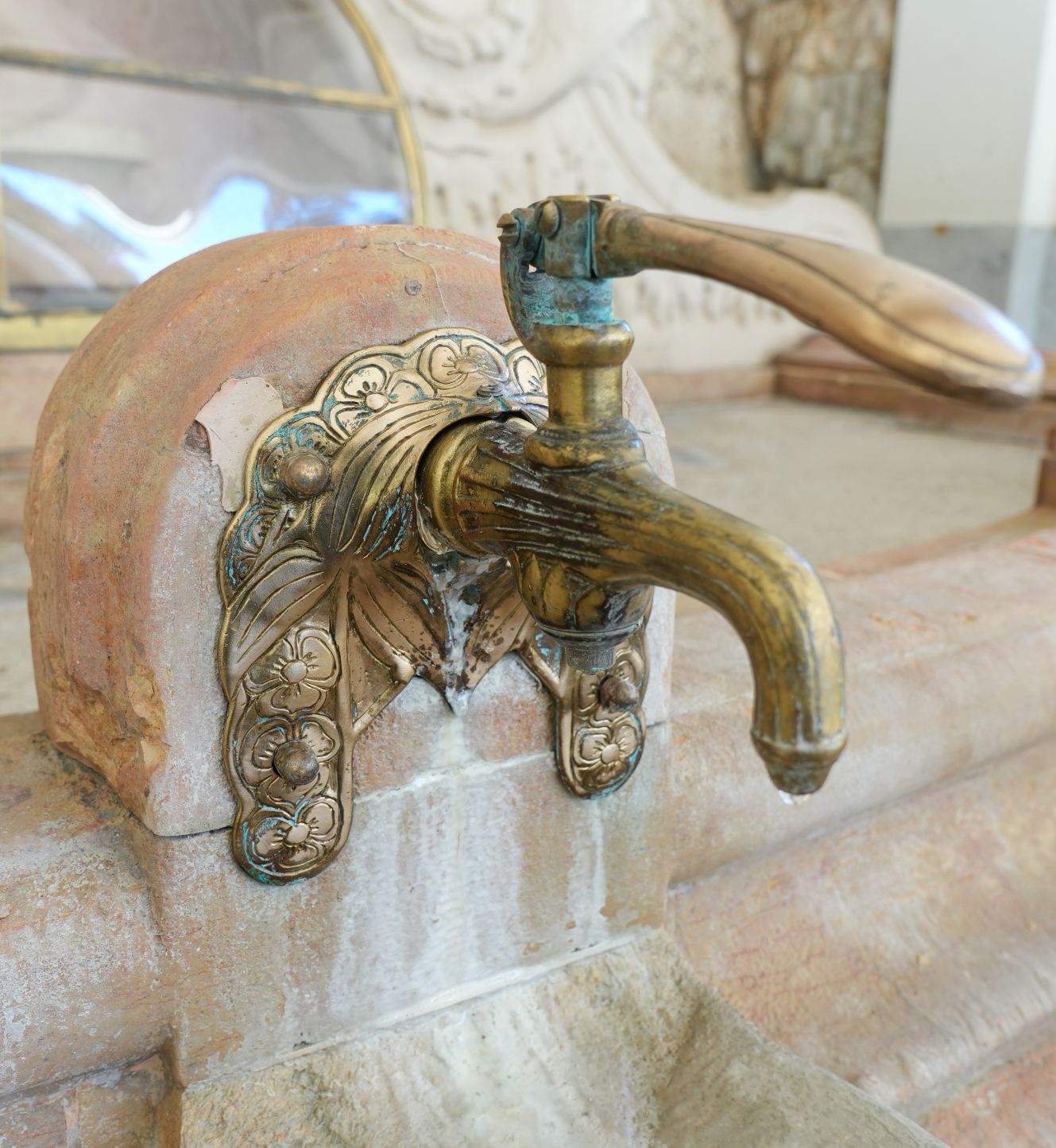
PS: If you’re wondering what the spa waters taste like, free to sample from spigots like the one in the first paragraph above, here are some words that others have used and we would agree: salty, alkaline, distinctive, strong mineral profile, oily and mouth coating. Legend says, “the worse it tastes, the better it is for you” so apparently you’re in for a very effective cure!




This was interesting, it’s true, and possibly unfortunate that the city continues to have a strong association with nazi collaboration. It definitely does in my mind. That’s something difficult to de-associate mentally. Another thing now that I think about it, I don’t recall anyone mentioning it as a place to visit—at least amongst my French friends. Collaboration with evil comes at a long-term cost, something people willing to do so should, but never will think about. Thanks for writing about this provocative place.
LikeLiked by 2 people
Glorious architecture
LikeLiked by 1 person
Are you seeing how Vichy and other areas in your recent travels are implementing measures to collect/compost food waste compared with Carcassonne? I noticed that France recently passed a law requiring that food be separated from regular garbage.
Thank you, and I’m enjoying your blog a great deal.
LikeLiked by 2 people
Hi Krista, happy to hear that you are enjoying the blog! You’re right about the requirement to separate food scraps from the rest of the garbage. From what I understand, each community can choose how they accomplish that. In Vichy, we saw a separate collection container sitting beside the glass recycling bin we used. In the communities surrounding Carcassonne, there is a shared composting approach with large boxes for everyone to use. Individuals with outdoor space can order their own compost box for 30€.
LikeLike