

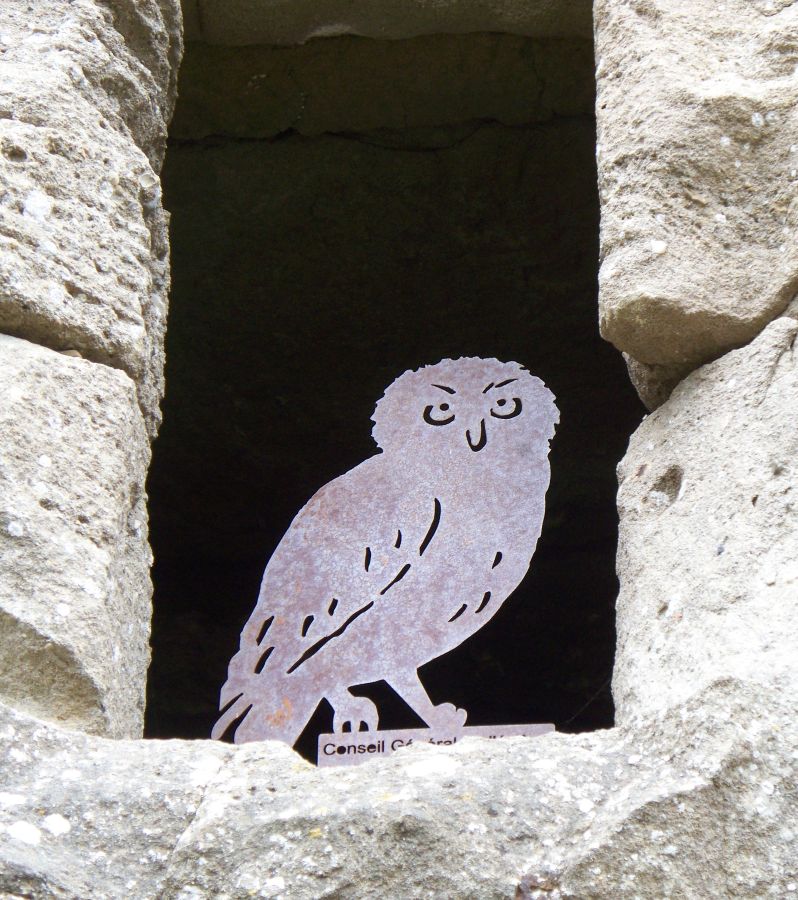
It’s not often that the word little (petite) is used in the same sentence with Carcassonne. After all, with 3 kilometers (nearly 2 miles) of double walls surrounding it, we’re more likely to see descriptions including “Europe’s largest medieval walled city” or “giant fortress” or even “most formidable fortified city”. That reputation has attracted up to 3 million visitors during an exceptionally busy year, half of whom were from nearby Spain. Historically, it’s that proximity to our former adversary, now ally to the south that required the construction of those protective walls. In fact there’s a string of fortifications along the French/Spanish border that provided security to this area for hundreds of years, including one in the village of Camon, also known as “La petite Carcassonne”.

The nickname comes from the fact that Camon was a fortified village, albeit on a much smaller scale than our French hometown. While it doesn’t have the massive double walls and extensive towers of Carcassonne, it did possess ramparts and defensive features that gave it a similar, though miniature, fortified appearance, some of which are still visible today. We started our visit by walking along one of those features, the thick, stone walls that have provided safety through the centuries.
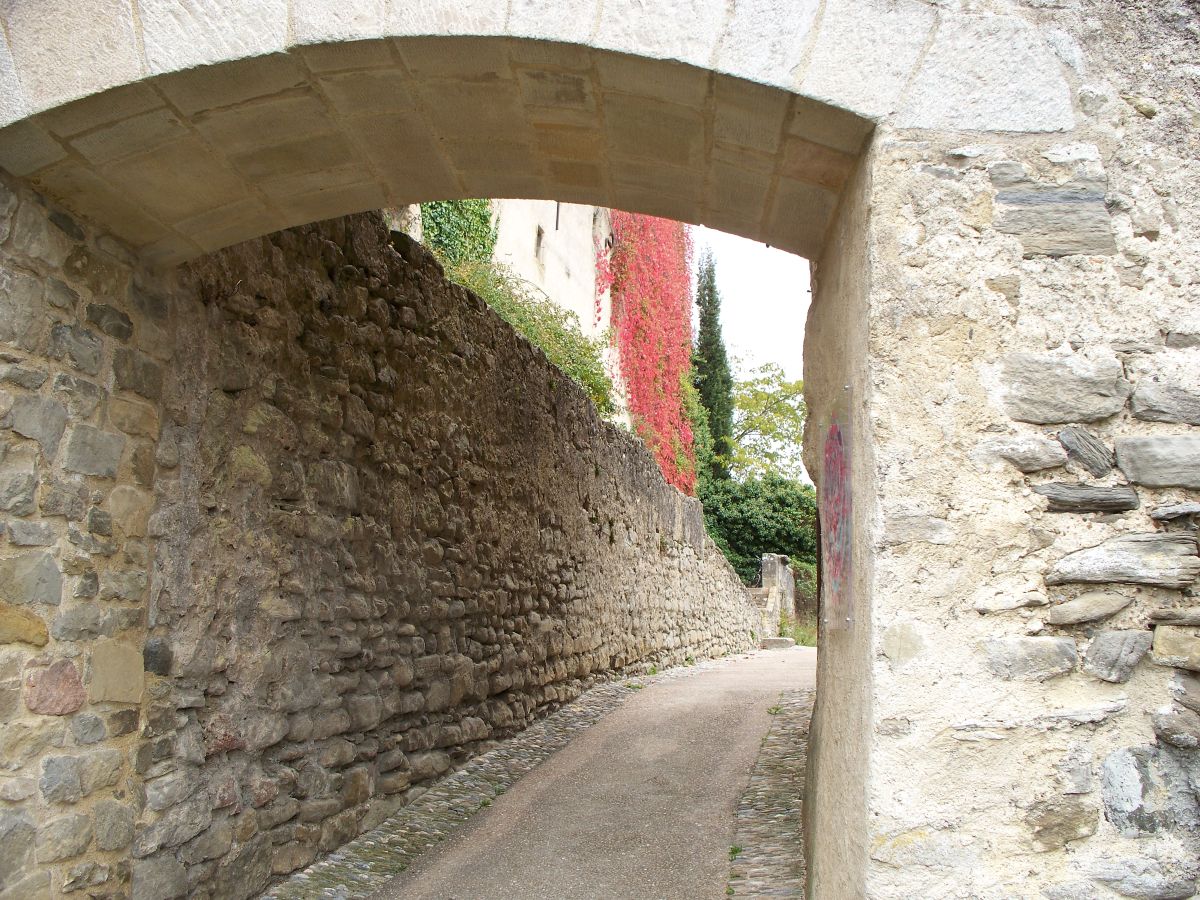
To gain access to the interior of the village, we passed through the same gate that would have been used in medieval times, La porte d’entrée. The 14th century tower includes three bells, the oldest of which was installed in 1513. Once inside, we were surrounded by the familiar site from other villages of a similar age with stone or half-timbered buildings, with their clay tile roofs, lining narrow streets (today’s featured photo across the top). It wasn’t long before we were approaching the monastery that legend says was founded by Charlemagne in 778. Written records do at least confirm that the building existed in 943 when it was donated to the Abbey of Lagrasse.
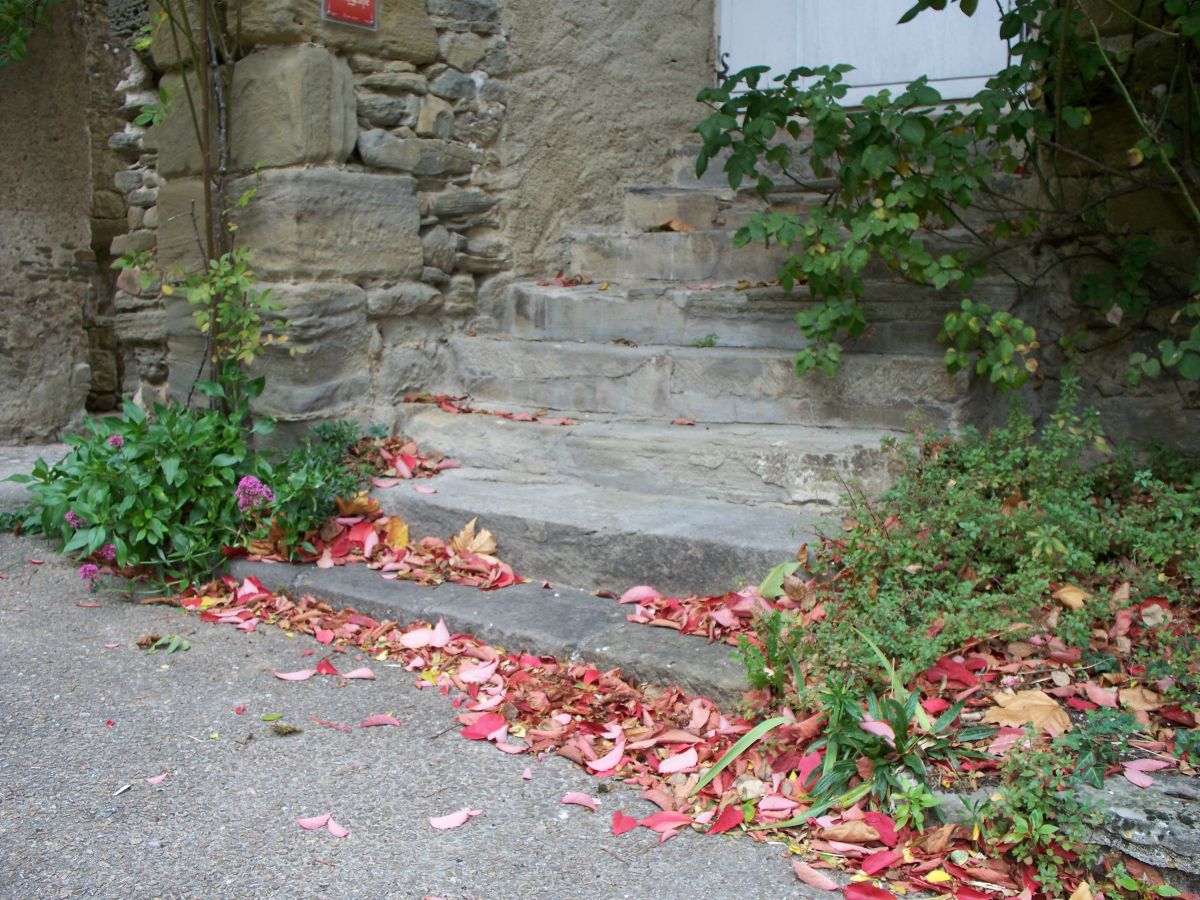
Recognizing the charm of Camon, the 150 residents are now part of “The Most Beautiful Villages of France” an organization that promotes the cultural and architectural heritage of small, picturesque French communities. Add to that the annual Rose Festival in May where the front of each household is duly decorated with climbing flowers that have also earned the town the national designation of a “Flower Village”.

Elsewhere in France we have La petite Carcassonne du Gers in Larressingle, La Carcassonne du Nord in Montreuil-sur-Mer, La Carcassonne Lorraine in Rodemack while Jaisalmer, India boasts The Carcassonne of the Desert. All intriguing and worth visiting, no doubt. But like those ‘Not Exactly’ car rental ads, they’re… well, not exactly Carcassonne. So, we’ll happily stick with the original.
 Let's Live In France