


Blog readers sometimes send us links to articles about France that they have read in other publications. There’s a French news source, Courrier International, that in a sense does the same thing for us with their section, “France seen from abroad”, that referenced an article in the British newspaper, The Telegraph. Journalist Anthony Peregrine has been based in this country for over 20 years so he has an amazing collection of articles with descriptive headline words such as “loveliest, greatest, most elegant, and popular”. When I saw a mention of “11 reasons why French cuisine is still the best in the world”, I definitely wanted to read about that.
According to Mr. Peregrine, France excels in its cuisine because of its use of some basic elements that he calls “building blocks”. His first example did not surprise me:
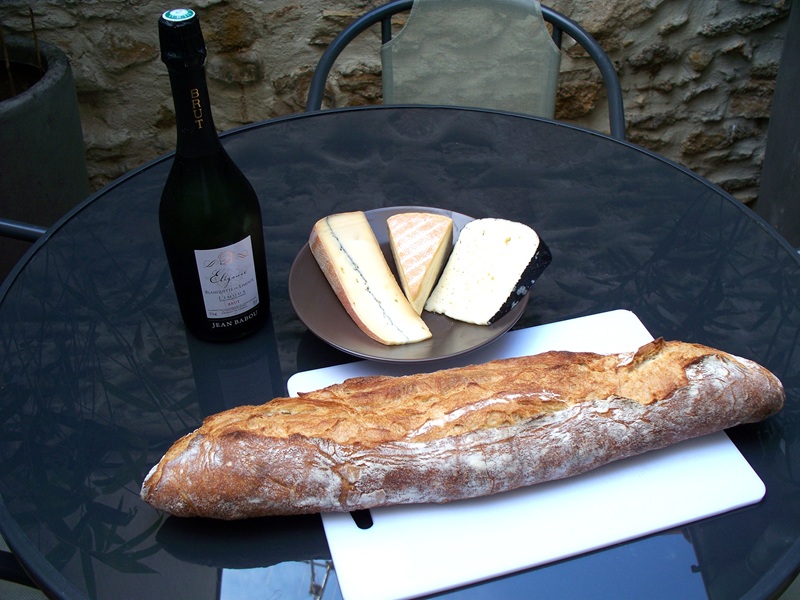
- Bread—The French eat more than 30 million baguettes every day, typically bought from one of the 39,000 bakeries located here. Within a 10-minute walk from our house we can pass 4 bakeries not counting the bread oven in our neighborhood grocery store.
- Truffles—Too strongly flavored for us but wildly popular here, even though they can sell for 1,000€ per kilogram. However, I’ll take a chocolate truffle (as simple as chocolate, sugar, butter) that national chain Jeff de Bruges sells for 75€ per kilogram.
- Oysters—Not a favorite at our house but obligatory at family celebrations, especially for Christmas and New Years. French philosophers including Voltaire ate them for inspiration while it’s said that they gave Napoleon stamina before a battle.
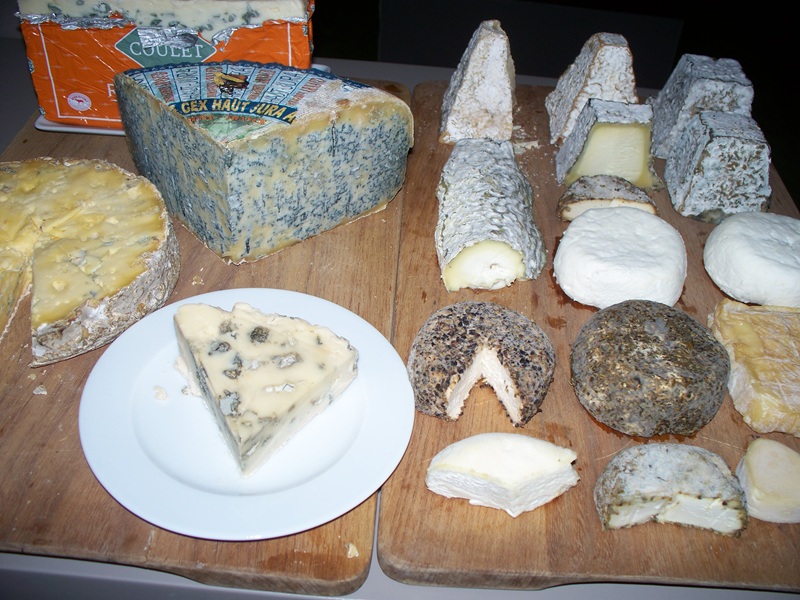
- Cheese—The saying goes that there’s a French cheese for every day of the year but even on Mars with a 687-day year you’d have cheese left over. We’d heard that you should only serve cheese as its own course, just before dessert, but we’ve been to plenty of parties where it’s out on the table with all the other snacks before dinner.
- Choucroute—This translates to “sauerkraut” yet if you order it in a restaurant you will get a heaping pile of fermented cabbage accompanied by a variety of sausages, other types of pork, and perhaps even some potatoes if you’re really hungry.
- Charolais beef—With its own AOP designation, like Champagne for example, to ensure that you are getting meat from Charolais cattle raised in a specific region of France and processed according to established standards.
- Mushrooms—In the US we bought them as “button mushrooms” (Agaricus bisporus) but here they are called “mushrooms of Paris” as a nod to their origin in the catacombs of the capital city although they are now cultivated all over the country.
- Foie gras—Much like oysters, we see this on special occasions including birthdays and holiday parties. The practice originated with the Egyptians 4500 years ago and was then brought to France by the invading Romans around 150 BC.
- Charcuterie—”Cold cuts” you might say that seems to be on the starter menu for every restaurant we’ve even been to. In 15th century France, shop owners who specialized in preparing and marketing pork products were prohibited from selling raw food so they focused on cooked and cured meats that needed no refrigeration.
- Pastry—Croissants, pain au chocolat/chocolatines, and other baked delights known as viennoiseries fill the shelves of bakeries side-by-side with crusty baguettes. Professionals mark their shops as “artisan” to emphasize that their breads are prepared and baked on-the-spot.
- Wine—You were expecting this last one, I’m sure. We enjoy wine and know all of those terms like nose, palate, body, and finish but the most important to us is taste. Does that wine taste good? Buy it!
When talking about the proliferation of American-based fast food chains, Mr. Peregrine concluded with, “…but they don’t threaten French cuisine any more than Disneyland threatens French culture. They merely expand the choice, which is already the widest in the world.” Even at Disneyland Paris, amidst the burgers and fries, you’ll find crêperies serving traditional Breton galettes, bistros offering classic French dishes, and patisseries overflowing with éclairs and macarons. Bon appétit!


The food is one of the reasons why I love living here.
LikeLiked by 1 person
Good morning Bill and Bob,
since I am sitting with my morning coffee, perhaps you can educate me a bit?
It used to be that one could read that French breakfast was a bowl of coffee and baquette, with butter and marmelade or a croissant.
Now my question: what do French folks consider a nice, good breakfast? Is there anything typical one would not want to miss?
LikeLiked by 1 person
Oh, you mean other than a cigarette and a cup of strong, black coffee, LOL ? We often eat breakfast in hotels here and they generally have these in common: a big selection of fresh breads–baguettes, loaves, pain-au-chocolat, pastries, a small cake or two–several jams, a selection of yogurts, and fresh fruit. Also there, but we seldom see the French touch them, are hard boiled eggs, sliced meats and cheese. If a city is known for a specialty (in Bordeaux, for example, it’s the rum and vanilla pastry, canelé) then that might be on the buffet as well. Our favorite, though, is the fresh-ground coffee machine where you choose the type of wake-up beverage that pleases you. Enjoy your breakfast!
LikeLike
PS: I forgot to specifically mention croissants and fruit juice and we’ve only seen coffee cups or mugs in hotels. At friends’ homes, however, there you might find that bowl of coffee into which they would dunk their baguette with butter and jam.
LikeLike
The photo from Franck Putelat’s reminds me of a tasting lunch Phil and I enjoyed there several years ago. I forget how many courses there were over a four-hour lunch, at a table for eight with no English speakers, but I remember that when we returned to our hotel at 4:30 that afternoon, we fell into bed and didn’t wake up until the next morning! Too much of a good thing….
LikeLiked by 1 person
We know what you mean, Sandy. Our dinner was an 11-course meal, oh-la-la !
LikeLiked by 1 person
I miss the food quality most of all. France does not need a store named “whole foods”, as that’s pretty much what you’ll get wherever you go, whatever you eat. The imagination the French have invested in their cuisine and their appreciation for it have made it a priority there, whereas here food production historically has been a matter of achieving the minimum to survive and choice is mostly determined by food processors and conglomerates. It even takes special effort to find coffee as good as Carte Noir, just an ordinary French coffee for which I still have yet to find a replacement. I could order it on Amazon, but it’s very expensive here. On the bright side, my relatively short stay in France has helped me immensely in the transition to retirement, as it jump-started the shift toward better life balance and appreciation of all the “little things” which taken together raise the quality of enjoyment and value of time spent.
LikeLiked by 1 person
Rich, I agree on your appreciation of Carte Noir coffee. It’s not as good when you drink it in the US after a a trip to France. We have tried many times but you just have to be here to enjoy it to the fullest.
LikeLiked by 1 person
Already planning the travel budget for next year…
LikeLiked by 1 person
That’s great news, Rich!
LikeLike