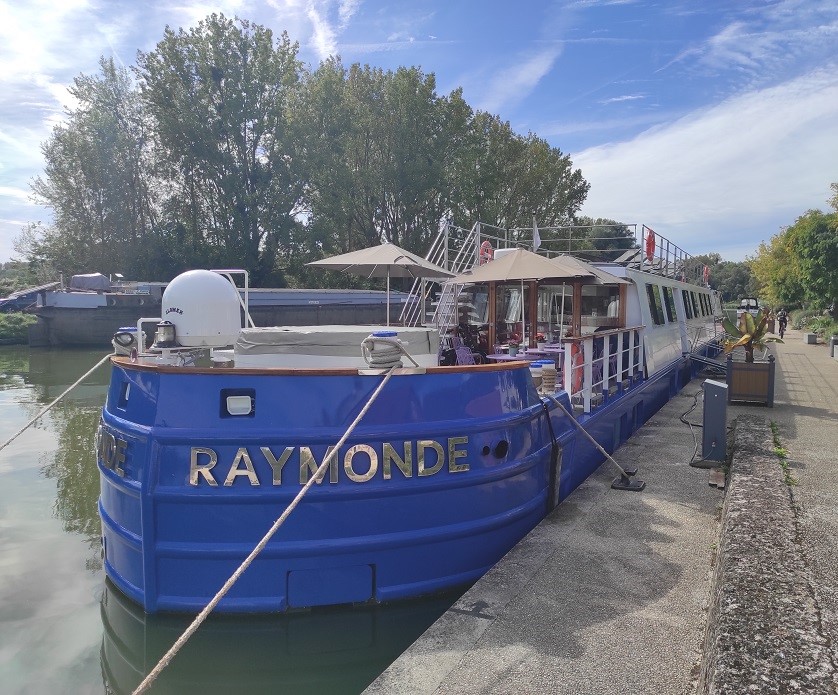
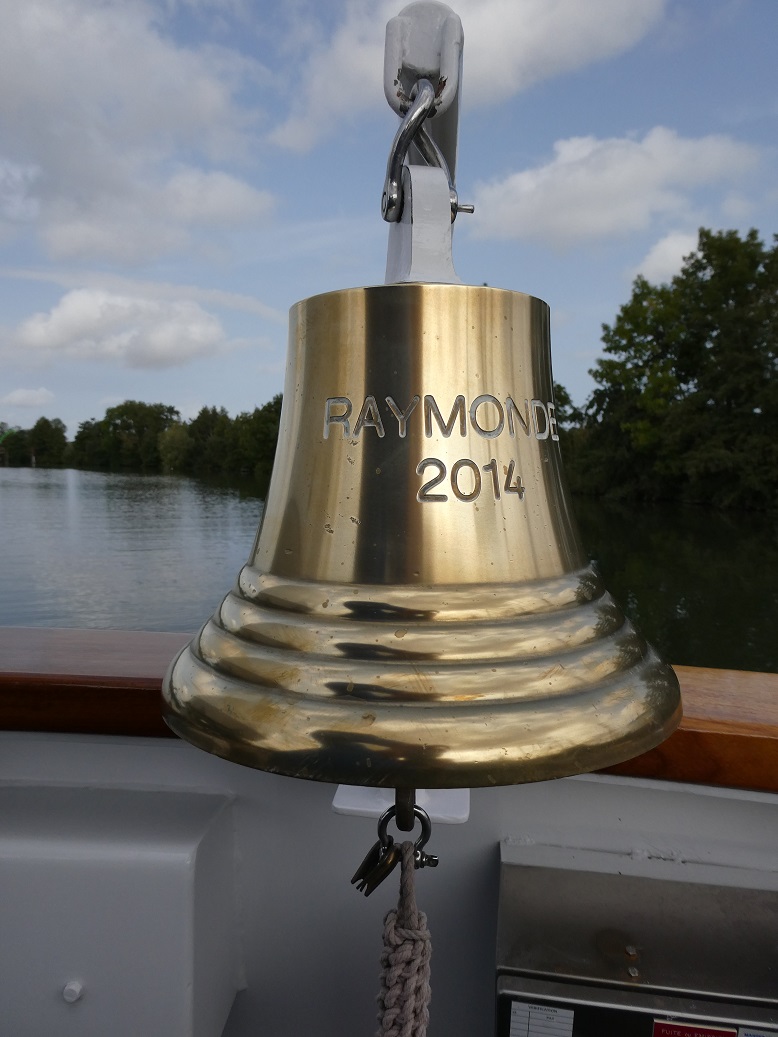
One week on a hotel canal barge

There’s an episode of the PBS TV show, Rick Steves’ Europe, called “Burgundy, Profoundly French” where the host is gliding down a peaceful canal, sipping red wine, while telling us about how calm and serene life onboard can be. We now live within a few minutes’ walk of the Canal-du-Midi and during the season we typically see small house boats navigating the narrow waterway that, in conjunction with the Garonne River, connects the Atlantic Ocean with the Mediterranean Sea. If a family has rented the boat, usually one of the parents is at the helm and in our minds, at least, wondering when their next challenge will arrive: the lock that they themselves might have to operate to get to the next higher or lower level of the canal, a task that has always dissuaded us from renting a similar boat. In that PBS video Rick Steves never has a worry and now we know why: he was on a hotel canal barge much like the one we enjoyed for a week.

Continue reading “One week on a hotel canal barge”

Canal boat to Paris

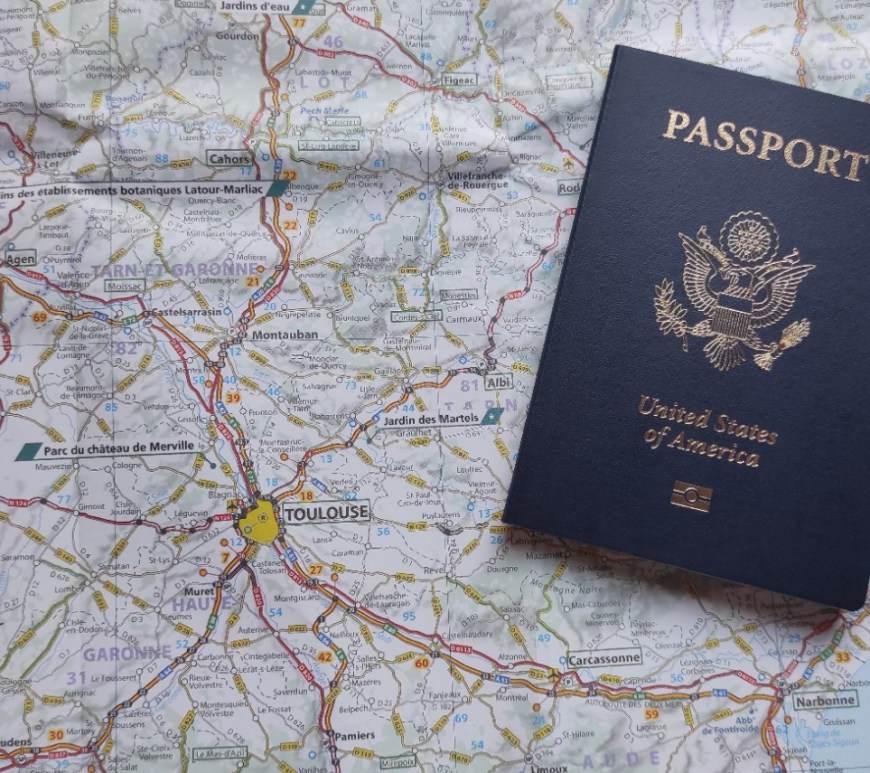
For anyone with a good knowledge of French geography, you might know immediately where the Oise Valley is located. To give you some hints, a few of the significant towns in the area are Compiègne, Pont-Sainte-Maxence, and Saint-Leu-d’Esserent. Still no idea? Me neither, at least until I got out a map to see that it’s northwest of Paris and that, in fact, the Oise River originates in Belgium and flows south to join the Seine about 25 kilometers (15 miles) from the capital. The reason this became important was because Bill had been reading about cruising the canals of France on a péniche (in this case, a hotel barge) and one company was offering a 50% discount on some departures on this route. It was time to investigate what this valley had to offer.

Continue reading “Canal boat to Paris”

Canfranc Estación, a grand railway hotel

Although Bill and I are definite fans of rail travel, we seldom pay close attention to the station. For us it’s usually just the place to check the departure board and to pick up some buttery croissants or a freshly made sandwich to take onboard. If we’re changing trains along the way we might not even go inside the building; instead, we look at the display screen as we arrive to see from which platform our connection will be departing and then walk directly there. Oh sure, who wouldn’t notice the massive open interior of New York’s Grand Central Terminal, London’s impressive red brick facade of St. Pancras International, said to have been the world’s largest enclosed space when it opened in 1868, or the beautiful tile covered walls inside São Bento in Porto, depicting the history of Portugal. While we’ve seen those and one or two others that come to mind, we had never made travel plans specifically to route ourselves a particular way in order to visit a station…until we went to Canfranc, Spain.

Continue reading “Canfranc Estación, a grand railway hotel”

Carmen meets the Barber of Seville

We’re not opera fans but we can appreciate the history that accompanies them. Such was the case two weeks ago when we spent the weekend in Seville, Spain. During our time “down south” we had already spent a week revisiting Madrid before going on to see the Alhambra in Granada where the locals would say that flamenco got its start. Now it was time to move on to a place that might give that latter city a bit of competition in both the origin of the dance and the splendor of their Moorish palaces.

Continue reading “Carmen meets the Barber of Seville”

Granada in 2 days

In a game of word association, you might match up Paris=Eiffel Tower, London=Big Ben or New York=Empire State Building. How about Granada, Spain? My guess is that Alhambra would come to mind. Perhaps it’s not as tall as those other iconic structures but it’s just as impressive with its vast complex that spreads across 14 hectares (35 acres) of gardens containing palaces, towers, and fortifications (today’s featured photo above). This masterpiece of Islamic art and architecture from the 13th and 14 centuries, is certainly why 2 million people visit it each year yet the ancient lower city, founded by the Romans in the 1st century AD has much to offer including the old Moorish quarter, a UNESCO World Heritage Site. The 2 days that we were in town gave us the chance to explore both.

Continue reading “Granada in 2 days”

Tolédo in 1 day

With a train every hour taking only 30 minutes it was easy to get from Spain’s current capital, Madrid, to the former capital and now a UNESCO World Heritage Site, Tolédo. In less than 10 minutes from exiting the train (station photo to the left), we were standing on the Azarquiel bridge admiring the view that you can see across the top of today’s blog post. We continued walking for 5 more minutes to what some might consider “cheating” but what we thought was “smart”: the free escalators that effortlessly take you up to the city. That saved a little time and a lot of climbing since the city sits about 40 meters (131 feet) above the river below. 

Continue reading “Tolédo in 1 day”

Back to Madrid

Returning to a city that you’ve already visited has its advantages: you can revisit some favorite spots, explore some new ones that you missed before, and discover others that you didn’t even know existed. That was the case when our English friends Pete and Gaynor suggested meeting up in Spain, as we had done with them in previous years in Belgium, Switzerland, and the Channel Islands. They had already seen us in Carcassonne soon after we moved here, so we all liked the idea of meeting up elsewhere in Europe for another adventure. Madrid seemed to be the logical choice, since they could fly there non-stop and we could take a direct train from Narbonne.

Continue reading “Back to Madrid”