Villages: most wanted

When an article pops up in the news a dozen times in one day it tends to get your attention. We read various online sources to see what’s going on around the world and we’re always on the lookout for new travel destinations, especially in France. That’s why when the headline, “Here are the French villages the most searched for in 2023 on the Internet” kept appearing one morning, we wanted to see which ones were included (photo gallery at the bottom). Although the website that had compiled the statistics was unknown to us, the popular French travel guide publisher, Routard, said that “Likibu is the Number 1 holiday rental comparison site (in France)” so we felt confident in their results.

Continue reading “Villages: most wanted”

Viollet-le-Duc, massive to mini

You don’t have to travel very far in France to see the name Eugène Viollet-le-Duc displayed on some type of medieval landmark be it a castle, a cathedral or a private building. In our case, we just look across the river to the walled fortress of La Cité de Carcassonne (photo at the very top of our blog) on which he began reconstruction work in 1853 or to the downtown 13th century cathedral Saint-Michel that’s a short walk from home. We had also seen his magic touch in Paris at the cathedral Notre-Dame-de-Paris, city hall, and the jewel-like Sainte-Chapelle plus elsewhere including Mont Saint-Michel, and in Amiens, Strasbourg, and Toulouse. On one list I counted 52 massive worksites around the country where he led the restoration in his 43-year career as an architect. But it’s something much smaller of his that’s on display this summer at our Museum of Fine Arts.

Continue reading “Viollet-le-Duc, massive to mini”

Hidden Montpellier

When we return to a city that we’ve already visited, it’s fun to seek out the less well known sites that are still interesting to see. We did so with Bordeaux and that revealed several links back to revolutionary America that I don’t think we ever learned in history class. Now it was time to discover what we missed on our first visit to Montpellier. The featured photo across the top of today’s blog post is one of the best known spots in the city, La Place de la Comédie, but even it holds a secret. Here to the left is a closeup of one of the buildings there that the locals know as the scaphandrier, a word I’d never seen before to describe something that is viewed but perhaps not noticed by thousands of people every day.

Continue reading “Hidden Montpellier”

Secret coastal France

While I generally look only at a few of our local or national newspapers, Bill has a more rounded approach that incorporates sources outside of France, including the US. He spotted an article  by Terry Ward in the travel section of CNN that he knew I would want to see. The title was “The secret stretch of coastal France that’s nicer than Nice” so naturally I wanted to find out where that was. It didn’t take more than two sentences to see the mention of our region, Occitanie, and then our departement, Aude, to know that the author was talking about Carcassonne and our coastal neighbors Narbonne and Gruissan. Now to find out why it’s a secret.

Continue reading “Secret coastal France”

Two castles and an aqueduct

Since Nîmes is less than a 2-hour train ride from Carcassonne, we’d been there on a day trip and now we were staying a few nights to explore some of the surrounding sites. On previous rail journeys through the area we had spotted two castles across from each other on the Rhône river in the towns of Beaucaire and Tarascon so we wanted to see those up close. Before that, however, was a visit to the  UNESCO World Heritage site connected to last week’s blog post about Uzès. The word “connected” is especially fitting since it’s the 2000-year-old Pont du Gard aqueduct that formed part of the link that brought water from its source in Uzès to Nîmes, 50 kilometers (31 miles) away.

Continue reading “Two castles and an aqueduct”

St.-Jean-de-Luz and Pau

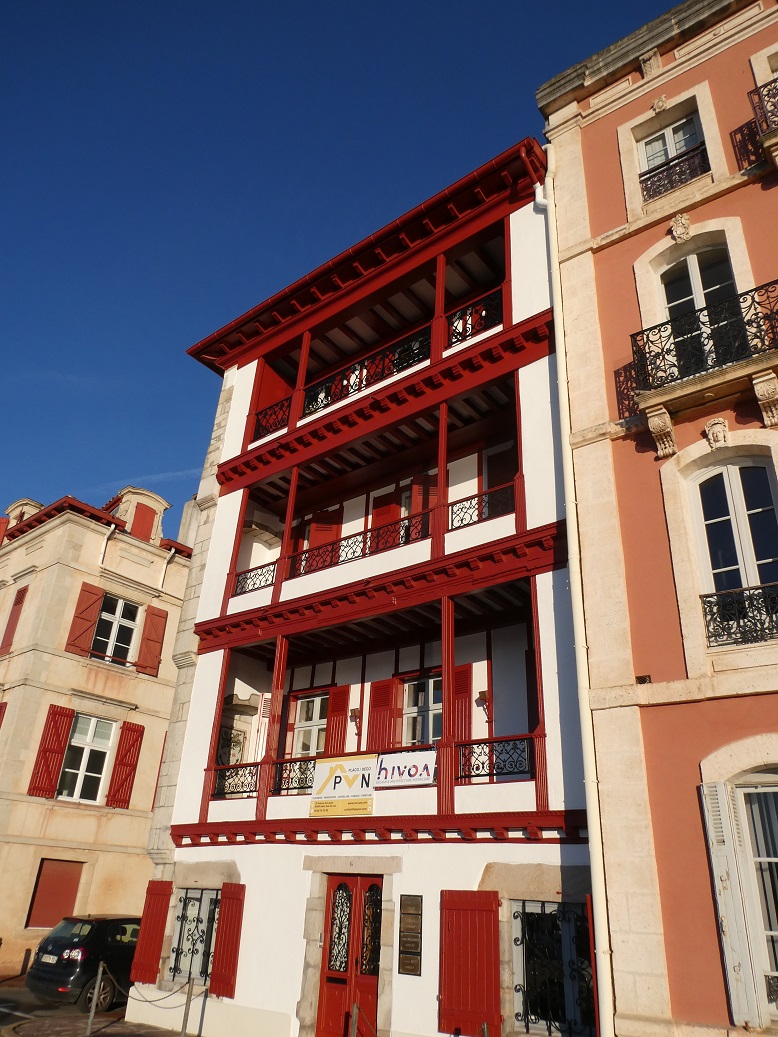
We were expecting to take today’s trip two years ago and I was going to call the blog post “Walking to Spain”. We would have gotten off the train at the last station in France, Hendaye, walked across the La Bidassoa river bridge to take a photo of the Bienvenido a España sign and then returned to France to continue our journey. The arrival of Covid and all of its associated travel restrictions forced a postponement and a rearrangement of our schedule but it all worked out fine. We still took a southbound train from Bayonne but exited 2 stops before the border (featured photo above) to spend the afternoon where Louis XIV, the Sun King, married his Spanish bride and future Queen of France. The next morning it was time to discover where the Sun King’s grandfather had been born 100 km (62 miles) to the east in the city of Pau.

Continue reading “St.-Jean-de-Luz and Pau”

Basking in Basque Country

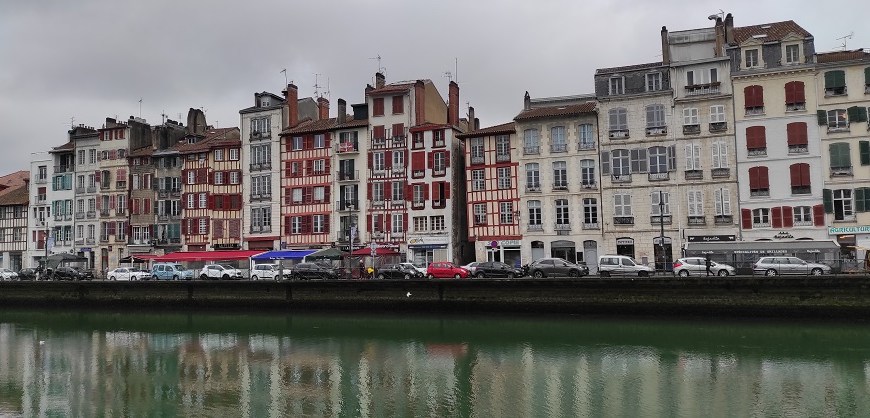
We live between a river and a canal and we can easily walk to either one but our house doesn’t have a water view. When we go out of town, therefore, we like to stay in a vacation rental or hotel that gives us that vista we are missing at home. Since the city of Bayonne is located at the confluence of the Nive and Adour rivers and if you follow that latter one a little further to the west you’ll reach the Atlantic Ocean where the beaches of Biarritz sit a few kilometers south, it was going to be easy enough to find a suitable view. That was especially true for this trip since going to a summer resort in the winter meant that there was little competition for space. Because it offered better train connections we chose Bayonne from where we were able to take day trips and still get back each evening to peer out at the passing boats below.

Continue reading “Basking in Basque Country”