
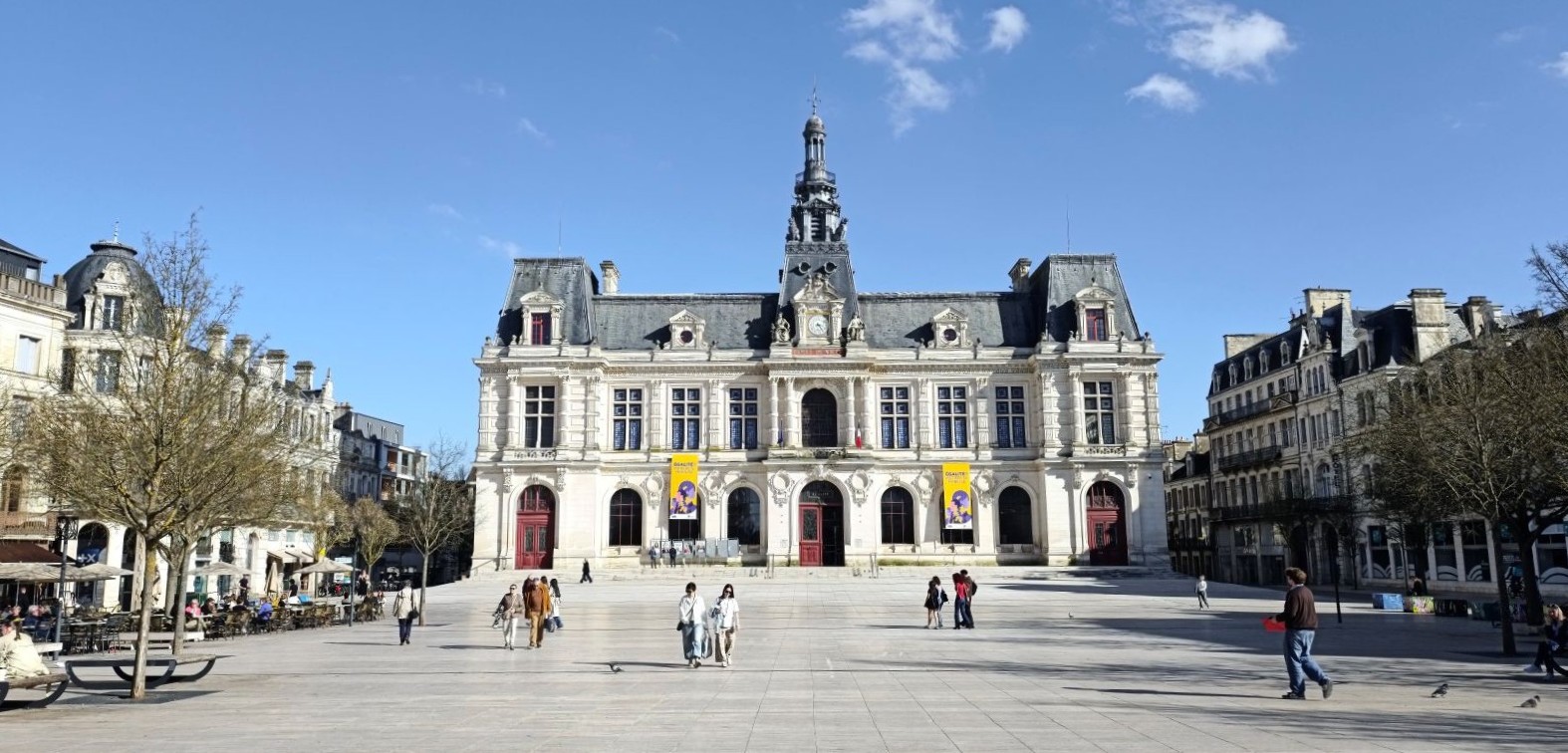
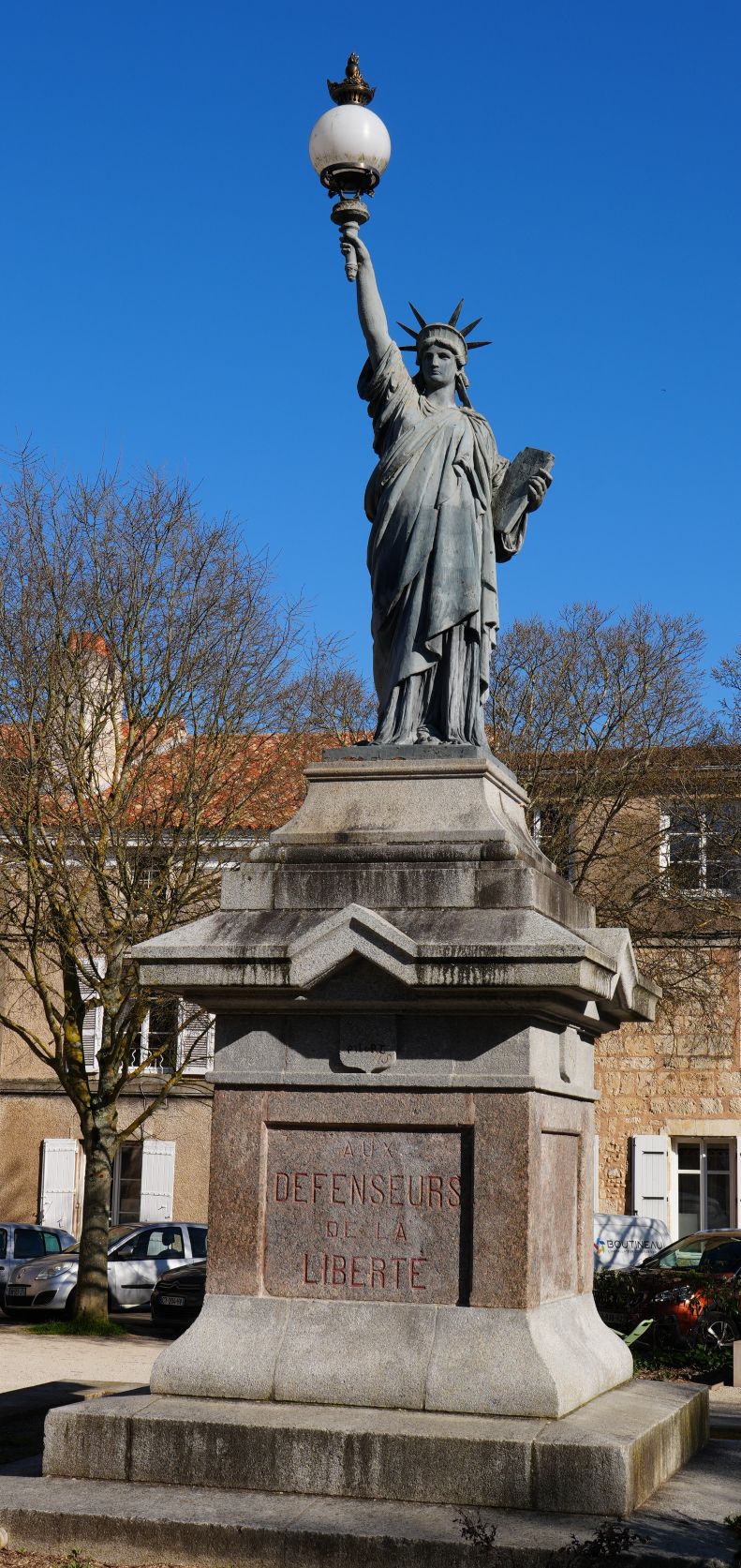
Whenever we vacation in a new part of the country, we always book accommodations in a central location in the area that we’re going to explore. That way it’s easy to make day trips to the surrounding destinations and still be back “home” in time for an apéro and dinner. Staying near the train station has at least 2 advantages: you don’t have far to go to catch your train for your day out and the station is often close to or in downtown near the sites you want to see in your base city. A third advantage in Poitiers, at least, is that the station is multimodal; that is, you can catch a train, a long distance bus, or the city bus, all in the same location. For this trip that was important because 2 of the towns we were going to visit are served only by motorcoach. More on those starting next week but first we wanted to discover the “City of a Hundred Steeples”.
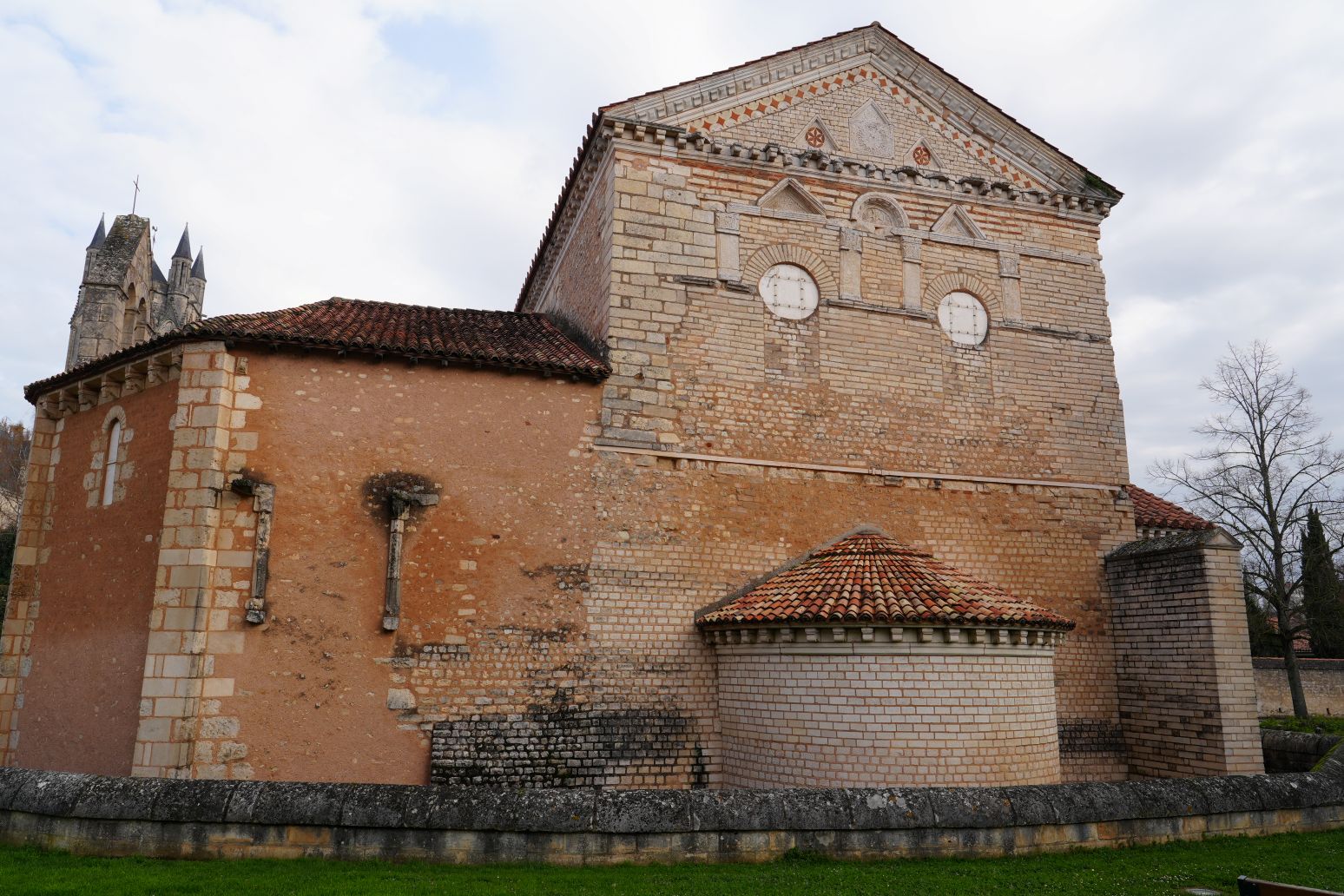
While the Baptistère Saint-Jean can’t boast of a massive steeple, it does qualify as the oldest building of its kind in France. Built in 360 AD as a total-immersion baptistery it became a parish church in the 11th century. Given that this structure was ordered by Bishop Saint Hilaire, our logical next stop was the church bearing his name, Église Saint-Hilaire Le Grand. The 4 chapels on the main floor are filled with medieval art while the crypt holds the relics of the Bishop.
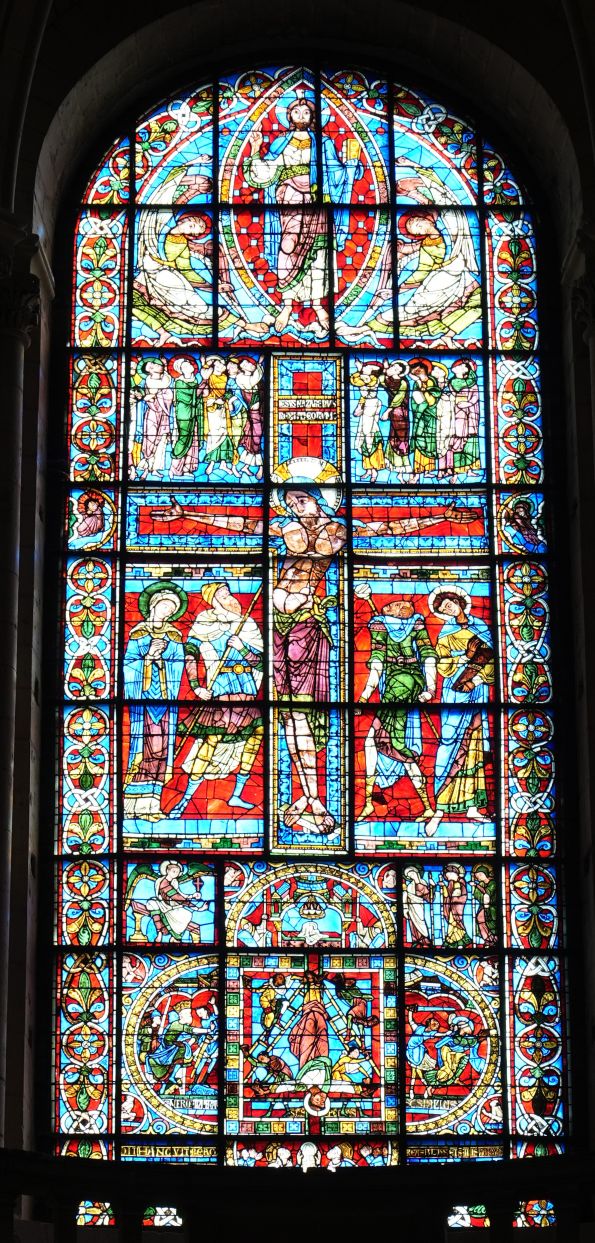
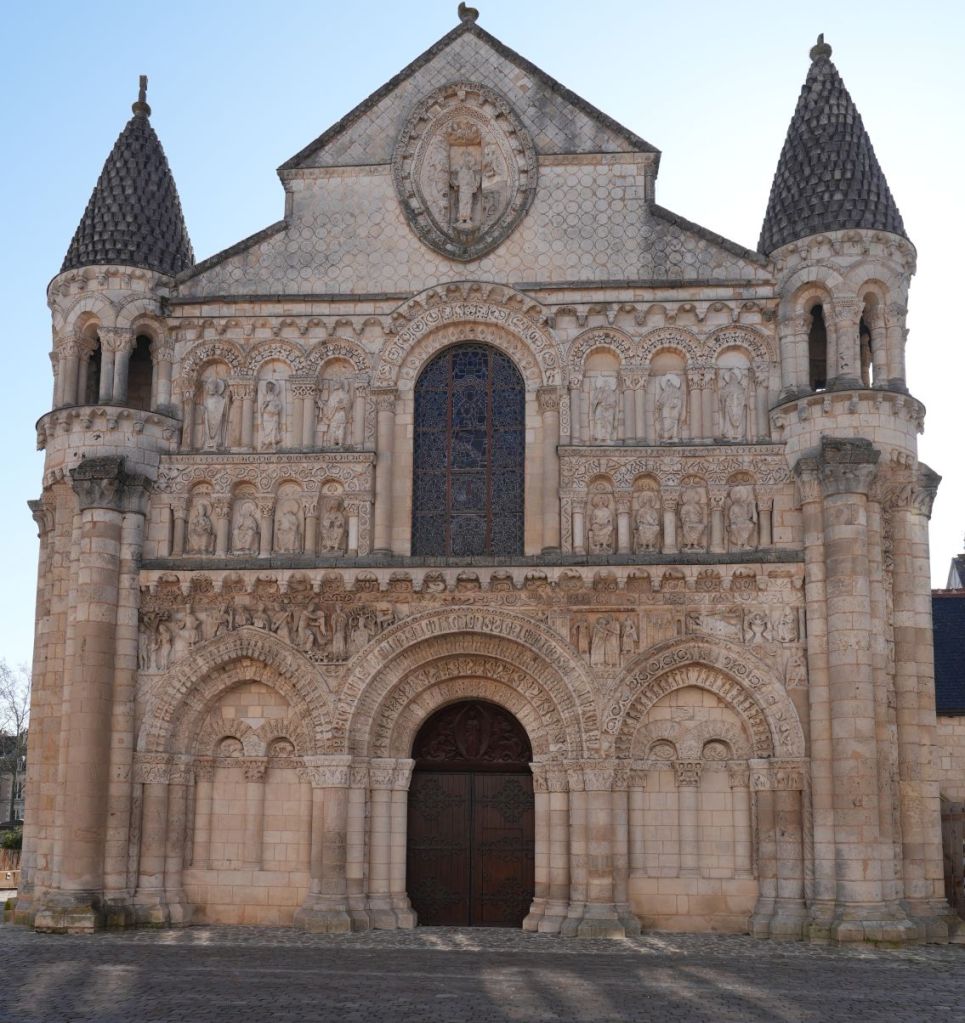
When I hear “Notre Dame” I think of the cathedral in Paris but here that name is attached to an 11th-century church highlighted by 12th-century friezes. There is a cathedral, known simply as Poitiers Cathedral, that was commissioned by Eleanor of Aquitaine in 1162. Almost all of the stained glass windows in the transept and the choir are original and you can even spot the likeness of the Queen and her King Henri II in the Crucifixion Window.
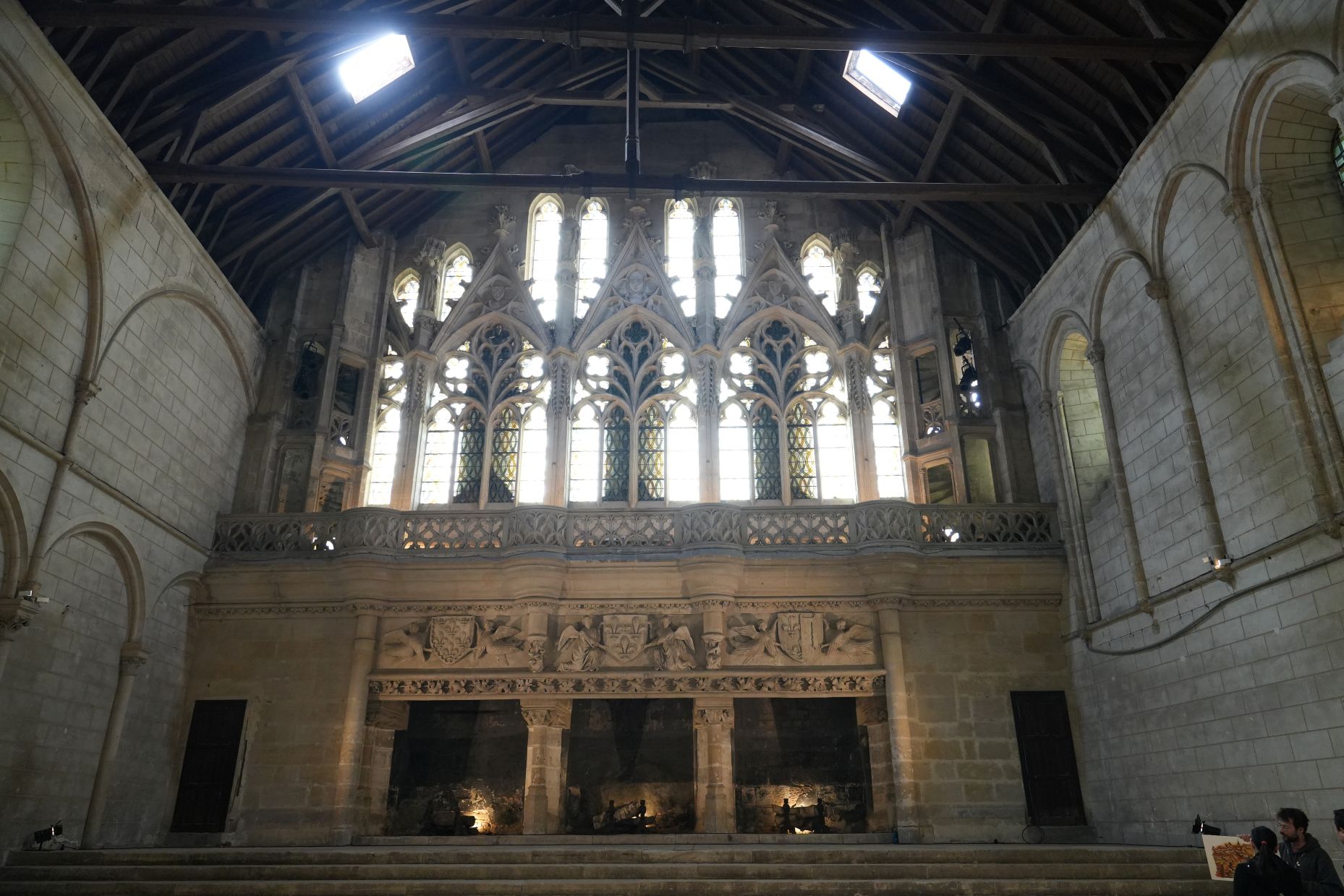
With kings and queens there must be a palace and although today the big Palais houses courtrooms there is still one room open to the public. The Grande Salle, ordered by Eleanor in 1190, is thought to have been the largest multipurpose hall (throne room, justice, dining) in Europe at the time. It required 3 huge fireplaces to heat the space of 50 X 17 meters (164 X 56 feet).
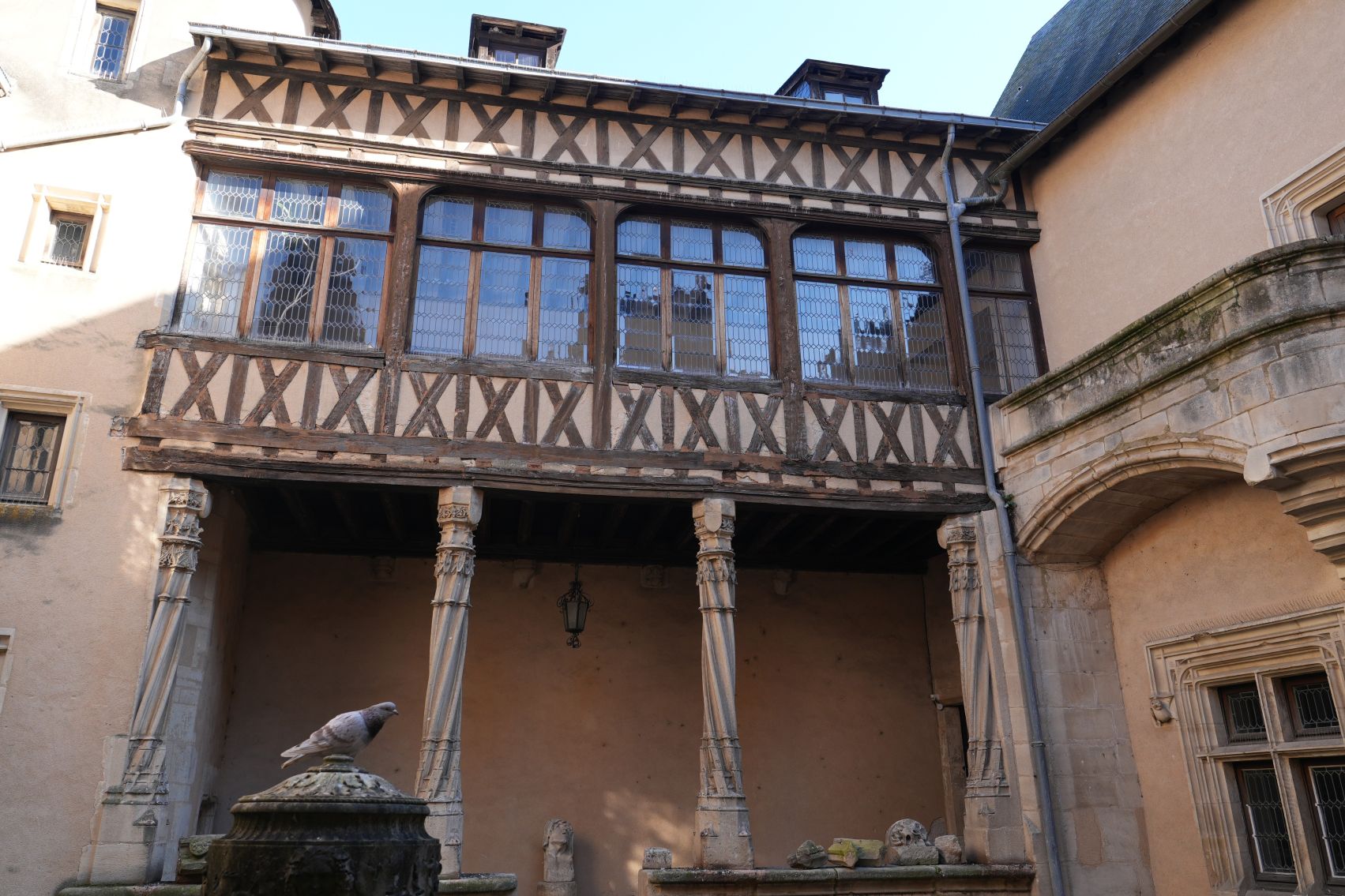
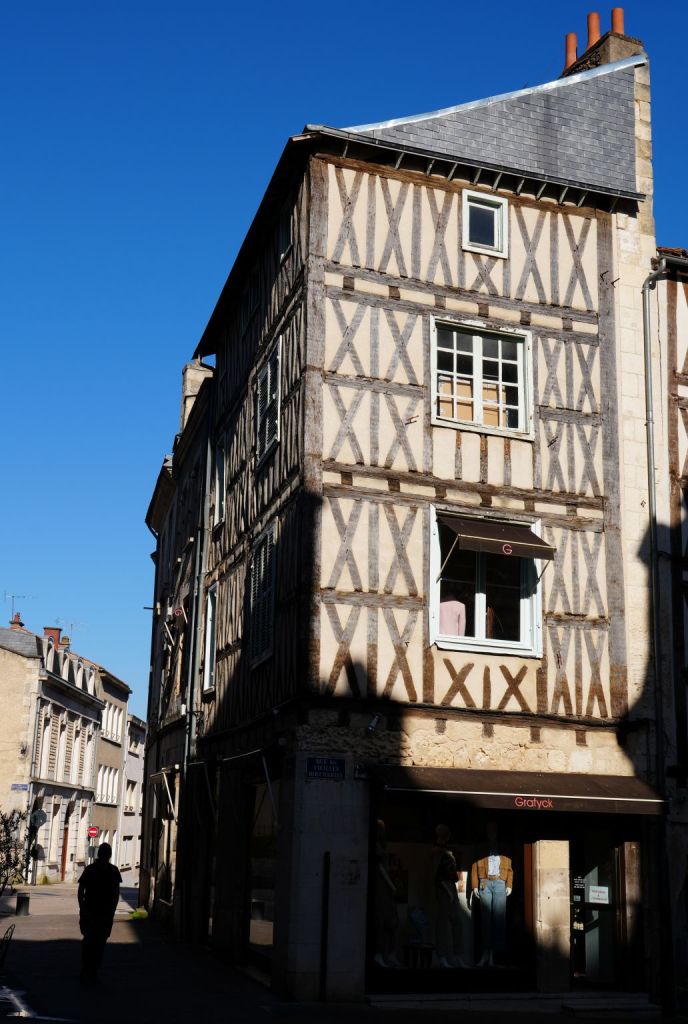
I saw a description of the street rue de la Chaîne as “one of the most delightful streets in the city” with half-timbered houses and gas streetlights. Just where the street changes names to rue René Descartes is a curved-fronted mansion built by the city’s mayor in the early 16th century. Hôtel Fumé is now part of a university so you can walk into the flamboyant courtyard of columns, half-timbers and windows.
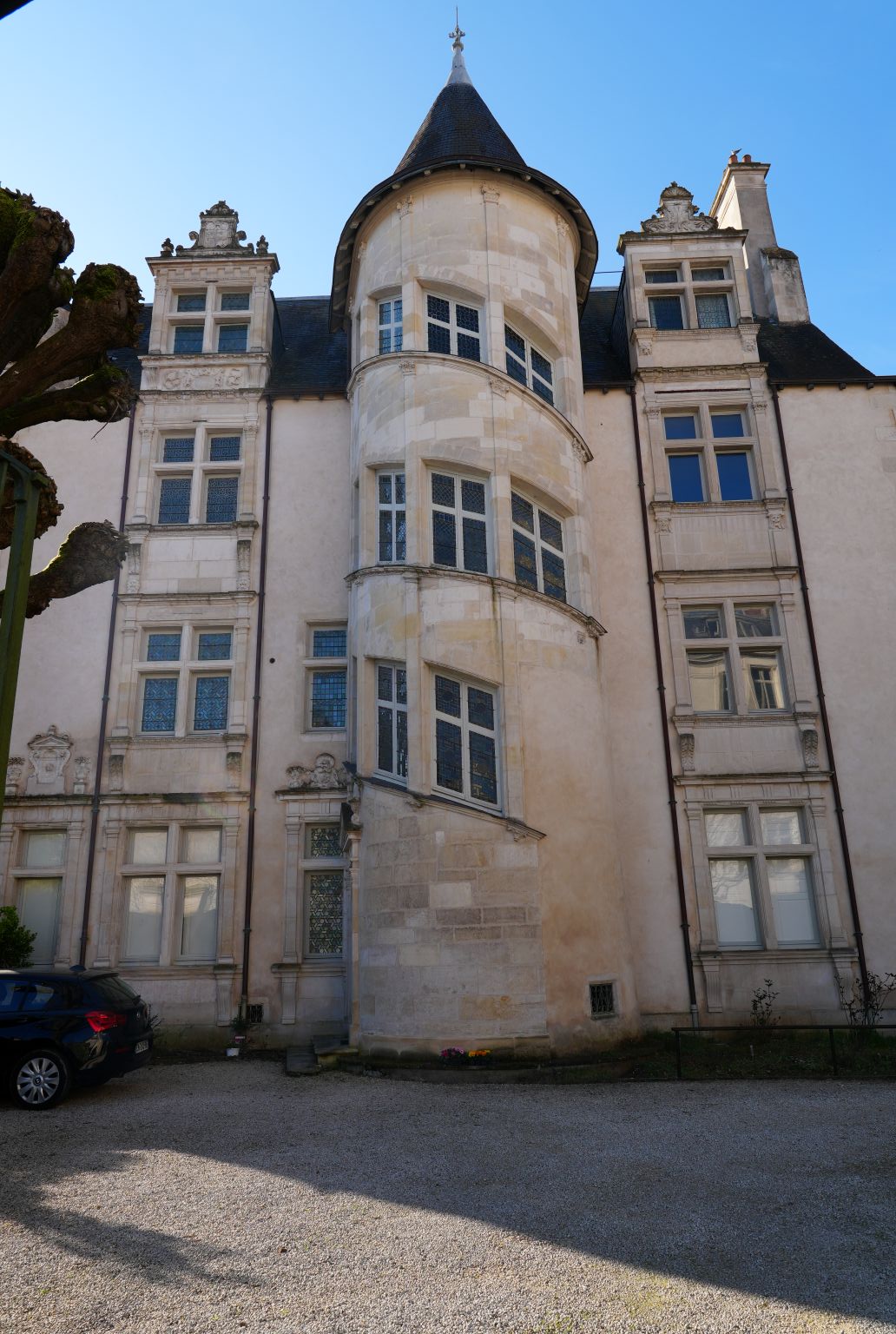
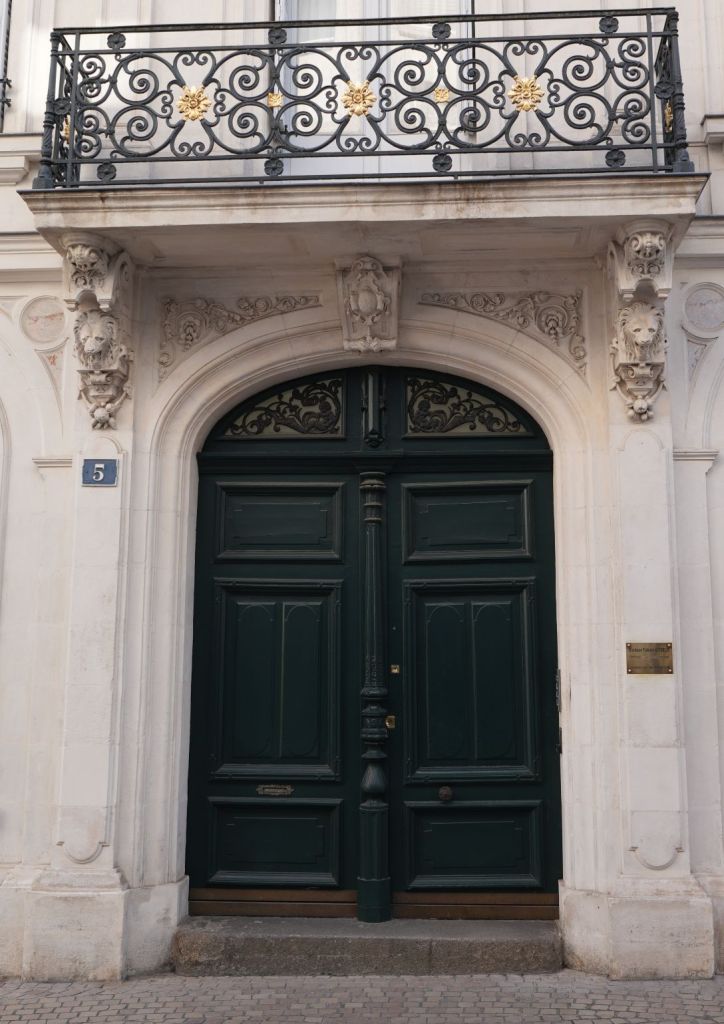
From the same era but still privately owned is Hôtel Jean Beaucé, a Renaissance mansion from 1554. I especially liked the spiraling staircase that reminded me of the Château de Blois and even Biltmore House in North Carolina.
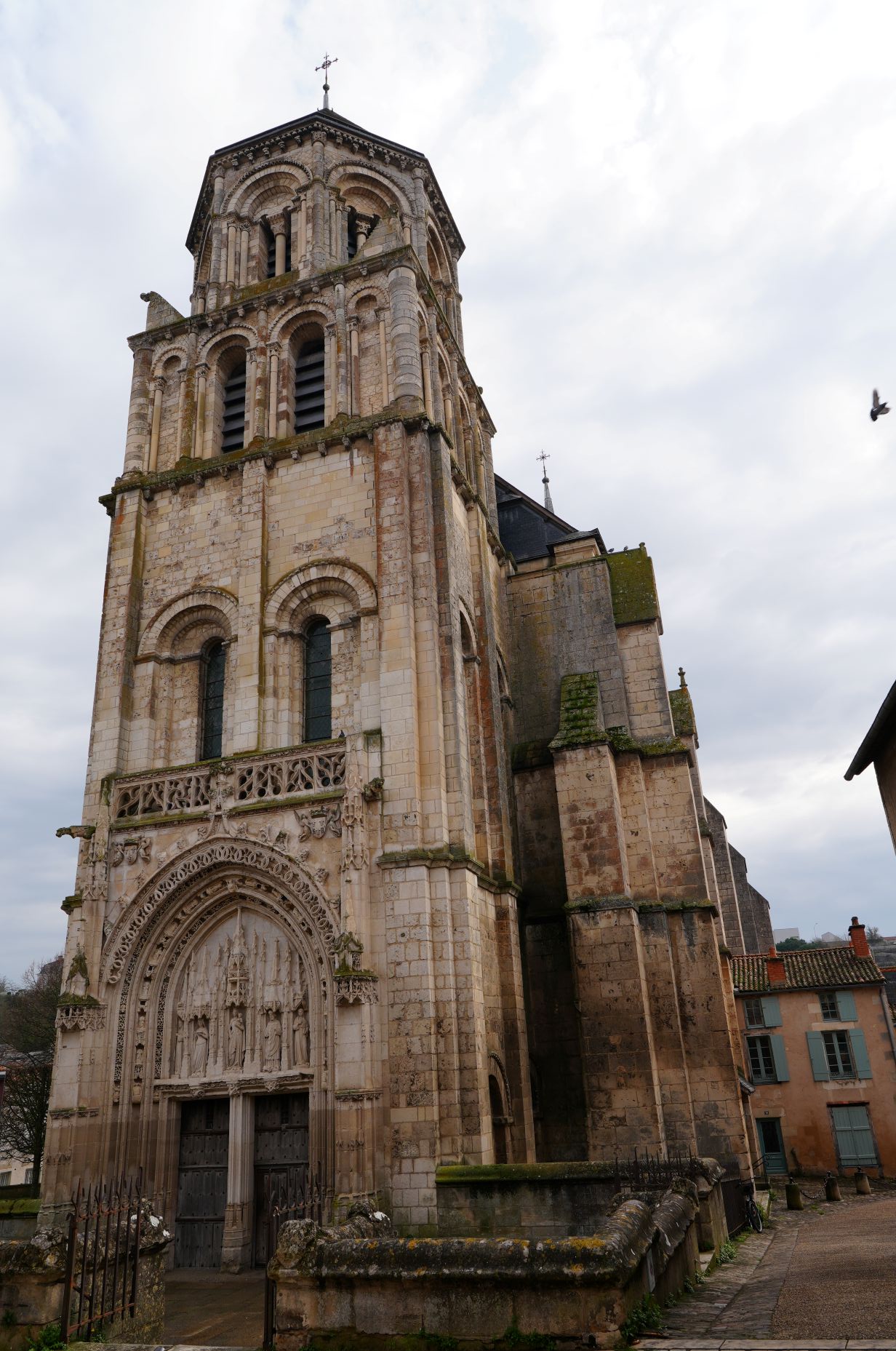
One last stop for steeples in this city with 100 of them; Église Sainte-Radegonde from the 11th century. Impossible to miss, since it’s right at the entrance that you must walk through, is a massive bell tower visible from across the city. Named for a Frankish queen who died in 587, it is said that her remains are kept in the crypt.
Next time we’ll be off into the countryside by bus to explore 2 other medieval towns close by.
Photo notes: The featured photo across the top of today’s post is City Hall and in the first paragraph is a replica of the Statue of Liberty with the dedication, “To the defenders of liberty”.
 Let's Live In France
Hi Bill and Bob,
This blog post took me back to the early 90s when I studied at the Institut Médiéval in Poitiers. I lived on the Rue de la chaine. The roads can get very tiny and city is very dark and cold in the winter. It looks like you had some good sunny weather.
All the best, Anne
LikeLiked by 2 people
Small world, Anne 🌞 You’re right, no dark and cold nights for us, thankfully!
LikeLike