Public transit survey

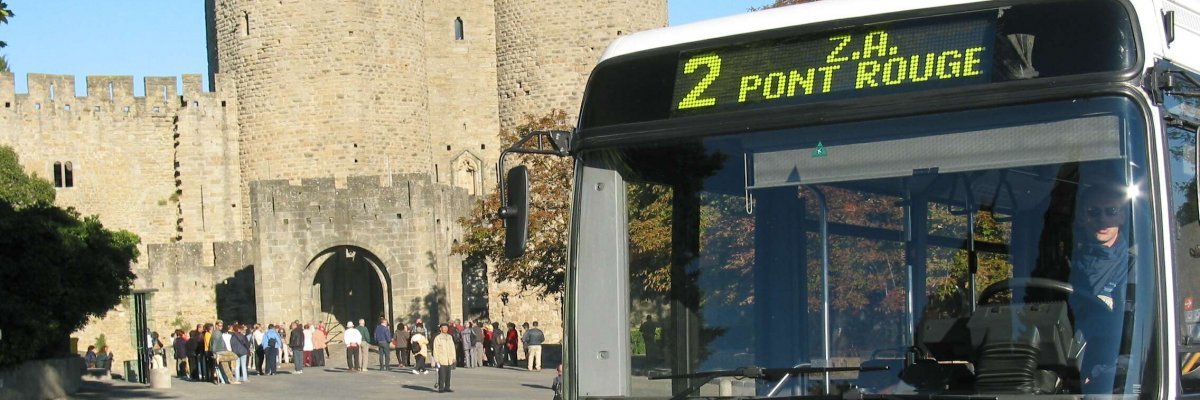
City bus at the castle. photo © Ville de Carcassonne – Julien Roche

Beginning in March of next year all public transportation in Luxembourg will be free to residents and visitors alike. No more tickets to ride the buses, trams, and trains within the borders of the country. The government hopes to ease some of the traffic congestion and the resulting pollution that results when 60 percent of the workers who commute use their cars. Later this summer the French parliament will take up the same issue for this country and in preparation, some members of the Senate have begun gathering opinions from the public. We only found out yesterday that you have just until the end of this month to answer an online survey (link below) regarding the possibility of free transports en commun here as well. Continue reading “Public transit survey”

Four-tunate

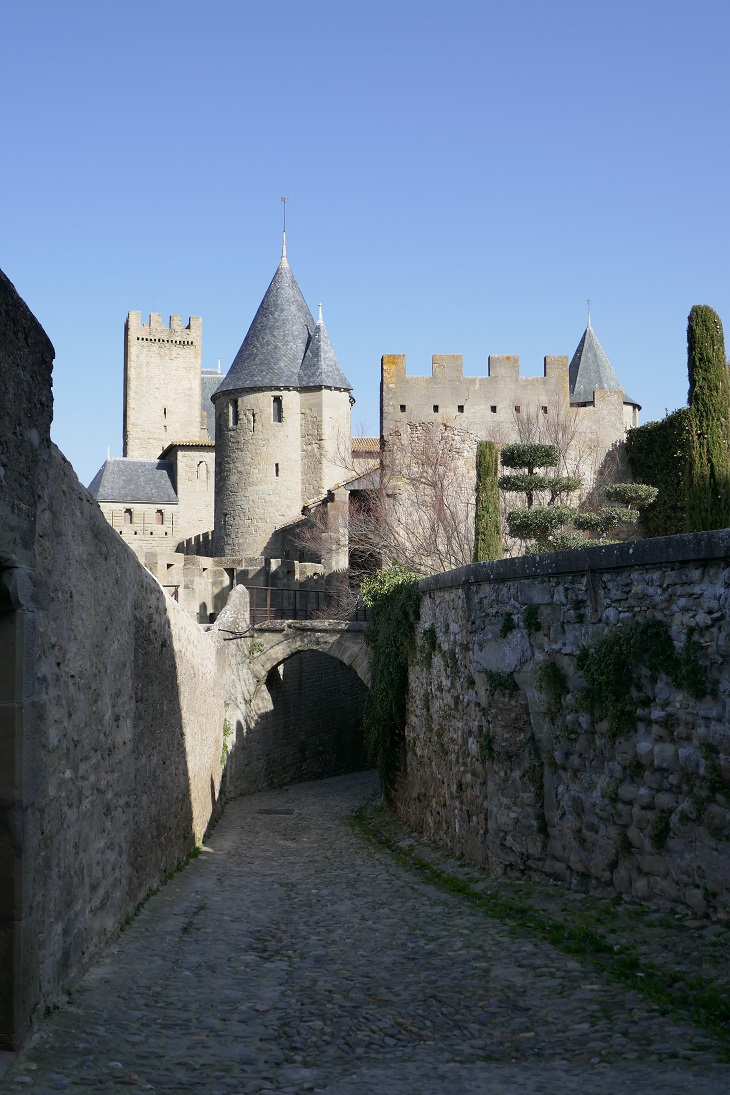
Inside the medieval city walls of Carcassonne

This month starts our fourth year of living in France and I thought that this would be a great opportunity to answer a question that we are often asked, “Why are you so happy all of the time?” A good starting point that might say it all is that we live in the south of France and we’ve just received our residency card renewal to remain here for another year. That alone makes us smile. The procedure was identical to last year (Year 3 begins) which reinforces our other experiences with government and business offices here: follow their rules, give them exactly the documents they want in the order requested and in return you will be treated in a respectful and friendly manner and receive precisely what you’ve been seeking. Who wouldn’t be happy with that? But wait, there’s so much more…. Continue reading “Four-tunate”

It’s mutual, I’m sure

Top-up insurance protection from Que Choisir website

In the October blog post Universal health care, I wrote about how everyone in France must have health insurance. We had received our Carte Vitale, the ID card to show that we are part of the French healthcare system, that we present at the doctor’s office, hospital, laboratory, pharmacy, etc. Coverage is generally 70 percent of the cost of the procedure leaving the patient to pay the remaining 30 percent out of pocket or to buy a private top-up insurance policy that costs between 50 and 100 euros per month per person. Coverage for dental, vision, and hearing problems will increase to 100 percent within 2 years. Anyone who has a long term disease such as cancer or diabetes is already covered at 100 percent as are people who are unable to afford additional insurance. We’ve now signed up for assurance maladie complémentaire more commonly called a mutuelle. Continue reading “It’s mutual, I’m sure”

A spoonful of sugar

Course announcement from Fun-Mooc website

You probably remember when Julie Andrews as the title character nanny in the film Mary Poppins was trying to get her two charges, Jane and Michael, to clean their room. To introduce the song she begins with “In every job that must be done there is an element of fun” and then the orchestra starts up and you soon hear her sing “A spoonful of sugar helps the medicine go down”. When you move to another country where they don’t speak your native language it’s important to learn what the local people are saying for a variety of reasons. Once you get past the survival level where you can at least get food and shelter then you can start fitting in with your new neighbors and having fun. But of course, language isn’t the only challenge since there are cultural differences, new rules to learn, and administrative procedures to follow for everything from buying a train ticket to seeing a doctor. Thanks to an online course sponsored by the French government’s Ministry of Higher Learning, you can combine all of those tasks in one place. Continue reading “A spoonful of sugar”

Universal health care

Carte Vitale brochure

Everyone who lives and/or works in France is required to have health insurance. In fact, it’s treated as a fundamental right in the Constitution with the Preamble stating that the Nation “shall guarantee to all, notably to children, mothers and elderly workers, protection of their health….” When applying for our visa that allowed us to stay here during the first year we had to prove that we had health insurance coverage that would take care of any emergency situations plus pay for sending us back to the US for treatment of anything serious and/or long term during the one-year validity of our visa. A common benefit of travel insurance is repatriation to the country where your trip began, so a policy for that was easy to find and accepted for the visa application. Once you’ve lived in France for at least 3 continuous months you become eligible to apply for Protection Universelle Maladie that we think of as universal health care and we have now been accepted. Continue reading “Universal health care”

Free association II

Festival of Associations

There are over 500 clubs, interest groups, and other hobby alliances, all classed as Associations,  registered with the mayor’s office in Carcassonne. That seemed like a lot for a town of 50,000 inhabitants until I started investigating why there might be so many. A law went into effect in 1901 to ensure that two or more persons were free to organize themselves without fear of persecution by the government. Additional benefits, at least where we live, include members being able to use city property for meetings, free publicity for their events, very modest monetary support, and the ability to hold a garage/yard sale annually. Individuals are prohibited from having what our British friends call a car-boot sale, as its considered unfair competition to a town or village’s small shopkeepers, so being able to raise money for an organization in this way can be vital. Continue reading “Free association II”

The taxes are here

Tax forms in a plain blue wrapper

Since today, April 15, is traditionally Tax Day in the US, it probably sounds odd for us to say that we were happy to see our French income tax forms arrive last week, but that’s exactly how we feel. Last year was our first time to report our revenue and it turned out to be relatively simple as I wrote about in the blog post You can run, but…. We filled out the paper forms, following a guide in English that we purchased, and deposited them directly into the huge mailbox in front of the Center of Public Finance office just before the mid-May due date. According to the treaty between our 2 countries, generally speaking, you pay tax based on where you earn the money and since our income is all from US pensions, we anticipated that only Uncle Sam would be sending us a bill. Four months later we were pleased to discover that the French government agreed and sent us a letter to confirm that; however, one important piece of information was missing from that document. Continue reading “The taxes are here”